
Why are fashion brands reconsidering China for manufacturing? Explore supplier ecosystems, tariffs, production costs, and how Deepwear helps brands evaluate sourcing options.
For years, fashion brands have explored moving production away from China to reduce tariff exposure, diversify supply chains, or find lower-cost manufacturing alternatives. Yet relocating production has proved more complicated for some businesses than expected. Recent reporting has highlighted companies reconsidering parts of their China exit after encountering gaps in supplier networks, skilled labor, equipment access, and supporting infrastructure elsewhere.
A September 2026 Reuters report described companies that had moved production to avoid tariffs but were now reassessing those decisions because they struggled to replicate China’s manufacturing ecosystem. The report also noted that the overall scale of this return remained unclear.
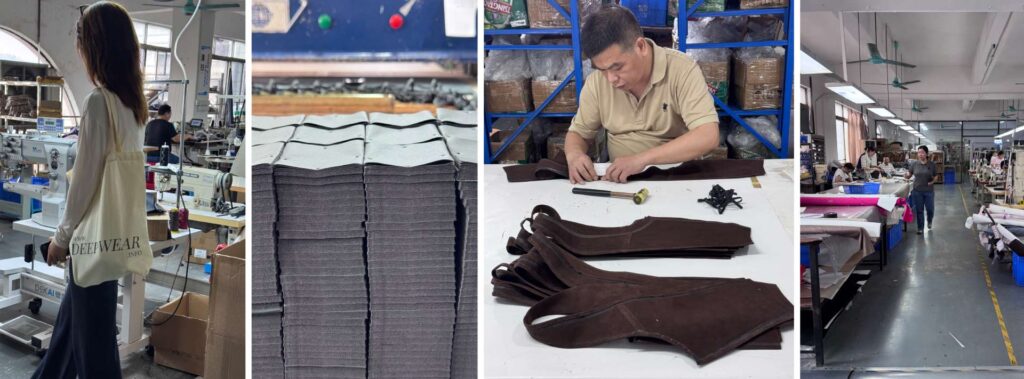
This does not mean fashion brands are abandoning diversification. US apparel import data still show substantial shifts away from Chinese suppliers. For January through August 2026, US apparel import value from China fell by approximately 29% year over year, according to figures reported by The Business Standard using US trade data.
The answer depends on the product, the supplier network behind it, the costs of moving production, and the operational demands of the brand. Finding another factory is only one part of building a viable alternative supply chain.
In this blog we cover:
- Why some fashion brands are reconsidering China as a manufacturing base
- How supplier ecosystems, skilled labor, and material availability affect production decisions
- Why lower factory prices do not always translate into lower total costs
- What brands should evaluate when diversifying manufacturing across multiple countries
- How Deepwear’s Guangzhou team helps brands assess suppliers, navigate local manufacturing relationships, and compare sourcing options
China’s Advantage Extends Beyond the Factory
China remains an important manufacturing base because its production ecosystem brings together capabilities that can be difficult to reproduce in a single alternative location.
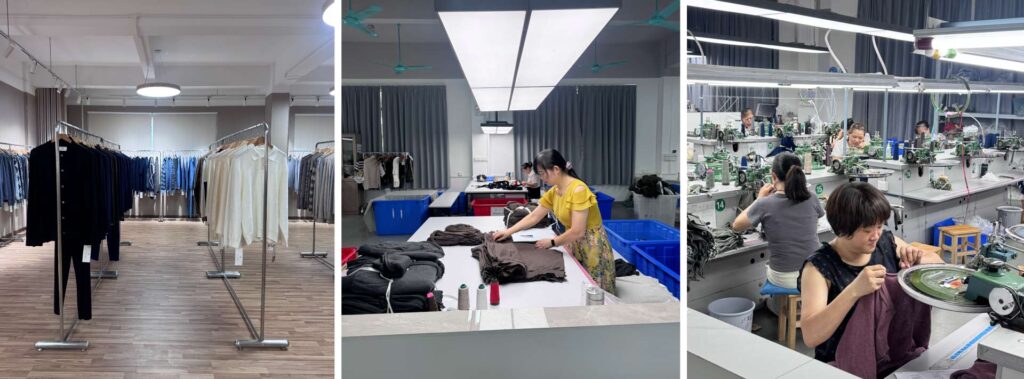
Depending on the product category and region, brands may find access to fabric and trim suppliers, specialist workshops, machinery, packaging providers, technical services, and experienced production teams within an interconnected network. These relationships can help manufacturers resolve material questions, develop samples, and coordinate different stages of production.
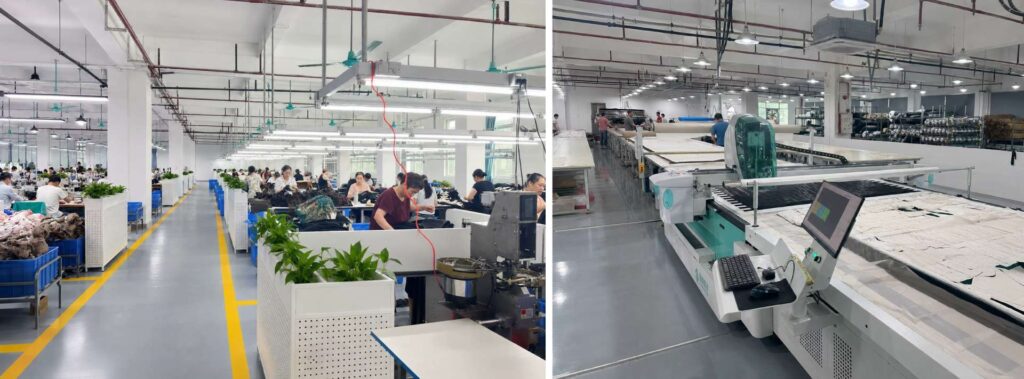
The Pearl River Delta illustrates this advantage. Its concentration of suppliers and manufacturing capabilities supports a range of fashion products and production requirements. Our related article, China’s Pearl River Delta in 2026: The Engine Behind Fast, Scalable Fashion, explores why this regional ecosystem matters to brands assessing speed and production scale.
However, a dense supplier network does not automatically make every Chinese factory the right fit. A manufacturer experienced in one product category may lack the specialist skills, equipment, or capacity required for another. The same applies to suppliers in alternative manufacturing countries.
Brands need to evaluate the network behind a proposed production partner, including where materials come from, which processes are performed in-house, what is subcontracted, and how delays or technical problems are handled.
Considering whether your current manufacturing setup still fits your product? Deepwear’s China team can help assess supplier options against your requirements, drawing on local knowledge to clarify capabilities, production arrangements, and the practical questions to resolve before committing to a partner. Talk to our team.
Relocating Production Can Create New Costs
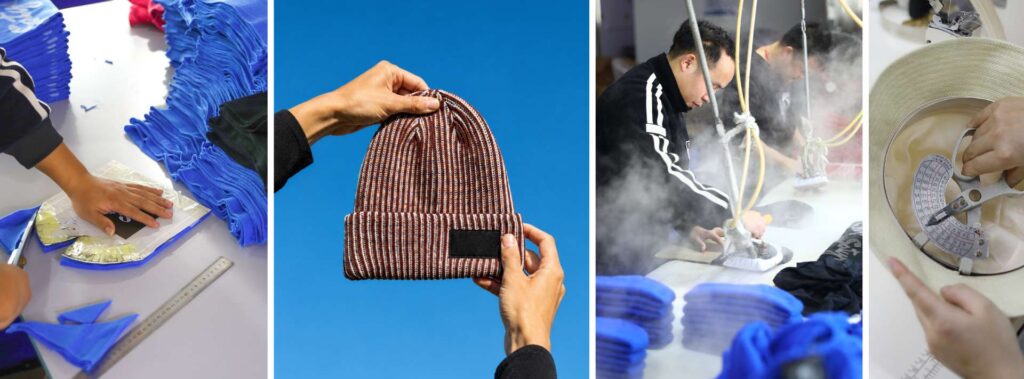
A factory quotation rarely tells the whole story of a manufacturing decision. A new supplier may offer a lower unit price, but the brand still needs to account for sampling, material sourcing, tooling, freight, duties, quality assurance, communication, and the time required to establish a workable production process. When a move separates a factory from its established material and component suppliers, additional coordination and lead time may also become necessary.
These factors can change the financial case for relocation. A lower production price may be offset by higher logistics costs, longer development cycles, or the need to source components from the original manufacturing market.
Tariffs complicate the comparison further. The effective cost of importing a garment depends on its classification, materials, origin, destination, applicable trade measures, and any relevant exclusions. Rates can change, so brands should assess the rules that apply to their specific products rather than make decisions based on a headline tariff figure.
The uncertainty also affects relationships between brands, suppliers, and retailers. A Vogue Business report published in October 2026 described independent retail businesses confronting unexpected duty costs and adjusting purchasing arrangements in response.
For brands comparing manufacturing countries, the implication is straightforward: evaluate total landed cost and operational requirements together, rather than choosing a supplier on unit price alone.
Deepwear can help brands structure that comparison by examining supplier quotations alongside production requirements, material availability, logistics considerations, and the coordination a project will need. For tariff-sensitive decisions, brands should also confirm product-specific duties and origin rules with qualified customs or trade professionals.
China Plus One Requires More Than a Backup Factory
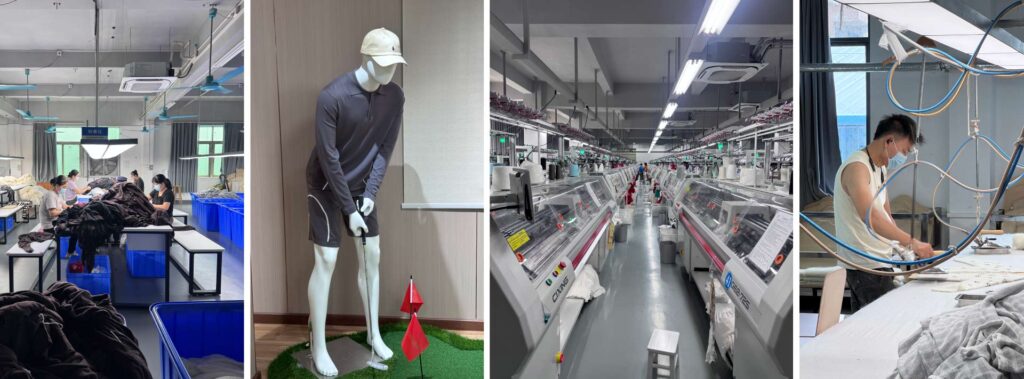
The China Plus One strategy involves maintaining manufacturing in China while developing additional production options in other countries. For some brands, this creates flexibility. For others, it introduces complexity that needs to be managed carefully.
A second manufacturing location can reduce dependence on a single market, but it may also require new supplier relationships, sampling rounds, material specifications, production documentation, and quality assurance processes. A factory that can produce a sample successfully may still need support to meet the brand’s volume, timing, and consistency requirements.
Diversification works best when brands have a clear reason for adding a production location. That reason might be tariff exposure, capacity constraints, a particular technical capability, access to materials, or the need for a more resilient supplier network. The destination should follow the product and business requirements, rather than a general assumption that one country is always cheaper or safer than another.
Our guide, The Global Manufacturing Reset: Where Fashion Brands Are Producing in 2027, provides further context on how brands assess manufacturing locations.
How to Decide Whether to Stay, Relocate, or Split Production
Before changing manufacturing locations, brands should examine five areas:
- Product requirements: Does the product rely on specialist machinery, complex construction, particular finishing techniques, or close coordination between several suppliers?
- Material availability: Can the proposed location access the required fabrics, trims, components, and finishes within the needed development schedule?
- Total cost: What happens to the full landed cost when freight, duties, development, quality assurance, and additional coordination are included?
- Production readiness: Can the supplier meet the required volumes, lead times, technical specifications, and repeat-order expectations?
- Supply-chain resilience: Are there credible alternatives if a supplier experiences capacity constraints, material shortages, or delays?
Material access deserves particular attention. A factory may have the technical capability to make a garment but depend on materials or components from another country. This can affect lead times and complicate the assumptions behind a relocation plan. Read more in Beyond Fabric Sourcing: How Material Availability Affects Fashion Manufacturing.
Brands may ultimately keep certain products in China, move others to a different country, or divide production across several locations. A mixed strategy can make sense when different products have different technical, cost, or capacity requirements. It also creates a need for consistent specifications, communication, and quality assurance across suppliers.
The key is to compare viable production arrangements on the same criteria and understand what each option demands from the team managing it.
What Deepwear’s China Team Brings to the Decision
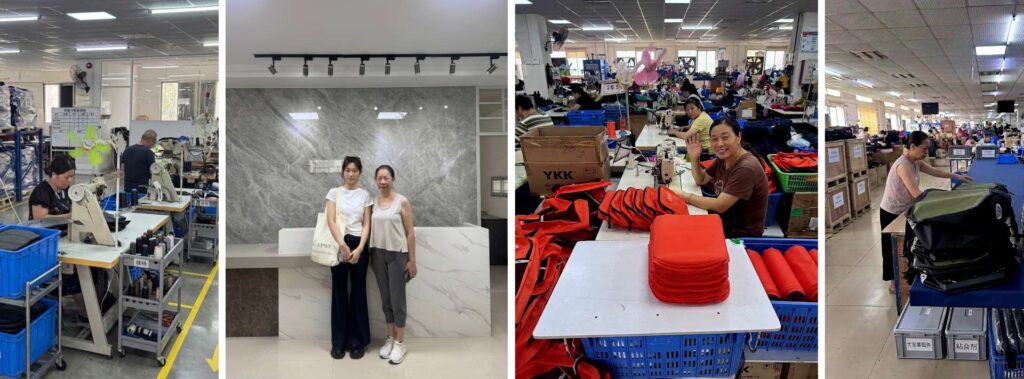
Deepwear’s role is to connect brands with suitable manufacturing partners and help coordinate the work required to turn a sourcing decision into a practical production arrangement. We help brands evaluate options, communicate requirements, and navigate the supplier relationships involved in developing and producing their collections.
Our team in Guangzhou brings local market knowledge and Mandarin-language capabilities to that process. This matters when brands need to clarify a supplier’s actual role, discuss technical requirements, understand production arrangements, or follow up on questions that are difficult to resolve through a supplier profile or quotation alone.
Our contribution goes beyond introducing a brand to a factory. Depending on the project, we can help:
- Assess supplier suitability: Compare a potential partner’s product experience, technical capabilities, capacity, and production arrangements with the brand’s requirements.
- Clarify the supply chain: Identify questions about material sourcing, subcontracted processes, components, and the coordination required between different suppliers.
- Support communication: Help bridge language and context gaps as brands discuss specifications, samples, timelines, and production expectations with local partners.
- Compare sourcing options: Put China-based opportunities into the wider context of a brand’s manufacturing strategy, including the requirements involved in considering alternative markets.
- Coordinate development and production: Help keep the brand’s requirements and supplier discussions aligned as a project progresses, while making unresolved questions visible for the relevant parties to address.
The right level of support depends on the project. A brand developing a technically complex collection may need a different supplier assessment from a retailer purchasing ready-made wholesale products. In both cases, the goal is to understand what a partner can offer, what still needs to be verified, and whether the arrangement fits the brand’s commercial and operational requirements.
For a broader overview of our work in the market, see Fashion Manufacturing and Sourcing in China.
A Manufacturing Strategy Built Around the Product
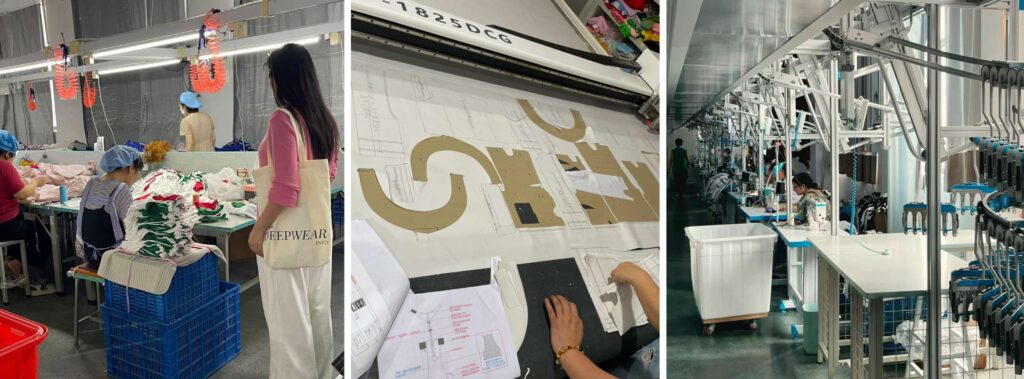
The latest developments do not point to a universal return to China, nor do they make diversification irrelevant. They show why manufacturing decisions need to account for the relationships and capabilities surrounding a factory, alongside price, tariffs, and geography.
For some products, China’s established supplier network may continue to offer practical advantages. For others, another country may be a better fit. Some brands will benefit from distributing production across several markets, provided they can manage the added coordination.
The decision should follow a clear assessment of the product, its materials, the production process, and the costs and risks attached to each viable option.
Considering a change to your manufacturing strategy? Deepwear can help you assess supplier options, clarify production requirements, and understand the practical considerations involved in sourcing in China or comparing it with other markets. If you have only a handful of questions about your current setup or a potential move, book a consultation with our team to discuss your project.
LINKEDIN POST:
I’ve spent more than half of my life in the fashion industry, and one thing I’ve learned is that manufacturing decisions rarely work out as neatly as they look on paper.
For years, many brands have been moving production out of China. The reasons are understandable: tariffs, rising costs, and the need to diversify supply chains. Recently, I’ve been paying attention to reports about companies reconsidering some of those moves because they’ve struggled to replace what China offers as a manufacturing ecosystem.
Access to fabrics and trims, specialist workshops, skilled people, machinery, and suppliers who already know how to work together can make an enormous difference to how a collection moves from development to production.
This is something we see in sourcing. Finding a factory with an attractive quotation is one thing. Understanding whether that factory can deliver what a brand needs, with the right materials, capabilities, timing, and supporting suppliers, is another.
I also don’t believe this means every brand should stay in China. Diversification remains important, and other manufacturing countries can be the right choice depending on the product and business strategy. Moving production simply because another country appears cheaper can create a different set of costs and operational challenges.
At Deepwear, our team in Guangzhou helps brands look beyond the factory quotation. We work on the ground, communicate with local suppliers, clarify production capabilities, and help brands understand the practical realities behind their sourcing decisions.
Sometimes, the right answer is to stay in China. Other times, it is to move certain products elsewhere, or a combination of markets makes the most sense.
The decision should start with the product, the people, and the supply chain it actually needs, not with the assumption that one country is always the better option.
After all these years in this industry, I still believe good sourcing begins with asking better questions before committing to a production decision.
I’m curious to hear from other people in fashion: Have you found it harder than expected to replicate an established manufacturing ecosystem when moving production to a new country?
#FashionManufacturing #FashionSourcing #SupplyChainStrategy #ChinaManufacturing