
Learn how garment trims and hardware sourcing, surface finishes, and garment treatments affect premium apparel. Discover how Deepwear supports component selection, sampling, and manufacturing coordination.
A jacket can use excellent fabric and still feel unfinished. The zipper pull may be too light for the garment, the buttons may look out of place against the shell material, or the metal finish may appear inconsistent with the intended design. These details can influence how customers judge the entire product, even when the main fabric and silhouette are well executed.
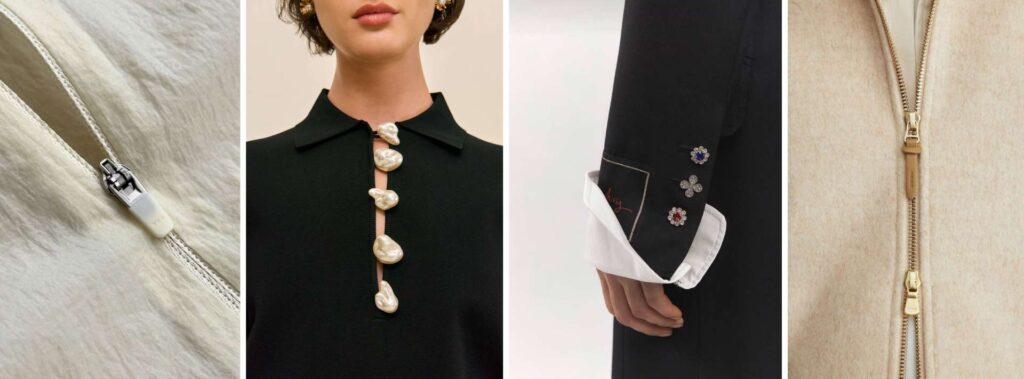
For premium fashion brands, garment hardware sourcing and finishing decisions deserve attention early in product development. Buttons, zipper pullers, buckles, snaps, eyelets, and drawcord adjusters must suit the garment’s construction and intended use. Washing, dyeing, and coating processes introduce additional considerations that may not become apparent until a sample is finished.
Thoray d’Haese Sacoor, CEO of Deepwear, approaches sourcing through the relationship between a product’s requirements and a supplier’s actual capabilities. His perspective on manufacturer selection provides a useful starting point: the right partner depends on the product being developed, its materials, the required workmanship, and the production conditions.
In this blog we cover:
- How garment trims and hardware sourcing influence the perceived value of premium apparel.
- What brands should specify when sourcing custom clothing hardware and selecting surface finishes.
- How garment dyeing, washing, and coatings can affect hardware compatibility.
- Why finished-garment sampling and approval matter before bulk production.
- When custom hardware justifies its additional development costs compared with stock alternatives.
1. Hardware Is Part of the Product Design
Hardware influences more than function. Its proportions, weight, surface texture, and placement contribute to the garment’s visual identity.
Consider a wool coat with a substantial silhouette. Small, lightweight buttons may look disproportionate, while oversized metal buttons could compete with the fabric and cut. A leather jacket may call for a different balance between zipper visibility, puller shape, and surface finish. On a technical parka, closure performance and weather protection may take precedence over decorative impact.
When evaluating premium garment trims, brands should consider:
- Material and weight: Does the component feel and function appropriately for the garment?
- Finish and sheen: Does polished, brushed, matte, antique, or oxidized hardware support the intended appearance?
- Proportion and placement: Are the components scaled appropriately for the silhouette and construction?
- Attachment and function: Can the garment support the component, and will the closure withstand its intended use?
- Consistency: Can the supplier reproduce the approved appearance across the required quantity and future orders?
A more expensive trim does not automatically produce a better result. A standard component that suits the design and performs reliably may be a better choice than custom hardware that adds cost without improving the finished product.
Our guide, A Complete Guide to Labels and Trims in the Fashion Industry, covers the main categories of garment components. Here, the focus is on how brands evaluate those components as part of a premium product rather than selecting them independently.
2. Surface Finishes Need to Match the Design Intent
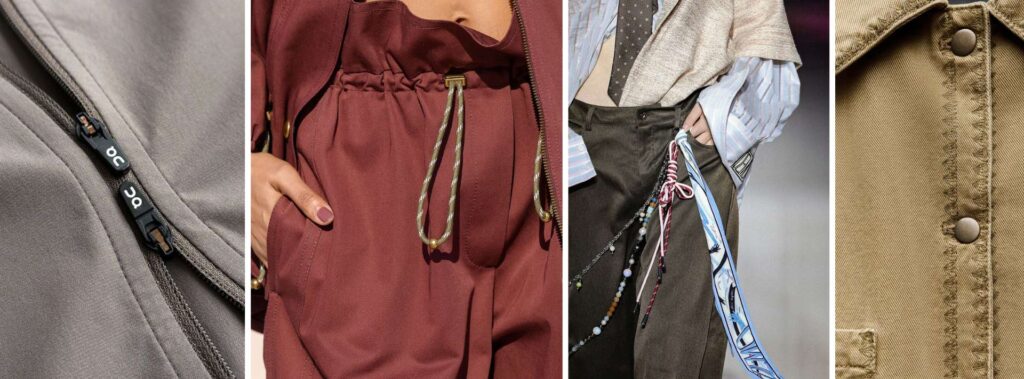
The term custom clothing hardware covers a wide range of possibilities, from branded zipper pullers and engraved snaps to specially finished buckles and decorative metal plates. The appropriate specification depends on how visible the component is, how it will be handled, and what conditions it will encounter.
A brushed finish may suit a restrained outerwear design, while a polished finish creates a sharper visual effect. Antique or oxidized appearances can complement distressed denim or leather, but their acceptability depends on the intended design and the consistency of the finish.
The specification should describe the desired result clearly. Depending on the component, it may include the base material, dimensions, finish type, colour reference, logo treatment, attachment method, and acceptable variation. A reference photograph can communicate the overall direction, but physical samples provide a more useful basis for judging sheen, texture, weight, and colour.
Brands should also distinguish between an intentional aged appearance and uncontrolled variation. A distressed finish may permit visible irregularity, while a clean, uniform metallic surface may require tighter visual acceptance criteria.
Our Trim Card vs Lab Dip vs Swatch: A Practical Guide for Emerging Fashion Brands explains how physical references support development approvals. For premium hardware, the same principle applies: document what has been approved so the supplier and manufacturing partner have a shared reference during production.
3. Garment Washing Can Change the Hardware
One of the most consequential decisions concerns the order in which components are attached and treatments are applied.
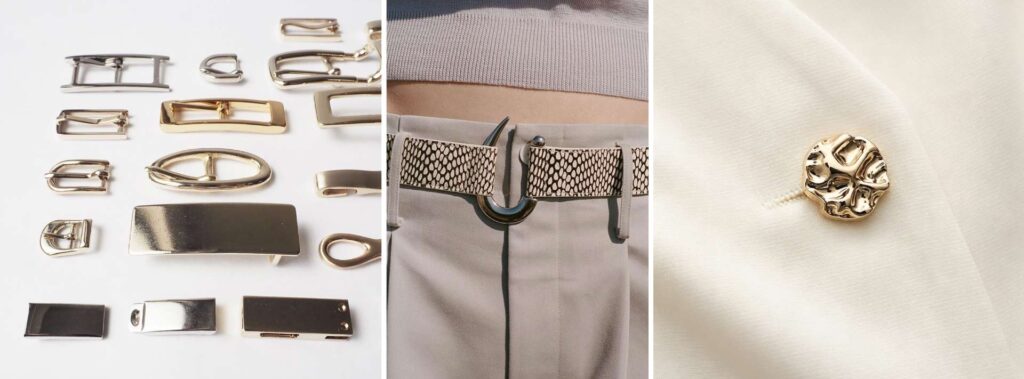
Garment dyeing, enzyme washing, stone washing, bleaching, and other finishing processes can expose metal components to chemicals, moisture, heat, or abrasion. Depending on the materials and process conditions, these exposures may contribute to discoloration, corrosion, staining, or changes in the component’s surface.
YKK’s technical guidance specifically warns that garment-dye chemicals can alter metal zipper components and stain adjacent fabric. Its recommendations include attaching zippers after garment dyeing where appropriate, or testing the proposed combination before production when the zipper must undergo the treatment. Similar precautions apply to certain washing and bleaching processes.
This creates a practical development question: should the hardware be attached before or after the finishing process?
The answer depends on the garment construction, the desired appearance, the component’s specifications, and the treatment itself. Attaching hardware after washing may reduce certain exposure risks, but it can also affect production sequencing, attachment methods, and the intended finished appearance. Some designs deliberately require the hardware to undergo the treatment.
A brand developing a garment-dyed cotton jacket, for example, should not assume that a zipper approved on an untreated sample will retain the same appearance after dyeing. The development team should assess the actual combination of fabric, zipper, dye chemistry, and processing conditions.
Our Garment Sampling: How Deepwear Guides Brands from Concept to Production covers the broader role of sampling and wash trials. The additional consideration here is the relationship between the treatment and the components already selected for the garment.
Developing an outerwear collection with specialized closures or finishing requirements? Contact the Deepwear team to discuss supplier options and sampling requirements before committing to bulk production.
4. Coatings and Performance Finishes Must Suit the Garment
Water-resistant coatings and durable water-repellent (DWR) treatments serve a different purpose from decorative hardware finishes. They influence how a garment handles moisture, while zippers, snaps, and other closures need to perform within the intended construction.
A technical parka, for example, may combine a treated shell fabric, a water-resistant zipper, a storm flap, and sealed seams. Each element has a separate role. A water-resistant zipper alone does not make the entire garment waterproof, and a coated shell does not compensate for unsuitable construction around openings.
The same principle applies to premium casual outerwear. A waxed cotton jacket may use metal hardware selected for its appearance and compatibility with the garment’s intended care conditions. The team still needs to consider how the hardware behaves during finishing, storage, and use.
For brands developing technical products, our guide to The Ultimate Deepwear Guide to Outerwear Manufacturing and Technical Heavyweight Assembly covers functional closures, shell construction, seam sealing, and performance requirements. Our blog on Water-Repellent vs. Water-Resistant: What Brands Need to Know explains the distinction between common moisture-protection approaches.
For the present discussion, the key development task is to verify that the selected components and finishes work together in the intended garment. Requirements should follow the product’s use rather than assuming that every premium jacket needs the same performance specification.
5. Approve the Finished Garment, Not Just Individual Components
A zipper supplier may deliver a component that matches its specification. A dyeing facility may produce the requested colour. A garment factory may assemble the product according to the tech pack. The finished garment can still reveal problems when these processes interact.
For example, a treatment may alter the appearance of metal hardware, a component may sit awkwardly against a bulky seam, or a puller may interfere with the fabric during use. These issues require assessment at the garment level.
Our team helps brands coordinate the relevant sourcing and manufacturing discussions so that component selection, construction requirements, and finishing plans are considered together.
Before bulk production, brands should establish a clear approval process:
- Define the intended result. Document the garment’s appearance, function, materials, and care requirements.
- Confirm component specifications. Record dimensions, materials, finishes, attachment details, and relevant performance requirements.
- Trial the actual combination. Use representative components and materials with the intended washing, dyeing, or finishing process.
- Review the finished sample. Assess visual consistency, closure operation, attachment strength, and any product-specific performance criteria.
- Record the approved standard. Retain appropriate physical references and documented acceptance criteria for production checks.
Testing and inspection answer different questions. Testing assesses performance under defined conditions, while inspection checks whether the product conforms to agreed specifications. Both may be relevant, depending on the garment and its intended use. Our blog, Why Comprehensive Closure Testing Separates High-Quality Apparel from Commodity Goods, examines closure performance in greater detail.
- When Is Custom Hardware Worth the Cost?
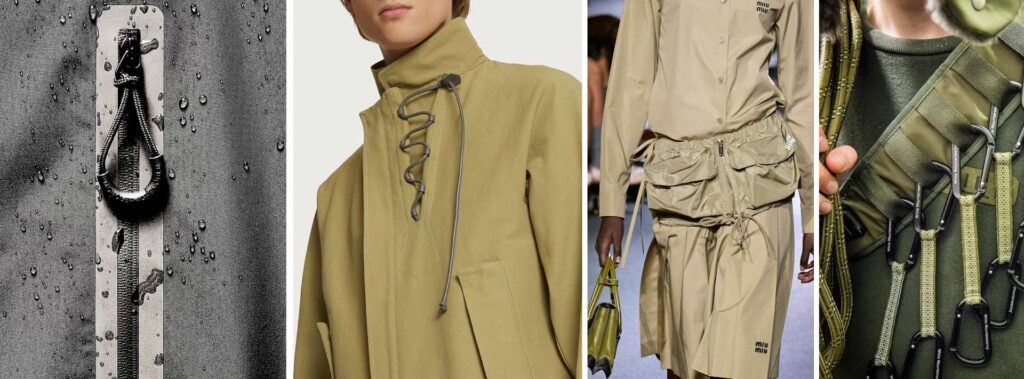
Custom hardware can distinguish a collection, particularly when a component becomes a recognizable design feature. It can also introduce additional tooling costs, minimum order quantities, development time, and supplier coordination.
Brands generally have three routes to consider:
- Stock hardware: Existing components can shorten development when the available designs and finishes meet the brief.
- Customized stock hardware: Logo engraving or selected finish modifications may provide differentiation without developing an entirely new component.
- Fully custom hardware: A new shape, construction, or specialized finish can offer greater design control but may require more development and a larger commercial commitment.
The best route depends on the expected volume, target cost, intended visual impact, lead time, and repeat-order plans. A distinctive puller used across several styles may justify custom development more readily than a decorative component used once in a limited run.
Supplier selection also matters. A supplier capable of producing a component is not necessarily equipped to deliver the required finish, manage the intended quantity, or coordinate effectively with the garment factory.
Thoray d’Haese Sacoor’s approach to sourcing emphasizes matching suppliers to product requirements and assessing factors such as price, quality, service, communication, and timing. Applied to fashion hardware sourcing, that means evaluating the complete development and production arrangement rather than comparing component prices alone.
Our team can help brands explore available suppliers, compare relevant options, coordinate sampling, and clarify commercial requirements. Actual minimums, costs, and lead times depend on the supplier and specification.
Does custom hardware always improve perceived value?
No. Custom hardware can contribute to product differentiation when its design, finish, and proportions suit the garment. Stock components may deliver an equally coherent result at lower cost when they meet the product’s visual and functional requirements.
Deepwear can help brands explore supplier options, compare component specifications and commercial terms, coordinate sampling, and connect hardware requirements with manufacturing considerations.
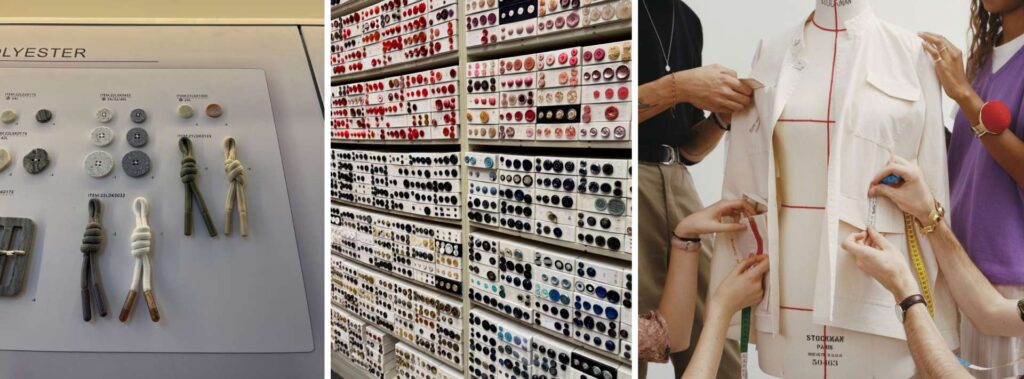
How Deepwear Supports Hardware and Finishing Development
Premium finishing depends on decisions made across several stages of development. The component must suit the design, the supplier must be able to meet the specification, and the manufacturing process must preserve the intended result.
Deepwear connects brands with manufacturers, specialist suppliers, and artisans while supporting sourcing coordination, sampling, and production oversight. Our role is to help translate a product brief into workable sourcing and manufacturing requirements, with attention to the capabilities of the partners involved.
For brands developing premium apparel, the practical starting point is to identify which details are essential to the design, which require technical validation, and which can be achieved with existing components. That makes it easier to compare options and direct development effort toward the details that contribute most to the finished product.
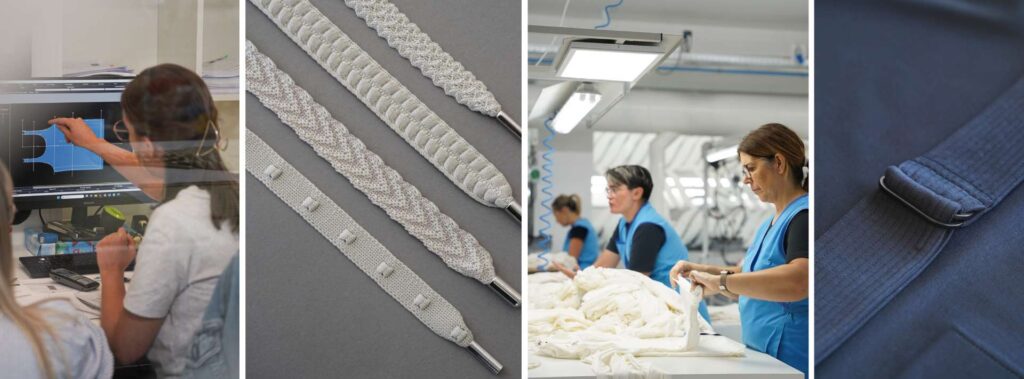
Have questions about specialized trims, custom hardware, or garment finishing? These are only a handful of the considerations our team can help you navigate. Book a consultation with Deepwear to discuss your sourcing requirements, compare suitable suppliers, and plan the next steps before bulk production.