
Prevent product failure and high return rates with comprehensive closure testing. Learn why zippers, buttons, and snaps require specific quality control protocols to distinguish high-quality apparel from commodity goods.
Garment quality is widely claimed across the fashion industry, yet measurable performance and durability remain inconsistent. The global apparel market is saturated with mass-produced garments designed for speed and cost efficiency rather than longevity. This gap is most visible in garment closures—including buttons, snaps, zippers, buckles, toggles, and hook-and-loop fastenings—the components responsible for everyday function and wearability.
In high-volume production environments, closure failure is not accidental. It is the predictable outcome of minimal quality control, low testing thresholds, and short product lifecycles. Buttons detach, snaps loosen, zippers fail prematurely, and hook-and-loop systems lose grip after limited use. In many cases, the closures are no more durable than the fabrics they are attached to, signaling deeper issues in material selection, construction methods, and manufacturing oversight.
More concerning is that these issues are no longer confined to fast fashion. Mid-market and high-end apparel brands—despite premium pricing—are increasingly associated with the same performance failures. The distinction is often branding rather than build quality. Elevated prices are driven by name recognition and marketing, not by stronger trims, better attachment techniques, or more rigorous closure testing.
This is where quality control testing for garment closures becomes a genuine differentiator rather than a technical afterthought.
In this blog we cover:
- Why garment closures are a critical indicator of overall apparel quality
- How closure failures result from minimal testing and weak quality control
- The gap between price perception and real product performance
- Key closure types and why each requires specific testing methods
- How closure testing and quality control help brands build long-term credibility
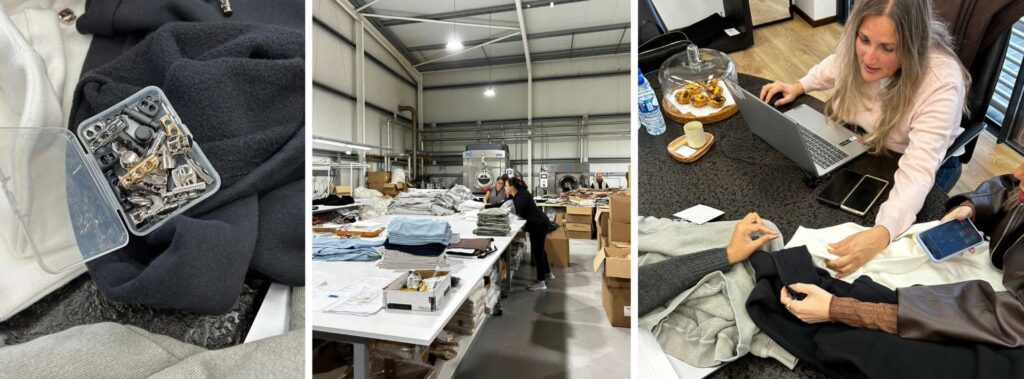
Closures: Small Components, High Impact
Closures perform a functional role that fabrics alone cannot. They are repeatedly stressed, pulled, twisted, and exposed to laundering and daily wear. When closures fail, garments become unusable even if the fabric itself remains intact.
Common closure types include:
- Buttons and snap fasteners
- Zippers
- Hook-and-eye systems
- Hook-and-loop fastenings
- Buckles, toggles, D-rings, clasps, and magnetic closures
Each of these components behaves differently under stress and therefore requires specific testing methods to verify strength, durability, and attachment integrity.
Durability Becomes More Fragile When Closures Are Involved
Most durability studies cited by Forbes—including the Hubbub and University of Leeds research—focused on relatively simple garments such as t-shirts and hoodies, with few or no closures. Jeans were the primary exception, incorporating zippers, buttons, and reinforced seams. That distinction is critical.
If price does not reliably predict durability in garments with limited construction complexity, the risk escalates in garments where performance depends on closures acting as mechanical systems. Closures are not ornamental. They bear load, absorb repeated force, and interact directly with fabric strength, stitching, and reinforcement.
In practical terms, closures introduce additional and compounding failure points that do not exist in closure-free garments.
Closures increase durability risk because they:
- Concentrate stress in small, localized areas
- Depend on proper integration with fabric weight and seam construction
- Are repeatedly pulled, twisted, snapped, zipped, and washed under tension
- Fail early when testing prioritizes appearance over mechanical performance
The implication is straightforward. If even high-priced garments show inconsistent durability outcomes without complex closures—as demonstrated in independent testing—there is no rational basis to assume better performance once closures are introduced. In fact, the opposite is more likely.
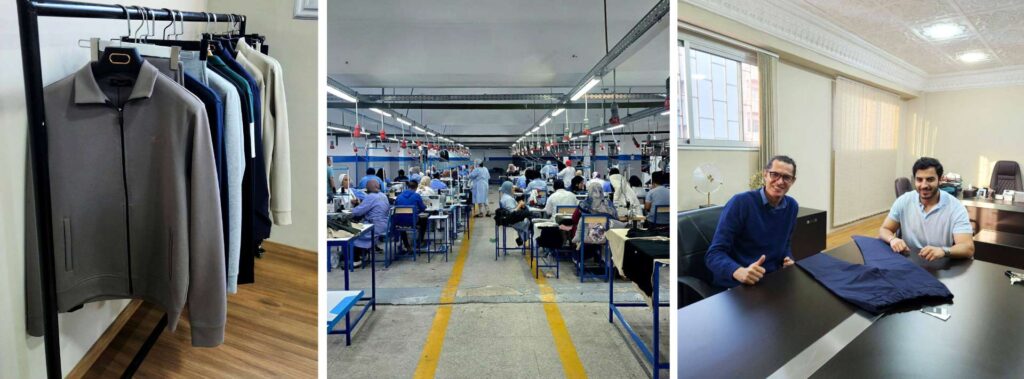
Why Failures Persist Across Price Tiers
Closure-related failures rarely stem from a single defect. They are usually the result of system-level breakdowns, where multiple decisions compound:
- Closures specified without regard to fabric tensile strength
- Insufficient reinforcement at stress zones
- Hardware selected for cost or aesthetics rather than cycle durability
- Testing limited to components instead of the finished garment
When closures are tested in isolation—or not tested under repeated wear and wash conditions—real-world performance suffers. This aligns with findings cited in Forbes: durability outcomes are driven by engineering discipline and testing rigor, not by retail price or brand positioning.
The Market Consequence
From a commercial standpoint, closures amplify risk. Consumers may tolerate fading or minor fabric wear, but functional failure ends usability. A broken zipper, detached button, or failed clasp triggers returns, complaints, and reputational damage disproportionately fast.
In short, if durability is already inconsistent in simpler garments, closures become the stress test that exposes the gap. This is not a fast-fashion versus luxury issue. It is a design, specification, and quality-control issue, and one that brands cannot afford to treat as optional.
Is a $0.05 button risking your $200 jacket? Functional failure is the fastest way to lose a customer. Don’t leave your hardware choices to chance or factory assumptions. [Contact our Quality Control team] to implement rigorous stress testing before your production scales.

Why Closure Testing Matters
Closure testing converts assumptions into measurable performance.
Depending on the closure type, testing may include:
- Pull strength testing to assess attachment security
- Tensile testing to measure resistance under load
- Cycle testing to simulate repeated opening and closing
- Failure analysis to identify whether breakdown occurs in the hardware, stitching, or fabric
These tests reveal whether a garment is built to last or merely designed to look finished at the point of sale.
Closures that pass appropriate testing:
- Reduce the risk of early product failure
- Improve safety, particularly for children’s and functional garments
- Extend garment lifespan
- Protect brand reputation
Quality as a Competitive Advantage for Emerging Brands
For emerging and independent brands, quality control is not a constraint; it is an opportunity.
Without the burden of legacy scale or extreme cost pressure, newer brands can:
- Specify better closures
- Apply consistent testing protocols
- Prioritize durability over short-term savings
- Build trust through repeat performance
In a market where consumers are increasingly skeptical of brand promises, consistency in quality is what establishes credibility. A strong reputation is built through products that hold up over time, not through price positioning alone.
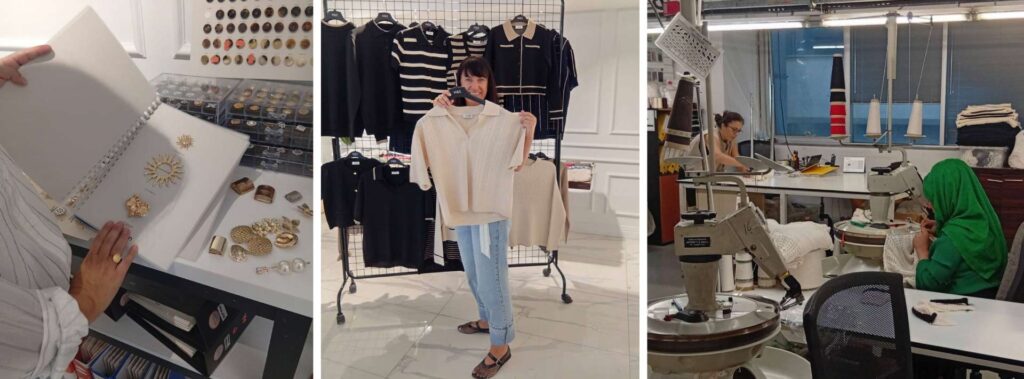
Why do garment closures fail even in expensive clothing?
High price does not guarantee durability. Failures often occur because closures are selected for aesthetics rather than function, or because there is a mismatch between the hardware and the fabric’s strength. System-level testing is required to prevent this.
What specific tests should be done for zippers and buttons?
Standard testing includes “pull strength testing” to check attachment security, “cycle testing” (zipping/unzipping repeatedly) to simulate daily wear, and “tensile testing” to measure resistance under load.
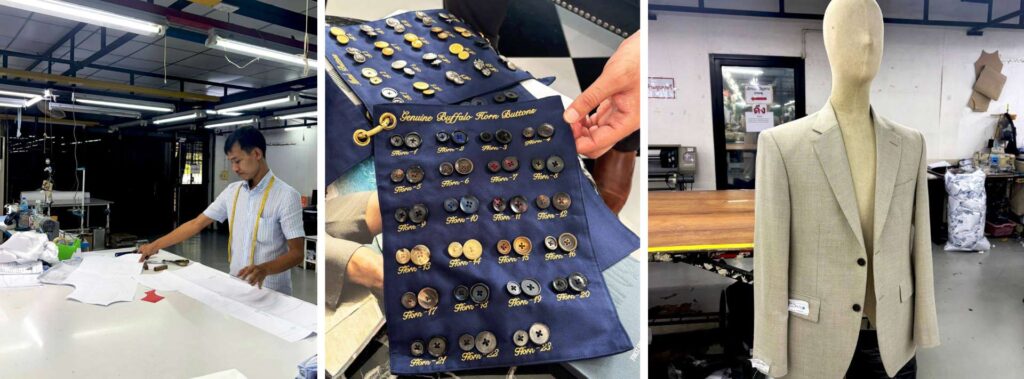
Closing the Loop: Where Quality Is Proven, Not Promised
At Deepwear, quality control is not treated as a final checkpoint. It is integrated throughout the production journey we manage for our partners.
We support brands by handling the operational and technical details that directly impact product performance, allowing brands to focus on creative direction, brand building, and go-to-market strategy.
Our approach includes:
- Pre-production inspection of trims and closures to identify potential issues early
- In-process checks on attachment points and stress areas
- Standard quality control testing to assess closure strength and durability
- Randomized inspections to detect inconsistencies before they scale
- Clear documentation that supports accountability and informed decision-making
By addressing closure performance during development and production, we reduce downstream risks such as product failure, returns, and reputational damage. The result is apparel that performs as intended in real-world conditions.
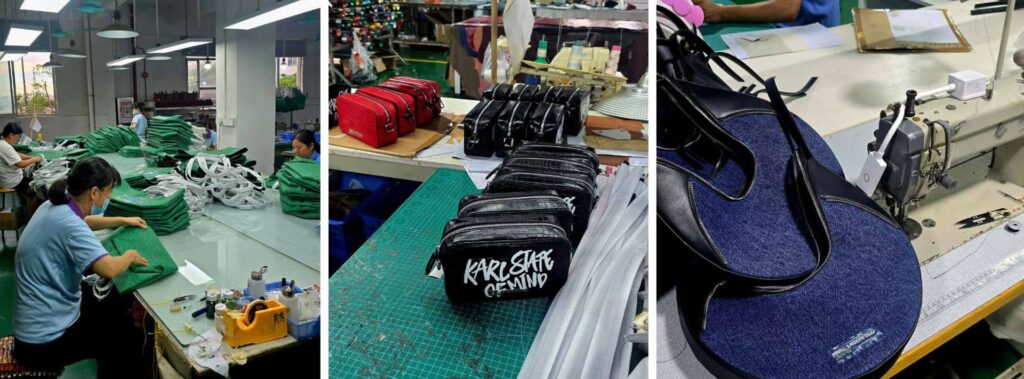
Giving Quality Its Closure
Brands that invest in proper closure testing—and work with partners who take quality control seriously—position themselves to earn trust, loyalty, and long-term relevance. That is where quality finds its closure, and where real value is created.
Define Quality Beyond the Price Tag
Consumers are demanding durability, and closures are the first line of defense. At Deepwear, we integrate inspection and testing into every stage of development, ensuring your trims perform as well as they look. Secure Your Production Quality with Deepwear.