
Learn how to source Solaro Fabric for premium menswear collections. Explore manufacturing countries, MOQs, supplier considerations, and how to bring luxury tailoring to market.
Solaro Fabric has occupied a unique position in luxury tailoring for a very long time. Recognized for its subtle iridescence and heritage appeal, it has become a signature choice for premium spring and summer suiting, particularly among Italian tailoring houses and established menswear brands. While its distinctive appearance attracts designers and consumers alike, bringing a Solaro garment to market requires more than selecting an attractive cloth.
Unlike standard wool suit fabric, Solaro demands careful sourcing, experienced pattern making, and manufacturers with proven expertise in tailored clothing manufacturing. The fabric’s directional weave, structured construction, and finishing requirements make factory selection just as important as fabric selection.
For brands entering premium tailoring or expanding an existing formalwear collection, understanding how Solaro moves from textile mill to finished garment can reduce production risks and improve product consistency.
In this blog, we cover
- What makes Solaro Fabric different from other suiting materials
- Which countries manufacture Solaro garments
- Typical MOQs for sourcing and production
- Common mistakes brands face during manufacturing
- How Deepwear coordinates premium tailoring projects across multiple suppliers
What Makes Solaro Fabric Different From Other Wool Suit Fabrics?
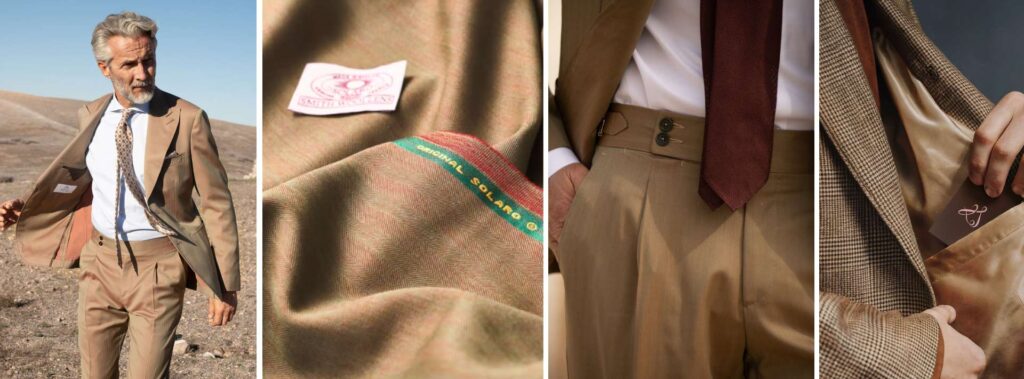
Not all premium suiting fabrics behave the same way during production. While many luxury cloths emphasize softness or drape, Solaro Fabric is defined by its unique construction and visual characteristics. Deepwear founder and CEO Thoray d’Haese Sacoor notes that fabrics like Solaro Fabric demonstrate why successful tailored clothing manufacturing depends on more than material selection alone. Pattern development, fabric handling, pressing techniques, and factory expertise all influence how premium textiles perform in the finished garment.
Its most recognizable feature is the use of contrasting warp and weft yarns. Traditionally, the face of the fabric appears beige or khaki, while the reverse incorporates a reddish tone. As light reflects across the twill weave, the cloth produces a subtle optical color shift that has become synonymous with classic tailoring.
Beyond aesthetics, Solaro offers several practical advantages for premium menswear.
| Feature | Benefit |
| Dual-colored warp and weft | Creates the signature iridescent appearance |
| Twill construction | Improves durability and structure |
| Breathable worsted wool | Comfortable during warmer seasons |
| Medium fabric weight | Suitable for spring, summer, and early autumn |
| Premium heritage | Adds value to luxury tailoring collections |
These characteristics position Solaro as a premium luxury suit fabric, but they also introduce manufacturing challenges that standard suiting materials may not present.
Because the fabric has a directional twill, pattern pieces must be aligned consistently throughout production. Even slight inconsistencies in cutting can affect how light reflects across finished panels, particularly on jackets with large uninterrupted surfaces.
Similarly, pressing techniques require experienced operators. Excessive heat or improper finishing may alter the fabric’s appearance or reduce the crisp silhouette expected from luxury tailoring.
For this reason, brands sourcing Solaro should evaluate not only the textile supplier but also the manufacturer’s technical capabilities.
If you’re still comparing premium suiting materials, readers may also benefit from Deepwear’s guide on different fabric types and how textile selection influences garment performance.
Where Is Solaro Fabric Produced?
One of the biggest misconceptions surrounding Solaro is that the country weaving the fabric is always the same country manufacturing the garment. In reality, these are often separate stages of the supply chain.
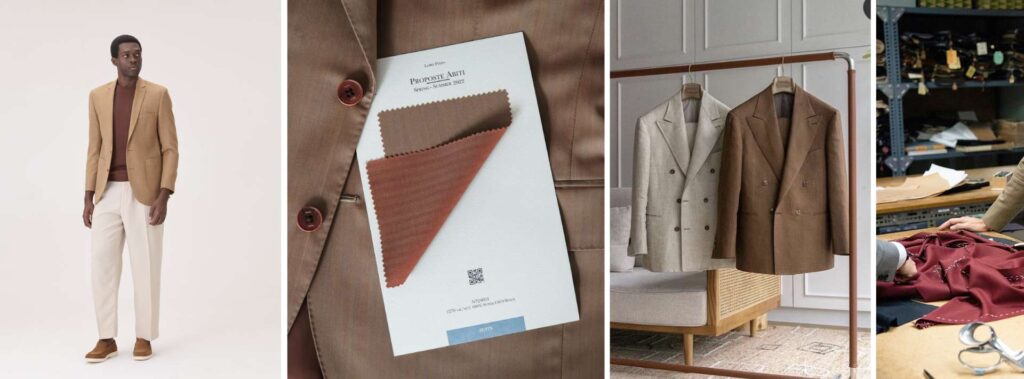
Many luxury brands purchase Solaro from established European mills before shipping the fabric to specialist garment manufacturers elsewhere. This allows brands to combine premium textiles with factories that best match their production requirements, budget, and target market.
The following countries play different roles within the Solaro supply chain.
| Country | Strength | Typical Use |
| Italy | Luxury textile mills | Premium and designer suits |
| United Kingdom | Heritage weaving expertise | Traditional tailoring |
| Portugal | High-quality garment manufacturing | Luxury ready-to-wear |
| Turkey | Competitive pricing with tailoring expertise | Premium tailoring collections |
Italy remains the benchmark for premium wool suit fabric production. Several internationally respected mills produce Solaro-style fabrics used by luxury fashion houses and independent tailoring brands alike.
The United Kingdom also maintains a strong heritage in traditional suiting textiles, supplying classic fabrics favored by bespoke tailors.
However, weaving premium cloth does not necessarily mean manufacturing garments in the same location.
Many brands source Italian fabric while producing garments in Portugal or Turkey, where experienced factories specialize in formalwear manufacturing and structured jackets. Separating textile sourcing from garment production allows businesses to balance craftsmanship, lead times, and production costs without compromising fabric quality.
This sourcing strategy has become particularly valuable for emerging private label menswear brands seeking access to premium materials without manufacturing entirely in high-cost markets.
Readers interested in evaluating overseas suppliers may also find value in our blog on Supplier Evaluation in Fashion Manufacturing, which explains how brands assess production partners before committing to bulk orders.
Manufacturing Solaro Garments: What Brands Should Know
Choosing premium fabric is only the beginning. Successfully manufacturing Solaro garments depends on the technical ability of the factory producing them.
Unlike knitwear or casual woven garments, tailored jackets and trousers require multiple construction stages that influence both appearance and fit. Solaro adds another layer of complexity because its distinctive weave must remain visually consistent throughout the finished garment.
Several production factors require particular attention such as:
1. Pattern matching
Although Solaro does not feature printed motifs or large checks, maintaining a consistent fabric direction across garment panels is essential. Misaligned components can produce uneven color reflection under different lighting conditions.
2. Directional twill
Every pattern piece should be cut according to the same grain direction. Rotating pieces simply to improve fabric utilization may reduce material waste, but it can also compromise the finished appearance of the garment.
3. Pressing techniques
Luxury tailoring relies heavily on pressing throughout construction. Skilled operators shape lapels, collars, sleeves, and canvassing using controlled steam and pressure. Poor pressing can flatten the fabric or distort the garment’s intended silhouette.
4. Structured tailoring
Factories manufacturing premium jackets should understand canvassing, chest construction, shoulder shaping, and other tailoring techniques that differentiate luxury garments from fused mass-market products.
5. Fabric handling
Premium Solaro Fabric deserves careful handling throughout cutting, sewing, and finishing. Proper storage, spreading, and inspection help minimize defects before production progresses.
6. Skilled sewing operators
Experience matters. Operators accustomed to casual apparel may not have the technical background required for luxury tailoring. Brands should prioritize manufacturers with demonstrated expertise in menswear manufacturing, particularly those experienced in jackets, trousers, and structured formalwear.
These technical considerations explain why not every garment factory is equipped to manufacture Solaro successfully. While many facilities can sew a jacket, far fewer possess the specialized knowledge needed to maintain the quality standards expected from premium tailoring.
Planning a tailored menswear collection? Contact the Deepwear team to discuss your sourcing and manufacturing requirements.
How Deepwear Matches Solaro Fabric Projects with the Right Manufacturing Partner
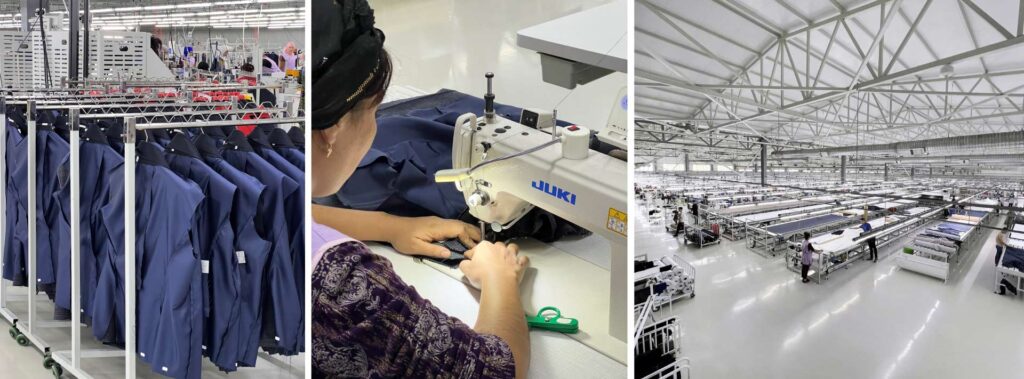
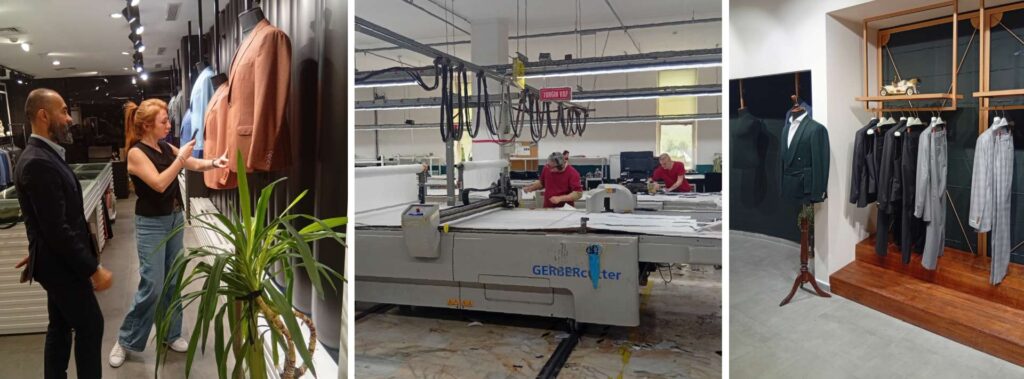
Unlike standard apparel production, manufacturing garments from Solaro Fabric often involves coordinating multiple specialists across different countries. The fabric may come from an Italian textile mill, while garment production takes place in Portugal or Turkey, and final quality inspections occur before international shipping.
Rather than relying on a single supplier, Deepwear helps brands build a supply chain based on the specific goals of each collection.
For every project, our team evaluates factors such as:
- Brand positioning
- Target retail price
- Expected production volume
- Preferred lead times
- Construction requirements
- Logistics strategy
For example:
| Brand Goal | Deepwear Strategy |
| Luxury European tailoring | Italian fabric + Portuguese manufacturing |
| Heritage craftsmanship | British cloth + Italian production |
| Premium quality with controlled costs | Italian fabric + Turkish manufacturing |
| Scalable global production | European fabric + Vietnam or China manufacturing |
Instead of recommending one country for every client, we identify the combination of mills and manufacturers that best fits each brand’s objectives.
Because Deepwear maintains relationships with manufacturers across Europe and Asia, brands gain access to a wider network without having to source, audit, and coordinate every supplier independently.
Typical MOQs for Solaro Fabric Projects
Tailored clothing manufacturing often operates on lower minimum order quantities (MOQs) than mass-market apparel because of its higher price point and smaller production runs.
That said, MOQs depend on two separate factors: the fabric supplier and the garment manufacturer. A mill may require a large order for a custom weave, while a tailoring factory may accept relatively small production quantities if the fabric has already been sourced.
| Production Stage | Typical MOQ |
| Stock Solaro Fabric purchase | 3–30 metres |
| Custom woven Solaro | 300+ metres per color |
| Sampling | 1–3 garments |
| Bulk production | 20–100+ garments |
For emerging private label menswear brands, this separation creates valuable flexibility. A business can purchase stock fabric from an established mill while partnering with a manufacturer willing to produce a smaller seasonal collection.
Lead times should also be considered. While stock fabrics are generally available immediately, custom developments require additional weaving, dyeing, inspection, and finishing before production can begin.
Understanding these distinctions helps brands budget more accurately and avoid unnecessary delays during development.
Planning your first premium collection? Deepwear works with brands to identify suppliers that match both production volume and business goals, helping reduce unnecessary inventory while maintaining premium quality.
Choosing the Right Manufacturing Country
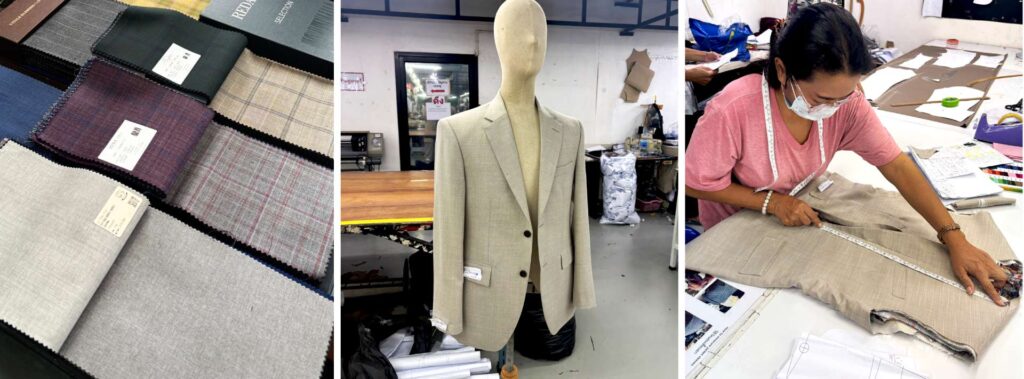
There is no single “best” country for producing garments made from Solaro Fabric. The right manufacturing partner depends on your brand’s priorities, whether those involve craftsmanship, scalability, pricing, or speed to market.
| Country | Best For | Considerations |
| Italy | Luxury craftsmanship and heritage tailoring | Higher production costs, smaller specialist factories |
| Portugal | Premium European manufacturing | Excellent quality with competitive European pricing |
| Turkey | Cost-quality balance | Strong tailoring expertise and relatively short lead times to Europe |
| China | Large-scale garment manufacturing | Wide range of capabilities; careful factory selection is essential |
| Vietnam | Premium export manufacturing | Suitable for brands scaling production with consistent quality |
Looking beyond price? Deepwear helps brands compare manufacturing partners based on technical expertise, production capacity, quality standards, and long-term scalability, not just unit cost. Start a conversation with our team.
Common Mistakes Brands Make When Working With Solaro Fabric and How Deepwear Helps Prevent Them
Working with Solaro Fabric requires more than selecting a premium textile. Every decision, from sourcing and sampling to factory selection and finishing, influences the quality of the final garment. Because Solaro combines a distinctive twill construction with luxury tailoring techniques, even small production oversights can become costly during bulk manufacturing.
At Deepwear, our role extends beyond connecting brands with suppliers. We help clients identify potential risks before production begins, ensuring that fabric sourcing, supplier evaluation, and garment manufacturing are aligned with the technical requirements of premium tailoring.
1. Selecting Manufacturers with Proven Tailoring Expertise
Not every apparel factory is equipped for tailored clothing manufacturing. A facility experienced in casualwear may not have the machinery, pressing equipment, or skilled operators required to construct structured jackets and formal trousers.
Deepwear evaluates manufacturing partners based on their experience with premium menswear, construction methods, production capabilities, and quality management systems. Rather than recommending a factory based solely on cost, we match brands with manufacturers whose expertise aligns with the collection’s technical requirements.
2. Verifying Premium Solaro Fabric Sources
Not every fabric marketed as “Solaro” follows the traditional construction that gives the cloth its distinctive appearance. Variations in fibre composition, weave structure, weight, and finishing can produce very different results.
Deepwear works with trusted textile partners to help brands source fabrics that meet their quality expectations while ensuring compatibility with the intended manufacturing process.
3. Optimizing Production Before Bulk Manufacturing
Because Solaro Fabric has a directional twill, marker planning and pattern placement require careful consideration. Maximizing fabric utilization without accounting for grain direction can affect the garment’s visual consistency.
During development, Deepwear coordinates technical sampling and production planning with manufacturing partners to identify potential issues before bulk production begins, reducing unnecessary material waste and costly revisions.
4. Maintaining Quality Throughout Construction
Premium tailoring depends on consistent execution across every production stage. Pressing, canvassing, stitching, and finishing all contribute to the structure and appearance of the final garment.
Deepwear oversees quality throughout the manufacturing process, working with production teams to verify that garments meet agreed specifications before moving to the next stage.
5. Coordinating Complex International Supply Chains
Many menswear manufacturing projects involve multiple suppliers. The fabric may be woven in Italy, garments assembled in Portugal or Turkey, and finished products shipped to another market entirely.
Rather than requiring brands to coordinate these suppliers independently, Deepwear manages communication between textile mills, manufacturers, quality control teams, and logistics partners. This integrated approach helps reduce delays, improve transparency, and maintain consistent quality across every stage of production.
Ultimately, premium formalwear manufacturing depends on far more than sourcing an exceptional fabric. It requires experienced partners capable of managing every step of the supply chain. By combining supplier evaluation, production management, quality assurance, and global sourcing expertise, Deepwear helps brands transform premium materials like Solaro Fabric into finished garments that meet the expectations of today’s luxury menswear market.
Is Solaro Fabric only suitable for bespoke tailoring?
No. Although Solaro Fabric has long been associated with bespoke tailoring, it is now widely used by luxury ready-to-wear and private label menswear brands. With the right manufacturing partner, Solaro can be incorporated into seasonal collections, capsule releases, and commercial formalwear lines. The key is selecting factories experienced in tailored clothing manufacturing and structured garment construction rather than relying on general apparel manufacturers.
Bring Premium Tailoring to Market with Confidence
Launching a collection made from Solaro Fabric requires more than sourcing a premium textile. Success depends on selecting experienced manufacturing partners, understanding realistic MOQs, coordinating suppliers across multiple countries, and maintaining consistent quality throughout production.
Whether your brand is developing its first tailored collection or expanding an established menswear line, working with the right sourcing partner can help streamline development and reduce production risk.
Deepwear supports brands throughout the entire journey, from sourcing premium textiles and conducting supplier evaluation to coordinating garment manufacturing, quality assurance, and global logistics. If you’re planning your next formalwear manufacturing project, get in touch with our team to discuss your project and discover how we can support your next collection.