
India is the strategic sourcing hub for 2026. Explore how the looming EU-India FTA, low MOQs, and vertical integration are reshaping the market. Scale your brand with Deepwear’s on-the-ground expertise.
For much of the past decade, India has been widely recognized as a capable but structurally disadvantaged manufacturing partner—particularly for European fashion brands. Despite its scale, skilled workforce, and deeply embedded textile ecosystem, Indian apparel exports operated under a persistent cost handicap driven not by production inefficiency, but by trade policy.
By 2026, however, this context has materially shifted. India stands as one of the most strategically important garment and accessories manufacturing hubs globally. With a deeply rooted textile heritage, a vast skilled workforce, and increasing government support for manufacturing and exports, India continues to strengthen its position as a preferred sourcing destination for brands across the US, Europe, and emerging markets. India’s apparel and textile sector contributes approximately 2.3% to the country’s GDP and employs over 45 million people directly, making it one of the largest employment-generating industries in the country. The sector spans the entire value chain—from natural fiber production (cotton, silk, wool, jute) to yarn, fabric, garment manufacturing, embellishments, leather goods, and accessories.
In this blog we cover:
- India’s garment and accessories manufacturing position in 2026
- Key strengths across apparel, accessories, and artisanal production
- Structural challenges brands face when sourcing in India
- MOQ flexibility and trims availability for emerging and established brands
- Trade dynamics and the impact of shifting tariff structures
- Why professional sourcing partners like Deepwear are critical for execution, compliance, and scale
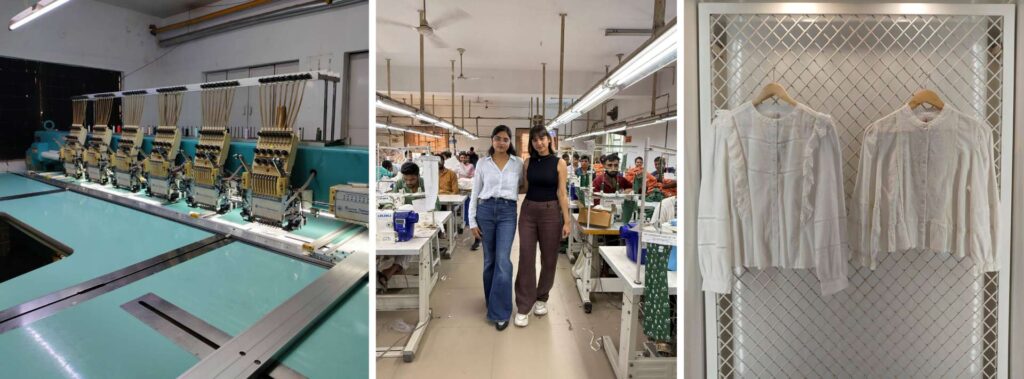
Product Categories and Capabilities
| Segment | Key Products |
| Womenswear | Dresses, tops, skirts, blouses, embroidered garments |
| Menswear | Shirts, casualwear, tailored garments, ethnic-fusion styles |
| Kidswear | Cotton-based apparel, printed and embellished styles |
| Lifestyle Apparel | Resortwear, boho fashion, loungewear, sleepwear |
| Sustainable Apparel | Sustainable and organic cotton collections |
| Artisanal Apparel | Handcrafted and artisanal garments |
| Accessories | Leather bags, belts, wallets; scarves, shawls, stoles; embroidered accessories |
| Jewelry & Footwear | Brass, silver, gold-plated jewelry with semi-precious stones; handcrafted leather footwear |
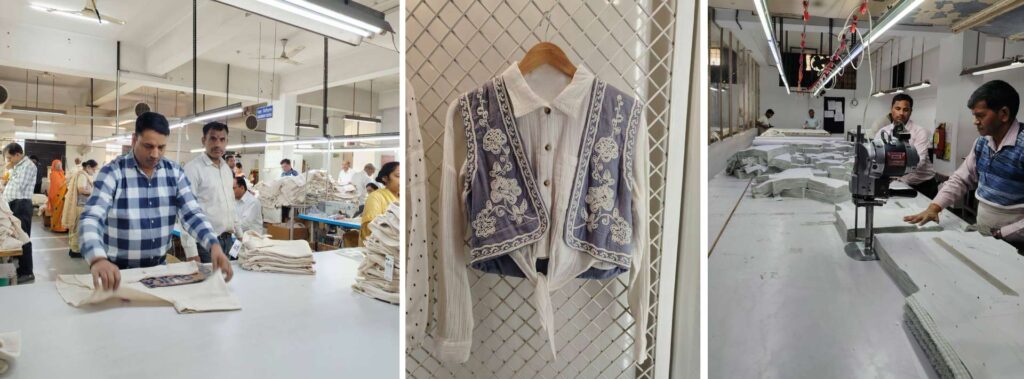
India is also globally recognized for specialized techniques that underpin its differentiation, including hand embroidery (zardozi, aari, kantha), block printing, screen and digital printing, handloom weaving, natural dyeing, beading and embellishment, and leather craftsmanship.
This combination of industrial scale and artisanal skill uniquely positions India for brands seeking differentiated products rather than purely commoditized manufacturing.
Need low MOQs without sacrificing quality? India’s flexibility is its superpower, but finding reliable factories for small batches can be a minefield. Don’t risk your deposit on unverified suppliers. Contact our India Sourcing Team to connect with vetted manufacturers who welcome emerging brands.
Key Strengths of Manufacturing in India
India’s position as a global apparel and textile manufacturing hub is anchored in four structural strengths: workforce depth, vertical integration, cost-value balance, and sustainability potential. Together, these factors make India highly attractive for brands seeking flexibility, craftsmanship, and long-term sourcing stability.
1. Workforce and Skill Availability
India has one of the largest and most skilled labor pools in the global fashion supply chain. Many manufacturing skills are generational, particularly in weaving, embroidery, tailoring, and leatherwork, giving Indian factories a technical depth that is difficult to replicate elsewhere.
Key workforce advantages include:
- Strong sampling and prototyping capabilities
- Ability to execute complex constructions and embellishments
- High adaptability to design revisions during development
- Competitive labor costs compared to Europe and parts of Southeast Asia
This skill density makes India especially well-suited for development-heavy collections, differentiated designs, and brands that require close collaboration between design and production.
2. Vertical Integration and Raw Material Access
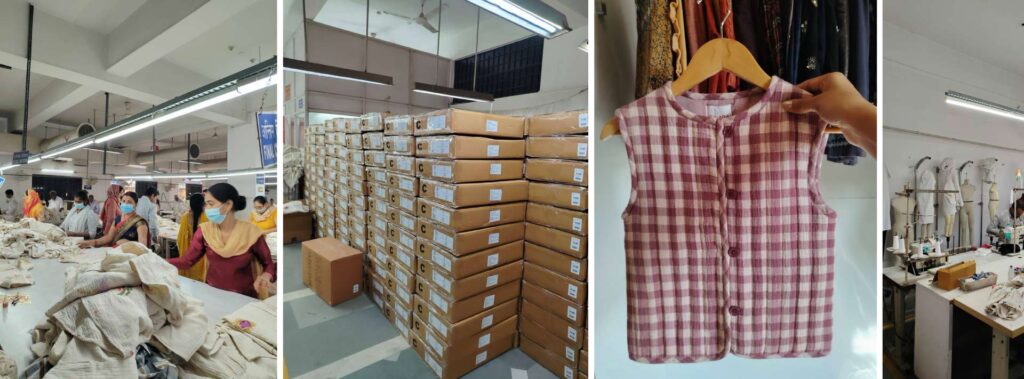
India is one of the few apparel manufacturing countries with access to nearly the entire textile value chain domestically. This includes raw cotton production, spinning and weaving mills, dyeing and finishing units, garment manufacturing, and trims and accessories.
When properly coordinated, this level of vertical integration:
- Reduces dependency on imported raw materials
- Improves control over lead times and quality
- Enables faster sampling and production turnaround
- Supports supply-chain transparency and traceability
The benefit is structural, but it is not automatic. Vertical integration delivers value only when production planning, material sourcing, and factory coordination are actively managed.
3. Cost Competitiveness and Value for Money
India offers strong cost advantages in specific manufacturing scenarios rather than across all product categories. It performs particularly well in:
- Labor-intensive styles
- Embellished and handcrafted garments
- Small to mid-volume production runs
- Development-heavy or design-led collections
India is not always the cheapest sourcing destination. However, for brands prioritizing quality, craftsmanship, flexibility, and design execution, it delivers a high value-to-cost ratio that often outweighs marginal price differences.
4. Sustainability and Compliance Potential
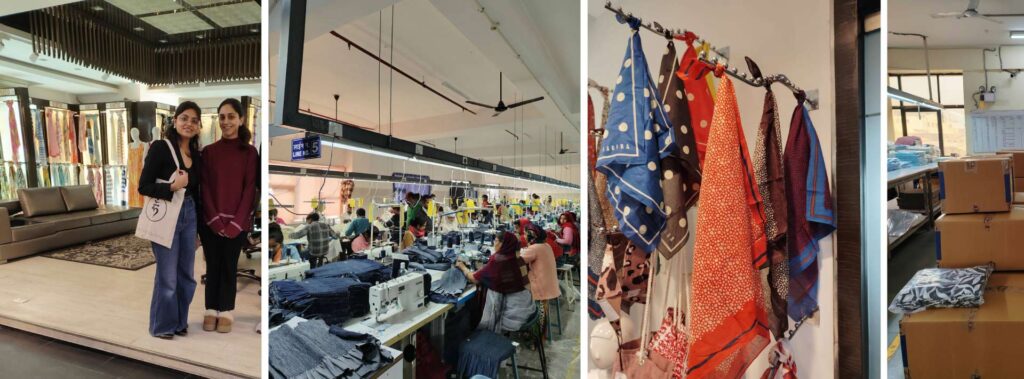
India plays a significant role in global sustainable apparel manufacturing. It is a leading producer of organic cotton, recycled textiles, and handloom-based, low-impact production.
Many export-oriented factories are increasingly compliant with international standards, including:
- GOTS
- GRS
- BSCI
- SEDEX
- ISO certifications
With the right sourcing partner, brands can build credible, auditable, and scalable sustainable supply chains in India rather than relying on superficial sustainability claims.
Weaknesses and Structural Challenges
India’s manufacturing strengths coexist with structural challenges that brands must understand clearly. These issues do not negate India’s potential, but they materially affect outcomes when unmanaged.
1. Fragmented Factory Ecosystem
Unlike China or Vietnam, India’s manufacturing landscape is highly fragmented. It consists largely of small to mid-sized factories with:
- Varying compliance standards
- Inconsistent management systems
- Uneven production discipline
Without local oversight and factory vetting, brands face increased risk of delays, quality inconsistencies, and misaligned expectations.
2. Lead Time Variability
Lead times in India can fluctuate due to structural and seasonal factors, including:
- Infrastructure gaps
- Port congestion
- Inconsistent raw material availability
- Seasonal disruptions such as monsoons and major festivals
These variables can affect production schedules unless timelines are actively monitored and buffers are built into planning.
3. Compliance and Documentation Gaps
Compliance levels vary widely across factories. While fully export-ready facilities exist, many require:
- Strong monitoring and follow-up
- Clear process discipline
- Robust documentation systems
Brands unfamiliar with the Indian manufacturing context often underestimate the operational work required to maintain compliance consistency.
4. Communication and Cultural Gaps
Misaligned expectations, unclear costing, and indirect communication styles can lead to misunderstandings—especially for overseas brands unfamiliar with the Indian business context.
MOQ Flexibility & Trims Availability in India
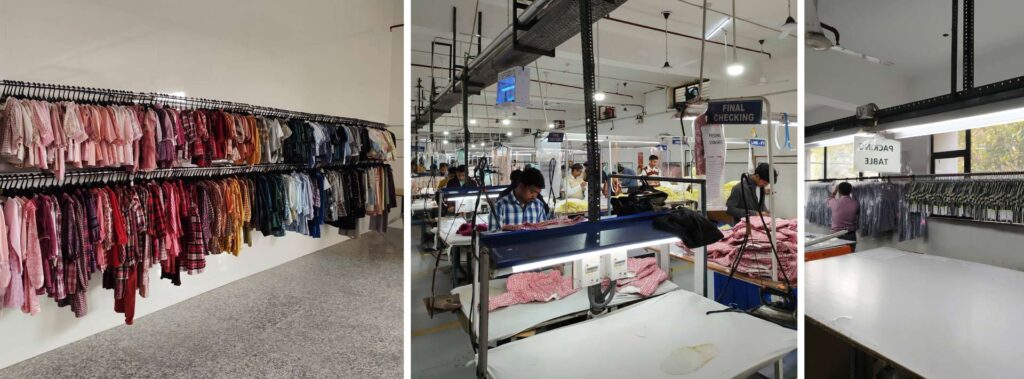
India’s manufacturing ecosystem is widely regarded for its low and flexible minimum order quantities (MOQs), making it particularly attractive for emerging brands, capsule collections, and development-heavy lines in 2026. Compared to many large-scale manufacturing hubs, Indian factories are generally more open to smaller production runs and iterative development.
Typical MOQs by category include:
- Woven garments: 100–300 pieces per style and color
- Embroidered or handcrafted styles: 50–150 pieces
- Knitwear: 300–500 pieces
- Leather accessories: 50–200 pieces
- Jewelry: as low as 30–50 pieces per design
This flexibility enables brands to execute pilot runs, market-testing orders, and limited capsules without committing to large production volumes upfront. However, lower MOQs often come with trade-offs, including higher per-unit costs, longer sampling and development cycles, and a greater need for hands-on coordination throughout production.
Trims & Materials Availability
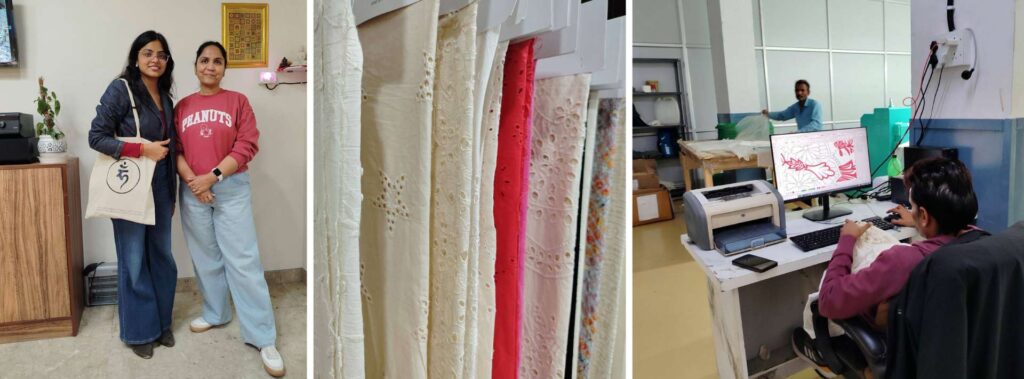
India offers strong local access to a wide range of trims and base materials, which supports both cost control and design experimentation. Commonly available domestic materials include:
- Cotton fabrics (woven and knit)
- Silks, linens, and blended textiles
- Embroidery threads and embellishment materials
- Buttons, zippers, labels, and packaging trims
- Leather hides and jewelry components
More specialized inputs—such as technical fabrics, high-performance synthetics, premium hardware, and certain recycled or specialty materials—are often imported or semi-imported. As a result, lead times for trims and materials can vary significantly if not planned early.
For brands producing in India, centralized trim management, early material confirmation, and supplier consolidation are critical to maintaining reliable timelines and avoiding downstream production delays.
Trade Dynamics in 2026 and Market Implications
Trade policy has historically shaped India’s position within European sourcing strategies. In the absence of an India–EU Free Trade Agreement (FTA), Indian apparel, textiles, leather goods, and accessories entering the EU have been subject to import duties of approximately 9–12%. This tariff structure increased landed costs for European brands and structurally disadvantaged India relative to FTA-beneficiary sourcing countries.
By 2026, this framework is shifting. The proposed India–EU FTA is expected to reduce or eliminate import duties on apparel and textile products, with projected tariff levels moving toward 0–5% or zero, depending on product category. The agreement also emphasizes closer alignment on sustainability standards, compliance frameworks, and supply-chain transparency, reflecting EU regulatory priorities.
What the Agreement Implies for the Market
For European fashion brands and sourcing teams, the implications are practical rather than theoretical:
- Lower landed costs for Indian-made apparel and accessories without changes to factory pricing
- Improved price competitiveness versus FTA-advantaged sourcing countries
- Greater flexibility in sourcing decisions, reducing over-reliance on single-country supply chains
- More viable long-term sourcing partnerships with Indian manufacturers as tariff risk declines
- Stronger alignment with EU sustainability and compliance expectations, supporting regulatory readiness
As tariffs decline, sourcing decisions shift away from duty arbitrage and back toward operational fundamentals: execution quality, lead-time reliability, compliance consistency, and supplier relationships. This shift does not simplify the Indian manufacturing ecosystem. It raises the stakes for getting it right.
The Difference Professional Sourcing Makes
India in 2026 is no longer defined by low-cost manufacturing alone. It is a strategic sourcing destination for fashion brands seeking flexibility, craftsmanship, sustainability, and long-term growth.
That said, India rewards preparation and penalizes shortcuts. Brands that enter the market without local expertise frequently encounter:
- Production delays
- Quality inconsistencies
- Uncontrolled cost escalation
Brands working with Deepwear gain the opposite advantage:
- Operational structure within a fragmented manufacturing ecosystem
Deepwear brings clarity and coordination to India’s decentralized factory landscape by aligning vetted suppliers, production planning, and compliance standards with brand requirements.
- Cost and process transparency in a complex sourcing market
Through standardized workflows, local oversight, and controlled material sourcing, Deepwear minimizes hidden costs and improves visibility across pricing, timelines, and production decisions.
- Confidence to scale sourcing responsibly
By maintaining quality control, compliance discipline, and long-term supplier alignment, Deepwear enables brands to scale production in India without sacrificing consistency or brand integrity.
In a global apparel manufacturing landscape shaped by volatility and regulatory pressure, India—when professionally managed through Deepwear—offers resilience, differentiation, and durable long-term value.
Deepwear’s Presence in India: Powered by People & Regional Expertise
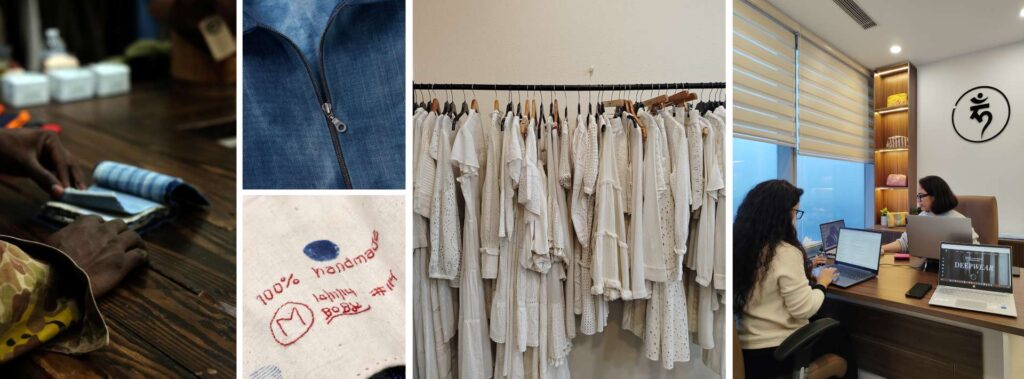
Deepwear’s strength in India is built on a powerful combination of local presence, a highly skilled team, and deep regional manufacturing knowledge. With two strategic offices — one in Delhi (NCR) and one in Mumbai — Deepwear is positioned at the heart of India’s most important fashion and manufacturing hubs.
Our on-the-ground teams work closely with factories, artisans, and suppliers to ensure smooth execution, consistent quality, and transparent communication from design development through final production. This local footprint allows us to move faster, solve problems in real time, and build long-term, trusted partnerships across the supply chain.
India’s manufacturing excellence is shaped by specialized regional clusters, each known for unique craftsmanship and technical capabilities. Deepwear connects brands directly to the right region for the right product:
- Chennai & Tamil Nadu – Renowned for premium leather goods and footwear craftsmanship
- Tirupur – India’s knitwear capital, specializing in jerseys, T-shirts, loungewear, and sustainable cotton programs
- Jaipur – A global center for jewelry, block printing, embroidery, and artisanal handwork
- Delhi / Noida / Gurgaon (NCR) – Export-driven woven garments, tailoring, and structured apparel with large-scale production capacity
By uniting a strong local team with this regional expertise, Deepwear transforms India’s complex manufacturing landscape into a clear, reliable, and creative sourcing destination for global brands.
We don’t just source in India — we unlock its full potential through people, process, and place.
Navigate the Complexity, Harvest the Value
India offers unmatched craftsmanship and value, but its fragmented ecosystem requires local guidance. Deepwear acts as your operational backbone, ensuring compliance, quality, and timely delivery. Start Sourcing in India with Deepwear.