
A practical, sourcing-focused look at alternative leathers in 2026. From biofabrication to recycled leather, explore what actually scales, with MOQ benchmarks and real supply chain insights.
The idea of a “dinosaur leather bag” has gained attention in recent years. In April 2026, a lab-grown “T. rex leather” handbag was unveiled in Amsterdam, developed using reconstructed dinosaur protein sequences and advanced bioengineering techniques. The piece, presented as a luxury prototype, is expected to sell for hundreds of thousands of euros and serves as a proof of concept for future materials development, according to NL Times.
The concept is grounded in real science. Researchers can reconstruct fragments of ancient proteins, and biotech companies are now able to grow collagen in controlled environments. Designers then translate these developments into high-end material applications, positioning them as the future of luxury.
It is a compelling narrative. It brings together science, rarity, and innovation in a way that is difficult to ignore.
However, it does not reflect how products are actually made.
A material existing in a lab does not mean it can function in a supply chain. A prototype does not translate into production. A concept does not guarantee consistency, scalability, or delivery.
For most brands, the question is not whether a material can be created. The question is whether it can be:
- Produced consistently
- Sourced at scale
- Integrated into manufacturing
- Delivered within timelines
As explored in our work on leather and its alternatives, the industry is not defined by isolated breakthroughs. It is shaped by materials that can move through real production environments while maintaining performance and reliability.
The “dinosaur bag” is not the future of leather, but it is a useful example of how quickly the conversation can drift away from what is actually usable at scale.
In this blog we cover:
- The reality behind lab-grown and biofabricated leather, including why concepts like the “dinosaur leather bag” remain far from scalable production
- The key constraints shaping material viability today: scale, cost, supply chain integration, and compliance
- How minimum order quantities (MOQs) impact material selection across major manufacturing regions
- What actually works in 2026, including recycled leather, plant-based alternatives, and optimized leather sourcing
- How brands can build a scalable material strategy that balances innovation, durability, and production realities
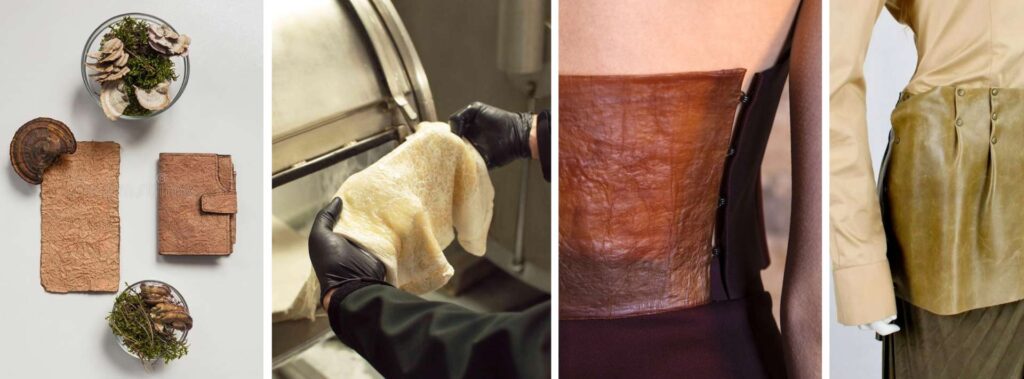
Why Biofabricated Leather Is Not Commercially Viable Yet
Biofabricated leather is not hypothetical. It already exists in multiple forms.
Companies like The Organoid Company have demonstrated that collagen, the core structural protein in animal leather, can be produced through engineered processes. Instead of animal hides, collagen is grown using microbes such as yeast, then processed into a leather-like material.
From a technical standpoint, this is a significant development. It allows:
- control over texture, density, and thickness
- production independent of animal supply
- integration with existing finishing processes
In controlled conditions, the material can even be customized to mimic different types of leather.
However, this is where the distinction between technical feasibility and commercial viability becomes critical.
The Three Constraints That Define Reality
1. Production Scale Remains Limited
Even leading companies in this space are still operating between research, pilot production, and early-stage commercialization.
Biofabricated leather has historically been produced in small batches, with companies gradually scaling from laboratory volumes to pilot facilities.
More broadly, academic and industry research consistently identifies scalability as a primary bottleneck, with many bio-based materials not yet optimized for mass production.
This creates a structural limitation:
- supply is inconsistent
- lead times are unpredictable
- large-volume orders are difficult to fulfill
For most brands, this alone is disqualifying.
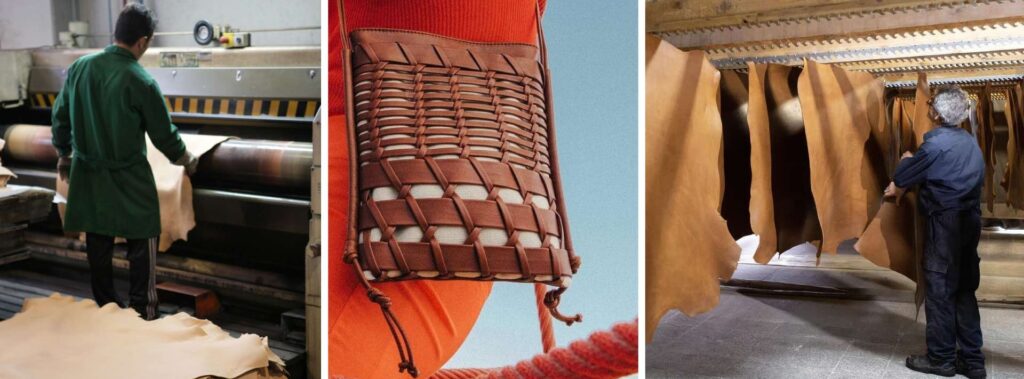
2. Cost Structure Is Still Unfavorable
Biofabrication requires:
- specialized equipment
- controlled environments
- highly skilled technical processes
These factors translate directly into cost.
Lab-grown and microbial leather alternatives remain more expensive than both traditional leather and synthetic options, largely due to infrastructure and production complexity.
Until economies of scale are achieved, this pricing gap will persist.
In practical terms:
- viable for experimental or luxury positioning
- not viable for standard production lines
3. Supply Chain Integration Is Incomplete
Even when materials are technically compatible with existing processes, integration is not automatic. Some newer materials are being designed to fit into traditional tannery systems, which is a step forward. However, integration requires more than compatibility. It requires:
- consistent global supply
- standardized quality
- supplier networks
- logistics alignment
These systems take years to build. At present, biofabricated leather is not embedded in global manufacturing infrastructure in the same way as conventional leather or even established synthetics.
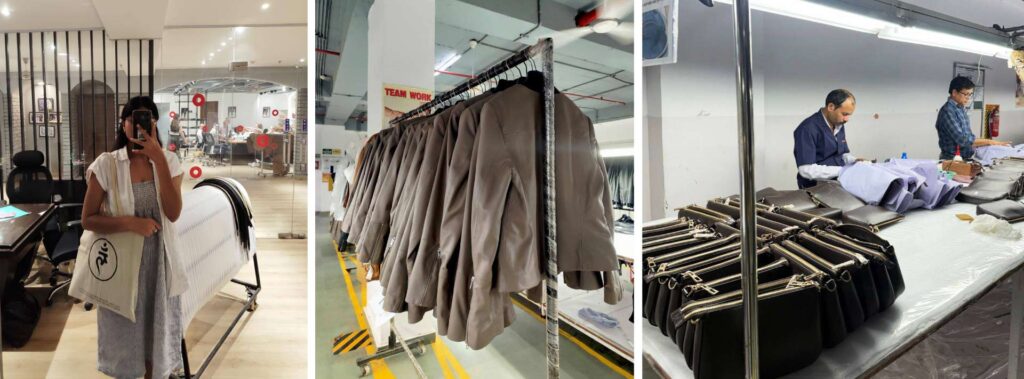
MOQ and Supply Chain Reality
Material selection is constrained by production realities. The most immediate of these is minimum order quantity.
If a material cannot be ordered at viable volumes, it cannot be integrated into a collection.
MOQ Benchmarks by Region (2026)
| Region | Typical MOQ (per style) | Strengths | Constraints |
| Italy | 50 to 150 units | High-end craftsmanship, precision finishing | Higher development cost, longer lead times |
| Turkey | 100 to 300 units | Flexible production, proximity to EU markets | Quality consistency varies by supplier |
| India | 200 to 500 units | Strong leather industry, scalable capacity | Requires strict quality control |
| Thailand | 100 to 300 units | Strong in small leather goods, adaptable factories | Limited large-scale infrastructure |
| China | 300 to 1000+ units | Industrial scale, integrated supply chains | Less flexibility for small runs |
Disclaimer: These figures reflect general industry norms as of 2026. Actual MOQs vary depending on material type, supplier specialization, product complexity, and geopolitical conditions.
If you’re evaluating leather or alternative materials for your next collection, we can help you assess what is actually viable based on your MOQ, supplier access, and end-use requirements. Get in touch with us to discuss your material strategy.
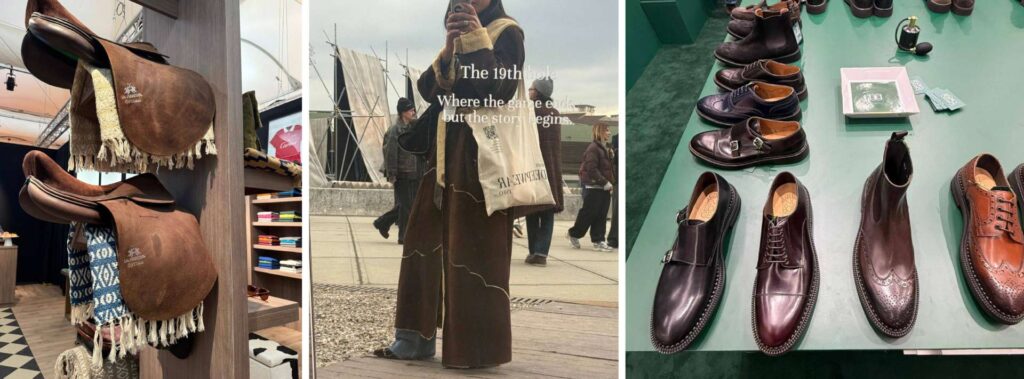
What Actually Scales Today
Traditional leather operates within established regulatory frameworks such as CITES, which enforce traceability and legality across borders.
Many alternative materials, by contrast, are not governed by equivalent global standards. This can lead to inconsistencies in labeling, material composition, and verification across suppliers.
In practice, this adds another layer of risk for brands navigating new materials.
When durability, compliance, and MOQ constraints are applied together, the number of viable material options reduces significantly.
What remains are materials that can:
- perform under repeated use
- move through regulated supply chains
- be produced within realistic order volumes
At present, three material categories used in leather and leather alternatives meet these conditions with varying degrees of reliability. These categories reflect what brands can realistically source and produce today:
1. Recycled and Reconstituted Leather
Among all alternatives, this is the most operationally practical.
Recycled leather builds on an existing system rather than replacing it. It uses offcuts and waste from leather production, which are processed and reformed into usable materials.
This aligns directly with the principle outlined in our blog From Tradition to Transition: leather is already a byproduct. The question is how efficiently that resource is used.
Why it scales:
- existing global supply of raw material
- compatibility with current manufacturing processes
- predictable MOQ ranges across regions
Performance profile:
- retains structural characteristics closer to leather than synthetic alternatives
- more stable under stress than low-grade PU materials
- suitable for accessories, small goods, and some footwear applications
Limitations:
- not identical to full-grain leather
- quality varies depending on fiber content and binding process
Recycled leather offers one of the most immediate paths toward improved material efficiency without disrupting production systems.
2. Plant-Based Leather (Selective Integration Only)
Plant-based materials are now widely available, but their role is often overstated.
As discussed earlier, most fall into composite structures that combine natural fibers with synthetic coatings. This affects both durability and end-of-life outcomes.
Where they work:
- low to moderate wear products
- design-led collections where material story is part of the value
- brands testing alternative material positioning
Where they struggle:
- high-stress applications such as structured bags or footwear
- long lifecycle expectations
- environments requiring high resistance to abrasion or moisture
Supply chain reality:
- supplier base is growing but still limited compared to leather
- MOQs can fluctuate depending on formulation and backing materials
Plant-based leather is scalable in a limited sense. It is best used strategically, not as a full replacement.
3. Optimized Leather (Including Exotic and Certified Sources)
Despite ongoing innovation, conventional leather remains central to high-performance applications.
This is not due to lack of alternatives. It is due to the combination of:
- durability
- repairability
- established supply chains
As outlined in our blog Navigating the Exotic Leather Trade, regulated materials operate within strict compliance systems such as CITES. This ensures traceability and accountability across the supply chain.
What “optimized” means in practice:
- responsibly sourced hides
- improved tanning processes
- better waste utilization
- integration of certified and traceable supply chains
Performance advantage:
- long lifespan reduces replacement cycles
- maintains structural integrity over time
- suitable for high-value and high-use products
Strategic role:
- remains the benchmark against which alternatives are measured
- can be combined with recycled inputs to improve material efficiency
Optimized leather is not a legacy material. It is an evolving one, supported by infrastructure that alternatives are still developing.
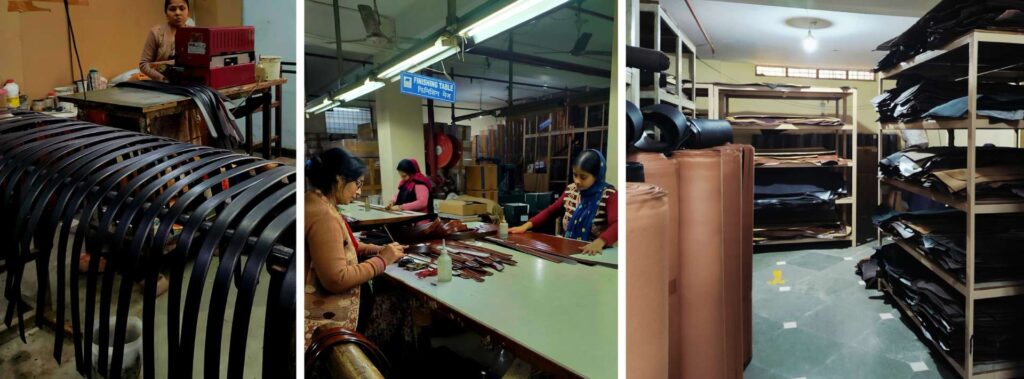
What is the most scalable alternative to leather for brands in 2026?
The most scalable alternatives today are recycled or reconstituted leather materials, followed by select plant-based composites used in controlled applications. Fully biofabricated or lab-grown leather is not yet commercially viable due to limitations in scale, cost, and supply chain integration. For most brands, the most reliable approach is a combination of optimized leather sourcing and selective use of alternative materials based on product function and production requirements.
Choosing Scalable Leather Alternatives in 2026
The idea of a dinosaur leather bag captures attention because it represents the extreme edge of what is now technically possible. It proves that materials can be engineered in ways that were previously unthinkable.
But it also highlights a more uncomfortable reality.
Just because a material can be created does not mean it should be used, and more importantly, it does not mean it can be produced, sourced, or delivered at scale.
For brands operating in 2026, the priority is not innovation for its own sake. It is material scalability.
This means selecting materials that can:
- perform consistently over time
- integrate into existing manufacturing systems
- meet minimum order quantities
- comply with regulatory requirements
At present, the most reliable approach is not a full replacement strategy, but a layered material strategy.
This includes:
- using recycled or reconstituted leather to improve material efficiency
- integrating plant-based alternatives selectively, based on product type
- continuing to rely on optimized leather sourcing where durability and performance are critical
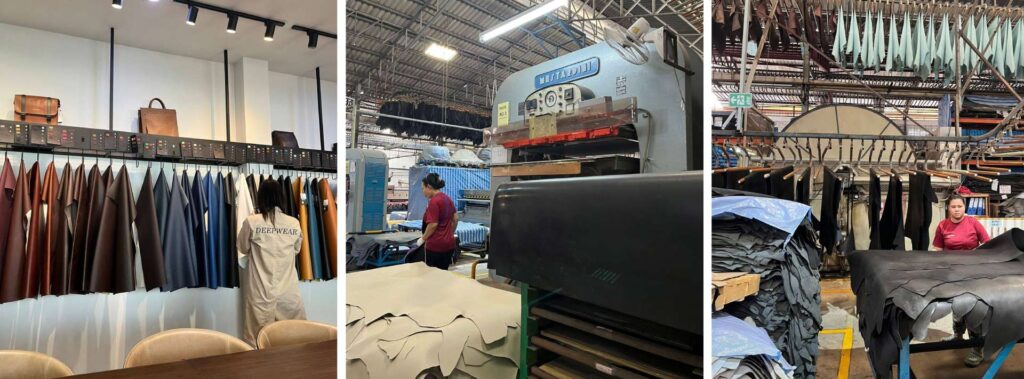
Biofabricated and lab-grown materials remain important developments. However, they are still a long way from functioning within global supply chains at the level most brands require.
The dinosaur bag is not a blueprint for the future. It is a signal of how far innovation can go without yet solving the constraints that define real production.
The brands that succeed will not be those adopting the most novel material first, but those aligning material choice with production reality, supply chain stability, and long-term product performance.
If you’re developing a collection and need to evaluate leather or alternative materials based on real sourcing conditions, we can help you identify what is actually viable for your product and scale. Contact us to build a material strategy that works beyond the prototype stage.