
Discover how the Istanbul-to-London logistics corridor is transforming the Turkey Europe supply chain through multimodal freight, Turkish manufacturing, and flexible fashion sourcing strategies.
The fashion industry long prioritized large-scale offshore manufacturing built around lower production costs and high-volume output. This model helped create complex international supply chains, with garments often moving across multiple countries and continents before reaching retail markets in Europe or North America.
In recent years, however, the weaknesses of overly extended sourcing networks became increasingly difficult to ignore. Pandemic-era shutdowns, freight disruptions, port congestion, rising shipping costs, shifting consumer demand, and broader geopolitical uncertainty forced many brands to reassess how they approach sourcing, inventory management, and logistics planning.
As a result, growing attention has shifted toward the Istanbul-to-London logistics corridor, an increasingly important regional freight and sourcing network connecting Turkish manufacturing with European retail markets through integrated road, rail, sea, and air infrastructure.
While the term “Silk Road” is often associated with historical trade routes, today’s Modern Silk Road logistics corridor operates through entirely different systems: customs integration, multimodal freight coordination, vertically integrated manufacturing, and more flexible regional supply chains.
In this blog we cover:
- How the Modern Silk Road logistics corridor is reshaping fashion sourcing between Turkey and Europe
- Why Istanbul has become a strategic hub for the Turkey Europe supply chain
- The role of road, rail, sea, and air freight in the Istanbul to London logistics network
- How Turkey’s vertically integrated manufacturing ecosystem supports modern Turkey garment sourcing
- How Deepwear’s Istanbul-based team works with Turkish factories, mills, and suppliers to support flexible production and logistics coordination
Why Istanbul Has Become a Strategic Logistics Hub
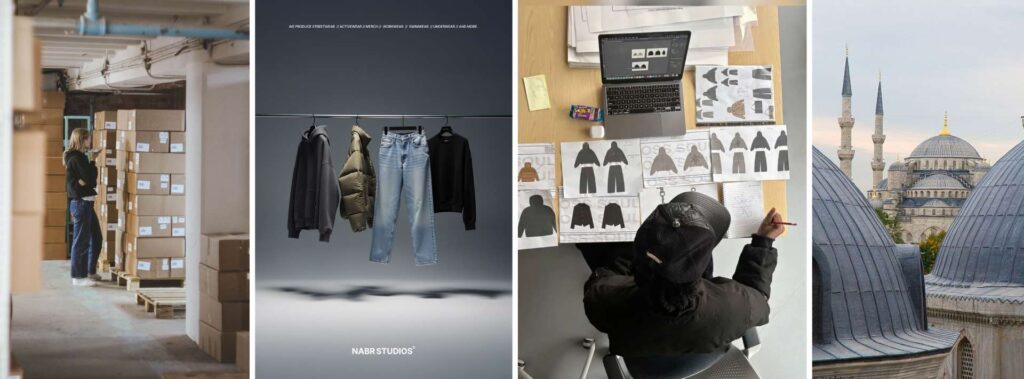
Istanbul occupies a unique position within the broader Turkey Europe supply chain ecosystem. The city connects directly into European trucking corridors while also serving as a gateway to Asian manufacturing routes, Mediterranean shipping systems, Black Sea logistics infrastructure, and emerging Eurasian rail networks. However, geography alone does not explain Istanbul’s growing importance. The real advantage lies in the concentration of manufacturing, logistics, freight coordination, and supplier ecosystems operating within one interconnected environment.
Turkey maintains substantial domestic production capabilities across multiple stages of apparel manufacturing, including:
- yarn production,
- knitting,
- weaving,
- dyeing,
- finishing,
- trims,
- and garment assembly.
Unlike sourcing regions heavily dependent on fragmented subcontracting chains across several countries, many Turkish suppliers operate within more vertically integrated production structures. This often allows for:
- faster sampling,
- tighter production coordination,
- shorter communication cycles,
- and more responsive manufacturing adjustments.
For fashion brands operating on compressed retail timelines, those operational efficiencies matter.
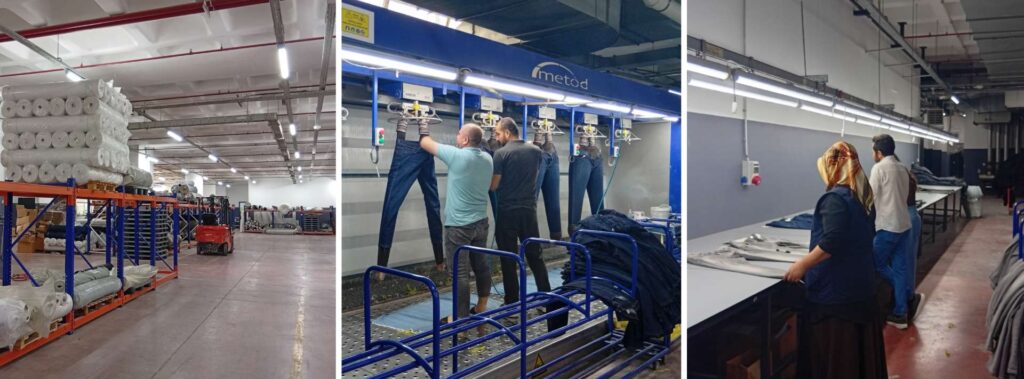
At Deepwear, our Istanbul office sits directly inside this ecosystem. Our local team works closely with long-standing factory partners, artisans, mills, and suppliers across Turkey, allowing us to maintain stronger communication and oversight throughout production and logistics processes.
That local presence matters because modern sourcing depends on coordination as much as production itself.
The Istanbul-to-London Corridor Is More Than a Shipping Route
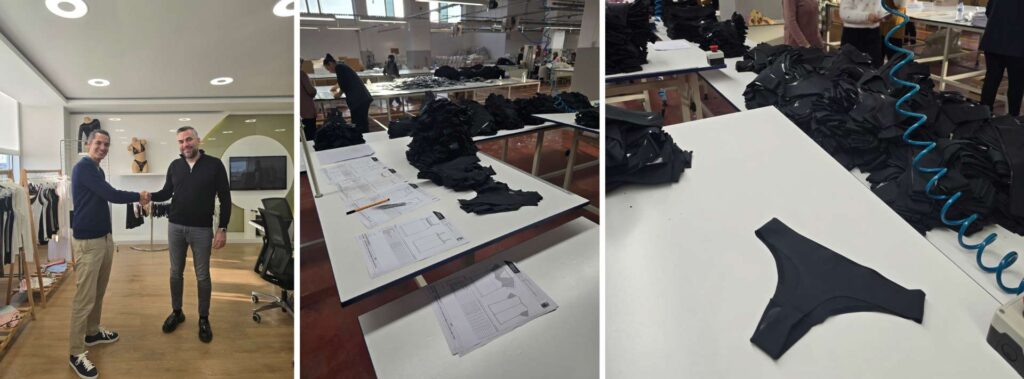
The Istanbul to London logistics network is not a single route or transport system. It functions more as a layered freight corridor connecting manufacturing and distribution through multiple transportation methods operating simultaneously.
1. European Trucking Networks
Road freight remains one of the most important pillars of the corridor.
Trucks departing from Istanbul can move through:
- Bulgaria,
- the Balkans,
- Central Europe,
- and onward toward Western European markets and the United Kingdom.
For apparel brands working with sourcing partners like Deepwear and our Istanbul-based operations team, road transport provides several practical advantages:
- flexible shipment scheduling,
- easier replenishment management,
- smaller shipment capabilities,
- and faster response for repeat production runs.
This flexibility has become increasingly valuable for:
- premium streetwear,
- independent fashion labels,
- seasonal collections,
- and contemporary brands operating on tighter inventory cycles.
Rather than waiting for large-scale ocean freight shipments, brands can adjust production and replenishment strategies more dynamically while maintaining closer communication with sourcing and logistics teams based in Istanbul.
2. Rail Connectivity and the Marmaray Corridor
One of the most strategically significant infrastructure developments supporting the Modern Silk Road logistics corridor is Istanbul’s Marmaray Tunnel.
The tunnel connects the European and Asian sides of Istanbul beneath the Bosphorus Strait, enabling uninterrupted rail freight movement between continents. For Deepwear, having an office in Istanbul places us directly within one of Eurasia’s most important logistics convergence points.
This matters because rail infrastructure is becoming important within Eurasian trade systems. As companies seek alternatives to congested or vulnerable shipping lanes, rail connectivity offers another layer of logistical flexibility.
Turkey’s expanding rail integration into broader Eurasian freight corridors positions Istanbul not simply as a transit point, but as a synchronization hub where multiple logistics systems intersect.
3. Sea Freight and RoRo Systems
Turkey’s maritime infrastructure also contributes heavily to the broader Turkey garment sourcing landscape.
Short-sea shipping and RoRo (Roll-on/Roll-off) freight systems allow trucks and cargo vehicles to move across regional maritime routes without relying entirely on container shipping.
This creates additional routing flexibility during:
- seasonal congestion,
- port delays,
- or shifting freight demand.
For sourcing operations, diversified transportation options can be just as important as manufacturing speed itself.
4. Air Cargo Infrastructure
Istanbul’s air cargo capabilities support urgent production timelines and higher-value shipments.
While air freight is rarely the primary transport method for large-scale apparel production, it remains important for:
- replenishment orders,
- delayed inventory recovery,
- premium collections,
- and time-sensitive launches.
The value of the corridor ultimately comes from its ability to support multiple transport systems simultaneously rather than depending entirely on one freight method.
Why Turkey’s Role Goes Beyond Nearshoring
Reducing Turkey’s relevance to simple nearshoring fashion manufacturing misses the broader structural transformation taking place across global sourcing.
Yes, proximity to Europe matters. But many brands are interested in Turkey for more operational reasons than geography alone.
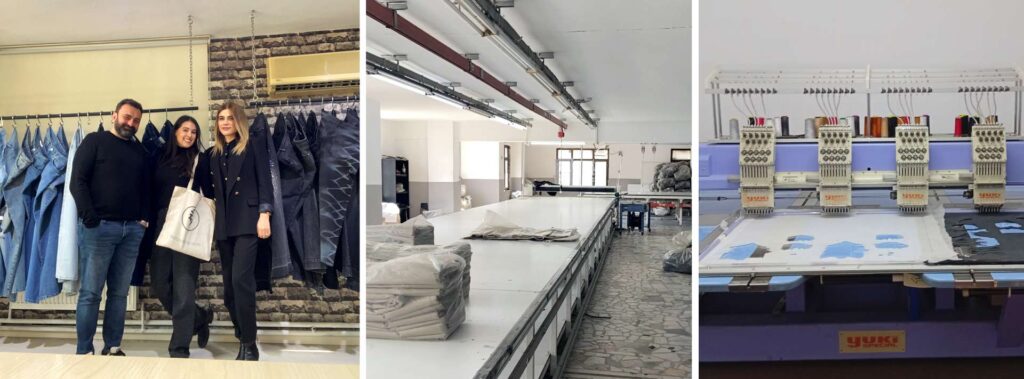
One of Turkey’s strongest advantages is the ability to compress multiple stages of sourcing, production, logistics, and export coordination into one regional ecosystem.
For example, a supplier may be able to manage:
- fabric sourcing,
- dyeing,
- garment manufacturing,
- finishing,
- quality control,
- and export preparation
within the same country and often within closely connected production regions.
That level of integration can reduce delays that frequently emerge when production is fragmented across multiple countries and intermediaries. Through our Istanbul office, Deepwear works within this interconnected manufacturing ecosystem to help brands coordinate production more efficiently across sourcing and logistics stages.
Turkey also operates within the EU Customs Union framework for industrial goods, helping facilitate trade movement into European markets when compliance and documentation requirements are properly managed.
That distinction matters because modern supply chains are often slowed less by manufacturing itself and more by:
- customs bottlenecks,
- fragmented supplier communication,
- administrative delays,
- and disconnected freight coordination.
The modern Turkey Europe supply chain depends on administrative and logistical efficiency as much as physical production speed.
Looking to Build a More Flexible Supply Chain? Our Istanbul-based team works directly with Turkish factories, mills, artisans, and logistics partners across multiple production categories.
A Corridor Built Around Flexibility, Not Guarantees
The growing importance of the Modern Silk Road logistics corridor does not mean global sourcing risks disappear.
Trade routes across Europe, Asia, and the Middle East remain exposed to:
- geopolitical shifts,
- regulatory changes,
- freight volatility,
- infrastructure bottlenecks,
- and broader economic uncertainty.
No sourcing geography is completely insulated from disruption.
For brands, the objective is not to eliminate risk entirely, but to avoid overdependence on any single manufacturing region or transportation route.
This is partly why Turkey’s position has gained greater attention in recent years. The country connects into multiple freight systems simultaneously, including:
- European road transport,
- Mediterranean shipping routes,
- Eurasian rail infrastructure,
- and regional air cargo networks.
That multimodal flexibility allows companies to adapt more dynamically when one route experiences pressure or disruption.
At the same time, Turkey’s role should not be overstated. It is not a universal replacement for every sourcing market, nor does regional proximity automatically outweigh labor cost advantages elsewhere.
Instead, Turkey functions as part of a broader diversification strategy for brands seeking:
- shorter replenishment cycles,
- lower inventory exposure,
- more agile production systems,
- and greater supply chain responsiveness.
In that sense, the modern Silk Road is less about replacing global trade and more about creating additional layers of logistical flexibility within it.
Deepwear’s Approach Inside the Istanbul Ecosystem
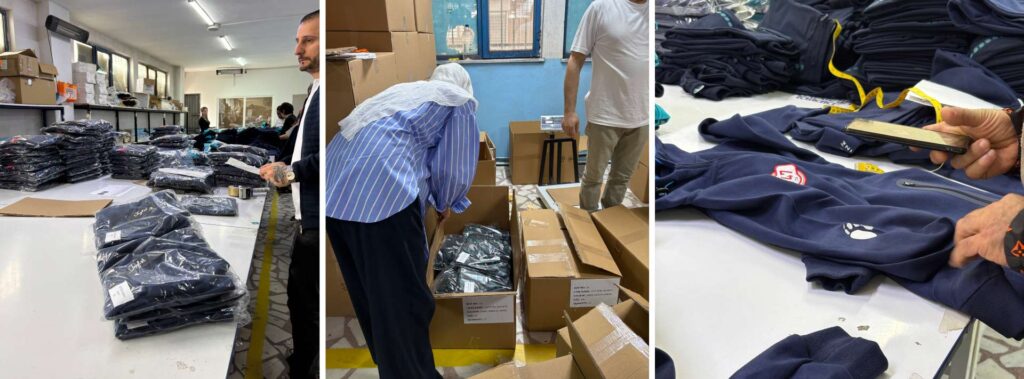
At Deepwear, our operations in Istanbul are built around local coordination, long-term relationships, and on-the-ground oversight.
Our team works directly with Turkish factories, artisans, mills, and suppliers across different manufacturing categories, allowing for closer communication throughout both production and logistics stages.
That local presence helps support:
- production transparency,
- quality control,
- faster issue resolution,
- and more responsive coordination between suppliers and freight systems.
Rather than approaching sourcing purely as transactional manufacturing, we view logistics, production, and supplier communication as interconnected parts of the same operational process.
The reality is that modern sourcing is rarely defined by a single factor anymore. Manufacturing quality, freight flexibility, production coordination, and communication efficiency all shape whether a supply chain remains adaptable under pressure.
Why Is the Istanbul-to-London Logistics Corridor Important for Fashion Sourcing?
The Istanbul-to-London logistics corridor is becoming important because it connects Turkish manufacturing with European retail markets through integrated road, rail, sea, and air freight infrastructure. Unlike longer global supply chains that often rely heavily on a single transportation method, the evolving Turkey Europe supply chain offers greater logistical flexibility, faster replenishment potential, and closer coordination between production and distribution. For fashion brands navigating rising freight volatility, shifting consumer demand, and tighter inventory cycles, the corridor provides an additional sourcing and logistics option within a more diversified and responsive regional manufacturing ecosystem.
The Future of the Modern Silk Road
The Istanbul-to-London logistics corridor reflects a broader transformation taking place across global fashion sourcing.
Supply chains are becoming:
- more regionalized,
- more infrastructure-driven,
- and increasingly focused on resilience and adaptability rather than scale alone.
The modern Silk Road is not simply about moving products faster between continents. It is about creating sourcing systems capable of responding more dynamically to changing retail conditions, shifting freight realities, and evolving consumer demand.
Turkey’s growing role within that system does not guarantee certainty. No logistics corridor can fully remove the complexity or unpredictability shaping global trade today.
For companies navigating the changing realities of modern sourcing, the evolving Modern Silk Road logistics corridor is becoming difficult to ignore not as a perfect solution, but as part of a broader shift toward more responsive and diversified supply chain strategies.
To learn more about our manufacturing network and sourcing capabilities in Turkey, connect with the Deepwear team and explore how regional production strategies are evolving across the modern Turkey Europe supply chain.