
Discover how Deepwear helps brands navigate complex denim manufacturing, from sourcing and product development to quality oversight and production management.
At first glance, a pair of jeans may seem like one of the simplest products in garment manufacturing. Most styles share familiar features such as five pockets, metal hardware, and durable twill fabric. However, behind that classic design is one of the most technically demanding production processes in the apparel industry.
Unlike many garments, denim manufacturing combines heavyweight fabrics, indigo dyeing, complex finishing techniques, and precise construction. Each stage affects the next, meaning even a small variation in fabric behavior, sewing accuracy, or washing conditions can change the fit, appearance, and durability of the finished garment.
For this reason, producing high-quality denim is not simply about conducting a final garment inspection. Consistency is built through careful planning, engineering, and process control from the earliest stages of denim production. Every decision, from fabric selection to the information contained in a technical pack, contributes to the final result.
In this blog we cover:
- Why denim manufacturing is more complex than most garments
- The production stages that shape the quality of every pair of jeans
- Common manufacturing challenges and their root causes
- How Quality Assurance and process control reduce production risks
- How Deepwear helps brands source the right denim manufacturer and manage production successfully
What Makes Denim Manufacturing Different?
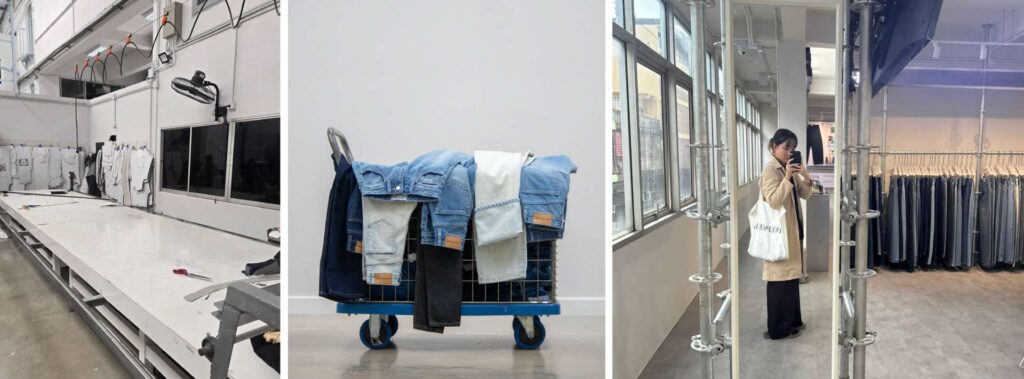
Every garment follows a production journey, but denim introduces challenges that many other apparel categories do not. The combination of heavyweight fabrics, indigo dye, specialized washing techniques, and durable construction requires greater precision throughout the manufacturing process.
Below are two of the biggest factors that make jeans manufacturing significantly more complex than standard apparel manufacturing.
1. Heavyweight Fabrics Require Greater Precision
Denim is designed for durability, but that durability comes with manufacturing challenges.
Compared to lighter woven fabrics, denim is thicker, heavier, and less forgiving during production. This influences every stage of manufacturing, from fabric preparation to sewing and finishing.
Key considerations include:
- Fabric weight (GSM): Heavier fabrics require different handling methods during spreading, cutting, and sewing.
- Stretch vs. rigid denim: Stretch fabrics improve comfort but require careful control of recovery and long-term shape retention.
- Shrinkage behavior: Denim often changes dimensions after washing, making shrinkage testing essential before production.
- Fabric relaxation: Allowing fabric to rest before cutting helps prevent measurement changes caused by tension within the rolls.
If these variables are not managed correctly, manufacturers may encounter inconsistent sizing, distorted garment panels, or fit issues that become visible only after washing.
2. Indigo Dye Creates Unique Manufacturing Challenges
The distinctive appearance of denim comes from indigo dye, but it also introduces production variables that are rarely seen in other fabrics.
Unlike many dyes that fully penetrate textile fibers, indigo primarily coats the outer layer of the yarn. This allows denim to develop its characteristic fading over time, but it also makes color consistency much more difficult to maintain throughout denim production.
Manufacturers must carefully monitor:
- Shade variation between fabric batches
- Crocking (color transfer caused by rubbing)
- Color migration during processing
- Batch-to-batch consistency throughout production
Selecting the right dyeing method is equally important. Different dye classes influence colorfastness, durability, compliance, and the garment’s appearance after repeated washing.
If you’re interested in how dye selection affects both product performance and manufacturing efficiency, our guide, Choosing the Right Dye: How Deepwear Ensures Colorfast, Compliant, and Scalable Fabric Dyeing Solutions, explores how different dye types support consistent quality across a wide range of textile applications.
Every Stage of Denim Manufacturing Changes the Final Product
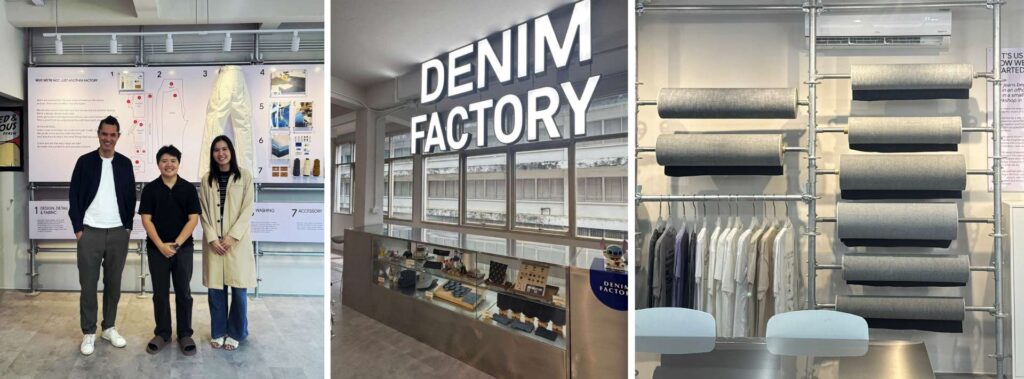
Every stage of denim manufacturing introduces new variables that influence fit, appearance, durability, and consistency. This is why experienced manufacturers view production as a connected system rather than a series of independent processes.
1. Fabric Selection
The quality of a pair of jeans begins long before the first piece of fabric is cut. Selecting the right material establishes the foundation for every production stage that follows.
When evaluating denim fabrics, manufacturers typically consider:
- Fabric quality and fibre composition
- Fabric weight (GSM)
- Twill construction
- Stretch and recovery performance
- Expected shrinkage after washing
For example, a heavyweight rigid denim may deliver a structured, vintage look but requires different pattern allowances than a lightweight stretch denim designed for everyday comfort. Likewise, fabrics with poor recovery can lose their shape after repeated wear, affecting customer satisfaction and increasing return rates. At Deepwear, fabric sourcing is matched to the intended wash process, target price point, and customer expectations rather than selected on GSM alone. This helps brands avoid costly changes later in product development, when switching fabrics can require new patterns, revised shrinkage allowances, and additional sampling.
2. Pattern Development & Technical Packs
Even the highest-quality denim cannot compensate for incomplete product specifications.
A detailed technical pack acts as the blueprint for production by defining measurements, construction methods, grading rules, stitch requirements, trims, and finishing details. It ensures that designers, pattern makers, sample rooms, and production teams are all working from the same specifications.
A well-developed technical pack helps manufacturers:
- Maintain consistent measurements across all sizes
- Improve fit accuracy
- Standardize construction details
- Reduce sampling revisions
- Minimize production errors
As discussed in our blog, Denim Tech Packs: The Difference Between a Good Sample and a Production Problem, many manufacturing issues originate before production even begins. Before production begins, Deepwear reviews technical packs for completeness and manufacturability. Small omissions, such as unclear stitch specifications, hardware placement, or wash references, can lead to multiple sample revisions and unnecessary production delays.
3. Cutting & Sewing
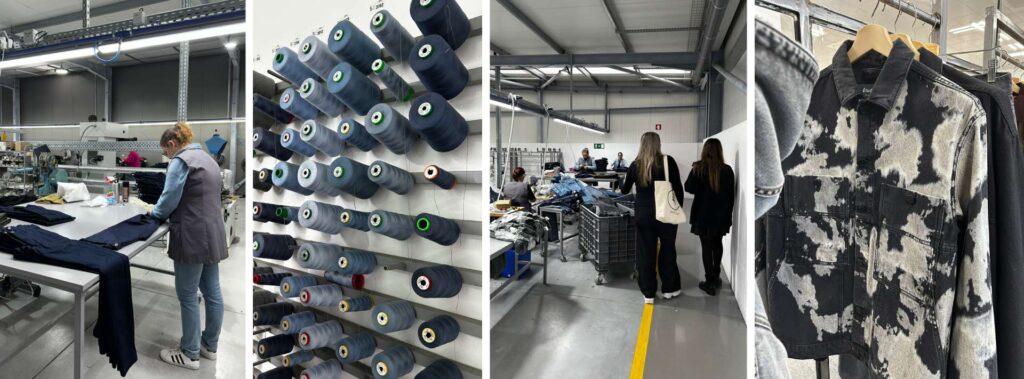
Once fabric and specifications are approved, precision becomes increasingly important.
Small inaccuracies during cutting and sewing may appear insignificant individually, but they can become highly visible after garments are washed and finished.
Key production controls include:
- Allowing adequate fabric relaxation before cutting
- Maintaining accurate panel alignment
- Controlling stitch density (SPI)
- Ensuring consistent seam strength
- Verifying pocket and trim placement
Because denim fabrics are thicker than many other apparel materials, operators must also adjust machine settings to achieve balanced stitching without causing seam puckering or excessive tension. During production management, Deepwear works with manufacturing partners to resolve technical questions early instead of waiting until final inspection. Preventing sewing and construction issues during production is significantly less expensive than correcting finished garments.
4. Denim Washing
Unlike many garments, washing is not simply a finishing treatment. In jeans manufacturing, it is a critical production stage that transforms both the appearance and performance of the garment.
Different washing techniques produce distinct visual and tactile effects, including:
- Enzyme washing for a softer feel and natural fading
- Stone washing to create a worn appearance
- Laser finishing for precise whiskers and distressing
- Ozone washing to reduce water and chemical consumption
- Fabric softeners to improve comfort
- Shade control to maintain consistency across production batches
While these techniques enhance the final product, they also introduce additional variables. Temperature, processing time, chemical concentration, and machine loading can all influence color, measurements, and fabric strength.
In our blog, When Denim Washes Go Wrong: Turning Defects into Design Opportunities, we discussed how even minor inconsistencies during washing can lead to issues such as uneven fading, back staining, or shade variation. Because washing has such a significant impact on fit, colour, and fabric performance, Deepwear works with suppliers that have proven experience with the specific wash effects required by each collection. Where appropriate, wash approvals are reviewed before bulk production proceeds.
5. Finishing & Packing
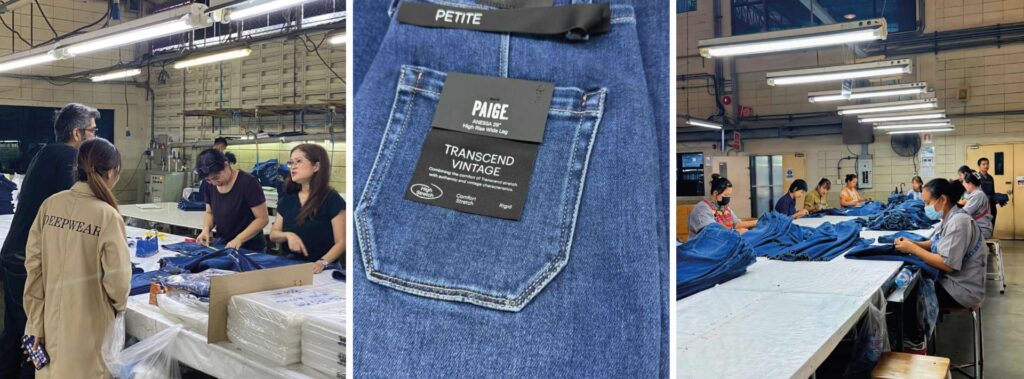
The final stage of denim manufacturing ensures that every garment meets both technical specifications and brand presentation standards before shipment.
During finishing, manufacturers typically verify:
- Hardware installation, including rivets, buttons, and zippers
- Pressing and garment presentation
- Folding and assortment requirements
- Final measurement verification
- Labelling and packaging accuracy
Although these activities occur at the end of production, they do not create quality. Instead, they confirm that every preceding stage has been executed correctly.
For experienced denim manufacturers, finishing is the final validation of a well-controlled manufacturing process, ensuring each garment reaches the customer with the fit, appearance, and durability the brand intended.
Planning a denim collection? Contact Deepwear to discuss your manufacturing and sourcing requirements.
The Most Common Problems in Denim Manufacturing
Even with detailed specifications, denim presents unique technical challenges that can affect both product quality and production efficiency. Most defects are not caused by a single mistake but by small variations that accumulate throughout the manufacturing process.
Some of the most common issues include:
| Issue | Common Cause |
| Leg twisting | Fabric skew, incorrect grain alignment, or insufficient fabric relaxation before cutting |
| Seam puckering | Improper machine settings, incorrect thread tension, or unsuitable stitch density |
| Uneven fading | Inconsistent wash cycles, chemical distribution, or garment loading during washing |
| Back staining | Indigo redeposition during denim washing |
| Waist growth | Inadequate stretch recovery or inaccurate pattern allowances |
| Shrinkage | Poor fabric testing or incorrect shrinkage calculations during product development |
| Broken stitching | Excessive needle heat, unsuitable thread selection, or high seam stress |
| Shade mismatch | Variations between fabric batches or inconsistent washing conditions |
| Inconsistent distressing | Manual finishing differences or poor process control |
Identifying the root cause is far more effective than correcting the finished product. Manufacturers that focus on process stability rather than reactive fixes consistently achieve better quality, lower rework rates, and more reliable delivery schedules.
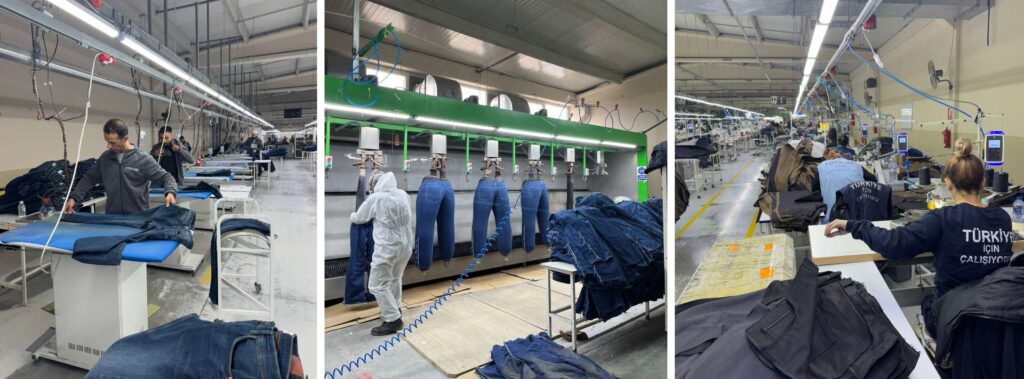
How Deepwear Helps Brands Build Quality Into Denim Manufacturing
Successful denim manufacturing requires more than finding a factory with available capacity. It requires aligning the right materials, production capabilities, quality systems, and technical expertise from the beginning of the project.
At Deepwear, we work with brands throughout the manufacturing journey to reduce production risks and improve consistency at every stage.
Our support includes:
1. Supplier Matching
Not every factory is suited to every denim project. Rather than taking a one-size-fits-all approach, we evaluate your product requirements, production volume, wash capabilities, and technical specifications to identify manufacturing partners best suited to your project.
2. Technical Development
A strong production process starts with clear documentation. We review technical packs, construction details, measurements, and production requirements before manufacturing begins to help reduce sampling revisions and production misunderstandings.
3. Production Management
Throughout denim production, our team works closely with manufacturing partners to monitor progress, facilitate communication, and address potential issues before they affect delivery schedules or product quality.
4. Quality Assurance
Quality should be built into the production process rather than inspected at the end. Deepwear supports brands with structured Quality Assurance, production monitoring, and independent quality checks to help maintain consistency throughout manufacturing.
5. Global Manufacturing Network
With a network of manufacturing partners across Europe and Asia, Deepwear helps brands source the right denim manufacturer based on product category, order volume, quality expectations, and regional sourcing strategies.
By combining sourcing expertise with production management and quality oversight, we help brands simplify one of the most technically demanding areas of garment manufacturing while maintaining the flexibility needed to scale.
Building Better Denim Starts with Better Manufacturing Decisions
A great pair of jeans is the result of hundreds of decisions made long before it reaches the customer. From selecting the right fabric and preparing detailed product specifications to managing denim washing, production, and quality oversight, every stage contributes to the final product.
The most successful brands understand that consistent quality isn’t created through a single inspection. It comes from working with experienced manufacturing partners, maintaining clear communication throughout production, and addressing potential issues before they become costly problems.
Whether you’re producing a premium capsule collection or scaling commercial jeans manufacturing, investing in the right manufacturing systems today helps reduce rework, improve product consistency, and build long-term customer confidence. Planning a denim collection? Contact Deepwear to discuss your project and discover how our global sourcing and manufacturing expertise can support your brand.