
Learn how denim tech packs affect fit, grading, construction, trims, and production consistency. Deepwear explores the technical details behind scalable denim manufacturing.
A denim sample can look flawless during development and still unravel once production begins. The fit shifts slightly after grading. The waistband twists after repeated handling. A zipper arrives in a brighter finish than the approved sample. The stitching holds structurally but loses the sharp contrast that gave the jean its character in the first place.
Small inconsistencies accumulate quietly until the garment arriving in cartons no longer resembles the one approved during sampling.
This is where a denim tech pack stops being administrative paperwork and starts becoming a production control system. At a glance, a technical package for a five-pocket denim pant looks orderly enough: measurements, trims, construction details, grading, packaging instructions.
In this blog we cover:
- Why denim tech packs are critical for fit, grading, and production consistency
- Common denim manufacturing problems caused by unclear technical specifications
- How construction details, trims, and BOM precision affect denim production quality
- What should be included in a production-ready denim tech pack
- How Deepwear helps brands develop factory-ready denim for scalable manufacturing
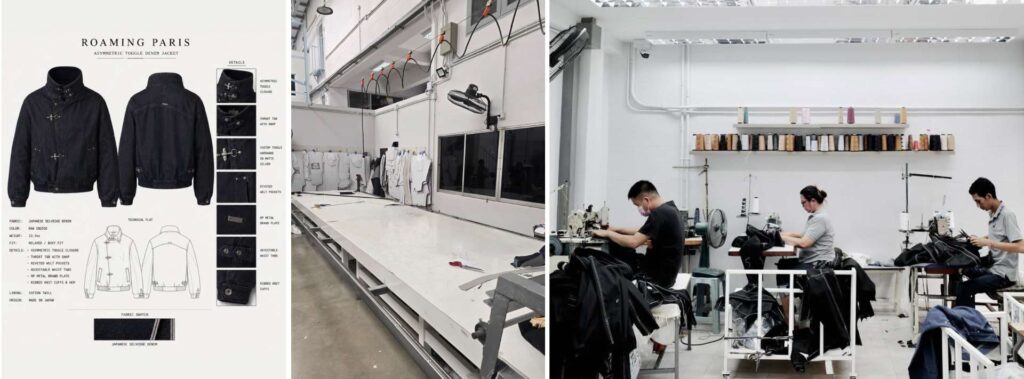
Why Denim Requires More Precision Than Basic Apparel
Factories can usually compensate for minor inconsistencies in softer, simpler garments. Denim behaves differently. Its structure exposes weak specifications almost immediately.
A slight variation in stitch density changes how seams sit against heavier fabric. Poor grading alters the silhouette between sizes. Pocket placement that works on a base sample may start drifting visually once production scales upward.
Even the physical construction of jeans creates additional technical pressure:
- Rivets concentrate stress
- Belt loops affect waistband tension
- Heavier fabric reacts differently under industrial sewing
- Reinforcement stitching changes seam behavior over time
This is partly why denim manufacturing developed such a technical culture around construction and fit because it is balanced through proportion, reinforcement, tension, and material behavior.
Deepwear has already explored how denim finishing affects the final garment, including in When Denim Washes Go Wrong: Turning Defects into Design Opportunities, which examined how wash inconsistencies, fading irregularities, and production defects can reshape an entire batch. Those finishing stages remain critical, but long before washing begins, the tech pack determines whether production can stay technically consistent at scale.
The Core Sections of a Denim Tech Pack
On paper, these sections look straightforward. In production, they become far more sensitive.
| Tech Pack Section | Production Function |
| Style Overview | Defines fit, fabric, and overall garment direction |
| Measurement Specification | Controls sizing consistency and tolerances |
| Bill of Materials (BOM) | Standardizes trims, hardware, and sourcing |
| Construction Details | Defines assembly methods and reinforcement |
| Fit & Grading | Maintains silhouette balance across sizes |
| Packaging Details | Reduces fulfillment and retail inconsistencies |
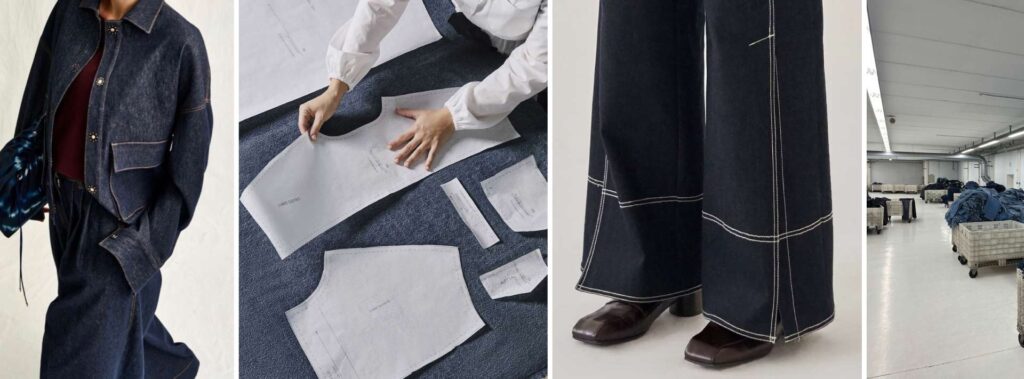
Where Denim Tech Packs Usually Start Breaking Down
Most production issues begin in areas that appear complete at first glance.
A measurement sheet may include waist, hip, inseam, and rise measurements while still leaving enough ambiguity to create inconsistent production outcomes. Without clearly defined tolerances or measurement methodology, factories may interpret points of measure differently across teams.
One production line measures the waistband flat. Another measures it under tension.
A half-centimeter deviation at the waist may go unnoticed. The same deviation at the knee can completely alter the balance of a slim silhouette.
This is also why technical feedback during development matters. A specification that looks clear inside a document may still create problems once it reaches production lines, especially in denim where construction, grading, and reinforcement details interact closely with machinery and fabric behavior. Because Deepwear works directly with factories throughout development, technical decisions can be reviewed against what is realistically achievable at production scale, and not just what works visually in an initial sample.
Common Problems in Denim Measurement Specs
- Missing tolerance ranges
- No distinction between pre- and post-production measurements
- Inconsistent rise measurement methods
- Poorly defined points of measure (POM)
- Incomplete grading logic across sizes
The issue becomes more obvious once grading enters production.
A size 32 may fit exactly as intended while a size 38 begins collapsing proportionally. The taper sharpens too aggressively. The rise balance shifts. The knee drops lower than intended. Technically, the garment follows the grade rule. Visually, it becomes a different jean.
Good denim grading is less about scaling dimensions and more about preserving proportion.
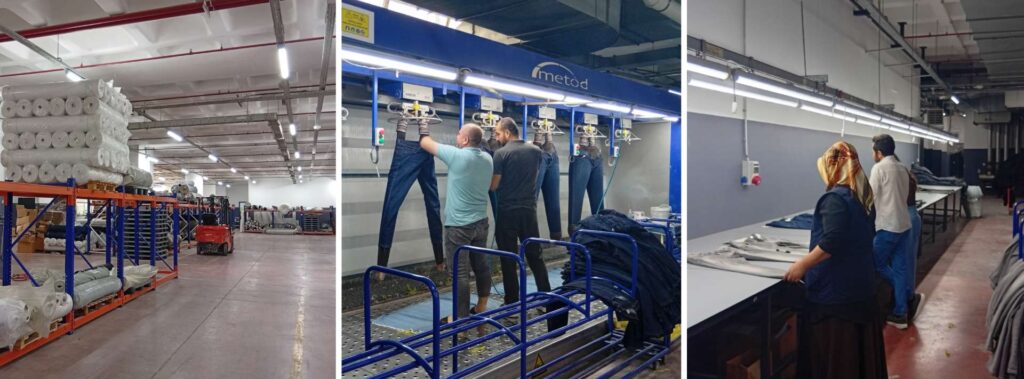
Fit Problems Rarely Start With the Pattern Alone
Denim fit issues are often blamed on patterns when the problem actually sits in the relationship between grading, construction, and fabric behavior.
Slim fits and relaxed fits scale differently. Stretch denim behaves differently from rigid denim. Even pocket positioning changes how proportions are perceived visually across sizes.
Areas Most Affected by Poor Denim Grading
- Knee placement
- Front and back rise balance
- Leg taper consistency
- Seat proportion
- Pocket positioning
- Thigh-to-opening ratio
A block that works beautifully in a smaller sample size can begin distorting quickly in larger sizes if grading logic is too mechanical.
Construction Details Decide More Than Durability
Many denim tech packs focus heavily on appearance while leaving construction language surprisingly vague.
Instructions like:
- “double stitch”
- “reinforced seam”
- “heavy-duty construction”
sound technical but communicate very little operationally.
Construction specifications affect:
- seam appearance,
- durability,
- machine setup,
- production speed,
- thread consumption,
- and ultimately cost.
Even stitch density changes how denim behaves visually. A tighter stitch count may create cleaner seam definition while increasing puckering under tension. Chain stitching introduces movement and texture that lockstitch construction does not replicate in the same way.
- hems,
- waistband joins,
- inseams,
- pocket attachment,
- fly construction.
The cleaner a pair of jeans appears externally, the more disciplined the underlying construction usually is.
Need technical feedback before sampling? A clean-looking tech pack does not always translate cleanly into production. Deepwear works directly with denim factories throughout development to help brands identify grading, construction, and sourcing issues before they create delays in bulk manufacturing.
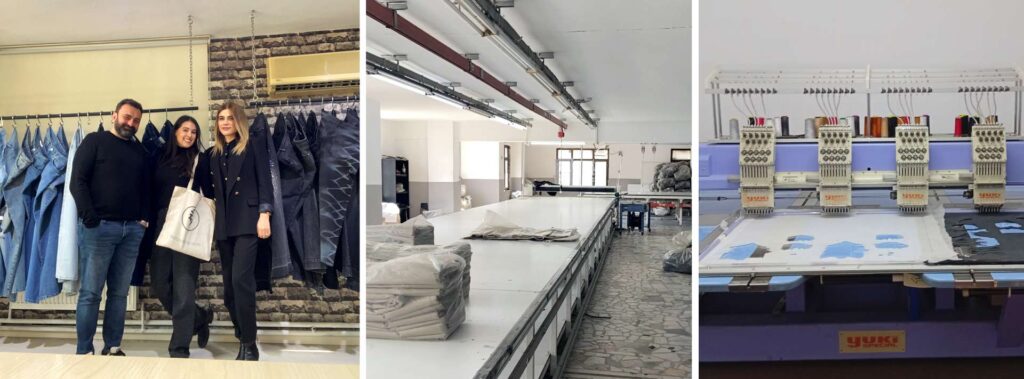
Why BOM Precision Matters in Denim Production
The Bill of Materials (BOM) is one of the most underestimated sections in a denim tech pack.
A specification that simply states:
- metal zipper,
- copper rivets,
- polyester thread,
- leather patch
still leaves enormous room for interpretation.
Factories sourcing at production scale need much more clarity.
| BOM Component | Common Production Issue | Why It Matters |
| Zipper | Generic finish substitution | Alters visual consistency |
| Thread | Incorrect thread weight | Changes seam appearance |
| Rivets | Different plating finish | Impacts branding consistency |
| Patch | Material thickness variation | Affects wear and presentation |
| Pocketing Fabric | Lower-quality substitute | Reduces durability |
If these details remain vague, suppliers often use the nearest available alternative to maintain production speed.
This is often where communication between brands and factories becomes critical. A trim substitution that appears minor on paper can affect durability, garment weight, or visual consistency once bulk production begins. Because Deepwear works directly with manufacturers throughout development, technical decisions can be evaluated against what is actually available, scalable, and production-ready before sampling delays begin compounding.
What Should a Denim Tech Pack Include?
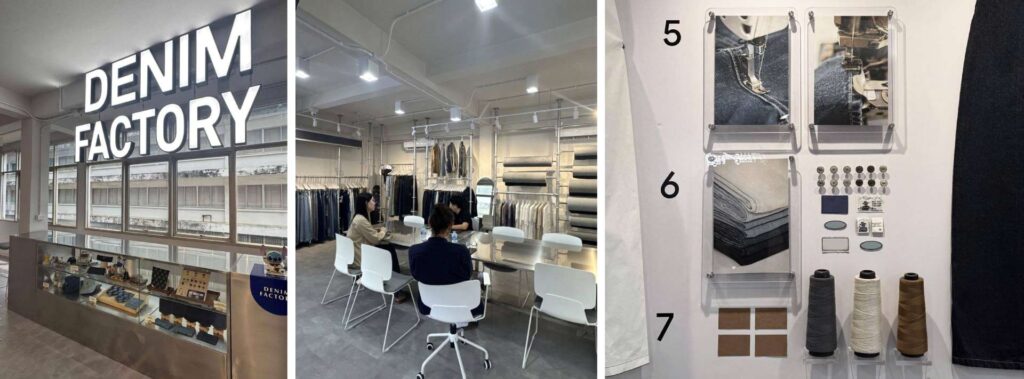
A production-ready denim tech pack should include far more than basic sketches and measurements. Strong denim tech packs typically contain detailed technical flats, measurement specifications with tolerances, grading rules, construction instructions, stitch and seam details, trim and hardware references, wash considerations, labeling placement, and packaging specifications. Because denim construction involves heavier fabrics, reinforcement stitching, hardware, and complex fit grading, incomplete documentation can quickly create production inconsistencies during sampling and bulk manufacturing. A well-developed denim tech pack helps factories reduce interpretation, improve fit consistency, streamline sourcing decisions, and maintain quality across production runs.
Technical Precision in Denim Development
At Deepwear, denim development is approached as a production process, not just a design exercise. Tech packs are reviewed against real factory conditions, construction limitations, grading behavior, and sourcing feasibility long before bulk production begins.
That perspective matters in denim, where small inconsistencies in measurements, trims, stitching, or fit can scale into costly production problems later on.
Planning a denim collection? By working closely with manufacturers throughout sampling and development, Deepwear helps brands create denim tech packs that are not only visually clear, but technically executable at production scale. The goal is not simply to produce a strong sample, but to create consistency from development through final manufacturing. Start a conversation with our team today!