
Discover why modern menswear has become visually repetitive and how brands can stand out through better fabrics, tailoring, silhouettes, and menswear manufacturing.
Menswear has evolved through distinct eras; the sharp tailoring of the 1960s gave way to the relaxed silhouettes of the 1990s, while the 2010s saw the rise of minimalist streetwear and athleisure. Today, however, many wardrobes seem to have arrived at the same destination.
Walk through an airport, shopping district, or city center and you’ll notice a familiar formula: an oversized T-shirt, relaxed jeans, white sneakers, and perhaps a hoodie or baseball cap. Despite thousands of brands competing for attention, the differences between many outfits have become surprisingly subtle.
This isn’t because men have become less creative. Rather, today’s menswear trends are shaped by algorithms, fast-moving trend cycles, cost-efficient production, and products designed for mass appeal. When the same silhouettes are recommended across social media feeds and replicated at every price point, individuality naturally becomes harder to achieve.
For brands, this presents both a challenge and an opportunity. Standing out no longer depends on creating louder graphics or chasing the next viral aesthetic. Instead, premium menswear is shifting toward thoughtful design, elevated materials, refined construction, and garments that deliver lasting value.
In this blog we cover:
- Why modern menswear has become visually repetitive
- How the “algorithm wardrobe” is shaping today’s menswear trends
- Why premium fabrics and better silhouettes create lasting differentiation
- How manufacturing decisions influence the success of premium menswear
- How Deepwear helps brands develop and manufacture distinctive collections
The Rise of the Algorithm Wardrobe
Fashion has always been influenced by culture, but today’s trends move through a different kind of ecosystem. Instead of magazines or seasonal runway shows setting the agenda, recommendation algorithms now play a major role in determining what consumers discover and ultimately purchase.
Platforms like TikTok, Instagram, Pinterest, and online marketplaces continuously reinforce products that already perform well. A single successful design can quickly appear across dozens of brands because digital platforms reward familiarity. Consumers engage with styles they’ve already seen, retailers stock products with proven demand, and manufacturers receive more requests for similar garments.
The result is what many now describe as an “algorithm wardrobe.”
Consider the lifecycle of a typical trend. A luxury fashion house introduces a relaxed oversized T-shirt. Within weeks or months, contemporary brands interpret the look. Fast-fashion retailers then release their own versions, followed by countless marketplace sellers offering nearly identical products at lower prices. Eventually, what began as a distinctive design becomes one of thousands of nearly indistinguishable garments.
From a fashion manufacturing perspective, this cycle also makes business sense. Producing established silhouettes carries significantly less risk than developing something entirely new. Manufacturers already have experience with familiar patterns, suppliers can source standard materials efficiently, and brands gain confidence from products that have demonstrated commercial success.
The downside is that collections across different price points often begin to resemble one another.
For private label menswear brands, differentiation becomes increasingly difficult when everyone is building around the same visual references.
Fast Fashion Rewards Sameness
Fast fashion has transformed the apparel industry by making new styles accessible within weeks rather than months. Its speed is remarkable, but so is the discipline behind its product strategy.
Contrary to popular belief, fast fashion isn’t driven by constant experimentation. It’s driven by minimizing uncertainty.
Retailers invest heavily in products that have already demonstrated market demand. Rather than reinventing the wardrobe every season, they refine existing best sellers through new colors, washes, graphics, or minor fit adjustments.
This explains why certain products continue to dominate stores around the world:
- Oversized T-shirts
- Cargo pants
- Hoodies
- Relaxed denim
- Minimal sneakers
These garments are easy to merchandise, simple to style, and appeal to broad demographics. They also simplify inventory management because consistent sizing and familiar silhouettes reduce production complexity and product returns.
None of this is inherently negative. These garments have become staples because they meet practical consumer needs.
However, when nearly every retailer builds collections around the same commercial formulas, innovation often becomes incremental rather than transformative. Instead of introducing new ideas, brands frequently compete through price or marketing while offering products that look remarkably similar.
This creates an opening for luxury menswear and premium apparel brands willing to invest in stronger design direction, material selection, and craftsmanship.
Texture Has Become More Powerful Than Graphics
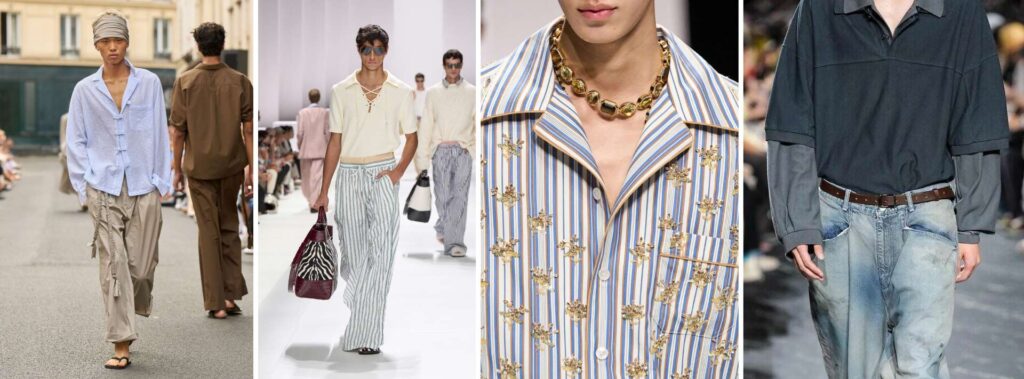
As minimalist fashion matured, another shift quietly emerged. Rather than relying on oversized logos or bold graphics to create visual impact, many premium brands began focusing on something far more subtle: texture.
Texture adds dimension without demanding attention.
A monochromatic outfit can feel rich and visually layered simply because different materials interact with light, movement, and touch in unique ways. This is why many of today’s most refined collections rely less on printed graphics and more on the qualities of the fabric itself.
Examples include:
- Slub cotton with natural surface variation
- Bouclé knits that create soft depth
- Crisp linen with visible weave structure
- Seersucker that naturally lifts away from the skin
- Donegal wool with flecked character
- Brushed twill for a softer finish
- Herringbone weaves that introduce subtle pattern
- Waffle knits with three-dimensional texture
These materials communicate quality without relying on branding. They encourage consumers to appreciate garments up close rather than from across the room.
More importantly, texture is not something added at the end of production. It is engineered throughout the supply chain.
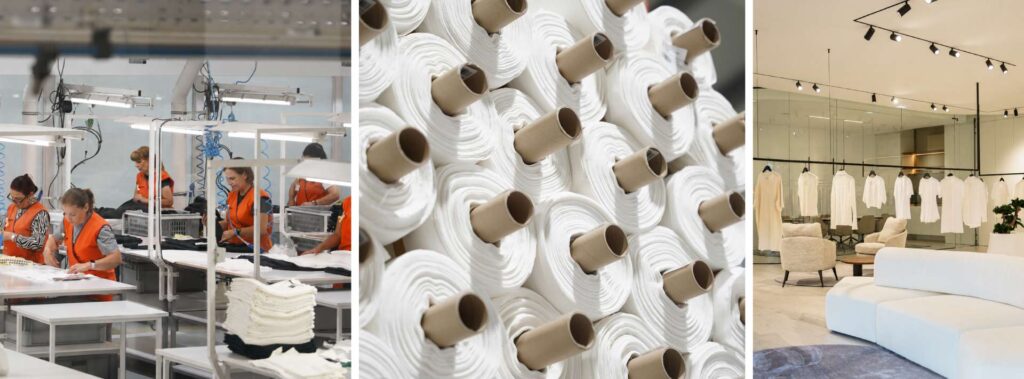
Fiber selection, yarn spinning, weaving or knitting techniques, finishing processes, garment washing, and fabric treatments all contribute to the final appearance and performance of a garment. By the time a shirt reaches the sewing floor, much of its visual identity has already been established.
This is where garment manufacturing becomes a competitive advantage rather than simply a production step.
Differentiate Through Materials, Not Just Design
The right fabric can completely transform a familiar silhouette. Deepwear works with brands to source premium textiles, evaluate suppliers, and align material selection with the positioning of each collection, ensuring that every garment communicates quality from the very first touch. Start a conversation with our team.
Beyond the T-Shirt and Jeans Formula
The T-shirt and jeans combination has earned its place as a wardrobe staple. It’s practical, comfortable, and adaptable across a wide range of occasions. The problem isn’t the garments themselves. It’s when entire collections rely on the same formula without offering customers new ways to express personal style.
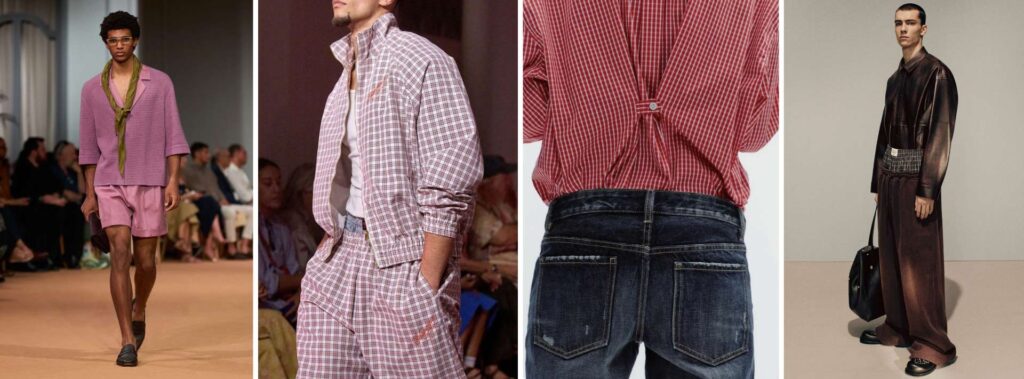
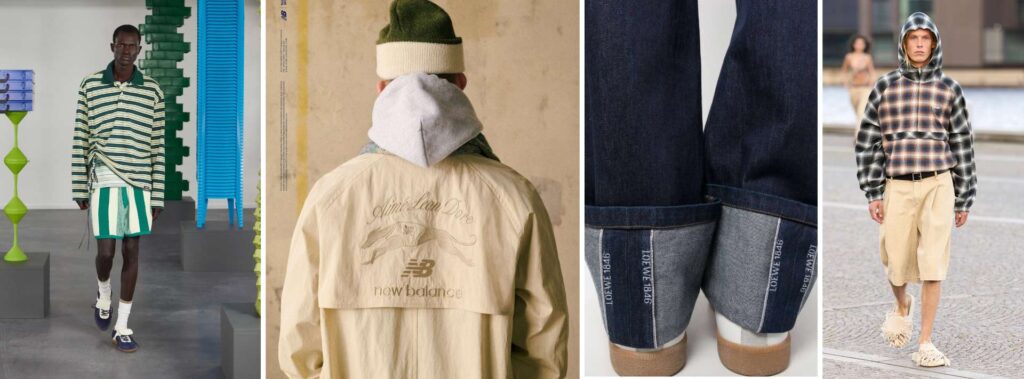
Today’s modern menswear is moving toward elevated casualwear. Instead of replacing comfort, designers are introducing more refined alternatives that add texture, versatility, and sophistication while remaining easy to wear.
| Instead of | Consider |
| Graphic T-shirt | Knit polo |
| Hoodie | Overshirt |
| Relaxed jeans | Pleated trousers |
| Joggers | Linen trousers |
| Basic Oxford shirt | Camp-collar shirt |
| Heavy sweatshirt | Lightweight merino knit |
| Denim jacket | Unstructured blazer |
These garments share a common goal: versatility. A well-designed overshirt or knit polo should feel equally appropriate in the office, at dinner, while traveling, or during a relaxed weekend. Rather than designing clothing for a single occasion, brands are building wardrobes where every piece complements the next.
If you’re selecting fabrics for versatile seasonal collections, explore What Makes a Fabric Truly Summer-Ready? Breathability, Design & Smart Sourcing to understand how fabric selection influences comfort, performance, and wearability.
Fabric Is Becoming the New Luxury
Not long ago, consumers primarily associated luxury with recognizable logos or designer labels. Today, many shoppers begin by asking a different question:
“What is it made from?”
The answer often carries more weight than the brand name itself.
Premium materials offer tangible qualities that customers can see and feel. The drape of a lightweight wool trouser, the crisp texture of linen, or the softness of Supima cotton creates an experience that branding alone cannot replicate.
Some of the most sought-after menswear fabrics today include:
- Linen for breathability and natural texture
- Wool for year-round versatility and elegant drape
- Supima cotton for exceptional softness and durability
- Solaro fabric for tailored clothing with heritage appeal
- Japanese denim for craftsmanship and longevity
- Cotton-linen blends for lightweight comfort
- TENCEL blends for softness and moisture management
These materials don’t simply change how garments feel. They influence how they move, age, and perform over time. Qualities such as breathability, wrinkle recovery, durability, and hand feel contribute to the overall perception of quality long after the purchase has been made.
For premium menswear brands, fabric becomes part of the product story. Rather than relying on logos to communicate value, they’re allowing carefully selected textiles to speak for themselves.
Of course, premium fabrics alone are not enough. Even the finest textiles can fall short if they’re paired with poor construction or inconsistent finishing. Achieving the full potential of these materials requires experienced garment manufacturing, careful quality control, and suppliers who understand how different fabrics behave throughout production.
Exceptional garments begin with exceptional textiles. Deepwear helps brands source premium fabrics, evaluate mills, and identify suppliers that align with each collection’s design goals, target market, and production requirements. Get in touch with our sourcing team.
Where You Manufacture Matters as Much as What You Design
Exceptional design is only part of the equation. The factory that produces a garment has a direct influence on its quality, consistency, and long-term performance.
Two brands can begin with the same technical sketch, identical fabrics, and similar trims, yet produce noticeably different garments depending on the expertise of their manufacturing partner.
Different production regions have developed strengths in specific product categories over decades of specialization.
| Manufacturing Country | Core Strengths | Typical MOQ* |
| Portugal | Luxury knitwear, premium casualwear, jerseys | 50–150 pieces |
| Turkey | Denim, tailoring, knitwear, outerwear | 100–300 pieces |
| Italy | Luxury tailoring, leather goods, premium fabrics | 100–300 pieces |
| Spain | Contemporary fashion, structured garments | 100–300 pieces |
| Morocco | Fast-turn woven apparel, denim | 200–500 pieces |
| India | Cotton apparel, embroidery, resortwear | 150–500 pieces |
| Vietnam | Performance apparel, outerwear, technical garments | 300–1,000 pieces |
| China | Full-package manufacturing across multiple categories | 100–500 pieces |
| Thailand | Premium casualwear, knitwear, sportswear | 100–300 pieces |
Typical MOQs vary depending on the factory, garment complexity, fabric availability, and production line capacity.
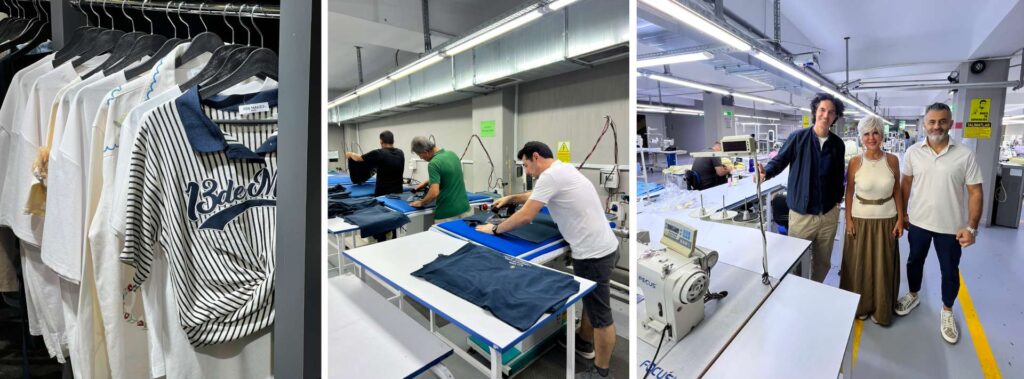
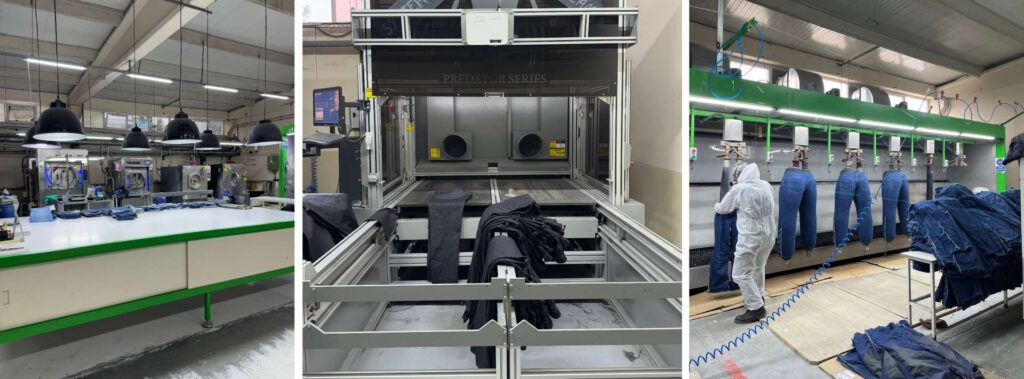
Understanding these regional strengths allows brands to make smarter sourcing decisions. A luxury knitwear collection may be better suited to Portugal, while a premium denim line could benefit from Turkey’s extensive expertise. Selecting the right manufacturing destination can improve product quality, reduce development challenges, and create a more efficient supply chain.
This is where Deepwear adds value beyond traditional sourcing.
With 17 global offices, including teams across key production hubs such as Thailand, Turkey, Portugal, Spain, Morocco, India, China, Vietnam, and other strategic markets, Deepwear maintains a local presence where manufacturing happens. Our teams work directly with suppliers, oversee sampling, evaluate factory capabilities, coordinate quality assurance, and help brands identify production partners that match their product category, quality expectations, and target MOQs.
How can a fashion brand make its menswear collection stand out in a crowded market?
Standing out in today’s modern menswear market requires more than introducing a new graphic or following the latest trend. The most successful brands differentiate themselves through thoughtful product development, premium fabric selection, refined silhouettes, and consistent menswear manufacturing. Choosing the right manufacturing partner is equally important, as expertise in sourcing, pattern development, quality control, and production can have a significant impact on the final product. By focusing on craftsmanship, versatility, and long-term value, brands can build collections that remain relevant well beyond a single season.
Build a Menswear Collection That Leaves a Lasting Impression
The most memorable collections aren’t built by following the same formulas as everyone else. They’re built through deliberate design decisions, carefully selected materials, and manufacturing partners who understand how to translate creative ideas into products that perform consistently in the market.
Whether you’re launching a new private label menswear brand or expanding an established collection, Deepwear provides end-to-end support across every stage of the process. From fashion sourcing and supplier evaluation to product development, sampling, quality assurance, and global production, our team helps brands create distinctive menswear with the quality, consistency, and scalability needed for long-term growth.
Ready to develop a menswear collection that stands apart? Contact Deepwear today to discuss your next manufacturing project and discover how our global network can help bring your vision to market.