
Learn how to evaluate next-gen sustainable fabrics, verify textile certifications, test material performance, and assess recycled fabric MOQs before bulk production.
A fabric can contain recycled fibres, use agricultural by-products, or come with a recognized sustainability certification and still present problems during manufacturing. A coating may crack under repeated flexing. A dyed fabric may lose color during washing. A supplier may have the necessary documentation but lack the capacity to reproduce the approved material at the required volume.
These are practical concerns for established fashion and lifestyle brands reviewing their material libraries. The decision involves more than identifying an alternative to a conventional textile. Brands must establish what a material contains, what its environmental claims actually mean, how it performs in its intended application, and whether the supply chain can deliver it consistently.
Regulatory developments add urgency to that assessment. The EU Directive on Empowering Consumers for the Green Transition became applicable on 27 September 2026, strengthening restrictions on misleading environmental claims. Meanwhile, textile-specific requirements for the EU’s Digital Product Passport are still being developed, with the European Commission indicating a planned adoption of the relevant delegated act in late 2027.
Our blog 8 Key Textile Industry Trends Shaping Apparel Manufacturing in 2026 explores the challenges of scaling textile innovations, including bio-fabricated materials and recycled fibers. Building on that broader industry overview, this article examines what brands need to verify before adopting next-generation textiles, from material composition and certification scope to technical performance and commercial feasibility.
In this blog, we cover:
- What sustainable textile certifications actually verify.
- How to evaluate plant-based leather alternatives, recycled polyester, and regenerative fibres.
- Which performance tests should inform material approval.
- How documentation, production capabilities, and recycled fabric MOQ affect commercial decisions.
- How Deepwear helps brands investigate sourcing options before bulk commitments.
What Do Sustainable Textile Certifications Actually Verify?
A certification is useful only when its scope matches the claim a brand intends to make.
Consider recycled polyester. A supplier’s claim that a fabric contains recycled material raises several separate questions: Is the recycled content verified? Can the material be traced through the relevant supply chain? Does the documentation support the proposed claim on the finished product?
These questions cannot be answered by looking at a certification logo alone.
Textile Exchange’s Recycled Claim Standard (RCS) and Global Recycled Standard (GRS) provide third-party frameworks for verifying recycled materials and chain of custody. The GRS includes additional social, environmental, and chemical requirements for processing, while the RCS focuses more narrowly on recycled-content verification.
The distinction affects how brands interpret supplier documentation. A recycled-content claim does not automatically establish that a fabric is biodegradable, recyclable through available waste infrastructure, or environmentally preferable across its entire lifecycle.
Chain-of-custody records provide another important layer. Textile Exchange explains that its Content Claim Standard uses scope certificates to establish whether businesses are certified for relevant activities and transaction certificates to document specific certified product shipments. The applicable requirements depend on the standard and transaction involved.
For brands, textile chain of custody should therefore be assessed against the material and claim being purchased.
Our sourcing team can help request and compare supplier documentation, identify missing information, and clarify what a supplier can substantiate. Certification bodies remain responsible for certification, while brands must determine whether their proposed marketing claims are adequately supported.
Plant-Based Leather: What Is Actually in the Material?
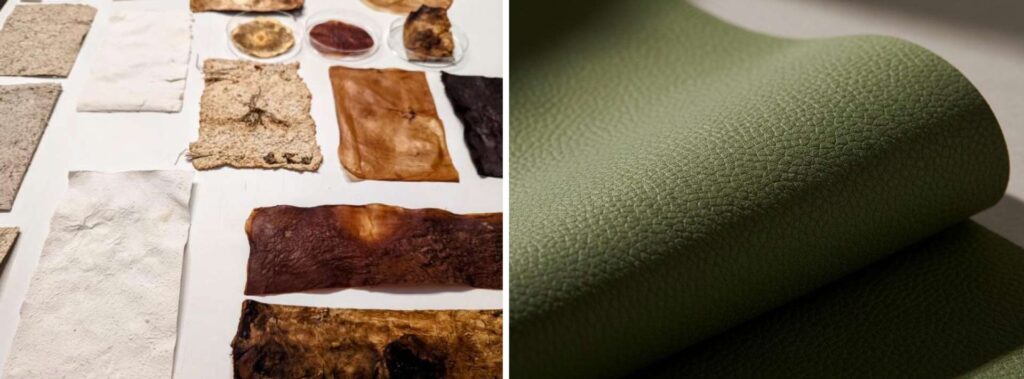
Plant-based leather alternatives are often made from agricultural by-products, plant-derived ingredients, microbial cellulose, or mycelium. Their compositions and manufacturing processes vary substantially.
A 2026 review published in Materials examined bio-based alternatives to conventional and synthetic leather, including plant-derived composites and mycelium materials. The authors identified continuing challenges involving tensile strength, water resistance, and process standardization. The review also documents how some commercial alternatives incorporate polyester or polyurethane, affecting their biodegradability.
The practical implication is that the percentage of plant-derived content cannot establish the performance or end-of-life properties of the finished material.
For example, a brand developing a structured handbag needs to assess whether a proposed material can withstand repeated handling, flexing, abrasion, and stress around seams. A decorative panel may have different requirements from a bag handle or a shoe upper.
The sourcing assessment should establish:
- The backing, coating, binder, and other components of the material.
- Tensile strength, tear resistance, and flex resistance appropriate to the application.
- Resistance to moisture, abrasion, and surface deterioration.
- Compatibility with the intended adhesives, stitching, printing, and finishing processes.
- Evidence supporting claims about bio-based content, biodegradability, or other environmental attributes.
The study does not establish that every plant-based alternative will fail these tests. It demonstrates why performance must be evaluated material by material rather than inferred from a category label.
Reviewing a new leather alternative for an upcoming collection? Our Deepwear team can help investigate supplier options, clarify material specifications, and coordinate sampling discussions before you commit to bulk production. Contact us to discuss your sourcing requirements.
Recycled Polyester: Beyond the Recycled-Content Claim
Recycled polyester is already part of the sustainable-material options discussed in our Introduction to Sustainable Fabrics. The more specific sourcing challenge is determining whether the proposed material meets both the brand’s documentation requirements and its technical specification.
The first step is to establish what the certification covers. Textile Exchange’s RCS and GRS have different scopes, so brands should verify the applicable standard, certification status, product documentation, and permitted claims rather than treating the two labels as interchangeable.
The second step is technical qualification.
Depending on the intended product, the team may need to assess tensile strength, abrasion resistance, colorfastness, dimensional stability, pilling, stretch recovery, or performance after repeated washing. A recycled fabric must meet the same relevant product requirements as any other material under consideration.
The third step is repeatability. A sample that performs well during development does not, by itself, establish that subsequent production lots will have identical characteristics. Brands should agree on the approved specification, relevant tolerances, testing requirements, and procedures for handling deviations.
These checks are particularly important when a fabric substitution occurs after product development. As explained in our blog, Beyond Fabric Sourcing: How Material Availability Affects Fashion Manufacturing, an alternative material can trigger additional sampling, testing, approvals, and changes to production planning.
Material approval should therefore account for both the initial sample and the supplier’s ability to reproduce the required specification.
Regenerative Plant Fibres: From Agricultural Claims to Textile Evidence
Regenerative agriculture is associated with farming practices intended to improve outcomes such as soil health, biodiversity, and water management. The environmental benefits depend on the practices implemented, the conditions being measured, and the evidence supporting the specific claim.
A brand sourcing a regenerative plant fibre needs to distinguish agricultural evidence from evidence about the textile itself.
Farm-level documentation may describe how a crop was cultivated. Fibre and processing records may establish the origin and handling of the material. Additional documentation may be needed to substantiate claims about the finished fabric or garment.
A regenerative claim should not be interpreted as proof that a finished textile is automatically lower-impact in every respect. Processing, dyeing, finishing, durability, and the product’s expected service life also influence its overall environmental profile.
For our team, the sourcing priority is to establish what the supplier can document, which stages are covered, and whether the available evidence supports the brand’s intended claim.
When Material Innovation Meets Production Reality
Testing requirements should follow the intended product, material construction, and applicable standards. A single universal test panel is unlikely to suit every textile.
|
Evaluation |
What the brand needs to establish |
|
Tensile and tear strength |
Whether the material withstands expected loads and stresses. |
|
Colorfastness |
Whether color remains acceptably stable under relevant washing, rubbing, perspiration, or light exposure. |
|
Dimensional stability |
Whether the material shrinks, stretches, or distorts under intended care conditions. |
|
Abrasion and flex resistance |
Whether the surface, coating, or structure withstands repeated use. |
|
Dyeing and finishing compatibility |
Whether the material responds consistently to the planned dye, wash, print, coating, or garment-dye process. |
|
Composition and documentation |
Whether the declared fibre content and relevant material claims match the available evidence. |
|
Bulk consistency |
Whether subsequent lots can meet the approved specification within agreed tolerances. |
These tests answer different questions. Colorfastness does not establish tensile strength, and a successful laboratory result does not establish that every production lot will perform identically.
The brand should define acceptance criteria before bulk production and retain an approved physical reference where appropriate. Testing can be coordinated with qualified laboratories and suppliers, while final material approval remains with the brand.
Our existing Essential Fabric Sourcing Checklist explains the broader sampling, testing, and approval process. The additional consideration for next-generation materials is selecting tests that address the specific composition, construction, and processing risks of the proposed textile.
Recycled Fabric MOQ: Can the Material Work Commercially?
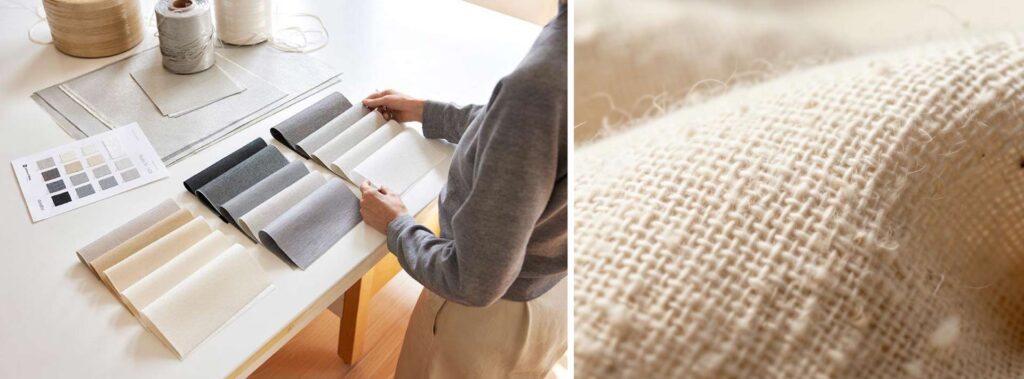
A suitable material can still be commercially impractical when its minimum order quantity, development costs, or lead time exceed the collection’s requirements.
There is no universal MOQ for recycled fabrics or other next-generation textiles. Requirements depend on whether the material is available from stock or requires custom development, as well as its color, construction, finishing, and production setup.
A stock fabric may be available in smaller quantities, while a custom color or specialised finish may require a larger commitment. Development fees, testing, certification-related costs, freight, and lead times can also affect the total sourcing decision.
Our blog, Beyond Fabric Sourcing: How Material Availability Affects Fashion Manufacturing explains why availability, supplier capacity, and substitutions can affect production planning. The fabric-sourcing checklist covers MOQ comparisons, sample fees, dyeing and finishing costs, and lead-time considerations.
For a brand comparing materials, the practical questions are:
- Is the required specification available from existing stock?
- What is the MOQ for the exact composition, color, weight, and finish?
- Are separate development or testing fees involved?
- Can the supplier reproduce the approved material for repeat orders?
- What happens to costing and timelines if the original material becomes unavailable?
At Deepwear, our team can help request quotations, compare supplier terms, investigate alternatives, and clarify production constraints. Actual MOQs, prices, and lead times remain supplier-dependent.
How can Deepwear help with sustainable textile sourcing?
Our team can help identify and compare suppliers, request relevant documentation, coordinate sampling, and assess commercial considerations such as MOQ, cost, and lead time. Certification and laboratory testing must be handled by the appropriate qualified organisations, and the brand retains responsibility for final product approval and claims.
How Deepwear Supports Material Qualification
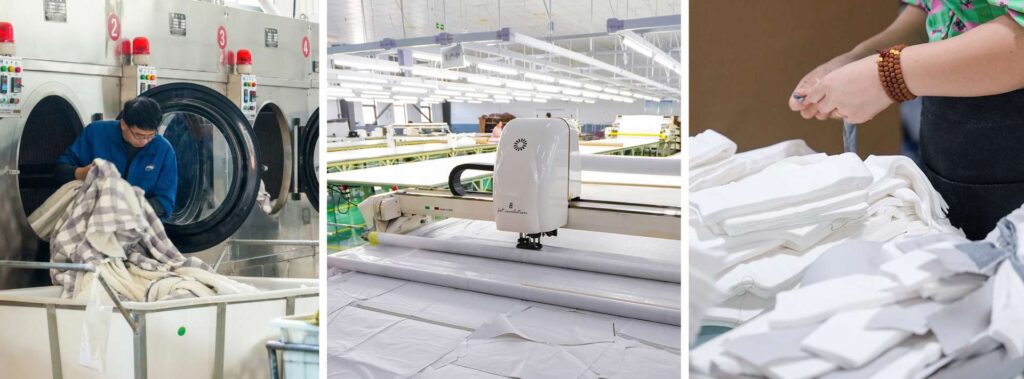
Next-generation textile sourcing requires coordination between a brand’s product requirements and the capabilities of its suppliers and manufacturing partners.
Our role is to help connect those requirements with realistic sourcing options. Through supplier evaluation, quotation comparisons, documentation requests, and sampling coordination, we can help brands investigate whether a proposed material is suitable for further development.
This does not replace independent laboratory testing, certification by an authorised body, or the brand’s responsibility for approving its products and environmental claims.
It does help bring the relevant questions into the sourcing process before a material decision becomes an expensive production problem.
For established brands reviewing their material libraries, the objective is straightforward: identify materials that meet the intended performance requirements, have credible supporting documentation, and can be sourced under commercially workable conditions.
Are you evaluating next-generation textiles for an upcoming collection? Contact the Deepwear team to discuss material sourcing, supplier capabilities, and the practical steps involved in qualifying your next fabric.