
Deepwear explores how new EU unsold inventory rules could reshape fashion manufacturing, from production quantities and MOQs to replenishment and flexible sourcing.
Unsold inventory has always been an expensive manufacturing problem. Brands can lose money through markdowns, storage, liquidation, returns, and products that never find a buyer. Now, for many companies selling into the European market, what happens to that inventory is also becoming a regulatory consideration.
As of 19 July 2026, large companies in the EU are prohibited from destroying unsold clothing, clothing accessories, and footwear under the Ecodesign for Sustainable Products Regulation (ESPR). Medium-sized companies will be subject to the same prohibition from 19 July 2030, while micro and small enterprises are exempt from the prohibition. Specific exceptions also apply, including certain unsafe, damaged, counterfeit, or intellectual-property-infringing products.
The rule does not prohibit markdowns. Businesses can still sell unsold products through discounts or alternative markets, donate them, or prepare them for reuse through repair, refurbishment, or remanufacturing.
In this blog we cover:
- How new EU rules on unsold clothing could affect fashion manufacturing
- Why demand forecasting and production quantities matter
- How MOQ decisions can influence excess inventory
- Why replenishment and manufacturing flexibility are becoming more important
- How product longevity, sampling, and demand-responsive production can support better inventory planning
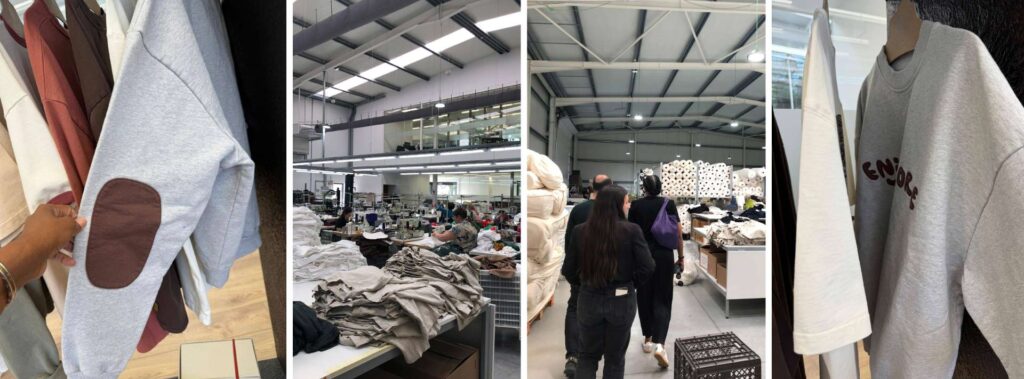
Unsold Inventory Is Becoming a Manufacturing Consideration
The scale of the problem helps explain why this is attracting regulatory attention.
According to the European Commission, an estimated 4–9% of textile products placed on the European market are destroyed before being used, equivalent to approximately 264,000–594,000 tonnes of textiles each year.
For a brand, excess inventory does not begin when an unsold garment reaches a warehouse. It begins much earlier, when decisions are made about product development, materials, quantities, production timing, and supplier capacity.
A brand might manufacture more units because the factory offers a lower price at a higher quantity. It might commit to a fabric MOQ that requires more garments than expected demand supports. It might produce a seasonal item months before the selling window opens. Or it might lack a practical route to replenish a successful product, encouraging a larger initial order.
These are manufacturing decisions.
The EU’s new rule therefore adds another reason to examine what happens upstream.
1. Forecasting Matters Before Production Begins
Demand forecasting has always been difficult in fashion. Consumer preferences change, trends move quickly, and even established brands can misjudge how a product will perform.
Deepwear previously explored this in Avoiding Supply Chain Disruptions in Fashion Production, where inaccurate forecasting is linked to both overproduction and underproduction.
The manufacturing response should not simply be to produce less.
A more useful question is:
How much inventory should a brand commit to before it has stronger evidence of demand?
Historical sales, customer data, product category, seasonality, price point, expected product lifespan, and planned sales channels can all influence that decision.
A brand may have a strong forecast for a core product that has sold consistently over several seasons. A completely new silhouette based on a short-lived trend carries a different level of uncertainty.
Treating both products as if they require the same production strategy can create unnecessary inventory exposure.
Need help translating demand expectations into a realistic manufacturing plan? Deepwear works with brands to connect product requirements with appropriate factories, suppliers, quantities, and production capabilities. Book a consultation with our team.
2. MOQ Decisions Can Shape Inventory Risk
Minimum order quantities (MOQs) can have a major influence on how much a brand ultimately produces.
A factory may be able to manufacture a garment at a lower unit cost when the order is larger. Materials, trims, dyeing, printing, packaging, and other production inputs may also have their own minimums.
That creates a familiar calculation:
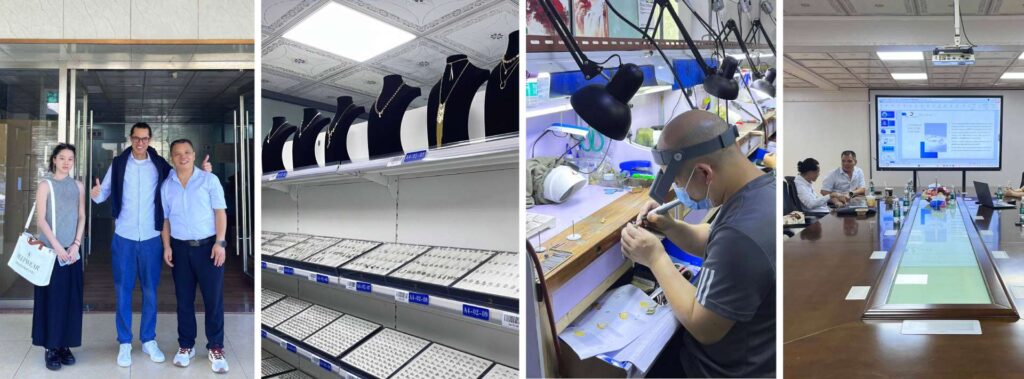
Higher quantity → potentially lower unit cost
But there is another side:
Higher quantity → greater inventory exposure if demand is lower than expected
Deepwear’s MOQ Made Simple: Managing Garments, Jewelry, and Packaging examines how minimum quantities influence production costs and flexibility. Our broader manufacturing guidance also notes that factories work with different order quantities and that matching a project with the appropriate factory is important.
A higher MOQ may be reasonable for a proven bestseller with predictable demand. It may be harder to justify for an experimental product with limited sales history.
This is where MOQ strategy becomes part of inventory planning rather than simply a purchasing consideration.
3. Smaller Initial Runs Can Create Room to Learn
Producing fewer units at the beginning does not automatically eliminate inventory risk. Smaller runs can increase unit costs, and some factories or materials may not be suitable for very low quantities.
The value lies in creating a closer relationship between initial production and actual demand.
A brand might:
- Develop and sample a product.
- Manufacture an initial quantity.
- Monitor sales and customer response.
- Identify products with stronger demand.
- Replenish those products where practical.
- Avoid committing the same volume to products that do not perform.
This approach is particularly relevant to capsule collections and limited launches.
Our blog How to Manage Sourcing for a Capsule Collection already explores small-batch production, MOQ planning, material repeatability, and establishing a replenishment strategy before launch.
The broader manufacturing lesson is that production quantity does not have to be determined entirely before a brand has market feedback.
Where supplier relationships and materials allow it, a staged production model can give brands more flexibility.
4. Replenishment Could Matter as Much as Initial Production
A smaller first production run only works when a brand has a realistic way to produce more.
This makes replenishment manufacturing an important consideration when selecting suppliers.
Before launch, brands can ask:
- Can the factory reproduce this style?
- Can the fabric or equivalent material be reordered?
- What is the likely lead time for a repeat order?
- Can the supplier accommodate smaller repeat quantities?
- Can the same colors and trims be sourced again?
- Which products are intended to become evergreen styles?
- How much production capacity could be available during the selling period?
A product that sells quickly but cannot be reproduced may require a larger initial commitment, whereas a product that can be replenished efficiently may give a brand more room to start with a controlled quantity.
That makes manufacturing flexibility a commercial consideration, not simply a sustainability objective.
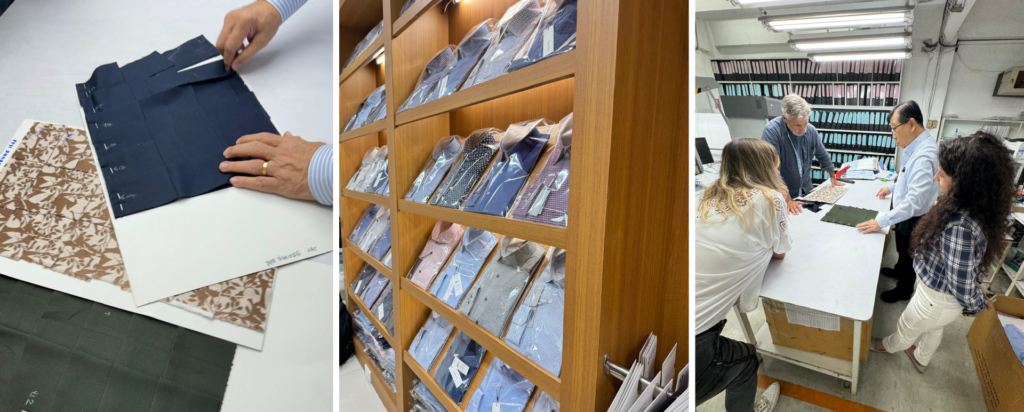
5. Product Longevity Can Influence Production Planning
The expected commercial lifespan of a product also matters.
An evergreen shirt that can remain in a collection for several years has a different inventory profile from a highly seasonal item designed around a short-lived trend.
For longer-life products, brands may have more opportunities to:
- repeat production;
- reorder materials;
- refine quantities;
- update colors;
- adjust specifications;
- distribute inventory over a longer selling period.
This is one reason Deepwear’s capsule sourcing guidance emphasizes repeatability, durable materials, and silhouettes that can work across multiple seasons.
Product longevity therefore has a direct manufacturing implication.
The longer a product remains commercially relevant, the more opportunities a brand may have to respond to actual demand instead of relying entirely on an initial forecast.
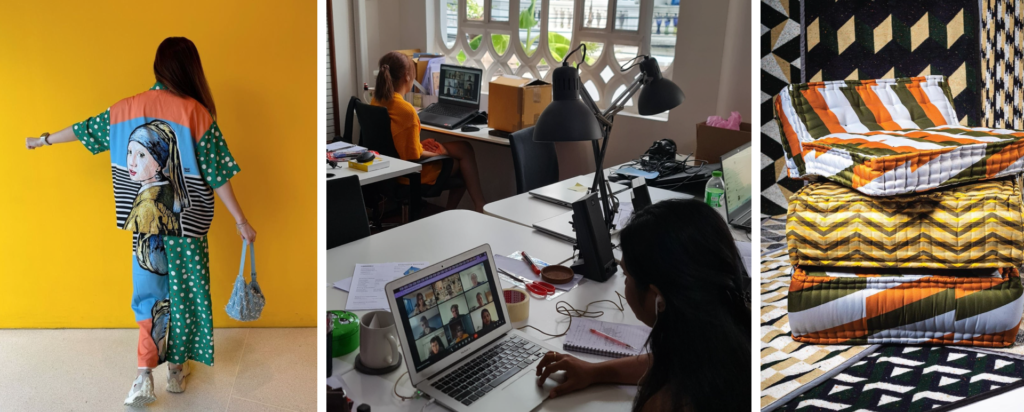
6. Flexible Manufacturing Becomes More Valuable
Not every factory is structured to support the same production model.
Some manufacturers are optimized for high-volume orders. Others may be more appropriate for smaller batches, specialized products, or repeat production.
Deepwear’s manufacturing network includes workshops and factories with different capabilities and production scales. Our existing guidance notes that some factories can work with smaller orders while others operate at higher MOQs, making supplier-product matching an important part of production planning.
This is particularly relevant when brands are trying to reduce excess inventory.
A manufacturer should be assessed on more than the initial quotation.
Brands can also consider:
- production quantity flexibility;
- material availability;
- lead times;
- repeat-order capability;
- technical specialization;
- capacity during peak periods;
- communication and planning;
- ability to support product development as well as bulk production.
The cheapest unit price does not necessarily produce the lowest overall inventory cost.
Choosing a manufacturer is also a question of production strategy. Deepwear can help brands assess factory capabilities, quantities, materials, and sourcing requirements before committing to production. Talk to our team about your next manufacturing project.
7. On-Demand Manufacturing Has a Role, but It Is Not a Universal Answer
The changing inventory landscape also puts greater attention on on-demand manufacturing and other flexible production models.
Technologies such as 3D knitting can reduce certain forms of material waste and support production closer to demand. But they are not suitable for every product or brand.
Deepwear’s 3D Knitting, On-Demand Manufacturing, and the Realities of Modern Production examines both the inventory advantages and the practical limitations of these approaches.
The important point is not that every fashion brand should move to on-demand production.
Instead, brands can consider whether the production model matches the commercial characteristics of the product.
For some products, traditional bulk manufacturing may remain the most practical option.
For others, small-batch production, pre-orders, made-to-order manufacturing, or other demand-responsive approaches may make more sense.
The manufacturing model should follow the product, materials, customer demand, and commercial requirements.
8. Sampling and Product Development Can Reduce Downstream Risk
Inventory decisions also begin before bulk production.
Effective fashion product development can identify problems with fit, materials, construction, cost, and manufacturability before a large order is placed.
Sampling gives brands an opportunity to assess whether a product works as intended before committing significant production resources.
The same logic applies to materials.
If a fabric cannot be reordered easily, has a long lead time, or requires a high MOQ, that information can influence whether the material is appropriate for a product expected to require replenishment.
Deepwear’s capsule sourcing guidance recommends addressing fabric availability and MOQ feasibility early in development because sourcing constraints can shape the collection before production begins.
Better development does not eliminate uncertainty. It can, however, move some decisions earlier, when changing them is generally more practical.
9. What Happens When Inventory Still Does Not Sell?
Even with careful forecasting, flexible production, and controlled quantities, some products will remain unsold.
The new EU rules do not require every product to be sold at full price. Businesses can use discounts and alternative markets, donate products, or prepare them for reuse through repair, refurbishment, or remanufacturing.
That means brands may need to think about inventory exit strategies before production begins.
For example:
- Where could excess stock be sold?
- Can products be moved to another market?
- Can they be repaired or refurbished?
- Can they be returned to a manufacturer for another use?
- Could components or materials be recovered?
- Which products are suitable for donation?
These are only some of the questions brands can consider when developing a plan for excess stock. The right approach will depend on the product and market, and Deepwear can help brands assess manufacturing and sourcing options as part of the wider production strategy. Book a consultation with our team.
What Brands Should Reconsider in Their Manufacturing Strategy
The new EU rules provide a useful reason to revisit several established production assumptions.
Before placing a bulk order, brands can ask:
- How confident are we in the demand forecast?
A new product with little sales history may warrant a different approach from an established bestseller.
- What quantity do we actually need for the first production run?
Consider expected demand alongside MOQ, unit economics, lead time, and replenishment possibilities.
- Can this product be replenished?
Material availability, factory capacity, repeatability, and lead times can determine how practical a smaller initial run really is.
- How flexible is the manufacturer?
Supplier capabilities should match the brand’s expected production model rather than simply the initial order.
- What is the product’s commercial lifespan?
Seasonless and repeatable products can provide more opportunities for staged production than highly time-sensitive products.
- What happens if the forecast is wrong?
A realistic plan should account for markdowns, alternative sales channels, donation, reuse, repair, refurbishment, recycling, and other appropriate routes for excess stock.
These questions are only part of the manufacturing assessment. The right approach will depend on the product, materials, market, production quantities, supplier capabilities, and commercial model.
For brands navigating those variables, working through the manufacturing strategy before placing the order can reveal options that are difficult to recover once production is already underway.
Need to work through those variables for your next collection? Deepwear can help you assess sourcing and manufacturing options before production begins. Book a consultation with our team.
From Inventory Management to Manufacturing Strategy
The EU’s prohibition on destroying unsold clothing does not mean fashion brands can eliminate excess inventory.
It changes the consequences of producing more than the market can absorb.
For large companies covered by the rule, destruction of unsold clothing, clothing accessories, and footwear is now prohibited from 19 July 2026, with medium-sized companies coming under the prohibition in 2030. The regulation also establishes disclosure and prevention requirements around unsold consumer products.
That makes manufacturing decisions increasingly connected to what happens at the end of a product’s commercial life.
Forecasting, MOQ planning, smaller initial runs, replenishment, supplier flexibility, product longevity, sampling, and demand-responsive production can all play a role.
The objective is not simply to manufacture less.
It is to make production quantities and production capabilities better aligned with the product and the demand that the brand can realistically support.
At Deepwear, we connect brands with factories, suppliers, and manufacturing capabilities across our global network, helping teams evaluate production requirements before they commit to manufacturing. If you’re reassessing your production quantities, MOQ strategy, or supplier network, book a consultation with our team.