
Learn how Deepwear helps brands choose jewelry manufacturers based on quality, ethical sourcing, materials, production capabilities, and transparency.
Choosing the right jewelry manufacturer is not simply a matter of comparing prices, minimum order quantities, or production locations. For a brand, the right supplier needs to meet its specific expectations for product quality, materials, finishing, production capacity, transparency, and responsible sourcing.
This is where a structured jewelry manufacturer selection process becomes important. At Deepwear, we work with brands to define these requirements first, then identify and assess manufacturers against them. Our role is not to make the decision on behalf of the brand, but to provide the supplier access, production knowledge, coordination, and practical assessment needed to make an informed choice.
From evaluating samples and production capabilities to reviewing material documentation and identifying potential risks, the objective is to find a manufacturing partner that fits the brand rather than simply finding a factory that can produce jewelry.
In this blog we cover:
- How Deepwear evaluates jewelry manufacturer quality through capabilities, sampling, experience, and quality-control processes
- How ethical and responsible manufacturing is assessed, including documentation, certifications, and third-party verification
- How materials, sourcing, and traceability are evaluated to support responsible jewelry production
- Red flags to look for when selecting a jewelry manufacturer, from inconsistent quality to unclear sourcing and documentation
- How Deepwear supports jewelry sourcing and manufacturer selection from supplier screening and sampling through production follow-up
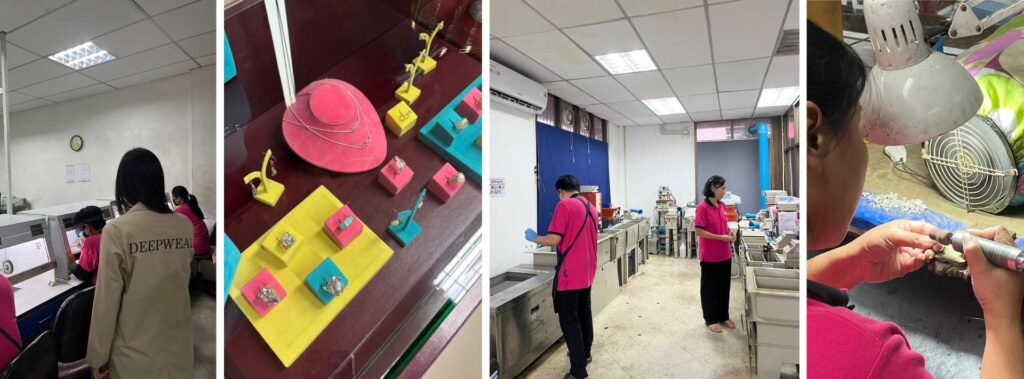
1. Defining the Right Manufacturing Requirements With Your Brand
Before Deepwear begins evaluating potential jewelry manufacturers, we first work with the brand to understand what the product and production process require.
This starts with defining factors such as:
- Product specifications and design
- Materials and components
- Finishing requirements
- Quality expectations
- Target price
- Order quantities
- Production timelines
- Destination-market requirements
- Specific ethical or sourcing standards
These requirements provide the basis for identifying suitable manufacturers. A supplier that is appropriate for one jewelry collection may not be appropriate for another.
For example, a brand producing relatively simple fashion jewelry at higher volumes may require a manufacturer with different capabilities from a luxury brand producing intricate pieces with precious metals or gemstones. Manufacturing experience, capacity, finishing techniques, and quality-control requirements can all vary according to the product.
By establishing these criteria before supplier selection, Deepwear can focus the sourcing process on manufacturers that are relevant to the brand’s actual needs rather than presenting a generic list of factories.
The brand also remains involved throughout this process. Deepwear provides recommendations based on its sourcing and production expertise, while the brand determines which requirements are most important to its business.
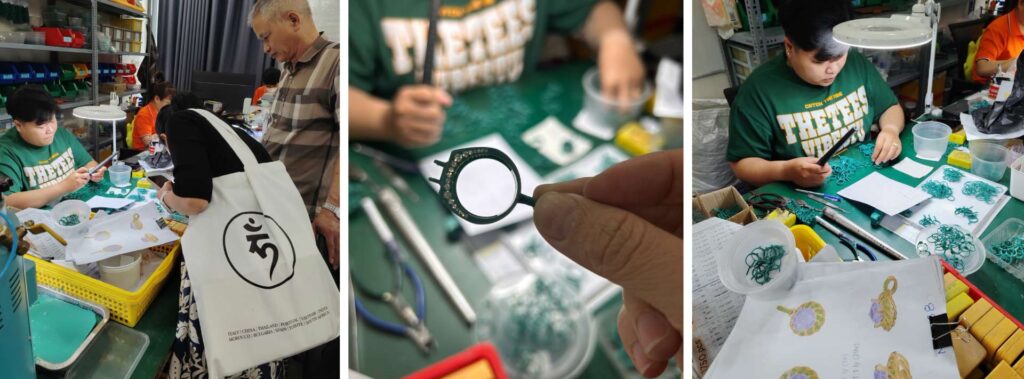
2. How Deepwear Assesses Jewelry Manufacturer Quality
Once the brand’s requirements are established, Deepwear evaluates potential manufacturers based on whether their capabilities align with those specifications.
Several factors are considered during the assessment, including:
Relevant manufacturing experience
A manufacturer’s previous experience can provide an indication of whether it has worked with comparable products, materials, construction methods, and finishing techniques.
Deepwear considers this experience when identifying potentially suitable suppliers, particularly where a product requires specialized production knowledge.
Production capabilities and capacity
A manufacturer also needs to have the technical and production capacity required for the order. This includes assessing whether its facilities, equipment, workforce, and production capabilities are appropriate for the product and expected quantities.
Capacity matters not only for placing an initial order but also for determining whether a manufacturer can support the brand if production volumes change.
Samples and prototypes
Sampling provides an opportunity to evaluate whether a manufacturer can translate the brand’s specifications into a finished product.
Deepwear works with the brand to review samples against the agreed requirements. This can include examining materials, dimensions, finishing, construction, and overall quality.
If technical or quality concerns are identified, Deepwear raises them with the manufacturer and works with both parties to clarify or address the issue before production proceeds.
For a more detailed look at quality management in jewelry production, Quality Assurance in Jewelry Manufacturing: Deepwear Approach examines how quality can be assessed from materials through to finished jewelry.
Quality-control processes
Deepwear also considers how a manufacturer manages quality during production. A supplier’s ability to explain its quality-control processes is an important part of understanding how consistently it can reproduce an approved product.
Ultimately, quality acceptance remains a joint process. Deepwear provides its assessment and recommendations, while the brand makes the final decision about whether a sample or production output meets its standards.
Need help identifying the right jewelry manufacturer? Deepwear can help brands define production requirements, identify suitable manufacturers, assess capabilities, and coordinate communication throughout the sourcing process. Start a conversation with our team.
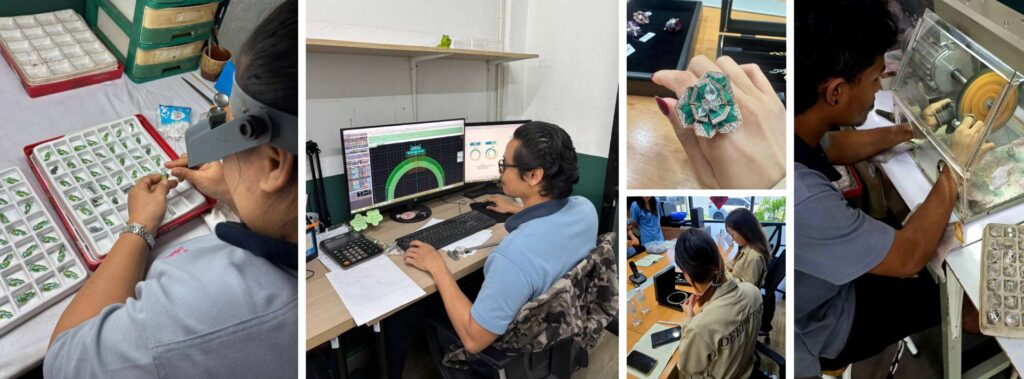
3. How Deepwear Evaluates Ethical and Responsible Manufacturing
Quality is only one part of supplier selection. Brands that prioritize ethical jewelry manufacturing also need to understand how their products and materials are sourced and produced.
The documentation required will depend on the jewelry category, materials, destination market, and the brand’s own standards. Depending on the project, Deepwear may help brands request information such as:
- Company and factory registration details
- Social-compliance or ethical-audit documentation
- Material certificates and declarations
- Documentation for recycled or certified materials
- Responsible sourcing documentation for precious metals or stones
- Product testing or laboratory reports
- Chemical-compliance documentation
- Production-site and subcontractor information
However, documentation should not be treated as automatic proof that a supplier meets every ethical requirement.
A supplier-provided certificate may support a particular claim, but it does not necessarily provide a complete picture of the manufacturer’s current practices or supply chain. Deepwear therefore helps brands identify what information is relevant and highlights areas that may require additional verification.
Where independent verification is appropriate, the brand and Deepwear can determine whether a third-party audit, certification, laboratory test, or other qualified verification process is necessary.
Deepwear’s role is to facilitate and advise on this process, rather than act as an independent certifying body.
For a broader look at how brands can approach supplier transparency and verification, A Guide to Ethical Sourcing and Manufacturing examines the importance of assessing manufacturing partners beyond the claims they make.
For jewelry-specific examples of ethical sourcing and sustainability claims, Greenwashing in the Jewelry Industry: The Importance of Ethical Sourcing and Transparency explores why brands should examine the evidence behind environmental and ethical claims.
4. Assessing Materials, Sourcing, and Traceability
Material selection is another area where Deepwear works directly with brands and manufacturers during the sourcing process.
The first step is establishing exactly what the brand requires. This may include specific metals, plating, gemstones, crystals, beads, recycled materials, or certified components.
Deepwear can then communicate these requirements to potential suppliers and request relevant information about:
- Metal composition and plating
- Stone and gemstone sourcing
- Component origins
- Material traceability
- Recycled or certified material claims
- Chemical and product-safety requirements
- Supplier information
- Subcontracting arrangements
This process helps identify inconsistencies between what a manufacturer claims to provide and the documentation or information available to support those claims.
For example, if a brand specifies a particular metal composition or recycled material, the manufacturer should be able to provide appropriate information to substantiate the specification. Where the available documentation is insufficient, additional verification may be recommended.
The level of traceability required will ultimately depend on the brand. Deepwear’s role is to help determine what information is relevant to the product and identify where further investigation may be necessary.
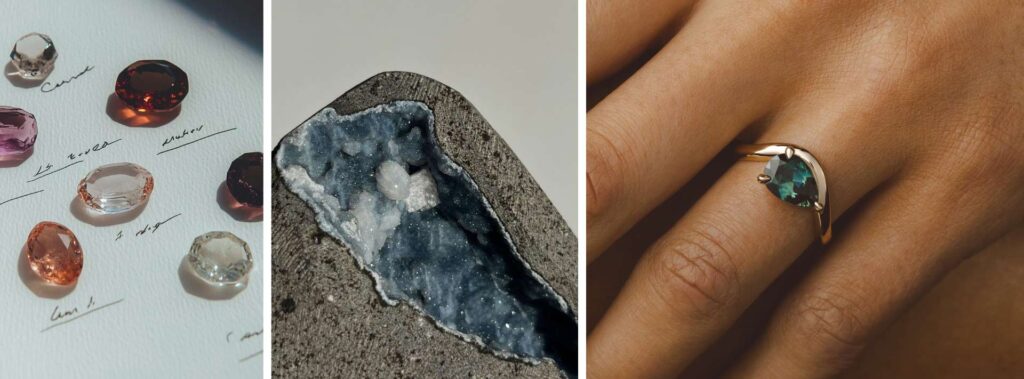
5. Red Flags Deepwear Looks for When Evaluating Jewelry Manufacturers
Even when a manufacturer appears suitable initially, certain warning signs can indicate that further investigation is necessary.
During supplier evaluation, Deepwear may flag issues such as:
- Inconsistent quality between samples
- Unclear or inadequate quality-control processes
- Inability to clearly explain materials or production methods
- Missing or inconsistent company documentation
- Certifications that cannot be reasonably verified or appear irrelevant
- Unclear material sourcing
- Limited transparency around subcontractors
- Significant differences between approved samples and production
- Unrealistically low pricing without a clear explanation
- Poor communication
- Unwillingness to document agreed requirements
- Reluctance to provide reasonable information needed for supplier evaluation
A red flag does not necessarily mean that a manufacturer should immediately be rejected. Instead, it indicates that the issue should be investigated and discussed with the supplier and brand.
For us at Deepwear, the purpose of supplier evaluation is not simply to eliminate manufacturers. It is to make potential risks visible so that brands can decide whether those risks are acceptable, manageable, or grounds for finding another manufacturing partner.
6. Match the Manufacturer to Your Jewelry Production Strategy
Finding a manufacturer that can produce quality jewelry does not necessarily mean you have found the right manufacturing partner. The supplier also needs to fit the commercial and technical requirements of your collection.
Deepwear considers factors such as:
- Jewelry category and product complexity
- Materials and gemstone requirements
- Finishing techniques
- Target price
- Minimum order quantities
- Required production volume
- Sampling requirements
- Production timelines
- Potential for future scalability
A manufacturer may have excellent craftsmanship but be unsuitable for a particular project because its minimum order quantity is too high, its production capacity does not match the brand’s needs, or its pricing is incompatible with the target market.
The opposite can also be true. A manufacturer capable of producing at scale may not have the specialized skills required for intricate pieces or specific materials.
This is why Deepwear does not approach jewelry sourcing as a simple factory-matching exercise. The manufacturer needs to be assessed in relation to the product, the brand’s commercial objectives, and the expected production requirements.
For brands working with gemstones, From Colored Gemstones to Production Strategy: Luxury Jewelry Manufacturing in 2026 provides further insight into how material selection, product complexity, manufacturing capabilities, and production strategy can influence supplier decisions.
Consider the manufacturer beyond the first order
Supplier selection should also account for what happens after the initial production run.
If a brand expects to expand a collection, increase order volumes, introduce new designs, or develop more complex products, the manufacturer’s capabilities need to be considered with those possibilities in mind.
Deepwear therefore evaluates not only whether a supplier can meet the immediate requirements but also whether its capabilities and production structure make sense for the brand’s broader manufacturing strategy.
7. How Deepwear Supports Brands From Supplier Selection to Production
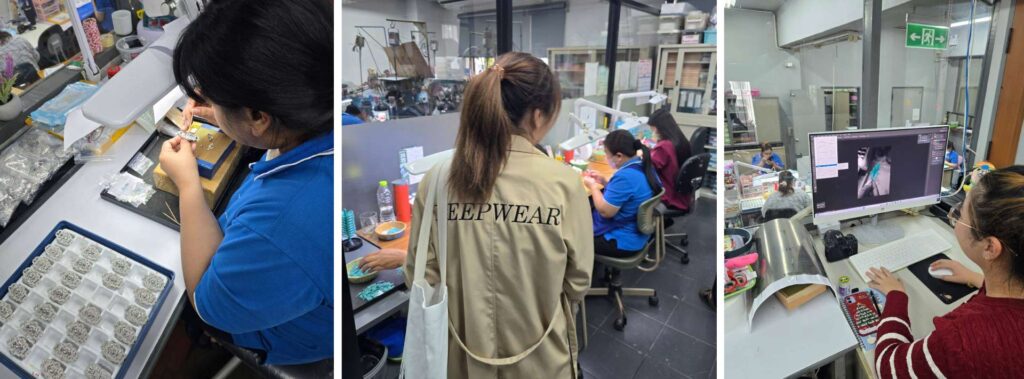
Selecting a jewelry manufacturing partner involves multiple stages, from the initial supplier search through production follow-up. Deepwear supports brands throughout this process while keeping the brand’s requirements at the center of each decision.
The process can include:
- Understanding the brand’s requirements: Deepwear begins by establishing the product specifications, materials, quantities, target pricing, quality expectations, and other requirements that will determine which manufacturers are appropriate.
- Identifying suitable manufacturers: Using its manufacturing network and sourcing expertise, Deepwear identifies potential suppliers whose capabilities are relevant to the project.
The objective is not simply to provide a large number of manufacturers. It is to identify manufacturers that have a reasonable fit with the brand’s specific requirements.
- Screening and evaluating suppliers: Potential manufacturers can then be assessed based on their relevant experience, capabilities, previous work, sampling, capacity, communication, and available quality-control processes. Where documentation is relevant, Deepwear can also coordinate requests for company information, material documentation, compliance records, and other supporting information.
- Managing communication and sampling: Clear communication between the brand and manufacturer is particularly important during sampling. Deepwear can help communicate specifications, clarify technical questions, review samples, and raise potential quality concerns. This helps reduce the risk of misunderstandings between the approved design and what ultimately enters production.
- Supporting production follow-up: Once a manufacturer has been selected, Deepwear can continue supporting communication and production coordination. This allows potential issues to be identified and communicated during the production process rather than leaving the brand to manage the supplier relationship independently.
- Advising when additional verification is needed: Not every manufacturing requirement can be resolved through supplier communication alone. When a project requires independent laboratory testing, formal certification, ethical auditing, or legal compliance assessment, Deepwear can advise the brand on when additional third-party verification may be appropriate.
This distinction is important. Deepwear supports supplier evaluation and production management, but it does not replace independent certification, laboratory testing, or formal auditing where those services are required.
The Brand Still Makes the Final Decision
Deepwear’s role in jewelry manufacturer selection is collaborative rather than prescriptive.
The brand establishes its objectives and standards. Deepwear contributes sourcing knowledge, manufacturer access, production expertise, coordination, and risk assessment. Together, we evaluate the available options.
The final decision remains with the brand.
This approach also recognizes that different brands will have different definitions of an appropriate manufacturer. A brand may prioritize low-volume production and specialized craftsmanship, while another may prioritize scalability and cost efficiency. One may require extensive material traceability, while another may have more limited sourcing requirements.
There is therefore no universal checklist that can determine whether a manufacturer is “ethical” or “high quality” in isolation. The more useful question is whether the manufacturer can demonstrate that it meets the specific quality, sourcing, production, and transparency requirements established by the brand.
Choosing a Jewelry Manufacturer With Greater Confidence
The right jewelry manufacturer should be evaluated on more than a portfolio, price quote, or certification.
Brands need to consider whether a manufacturer can consistently deliver the required quality, work with the specified materials, provide appropriate documentation, communicate clearly, manage production effectively, and provide sufficient transparency around sourcing and subcontracting.
Deepwear approaches this process by working with the brand to establish its requirements, identify suitable manufacturers, assess their capabilities, coordinate documentation and sampling, and highlight potential risks. Where independent testing, certification, or auditing is necessary, Deepwear can help determine when additional verification should be considered.
The result is not a guarantee that every manufacturing risk can be eliminated. Rather, it gives the brand a clearer basis for making its own supplier decisions.
For jewelry brands, responsible manufacturing begins with choosing the right manufacturing partner. A structured evaluation process can help ensure that the supplier selected is not only capable of producing the product, but is also aligned with the standards and expectations behind the brand.
Ready to Find the Right Jewelry Manufacturing Partner? Deepwear helps jewelry brands identify, evaluate, and coordinate with suitable manufacturers based on their product, quality, sourcing, and production requirements. If you are looking for a manufacturing partner that fits your brand’s specific needs, get in touch with us to discuss your project.