
As global sourcing shifts toward scale and low cost, Turkey remains strategically relevant for brands prioritising compliance, traceability, and supply-chain resilience.
Global apparel sourcing is entering a structural reset. After years of prioritising scale, low labor costs, and increasingly fragmented offshore supply chains, brands are now operating in a far more unstable environment shaped by freight volatility, geopolitical disruption, sustainability regulation, inventory risk, and unpredictable consumer demand.
As a result, sourcing decisions in 2026 are no longer based solely on unit price. Brands increasingly evaluate manufacturing partners through a broader operational lens that includes:
- speed to market
- supply-chain visibility
- compliance readiness
- replenishment flexibility
- production resilience
- nearshoring capability
This shift has created growing pressure across the global manufacturing landscape, including in Türkiye. Reporting from Deutsche Welle has highlighted mounting strain across parts of the Turkish textile and apparel sector, including factory closures, job losses, and declining export share within the European Union as lower-cost manufacturing regions continue absorbing larger portions of global volume.
These developments are significant, but they are also part of a broader restructuring taking place across global sourcing markets rather than evidence of a simple industrial collapse.
At the same time, reducing the conversation around Türkiye to a straightforward “industry crisis” overlooks a more important structural transition underway.
In this blog, we cover:
- What the current downturn in Turkey’s apparel sector actually signals
- Why low-cost, high-volume sourcing increasingly exposes brands to risk
- How compliance and transparency are reshaping sourcing decisions
- Where Turkey aligns with EU-driven regulatory expectations
- Why speed, traceability, and accountability matter more than unit price
What the Current Downturn Really Signals
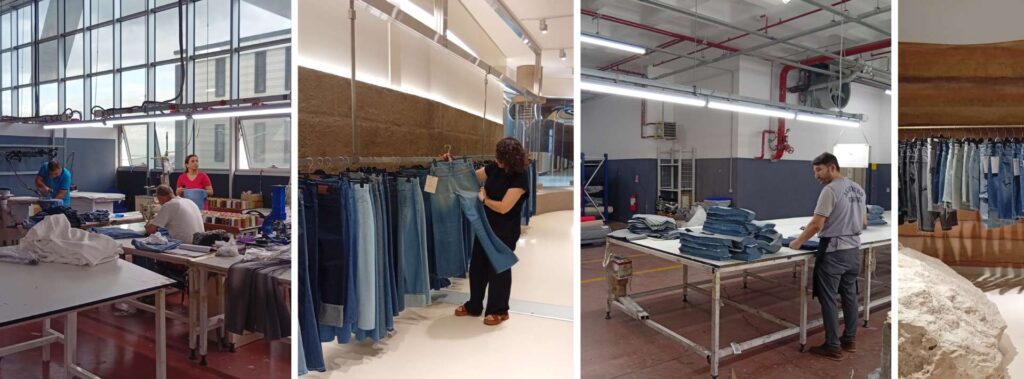
Turkey’s textile and apparel sector has been hit hard by inflation, high interest rates, and aggressive price competition from Asia. Thousands of businesses closed in 2025 alone. EU imports from China and Bangladesh surged, while Turkish exports declined.
At the same time, several international brands expanded sourcing operations into Egypt, where lower labor costs, industrial free zones, and trade agreements created a more cost-competitive manufacturing environment for volume production. Egypt has positioned itself as a strategic alternative for brands seeking to reduce costs while maintaining relatively closer access to European and Middle Eastern markets.
This broader regional shift matters because it demonstrates that sourcing diversification is no longer simply “Asia versus Turkey.” Brands are distributing production across multiple manufacturing ecosystems depending on product category, compliance requirements, speed expectations, and margin pressure.
Turkey’s cost structure is shaped by wages, compliance standards, energy costs, and regulatory alignment with Europe. These factors make Turkey structurally unsuited to ultra-low-cost mass manufacturing. Competing head-to-head with Bangladesh or China on price has never been Turkey’s comparative advantage. However, that is precisely why Turkey remains strategically relevant.
Scale and Volume Do Not Equal Better Brand Outcomes
For many brands, the appeal of low-cost sourcing is straightforward: lower unit prices and high capacity. Turkey’s proximity to European markets continues to provide a structural advantage here, particularly through regional freight corridors connecting Istanbul with major European distribution hubs. We examined this broader shift toward nearshore logistics in our analysis of the Istanbul-to-London apparel logistics corridor and how regionalized supply chains are reshaping sourcing strategy in 2026.
High-volume, low-cost supply chains often mean:
- Longer and less predictable lead times
- Fragmented production across multiple subcontractors
- Limited transparency beyond Tier 1 suppliers
- Weak or inconsistent documentation
- Higher exposure to labor, wage, and environmental violations
In isolation, none of these issues are new. What is new is the regulatory environment brands now operate in.
The Compliance Reality Brands Can’t Ignore
Across major consumer markets, supply-chain transparency is no longer optional.
Brands selling into the EU, the US, and parts of Asia are now expected to prove, not claim, that their products meet ethical, labor, and environmental standards. This includes:
- The EU’s Corporate Sustainability Due Diligence framework
- National supply-chain laws such as Germany’s Supply Chain Act
- US requirements like the California Transparency in Supply Chains Act
- Emerging systems such as Digital Product Passports
In practice, this means brands must be able to produce:
- Traceable supplier and subcontractor data
- Verified labor and wage documentation
- Chemical and material compliance records
- Third-party certifications
- Auditable, consistent documentation across collections
This is where scale-driven sourcing often breaks down.
Low cost becomes irrelevant when shipments are delayed by audits, when compliance gaps trigger retailer rejections, or when brand narratives collapse under scrutiny.
Why Turkey Aligns Well with Compliance-Driven Sourcing And How Deepwear Supports It
Turkey’s manufacturing landscape developed in close alignment with European market expectations. At Deepwear, our role is to help brands navigate this environment with clarity; connecting production strategy with regulatory realities rather than focusing on cost alone.
1. Proximity Supports Visibility
Turkey’s geographic closeness to Europe creates shorter supply chains and fewer intermediaries between brand and factory. Through our local partnerships and on-the-ground coordination, Deepwear works to maintain clear communication flows, structured documentation, and aligned timelines particularly important where traceability is required.
2. Integrated Production Ecosystems
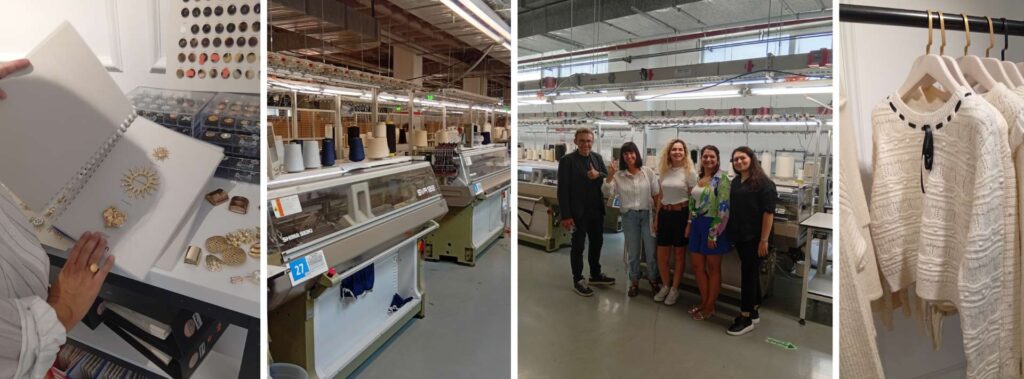
Many Turkish suppliers operate within consolidated production clusters, where fabric sourcing, dyeing, finishing, and garment manufacturing sit within the same network. Deepwear’s factory matching process considers these integrated structures carefully, helping brands work with partners where documentation and audit pathways are more straightforward.
3. Familiarity with European Compliance Standards
Certifications such as OEKO-TEX®, GOTS, ISO, and established social compliance frameworks are widely present within Turkey’s export-oriented manufacturers. Our team reviews certification scope, audit history, and documentation practices as part of supplier evaluation to support brands that sell into the EU and other regulated markets.
4. Structured Production Oversight
Turkey is particularly suited to products requiring construction precision, fabric performance, and consistent fit. Through ongoing coordination with selected suppliers, Deepwear supports production planning, quality alignment, and documentation tracking across collections. In practice, maintaining consistency across Turkey’s fast-moving manufacturing ecosystem depends on strong local oversight structures, particularly within dense textile regions such as Bursa. We explored this operational reality further in our blog on how local merchandisers help prevent QC issues in Bursa’s textile hub, including the role of on-the-ground coordination in reducing production delays, communication gaps, and quality inconsistencies across vertically integrated supply chains.
5. Independent Local Merchandising Matters
Effective production oversight depends not only on local presence, but also on operational independence. In many sourcing environments, brands rely on factory-employed merchandisers to manage communication, production updates, and quality reporting. However, factory-side teams ultimately represent the factory’s priorities, which can create conflicts of interest when production issues, delays, or quality risks emerge.
At Deepwear, our local merchandising and production management teams operate independently from the factories themselves, allowing us to support brands’ interests directly throughout sampling, bulk production, quality control, and shipment coordination. This independent oversight helps brands maintain clearer visibility across production, flag issues earlier, and retain stronger control over supplier performance, compliance tracking, and sourcing transparency.
Turkey Was Never a Low-Cost Destination And That’s the Point
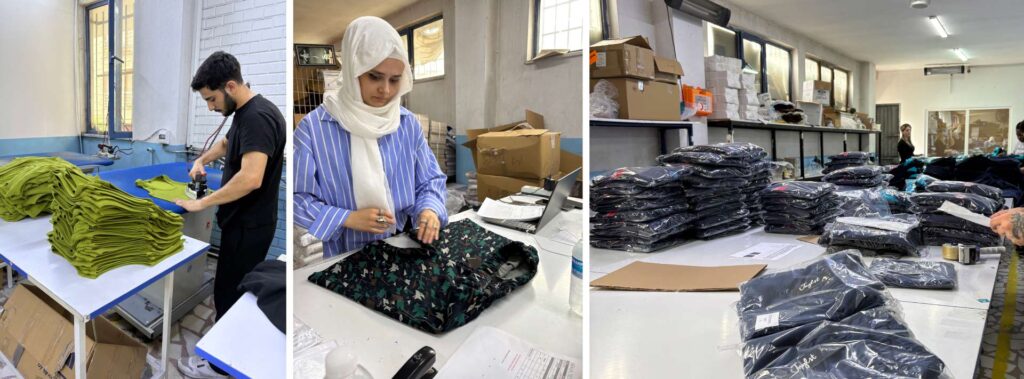
Turkey’s position in global sourcing has always been premium mid-to-high, not commodity manufacturing.
It competes on:
- Speed to market
- Quality consistency
- Compliance readiness
- Collaboration and flexibility
- Supply-chain defensibility
It does not compete on:
- Ultra-low wages
- Extreme volume
- Opaque subcontracting models
The current market pressure is not a failure of this positioning. It is a market correction that exposes which sourcing models are sustainable under regulatory and reputational scrutiny, and which are not.
Production planning that balances volume, lead time, and compliance requirements allows brands to avoid the hidden costs of scale-driven sourcing. Talk to our team.
Why does local oversight matter in Turkey’s textile industry?
Turkey’s apparel sector moves quickly, particularly within major textile regions such as Istanbul and Bursa. Without strong local coordination, brands may encounter communication delays, quality inconsistencies, documentation gaps, or production visibility issues during sampling and bulk manufacturing. Deepwear’s on-the-ground teams help support supplier coordination, production oversight, quality alignment, and compliance tracking throughout the sourcing process to improve manufacturing consistency and operational transparency.
Choosing the Right Kind of Resilience
The future of apparel sourcing is not defined by who can produce the most units at the lowest price. It is defined by who can produce responsibly, document consistently, and withstand scrutiny from regulators, retailers, and consumers alike. The economic strain highlighted by DW reflects a painful transition, particularly for workers and smaller factories. However structurally, it is also forcing consolidation, higher standards, and clearer positioning.
For brands, this moment offers clarity.
If your strategy depends on transparency, traceability, speed, and long-term brand equity, Turkey remains one of the most reliable manufacturing partners available. Not because it is the cheapest, but because it is fit for the reality brands now face.
Turkey still matters because it was never built for shortcuts; it was built for accountability.
If you are building a supply chain designed to withstand audits, delays, and reputational risk, let’s discuss how Turkey can strengthen your production model. Contact our team to start the conversation.