
What is a Henley shirt? Learn fabrics, fit, manufacturing options, and MOQ strategy to scale Henley shirts with the right sourcing approach in 2026.
The Henley shirt has been around for decades as a recognizable garment style, but its role in today’s market is shifting. While most people understand it as a shirt, the distinction between fabric and construction is often overlooked. A Henley is not a material or standalone fabric category. It is a garment construction built on knit fabrics, and that distinction becomes important when moving from design into sourcing and production.
What is notable in 2026 is not the existence of the Henley shirt, but its reappearance as a core product in modern collections. As brands shift toward comfort-led apparel, knitwear continues to dominate. Within that space, Henleys provide a practical way to introduce more structure into basics without adding the complexity of woven garments.
In this blog, we cover:
- What a Henley shirt is and how it differs from fabric categories
- The best knit fabrics for Henley shirts (jersey, rib, waffle, blends)
- Why Henleys are replacing basic T-shirts as core SKUs
- Where to manufacture Henley shirts (country comparison + MOQs)
- How to structure MOQ and production strategy for knitwear
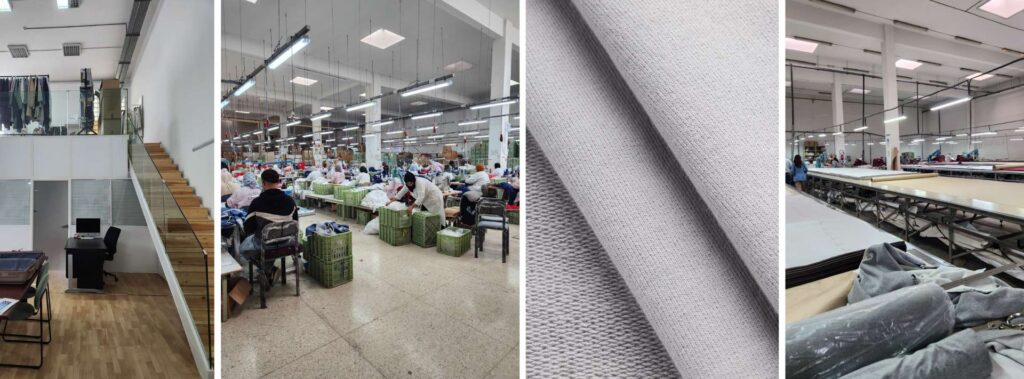
What Is a Henley Shirt?
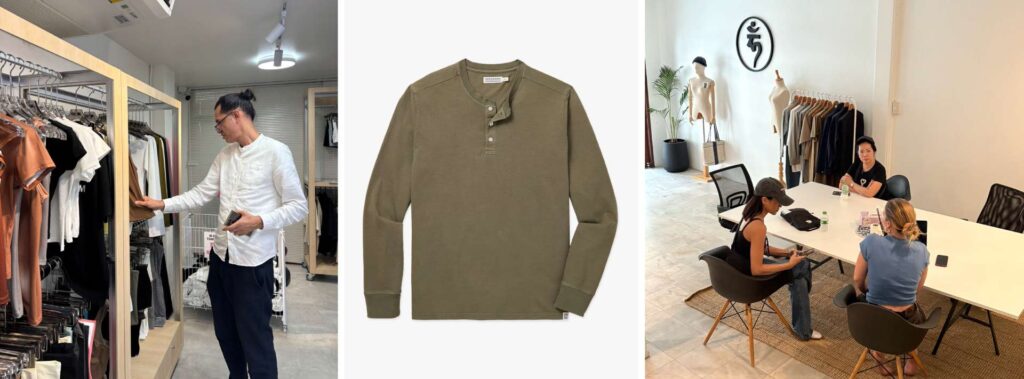
A Henley shirt is a collarless top with a short button placket, typically featuring between two and five buttons. It is defined by its construction rather than its material.
Key characteristics include:
- A collarless neckline
- A partial front placket with buttons
- Construction using knit fabrics rather than woven fabrics
- Availability in both short-sleeve and long-sleeve versions
From a design perspective, the Henley sits between categories. It is more structured than a T-shirt but less formal than a polo or woven shirt, making it adaptable across different collections and price points.
What Fabrics Are Used in Henley Shirts?
Because the Henley shirt is built on knit systems, fabric choice directly determines performance, comfort, and visual identity.
The most commonly used fabrics include:
- Single jersey
Lightweight, breathable, and cost-effective. Ideal for everyday Henleys and warm-weather use. - Rib knit
Provides enhanced stretch and recovery. Suitable for fitted silhouettes that need to retain shape. - Waffle knit
A textured, grid-like structure that traps heat while allowing airflow. Often associated with classic Henley designs. - Cotton blends with elastane
Improve durability and stretch. Common in more fitted or performance-oriented versions.
Each fabric influences key factors such as breathability, stretch, recovery, and drape, making material selection a critical step in product development.
For a deeper breakdown, refer to our guide on knit fabric types and sourcing strategies.
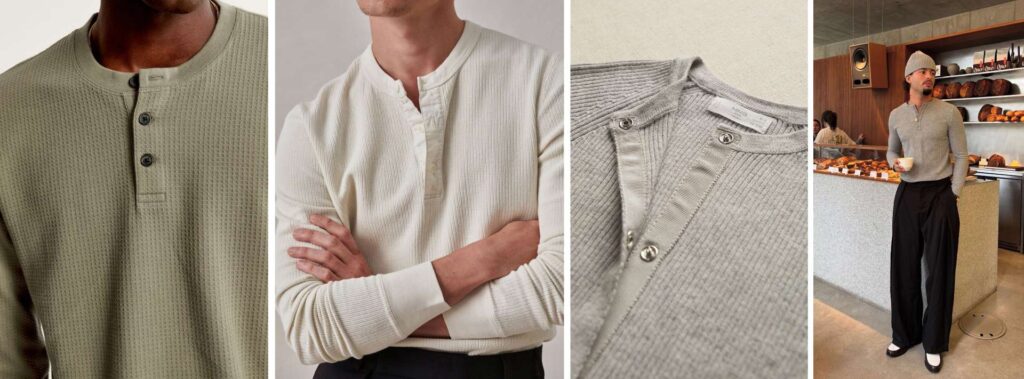
Why Henley Shirts Are Gaining Popularity
The resurgence of the Henley shirt reflects broader changes in how brands approach everyday products.
Key drivers include:
- Upgrade from basic T-shirts
The Henley introduces structure through a placket, allowing brands to elevate a basic item without significantly increasing production complexity. - Retention of knit comfort
Unlike woven shirts, Henleys maintain the softness and flexibility consumers expect from knitwear. - Cross-season adaptability
Fabric selection allows Henleys to function across climates, from lightweight summer versions to heavier layering pieces. - Efficient production model
Henleys rely on standardized knit construction, making them easier to reproduce consistently across multiple production runs.
Looking to develop knit-based products like Henleys? Explore how Deepwear supports fabric sourcing and garment development across global manufacturing hubs.
Where Should You Manufacture Henley Shirts?
Selecting the right production base is key to balancing cost, quality, and scalability. Within Deepwear’s network, several countries stand out for Henley shirt manufacturing.
Minimum order quantities are typically defined per style and may vary depending on fabric, colorways, and size distribution.
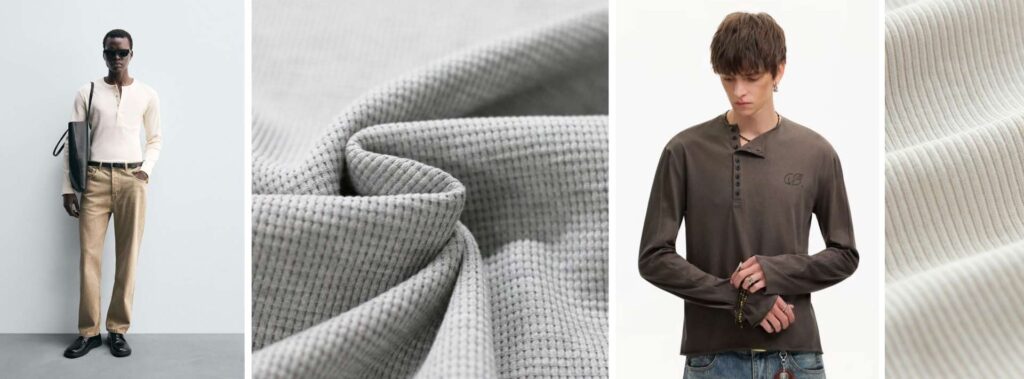
Henley Shirt Manufacturing by Country
| Country | Strengths for Henley Production | Best Use Case | Typical MOQ (per style) |
| Thailand | Strong in cotton jersey and rib knits, close quality control | Sampling and early-stage production | 50–150 units |
| Vietnam | Reliable large-scale knitwear production | Scaling proven products | 200–500 units |
| India | Extensive textile ecosystem, strong cotton supply | Fabric-driven collections | 150–400 units |
| China | Advanced technical capabilities and fast turnaround | Complex designs and rapid production | 100–500 units |
| Turkey | High-quality cotton and premium finishing | Elevated basics and EU-focused brands | 150–400 units |
MOQ Disclaimer: The MOQs listed above reflect general market standards and may vary depending on the factory, fabric, and level of customization required.
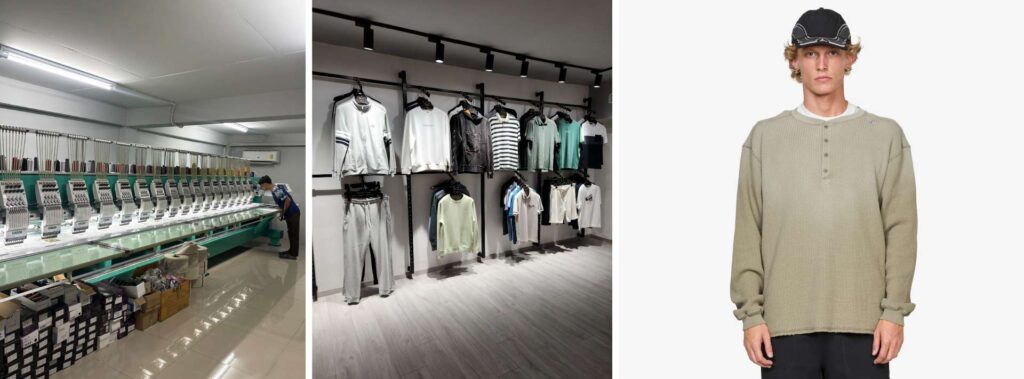
MOQ Strategy for Henley Shirts and How Deepwear Supports Brands
When developing a Henley shirt, MOQ planning is relatively straightforward due to its reliance on standard knit construction.
A typical structure includes:
- 50–150 units per style for sampling and testing
- 200–500 units per style for validated designs
- 500+ units per style for core, repeatable products
Because Henleys do not require highly specialized production, brands can move between these stages with relatively few adjustments.
How Deepwear supports this process
For brands adding Henleys to their collection, the priority is ensuring a smooth transition from concept to production.
Deepwear supports this by:
- Aligning factories with your order size
- Advising on fabric selection based on MOQ requirements
- Helping organize styles and colorways efficiently
- Supporting sampling to production transitions
- Providing on-ground coordination and quality control
This allows brands to approach Henley development as a structured, step-by-step process, rather than committing to large volumes upfront.
What is the best way to manufacture a Henley shirt at scale?
The most effective way to manufacture a Henley shirt at scale is to start with widely available knit fabrics such as single jersey or rib, validate the design through small production runs (typically 50–150 units per style), and then scale to larger volumes once fit, demand, and pricing are confirmed; choosing the right manufacturing country, aligning fabric selection with MOQ requirements, and maintaining consistency in construction are all critical to building a reliable and repeatable production process.
Building a Scalable Henley Strategy
The Henley shirt represents a practical evolution of the basic T-shirt, combining knit fabric comfort with a more structured design that fits modern apparel strategies.
Its strength lies in its ability to:
- Adapt across fabrics and seasons
- Fit into existing knit production systems
- Transition smoothly from sampling to scale
For brands, success depends on execution. Selecting the right fabric, aligning with the right manufacturing partner, and structuring production around realistic MOQs will determine whether a Henley becomes a short-term addition or a long-term product.
Looking to develop or scale your Henley collection? Work with Deepwear’s sourcing team to identify the right fabrics, production partners, and MOQ strategy to bring your designs to market with clarity and control. Contact our team today!