
Learn how Deepwear verifies garment factories, assesses financial risk, and helps fashion brands protect production capital through local factory due diligence.
When brand founders evaluate an apparel factory, they usually focus on sample quality, stitching precision, unit price, and minimum order quantities. While these technical specs are crucial, they completely ignore the silent killer of fashion startups: factory financial insolvency.
In global garment manufacturing, a factory’s balance sheet is just as critical as its machinery. Every year, hundreds of apparel facilities quietly go bankrupt, hit severe cash flow freezes, or face sudden asset seizures right in the middle of active production runs.
When an unvetted factory collapses, it takes your launch capital, your custom raw fabrics, your tech packs, and your entire seasonal collection down with it.
In this blog we cover:
- Why factory financial stability matters to fashion brands
- The warning signs that can indicate operational or financial pressure
- How Deepwear verifies financial and operational stability
- How contracts and payment structures can reduce exposure
- How local oversight helps protect production continuity
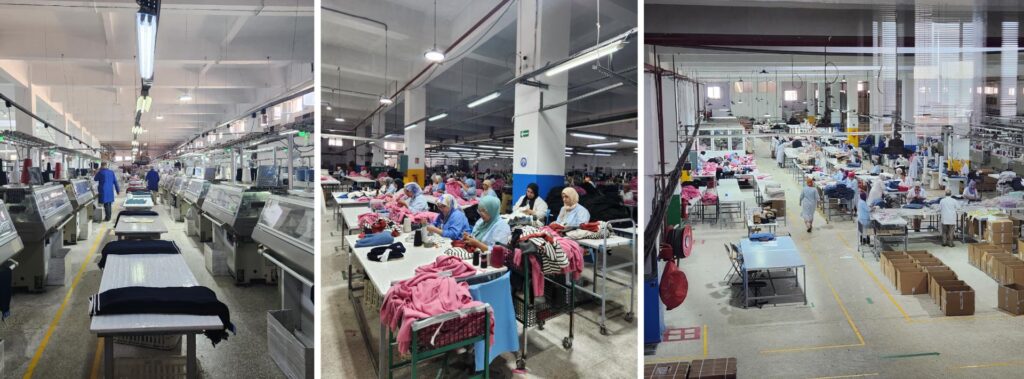
Why Factory Financial Stability Matters in Garment Manufacturing
Garment manufacturing is a cash-intensive business. Factories must continuously manage wages, utilities, rent, machinery, maintenance, fabrics, trims, packaging, transportation, and other operating expenses while waiting for customer payments.
This creates an important distinction: a factory can have orders without having sufficient liquidity to fulfill them.
A manufacturer may appear busy, have significant production commitments, and still struggle to meet immediate obligations. If financial pressure begins affecting suppliers, employees, equipment, or production planning, the brand can become exposed before the problem is visible from overseas.
Potential consequences include:
|
Risk |
Potential impact on the brand |
|
Supplier disputes |
Fabrics, trims, or packaging may not be released |
|
Workforce disruption |
Production may slow or stop |
|
Equipment financing problems |
Critical machinery may become unavailable |
|
Undisclosed subcontracting |
Production may move outside the approved facility |
|
Production delays |
Orders remain unfinished and delivery schedules slip |
|
Asset disputes |
Customer-funded materials may become difficult to retrieve |
|
Factory closure |
Materials, work-in-progress, and finished goods may become inaccessible |
The legal consequences vary by jurisdiction, ownership structure, contracts, and insolvency process. This is why brands should establish ownership of customer-funded materials and unfinished goods before production begins.
The practical lesson is simple:
Factory financial health is part of supply-chain risk, not a separate accounting concern.
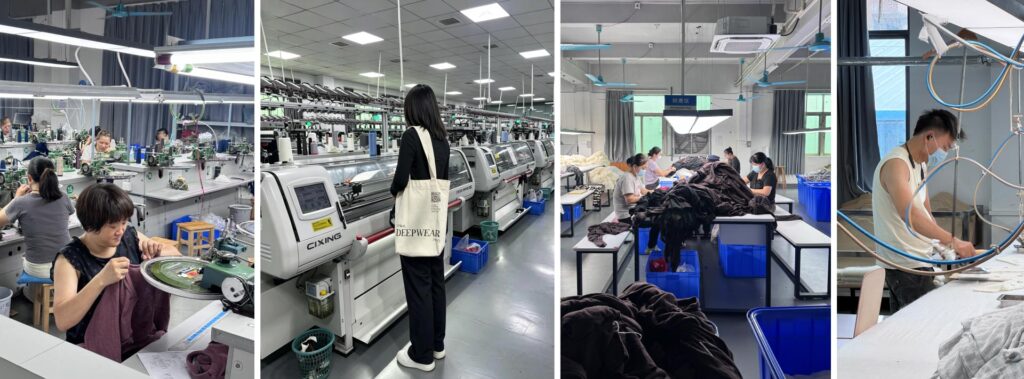
What Factory Financial Distress Can Look Like Before Collapse
Financial distress rarely appears as an obvious announcement that a factory is failing. More often, operational changes accumulate over time.
The important point is that no individual warning sign proves bankruptcy. A delayed order may have a legitimate explanation, and a supplier may change its payment terms for reasons unrelated to financial distress. Risk becomes more significant when several signals point toward sustained pressure.
Brands and their sourcing partners should pay particular attention to:
- Repeated unexplained delays: Persistent disruptions may reflect problems with suppliers, staffing, utilities, machinery, or production scheduling.
- Unexpected subcontracting: Moving production to another facility can indicate capacity constraints or cost pressure and can create additional quality, compliance, and traceability risks.
- Sudden material changes: Unapproved substitutions or unusual difficulty securing materials can warrant investigation.
- Workforce instability: Significant turnover, staffing shortages, or labor disruption can affect both production continuity and quality.
- Equipment problems: Production-critical machinery may be leased, financed, shared, or subject to other claims rather than fully controlled by the factory.
- Unusual payment demands: Sudden changes in supplier or factory payment expectations may deserve closer examination, particularly when they differ from established commercial practices.
- An overloaded order book: A factory accepting more work than its practical workforce and equipment can support may struggle to maintain delivery schedules.
These signals are particularly difficult to assess remotely. A buyer may not discover the underlying problem until it appears as a missed deadline, missing material, quality deterioration, or unexplained production change.
The purpose of due diligence is not to predict bankruptcy. It is to identify material risks while there is still time to act.
Don’t wait for a production crisis to discover a factory problem.
Deepwear can assess manufacturing partners, production capabilities, sourcing conditions, and operational risks before you commit significant capital to production. Request a Supply Chain and Production Audit with Deepwear.
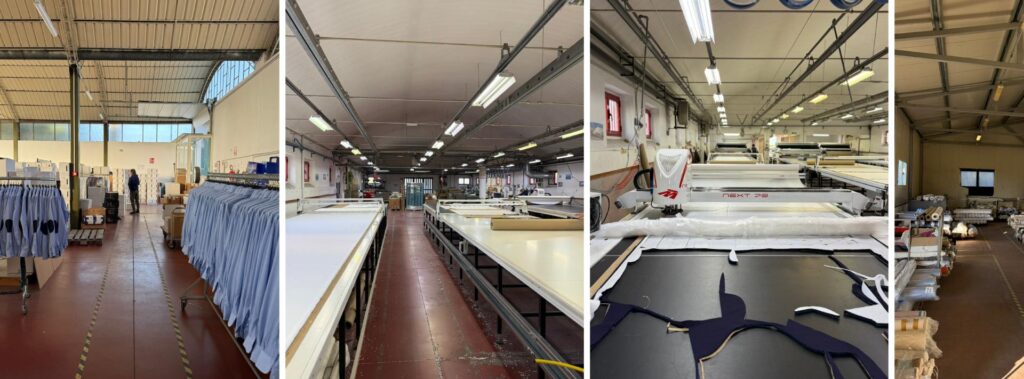
How Deepwear Verifies Factory Financial and Operational Stability
A garment factory audit cannot establish financial health from a single document or factory visit.
Deepwear takes a broader approach, combining available corporate and financial information with evidence gathered from the manufacturing environment.
Depending on the market and information available, due diligence may include reviewing:
- Corporate registration and ownership information
- Available financial and corporate records
- Production history and customer references
- Reported production capacity
- Certifications and operational documentation
- Contracts and payment structures
- Current production activity
- Workforce and equipment conditions
- Supplier and material relationships
Some information can be assessed remotely. Other evidence requires someone physically present at the factory.
This is where Deepwear’s local presence becomes particularly valuable.
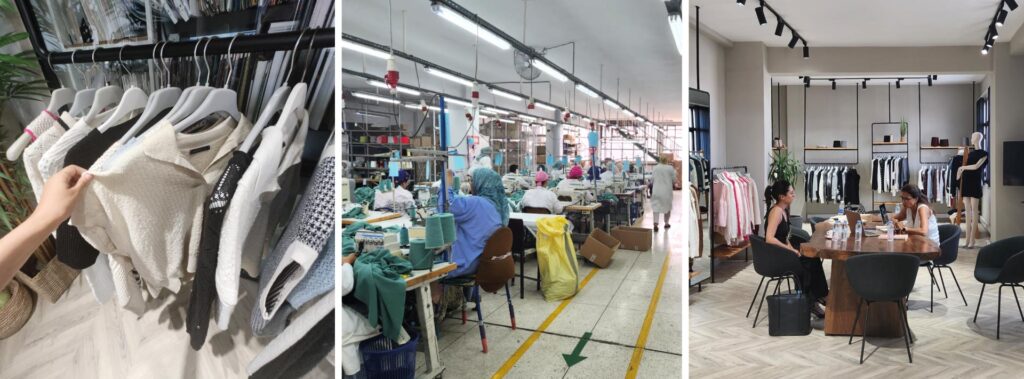
Local teams can observe the actual production environment, compare reported capabilities with conditions on the floor, and investigate operational signals that may not appear in documents or photographs.
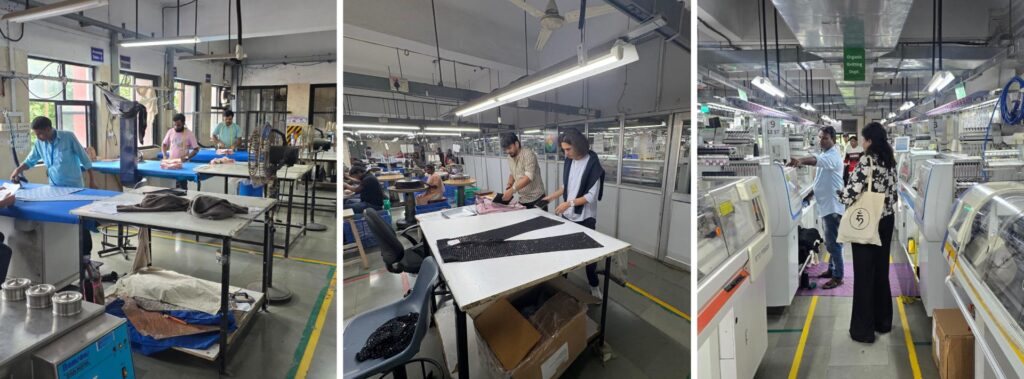
The assessment focuses on four areas:
1. Verify Supplier and Material Stability
A manufacturer’s suppliers are essential to keeping an apparel order moving.
Deepwear can investigate whether required fabrics, trims, packaging, and other inputs are consistently available and whether there have been significant changes in established supplier relationships.
The assessment can consider:
- Established supplier relationships
- Availability of production materials
- Changes in supplier payment requirements
- Unresolved supplier disputes
- Unusual material delays
- Changes affecting the production schedule
Payment terms vary by country, supplier, material, and order size. An upfront payment requirement is therefore not automatically a financial warning sign.
What matters is the pattern and the change.
A significant departure from established supplier behavior, particularly when it begins affecting production, deserves further investigation.
2. Verify Workforce and Production Stability
Workforce conditions can provide important operational evidence.
Deepwear’s local teams can observe:
- Staffing levels
- Workforce stability
- Production activity
- Unusual employee turnover
- Changes in working patterns
- Signs of labor disruption
Payroll records may be confidential and unavailable for external review. The purpose is not to obtain unnecessary employee information, but to identify operational conditions that could affect the manufacturer’s ability to deliver.
A factory that has the equipment to produce an order but lacks a stable workforce to operate it does not have reliable practical capacity.
3. Verify Machinery and Operational Assets
A production floor full of machinery can create an impression of capacity. It does not necessarily establish who controls those assets.
Equipment may be:
- Owned
- Financed
- Leased
- Shared
- Subject to contractual or financial claims
For supplier evaluation, the key question is whether the manufacturer has reliable access to the equipment required for the production order.
Where appropriate, Deepwear’s local teams can verify equipment, production use, maintenance conditions, serial numbers, and available ownership documentation.
This provides a more useful picture of the factory’s operational infrastructure than photographs or equipment lists alone.
4. Assess Capacity Against the Active Order Book
A busy factory is not necessarily a financially healthy factory.
A manufacturer under commercial pressure may accept additional orders even when its existing workload is difficult to accommodate. That makes the relationship between the active order book, workforce, machinery, and production schedule an important part of due diligence.
Deepwear can assess:
- Current production commitments
- Existing customer orders
- Available machinery
- Workforce levels
- Production schedules
- Practical capacity
- Whether new orders are creating unusual production pressure
The question is not simply whether a factory has “too many orders.” It is whether the manufacturer’s workload appears commercially and operationally sustainable.
Protecting Production Capital Beyond Factory Due Diligence
Even strong due diligence cannot guarantee that a manufacturer will remain solvent throughout a production cycle.
Brands should therefore consider a second layer of protection: how the production relationship is structured.
Before production begins, contracts should clearly address ownership and control of customer-funded:
- Fabrics and trims
- Patterns and samples
- Work-in-progress
- Finished goods
- Other production materials
Payment milestones can also be structured around agreed production stages rather than releasing all capital without sufficient controls.
Depending on the jurisdiction and contract, agreements may address how customer-owned materials are identified, when ownership transfers, what happens if production is terminated, and how unfinished goods are handled.
These provisions do not eliminate insolvency risk. They can, however, make commercial expectations and ownership positions clearer before a dispute occurs.
Deepwear can help brands assess manufacturing and supply-chain risks as part of the broader production process. Jurisdiction-specific contractual protections should be reviewed with qualified legal counsel.
Why Local Factory Verification Matters
For brands sourcing overseas, financial due diligence becomes more difficult when the factory is thousands of kilometers away.
Documents provide one layer of information. Physical verification provides another.
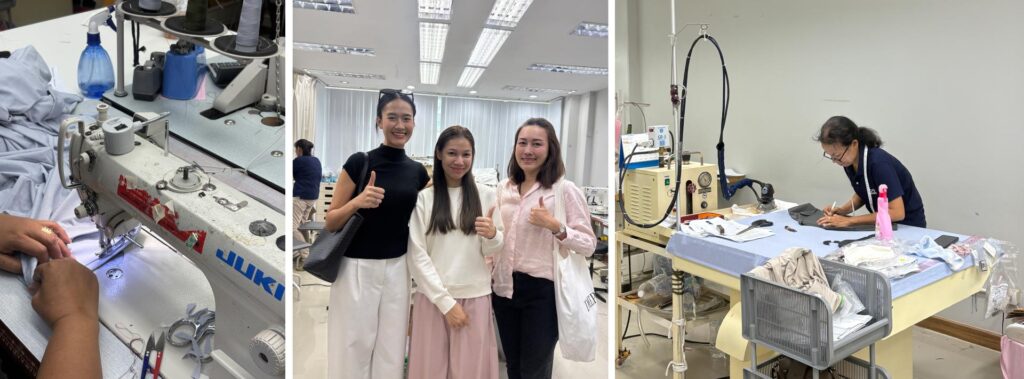
Deepwear’s local teams can act as the brand’s eyes and ears on the ground, verifying factories, observing production conditions, assessing practical capacity, and identifying operational changes that may not be visible from a remote supplier evaluation.
If a brand can travel, Deepwear can support the factory visit.
If the brand cannot travel, Deepwear can conduct local verification on its behalf.
This is particularly valuable when combined with a broader sourcing network. If a factory presents material operational risk, brands can assess alternative manufacturing options rather than discovering the problem after production has already been committed.
How can I check if a garment factory is financially stable before placing an order?
To assess a garment factory’s financial stability, brands should combine available corporate and financial information with operational due diligence. This can include reviewing ownership and business records, supplier relationships, workforce stability, equipment control, production capacity, current order commitments, payment structures, and signs of operational disruption. Deepwear combines document-based assessment with local factory verification to identify material financial and operational warning signs before a brand commits significant production capital.
Verify Your Garment Factory Before You Cut Fabric
Choosing a garment factory should involve more than comparing samples, prices, and MOQs.
A reliable manufacturing partner needs to demonstrate not only the ability to produce your garments, but also the operational stability and capacity to complete the order.
Deepwear combines factory assessment, local verification, production oversight, sourcing expertise, and supply-chain risk management to help fashion brands make that decision before significant production capital is committed.
Protect your production capital before you cut fabric. Apply for a Free Supply Chain and Production Audit with Deepwear.