
From Dolly Parton’s rhinestones to Tim Curry’s iconic corset, explore a fashion legacy shaped by identity, craftsmanship, reuse, and lasting style.
Dolly Parton and Tim Curry built careers around something fashion understands exceptionally well: the power of a recognizable image. On August 25, 2026, the entertainment world lost two performers whose influence extended far beyond their respective stages and screens. Dolly Parton, the legendary singer, songwriter, actress, and cultural icon whose music and distinctive style became part of American popular culture, and Tim Curry, the acclaimed British actor and performer whose nearly six-decade career spanned theatre, film, television, voice acting, and music, both died at the age of 80. Parton’s rhinestones and unmistakable glamour became as recognizable as her voice, while Curry’s extraordinary range carried him from the stage to some of the most memorable characters in film and television.
Their careers were radically different. Their wardrobes were, too. Yet both understood that clothing could do more than dress a performer. It could establish a character, communicate an identity and create an image that audiences would remember for decades.
For fashion brands and manufacturers, that legacy offers an unexpected lesson. The most valuable garment is not necessarily the newest one. Sometimes it is the garment that is distinctive enough to be remembered, well made enough to survive, and adaptable enough to have another life.
When Clothing Becomes Part of the Character
Fashion can communicate before a person speaks.
For performers, this is particularly powerful. A silhouette, material, color or embellishment can establish a character within seconds. Over time, repeated visual choices can become something even more valuable: a recognizable identity.
Dolly Parton understood this exceptionally well.
Dolly Parton and the art of recognizable style
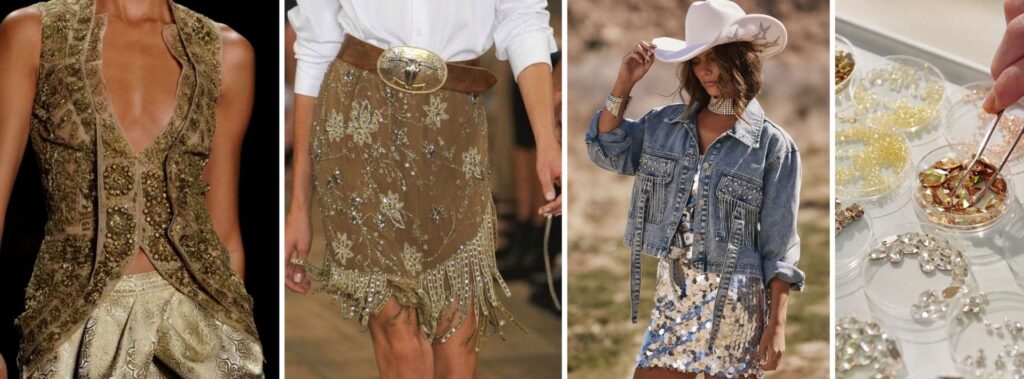
Dolly’s wardrobe developed a visual language that could be identified almost instantly: rhinestones, sequins, fringe, denim, leather, metallic fabrics, fitted silhouettes, high heels, statement accessories and Western influences, accompanied by her signature platinum-blonde hair and makeup.
The important point is not simply that her clothing was glamorous. It was that the aesthetic was remarkably consistent while still leaving room for reinvention.
Parton has spoken openly about her approach to fashion, including her preference for avoiding trends and dressing according to what suits her. Her book Behind the Seams: My Life in Rhinestones documents the relationship between her clothing and her life, while her long-running wardrobe archive shows how closely her visual identity became connected to her public persona.
Her relationship with embellishment was particularly deliberate. In a 2019 Vogue profile, Parton discussed her love of rhinestones and described how she and her longtime creative director, Steve Summers, developed her stage looks.
This is an important distinction for fashion.
Parton did not need to constantly reinvent what Dolly Parton looked like. She refined it.
The result was a fashion identity that could move between country music, Hollywood, television appearances and major live performances without losing its defining characteristics.
Tim Curry and the costume that became a character
Tim Curry’s relationship with fashion was different.
His most famous visual transformation came through Dr. Frank-N-Furter in The Rocky Horror Show and The Rocky Horror Picture Show. The corset, fishnets, garters, heels, makeup and dramatic styling were not simply wardrobe choices. Together, they created a character whose appearance became inseparable from Curry’s performance.
The result was one of the most recognizable costume designs in cult cinema, and the story becomes considerably more interesting when we look at where that costume came from.
The £3 Corset That Became Fashion History
One of the most famous garments associated with Rocky Horror was not originally made for Frank-N-Furter.
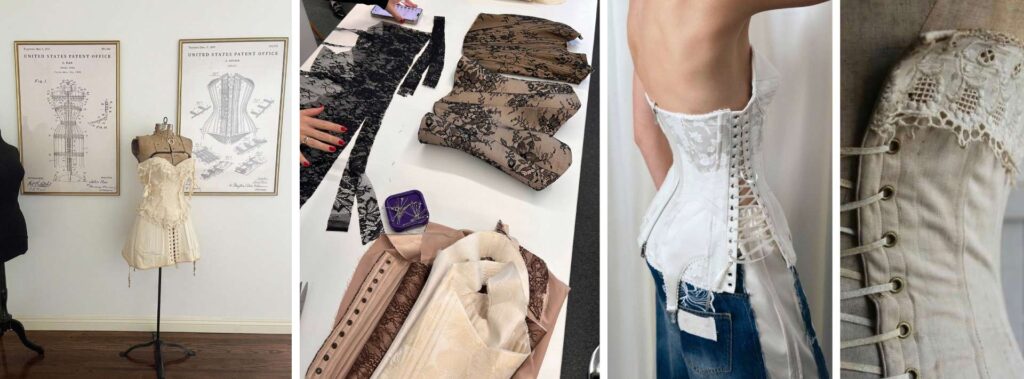
Costume designer Sue Blane had bought the corset for approximately £3 at a Glasgow market for an earlier production of Jean Genet’s The Maids. Tim Curry wore it in that production before Blane reused it for The Rocky Horror Show. For Frank-N-Furter, the garment was restyled and worn in a different way, helping create the visual identity that audiences would come to associate with the character.
Blane’s approach to Rocky Horror was not based on creating an entirely new wardrobe from expensive materials. The original stage costumes were assembled using pieces found through junk shops and flea markets, working within a very limited production budget. The garments did not become valuable because they were new. They became valuable because they were transformed.
That is the point at which a story about fashion history naturally becomes a story about circular fashion.
From Found Objects to Fashion Statements
Reuse has always existed in fashion.
Before contemporary discussions about upcycling, deadstock fabric and circular fashion, garments were altered because materials had value. Clothes were repaired, resized, inherited, reconstructed and adapted to new circumstances.
The modern fashion industry now has more sophisticated ways of doing this.
Brands can investigate opportunities involving:
- Deadstock fabric
- Reclaimed textiles
- Vintage garments
- Production offcuts
- Recycled fibres
- Reclaimed buttons and hardware
- Recovered leather
- Recycled trims
- Recycled sequins and embellishments
- Garment-to-garment recycling
- Upcycled fashion
- Components designed for disassembly and reuse
However, there is an important caveat.
Using something old does not automatically make a garment sustainable.
The environmental impact of a garment exists across its lifecycle. Collection, sorting, processing, dyeing, manufacturing, transportation, packaging, use, repair and end-of-life treatment can all contribute to its footprint.
The United Nations Environment Programme advocates a lifecycle approach to the textile sector and identifies circularity, improved practices, infrastructure, and addressing overproduction and overconsumption as interconnected priorities.
The objective, therefore, is not simply to replace virgin materials with recycled ones.
It is to think about what happens to a garment before, during and after its first life.
What Dolly’s Rhinestones Can Teach Fashion Manufacturing
Dolly Parton’s wardrobe offers a different lesson from Tim Curry’s corset.
Her clothes demonstrate how design identity and garment longevity can reinforce each other.
A rhinestone-covered garment might seem like an unlikely starting point for a conversation about responsible fashion manufacturing. But the question is not whether a garment has rhinestones.
The question is whether those rhinestones, and the garment supporting them, are designed to survive.
1. Design for durability
Embellishment introduces additional manufacturing considerations.
Rhinestones, sequins, studs, fringe, metallic trims and decorative hardware can experience significant stress through wear, cleaning, transportation and repeated use.
For brands producing heavily embellished garments, garment construction and attachment methods matter.
A beautiful garment that loses its defining embellishment after a few wears has a very different lifecycle from one designed to withstand repeated use and maintenance.
Durability therefore begins long before the finished garment reaches a customer.
2. Design for repair
The same principle applies to repair.
If decorative components can be replaced without destroying the garment, a damaged piece can remain useful rather than becoming disposable.
That can mean considering:
- Replaceable trims
- Secure but serviceable embellishment
- Accessible construction points
- Reinforced attachment areas
- Compatible replacement components
- Construction that allows alterations
This is not about making clothing look utilitarian.
It is about building longevity into the design without sacrificing aesthetics.
3. Design for emotional durability
There is another dimension to longevity that is harder to measure: the attachment people develop to what they wear.
A generic garment may be easy to replace when trends change. Something with a strong visual identity can become tied to memories, self-expression and personal history. Dolly Parton’s wardrobe is a clear example. Her rhinestones, silhouettes and styling have become so closely associated with her public identity that they carry meaning beyond their decorative function.
This is emotional durability: creating garments with enough character, meaning or cultural significance that people want to hold on to them.
For fashion, that makes longevity partly a matter of design. A garment can be physically durable and still be discarded. The pieces that endure often give people a reason to keep wearing them.
What Tim Curry’s Wardrobe Teaches About Reuse
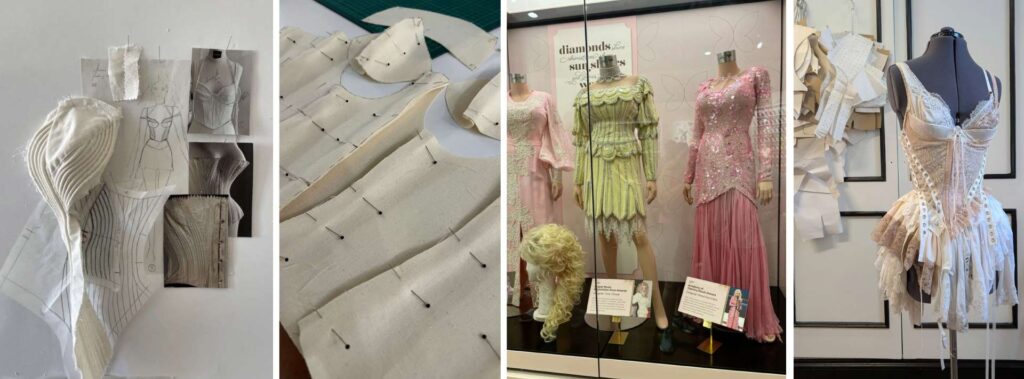
The Frank-N-Furter corset offers a direct lesson in how existing garments can be given new value.
1. Reuse what already exists
Blane did not see the corset’s previous use as a reason to discard it. Its history became part of its second life.
For contemporary brands, this could mean exploring deadstock, surplus materials, existing garments and recovered components before commissioning new materials.
2. Reinterpret rather than reproduce
The corset did not need to be made from scratch to become something new. Styling, construction and context transformed its meaning.
That principle sits at the heart of upcycled fashion: a reused component can be transformed so completely that its previous life becomes almost invisible.
3. Embellishment can change identity
The Frank-N-Furter look shows how styling and complementary pieces can completely alter an existing garment’s identity.
This creates opportunities for modular fashion, adaptable garments and components that can be reconfigured rather than discarded.
A Second Life Can Become the Most Memorable Life
The corset had a history before Rocky Horror, yet its role in the film became the one audiences remembered. Its previous life did not reduce its value. It gave the garment another chapter.
Recycled Does Not Mean Carbon Neutral
This distinction matters, particularly as brands become more sophisticated about fashion sustainability.
Recycled clothing, upcycled fashion, lower-impact clothing and carbon-neutral clothing are not interchangeable concepts.
A garment containing recycled material can still have environmental impacts associated with collection, sorting, recycling, fibre processing, dyeing, manufacturing, transportation and other stages of its lifecycle.
That means a brand should not automatically describe a garment as carbon neutral simply because it contains recycled material.
The U.S. Federal Trade Commission similarly warns marketers against broad, unqualified environmental claims and says recycled-content claims should clearly identify the proportion of recycled material where appropriate. It also cautions that a recycled-content attribute does not automatically establish an overall environmental benefit.
For fashion brands, credible sustainable garment manufacturing therefore requires more than a recycled-material label.
It requires evidence.
That can include:
- Material traceability
- Verified recycled content
- Lifecycle assessment
- Supplier information
- Production data
- Waste measurement
- Durability testing
- Repairability considerations
- Responsible chemical and dyeing practices
- Clear environmental claims
The terminology matters because sustainability claims should describe what a product can actually demonstrate, rather than what consumers might assume from a broad label.
Choosing the Right Production Market
Designers know their target audience, the story they want each collection to tell, and the garments, materials, and details needed to bring that vision to life. Once the creative direction is established, production decisions become an important part of translating that vision into a viable collection. Manufacturing location, minimum order quantities (MOQs), material availability, production capabilities, and lead times can all influence how a collection is developed and produced. The following comparison provides an indicative starting point for designers considering established manufacturing markets for garments and fashion accessories.
| Country | Indicative Garment MOQ | Indicative Accessories MOQ | Particularly Suited To |
| India | 100–300+ pcs/style | 50–100+ pcs/design | Embellishment, embroidery, cotton, leather goods, jewellery, and artisanal techniques |
| China | 300–500+ pcs/style | 500–1,000+ pcs/design | Large-scale apparel, technical products, extensive materials, and accessories |
| Türkiye | 100–500+ pcs/style | Project-dependent | Knitwear, denim, woven garments, leather goods, and European replenishment |
| Thailand | 50–300+ pcs/style | 30–100+ pcs/order or design | Small-batch apparel, fashion garments, leather goods, jewellery, and regional production |
| Morocco | 200–500+ pcs/style | 200–500+ pcs | Nearshore European production, denim, woven garments, knitwear, and leather or textile accessories |
| Portugal | 75–300+ pcs/style | Project-dependent | Premium apparel, knitwear, jersey, and smaller European collections |
MOQ disclaimer: These figures are indicative rather than fixed country standards. Actual MOQs can vary considerably between manufacturers and even between individual products from the same factory. Fabric minimums, colourways, construction complexity, embellishment, material sourcing, production capacity, and order frequency can all affect the final requirement. Designers should confirm the MOQ for the specific product, colour, and material directly with the manufacturer before placing an order.
A Lasting Reflection
Dolly Parton and Tim Curry understood something fundamental about performance and fashion: what we wear can become part of the story we leave behind. Parton’s rhinestones, Western-inspired silhouettes, and unmistakable glamour became inseparable from her identity. Curry’s transformation into Frank-N-Furter demonstrated how a costume could transcend its original purpose and become part of cultural history.
Their wardrobes remind us that fashion does not exist only in collections, seasons, or trends. The most enduring pieces can carry memory, personality, craftsmanship, and meaning long after their original moment has passed.
For fashion brands, that is a meaningful principle to carry forward. Creating garments with lasting value means thinking carefully about the materials selected, the quality of construction, the people who make them, and the ways a garment might continue to be valued beyond its first season. These considerations sit at the heart of a more thoughtful approach to fashion manufacturing and sourcing.
At Deepwear, we honor the legacy of designers and creators who understood that clothing could be more than something to wear. It could become part of who we are, how we express ourselves, and what we remember.
As the fashion world remembers Dolly Parton and Tim Curry, their influence will remain not only in the music, performances, and characters they gave us, but in the unmistakable images they left behind.
Some styles become trends. Others become part of history. If you are building a collection designed to be remembered, contact Deepwear to turn your vision into reality.