
Explore Tangier vs Casablanca garment manufacturing with Deepwear. Learn how Morocco’s leading nearshoring apparel hubs support fast fashion, premium garment production, logistics, and scalable sourcing strategies.
Morocco has rapidly evolved into one of the most important nearshoring apparel manufacturing destinations for European and North American fashion brands. Rising freight costs, geopolitical instability, sustainability pressures, and the need for shorter lead times have pushed many companies to rethink traditional sourcing strategies centered entirely on Asia. Morocco sits directly at the center of this shift. For Deepwear, Morocco is not viewed as an isolated sourcing destination, but as part of a wider Mediterranean manufacturing network connected through our operational presence in Casablanca and Istanbul. This regional structure allows brands to coordinate production, logistics, and supplier relationships across both Morocco and Turkey depending on garment category, speed requirements, and production complexity.
For brands evaluating Moroccan production, two cities dominate the discussion: Tangier and Casablanca. Understanding this distinction matters because the wrong regional fit can affect everything from lead times and quality control to scalability and long-term production stability.
In this blog we cover:
- The differences between Tangier vs Casablanca garment manufacturing
- Why Tangier is ideal for fast fashion manufacturing and rapid replenishment
- How Casablanca supports premium apparel manufacturing and technical garment development
- The advantages and limitations of each Moroccan manufacturing hub
- How Deepwear helps brands build smarter nearshoring apparel production strategies in Morocco
Why Morocco Has Become a Strategic Manufacturing Hub
Morocco’s rise within the global textile industry is driven by a combination of geographic and operational advantages that few sourcing destinations can offer simultaneously. The country provides proximity to Europe, competitive labor costs, improving infrastructure, and trade agreements that simplify exports into major markets. At the same time, shipping timelines are dramatically shorter than traditional Asian sourcing routes.
For fashion brands, this changes the economics of inventory management. Instead of forecasting collections months in advance, companies can operate with more flexibility and reduced inventory exposure. Shorter production and shipping timelines allow brands to react faster to consumer demand, seasonal shifts, and trend cycles.
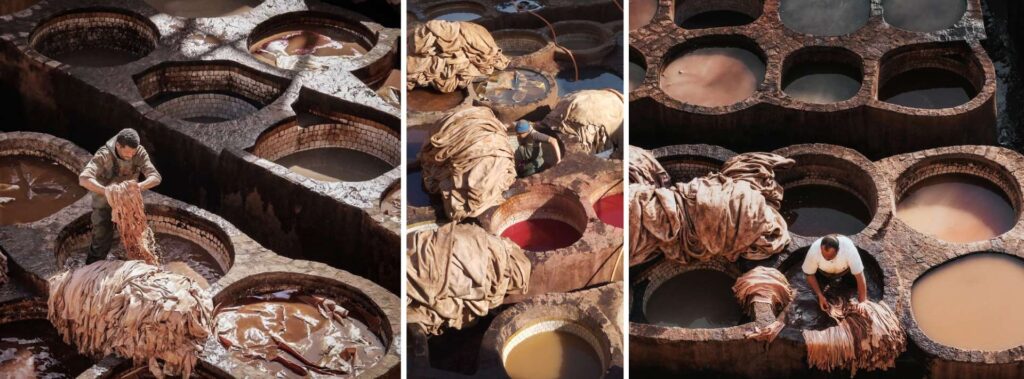
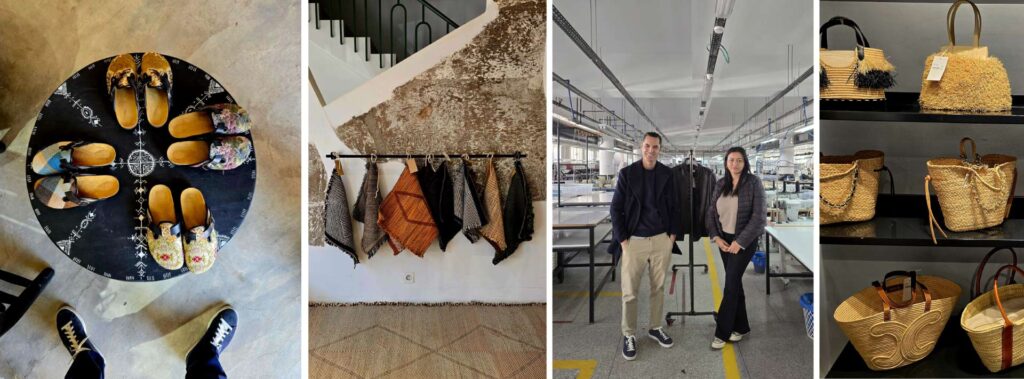
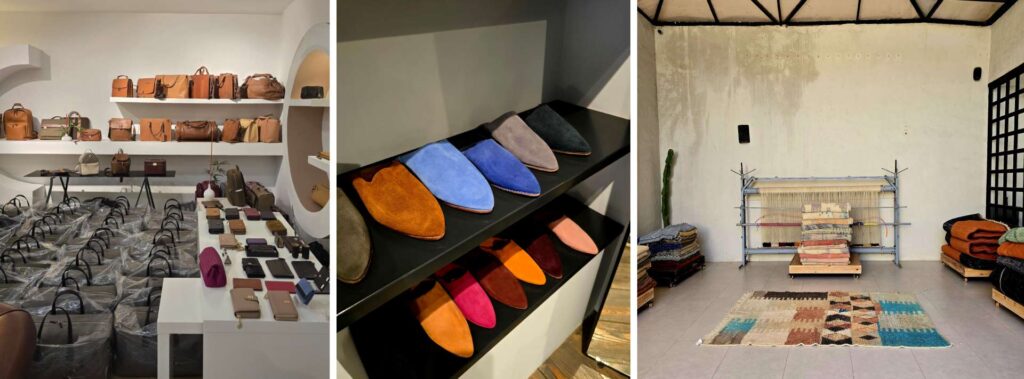
However, Morocco is not a single unified manufacturing environment. Different regions specialize in different categories and production models. While Casablanca and Tangier dominate large-scale export manufacturing, cities like Marrakesh also contribute to Morocco’s growing fashion ecosystem through artisan craftsmanship, premium hospitality, design culture, and boutique production networks that increasingly attract international fashion brands seeking smaller-scale or heritage-inspired manufacturing partnerships.
Want to explore Morocco’s artisan production landscape beyond apparel manufacturing? Deepwear’s breakdown of Morocco’s handicraft export boom and fashion opportunities examines how Moroccan leatherwork, ceramics, textiles, and traditional craftsmanship are creating new sourcing opportunities for fashion, lifestyle, and luxury brands looking for more differentiated product development across the Mediterranean region.
Tangier: Morocco’s Speed-Driven Manufacturing Hub
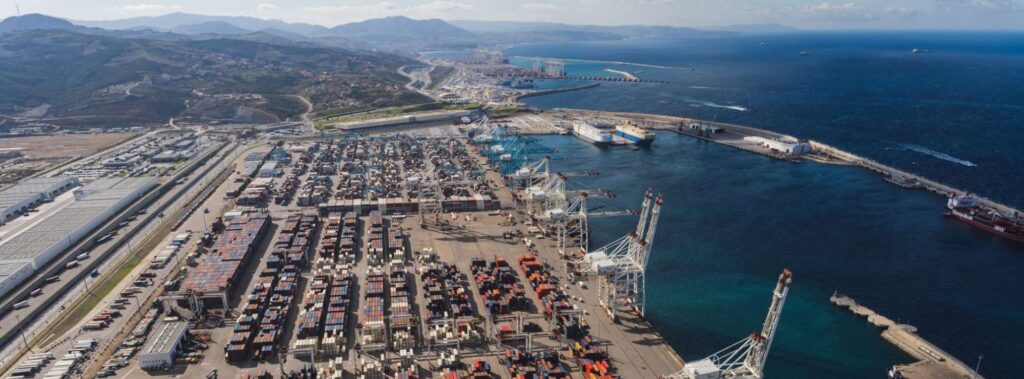
Tangier has transformed into one of the Mediterranean’s most strategically important export manufacturing zones. The development of Tanger Med Port significantly accelerated this growth, turning the region into a logistics-first industrial ecosystem designed around rapid international movement.
Unlike Casablanca, which evolved more organically as Morocco’s broader commercial and textile center, Tangier was developed with export efficiency in mind. The region prioritizes fast logistics, industrial free zones, and operational speed, making it especially attractive for brands working on shorter product cycles and tighter delivery timelines.
What Tangier Does Best
Tangier is strongest when speed and flexibility are the primary business objectives. The region performs particularly well for:
- fast fashion manufacturing
- replenishment programs
- trend-reactive collections
- agile streetwear production
- short production runs
Factories in Tangier are generally optimized for rapid turnover and operational flexibility rather than highly technical garment construction. This makes the region well suited for influencer-led brands, athleisure labels, trend-driven womenswear, and reactive DTC fashion companies that prioritize quick market response over intricate product engineering.
Tangier’s infrastructure also supports sourcing strategies built around smaller inventory commitments and faster movement from production to export. Compared to traditional Asian sourcing routes, Moroccan exports into Europe can arrive significantly faster, allowing brands to reduce warehousing pressure and respond more quickly to demand shifts.
For many companies, the region’s biggest advantage is not simply lower lead times, but the ability to operate with greater inventory agility through:
- small-batch testing
- rapid repeats
- flexible replenishment
- lower inventory exposure
The Limitations of Tangier
Tangier’s speed-focused production model also creates limitations. The region is generally less suited for highly technical tailoring, luxury-grade finishing, development-heavy collections, or garments requiring extensive construction refinement.
Factories optimized for throughput and export efficiency do not always provide the same level of technical sophistication as ecosystems centered around premium garment development. Without strong local oversight, brands may encounter communication gaps, inconsistent execution, or quality-control issues during production scaling.
This is where on-the-ground coordination becomes particularly important. Deepwear supports brands through local merchandisers, supplier communication, and production oversight designed to maintain visibility and consistency throughout the manufacturing process.
Looking to navigate Moroccan garment manufacturing with greater speed, consistency, and production visibility? Deepwear helps brands align the right garment category, supplier network, and regional sourcing strategy across both Tangier and Casablanca. Schedule a meeting with our team.
Casablanca: Morocco’s Premium Apparel Manufacturing Center
If Tangier represents Morocco’s logistics-focused manufacturing future, Casablanca remains the country’s industrial and technical textile foundation.
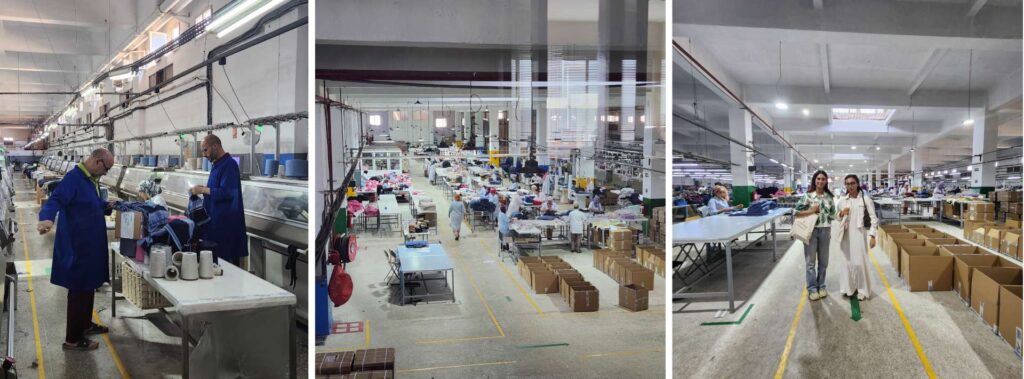
As Morocco’s largest apparel business center, Casablanca has deeper concentrations of textile headquarters, sourcing offices, integrated suppliers, development teams, and quality-control infrastructure. This creates a more mature production environment overall, particularly for brands requiring stronger technical support and long-term manufacturing stability.
Casablanca is especially strong in:
- premium apparel manufacturing
- luxury streetwear
- elevated knitwear
- tailoring
- structured womenswear
- fashion denim
What Casablanca Does Best
Compared to Tangier, Casablanca offers easier access to integrated production support across multiple stages of development. Brands working in the region often benefit from closer coordination between:
- fabric sourcing
- trims suppliers
- technical development teams
- wash specialists
- QA and QC services
This makes Casablanca particularly valuable for brands focused on product refinement, collection continuity, and premium positioning rather than purely reactive production cycles.
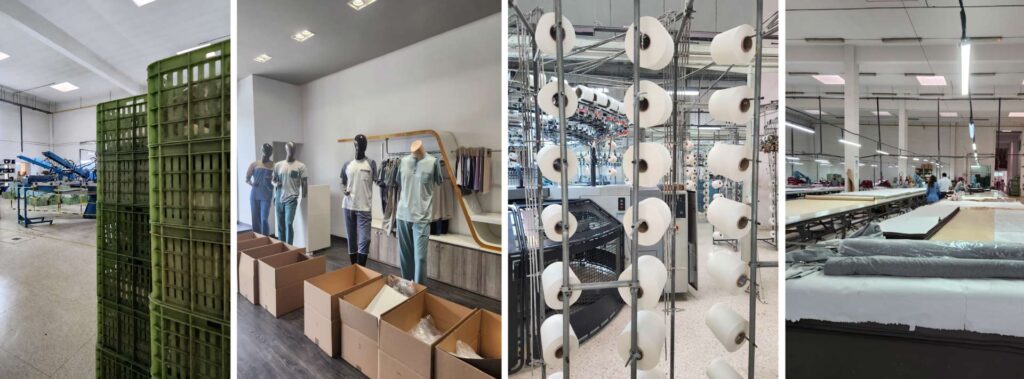
Factories in the region are often better equipped for technical sampling, structured garment construction, premium finishing, and more demanding compliance requirements. Morocco’s growing network of vertically integrated suppliers also supports stronger workflow continuity from development through finishing and export management.
For brands building long-term supplier relationships and scalable production systems, Casablanca generally provides a more stable and technically refined manufacturing environment.
The Weaknesses of Casablanca
Casablanca’s strengths come with tradeoffs. The city is often more expensive and less agile for extremely reactive production models. Brands focused on rapid trend pivots or ultra-fast replenishment may find the region less flexible than Tangier.
Instead, Casablanca is better suited for companies prioritizing:
- garment refinement
- elevated branding
- technical execution
- structured collection development
- production consistency
The region favors stability and technical depth over maximum production speed, making it a stronger fit for brands where garment quality plays a central role in market positioning.
Common Mistakes Brands Make When Sourcing in Morocco
Many brands entering Morocco for the first time assume the country operates as a single uniform manufacturing market.
Some of the most common sourcing mistakes include:
- choosing factories based primarily on price rather than specialization,
- underestimating fabric sourcing timelines,
- selecting speed-focused suppliers for technically complex garments,
- relying on remote communication without local oversight,
- and treating Morocco as a direct replacement for large-scale Asian volume manufacturing.
Successful sourcing strategies in Morocco usually depend on aligning the right factory ecosystem with the right product category, production timeline, and operational expectations from the beginning.
This is one reason why local sourcing oversight is important within Morocco’s apparel industry. Managing production remotely without teams on the ground can create visibility gaps across sampling, material approvals, production coordination, quality control, and delivery timelines, particularly when multiple suppliers are involved across different regions.
For us at Deepwear, local operational presence is a core part of how we support brands in Morocco. Our Casablanca-based teams work closely with factories, suppliers, and production partners while also traveling directly to Tangier and other manufacturing regions when additional coordination, factory oversight, inline quality control, or production monitoring is required.
This regional presence allows us to maintain closer visibility across:
- supplier communication,
- inline quality control,
- production timelines,
- factory coordination,
- and manufacturing consistency throughout the sourcing process.
At the same time, our offices in Turkey and China help coordinate fabrics, trims, and other production components across multiple sourcing markets when supply chains extend beyond Morocco itself. This structure helps brands maintain stronger production visibility, faster communication, and greater consistency across increasingly complex manufacturing networks.
Can brands use both Tangier and Casablanca?
Yes. Many brands now combine both regions within a hybrid sourcing strategy. Development and technical sampling may take place in Casablanca, while Tangier handles replenishment production and faster export operations. This approach allows brands to balance product refinement with operational speed.
Building the Right Manufacturing Strategy in Morocco
Tangier and Casablanca are not competing versions of the same manufacturing hub. They represent two very different approaches to apparel production within Morocco’s evolving textile industry.
Tangier excels in speed, export logistics, and agile replenishment. Casablanca offers greater technical depth, premium garment development, and integrated production support. Neither is universally “better.” The right choice depends entirely on the type of garments being produced, the pace of the brand’s business model, and the level of production complexity required.
For some brands, Tangier’s rapid production environment may create the flexibility needed to react quickly to consumer demand. For others, Casablanca’s more structured ecosystem may provide the consistency and refinement necessary for premium positioning.
Many brands are discovering that the strongest sourcing strategy may involve using both regions together: combining Casablanca’s development capabilities with Tangier’s production speed and export efficiency.
As global fashion supply chains continue shifting toward shorter lead times and more flexible sourcing models, Morocco’s regional specialization is likely to become even more important. Brands that understand these differences early are often better positioned to build resilient, scalable, and commercially competitive manufacturing networks for the long term.
Ready to determine whether Tangier or Casablanca is the right fit for your brand’s garment category, production timeline, and sourcing strategy? Contact our team to explore how Morocco’s evolving apparel manufacturing ecosystem can support your next collection.