
Personalized jewelry gives customers more control over what they buy. For brands, delivering that flexibility requires careful decisions about product design, manufacturing technology, supplier selection, inventory and quality control.
Jewelry collections are becoming increasingly diverse in their materials, proportions and construction. The Spring/Summer 2027 fashion season offered examples ranging from sculptural accessories and oversized hoops to expressive pearls and high jewelry. London Fashion Week also featured commission-based bespoke work, including pieces from Shaun Leane’s atelier, alongside creations from established luxury houses.
These developments illustrate the variety of products brands can bring to market. They do not, however, mean that every commercial collection needs to offer fully bespoke manufacturing.
For jewelry businesses, the more immediate opportunity lies in offering customers a carefully selected range of options without redesigning the product or rebuilding its production process for every order.
This requires a different approach to manufacturing. Instead of treating each variation as an isolated project, brands can establish repeatable production methods that accommodate individual preferences within defined technical limits.
At Deepwear, this is an important consideration when assessing manufacturing partners and developing sourcing strategies for jewelry collections.
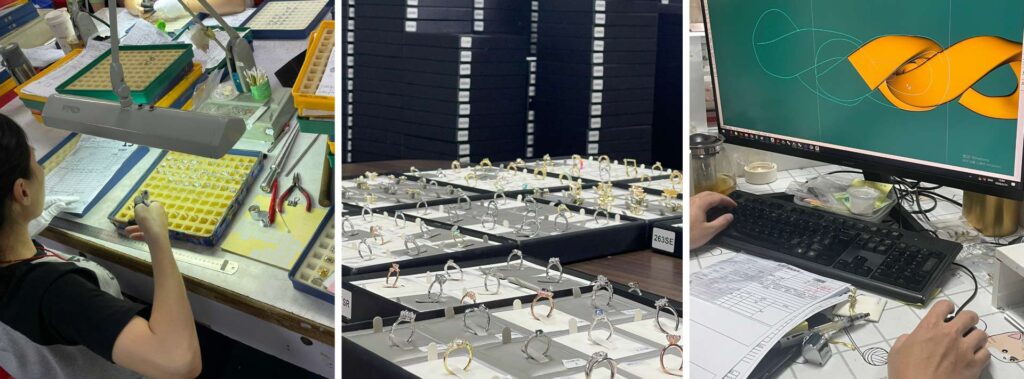
In this blog we cover:
- How personalization affects jewelry manufacturing and production planning
- The differences between made-to-order, mass customization and bespoke jewelry
- How modular product design and CAD can support flexible production
- Which sourcing markets may suit different jewelry requirements
- How MOQ, inventory, lead times and quality control influence commercial viability
Personalization Starts With Product Architecture
A conventional jewelry collection is generally developed around predetermined designs, specifications and production quantities. Once the specifications are approved, manufacturers can plan material purchases, production schedules and quality checks around relatively consistent products.
Customization introduces additional variables.
Customers might choose a different metal, gemstone, finish, chain length, engraving or product size. Each option affects the manufacturing process differently. Changing an engraving may require little additional setup, while introducing a new stone shape could affect the setting design, dimensions and production requirements.
The challenge is therefore not simply to accommodate more options. It is to determine which options can be offered without introducing disproportionate costs, delays or quality risks.
Consider a ring collection with three metal options, several approved gemstones and a range of sizes. Rather than developing a separate design for every possible combination, the brand can establish a validated base design with defined specifications for each permitted variation.
Customers retain meaningful choice, while the manufacturer follows an established production framework.
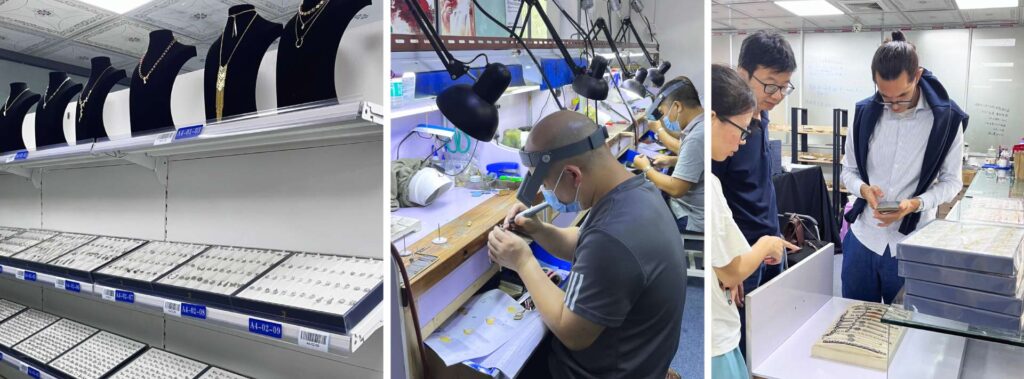
This is the foundation of scalable personalization: the customer-facing experience can be flexible even when the underlying manufacturing process remains standardized.
Choosing the Right Production Model
Made-to-order, mass customization and bespoke jewelry are related concepts, but they involve different levels of product development and operational complexity.
| Production model | How it works | Main operational consideration |
| Made-to-stock | Finished products are manufactured before orders arrive. | Forecast accuracy and finished-goods inventory |
| Made-to-order | An established product is manufactured after a customer places an order. | Production scheduling and dependable lead times |
| Mass customization | Customers select from approved combinations of product features. | Managing variations through repeatable specifications |
| Bespoke | A design is developed or substantially adapted for an individual customer. | Individual design, sampling and technical development |
These approaches can overlap. A made-to-order ring, for example, may also be a mass-customized product when customers choose from predetermined metals, stones and engravings.
Bespoke jewelry involves a different level of flexibility because the design itself may need to be developed or substantially revised for each commission.
For brands seeking to expand personalization without incurring the development costs associated with individual commissions, mass customization can provide a practical middle ground.
The appropriate model depends on the collection, target price, expected order volume and manufacturing capabilities available.
Planning a made-to-order jewelry collection? Deepwear can help assess potential manufacturing partners and sourcing options against your product specifications, volumes and customization requirements. Start a conversation with our team.
Modular Design Makes Customization More Manageable
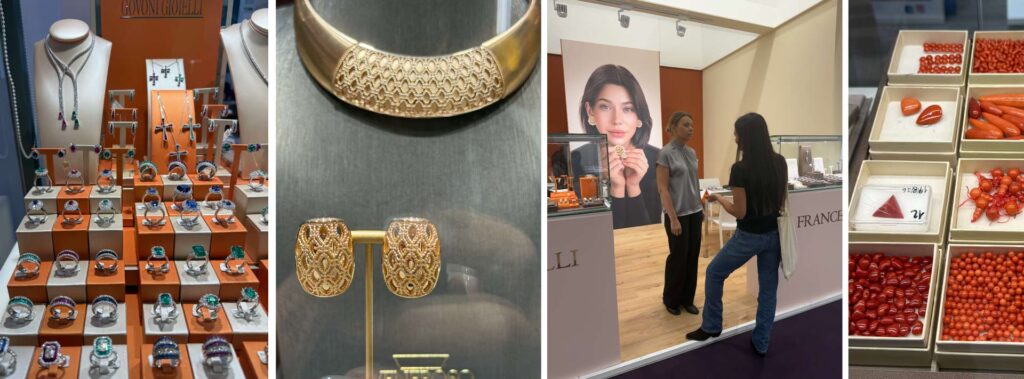
Modular jewelry design allows brands to create products from components that share established dimensions and connection points.
A necklace might use a standardized chain and clasp with several interchangeable pendants. A bracelet could retain the same base construction while offering different charms. An earring collection could use a consistent attachment mechanism across several decorative designs.
The commercial benefit is a broader range of product combinations without requiring every component to be developed independently.
The manufacturing implications are equally important. Standardized components can simplify technical documentation, purchasing and assembly. Depending on demand and supplier capabilities, common parts may also be produced or purchased before the final customer configuration is known.
This creates an opportunity to delay certain production decisions until an order is received.
For example, a brand could maintain stock of standardized chains and clasps while producing or assembling the selected pendant configuration after purchase. The approach may reduce the need to hold finished inventory for every possible combination.
However, modularity requires more than making components interchangeable. Connection points, dimensions, material compatibility, wear resistance and assembly tolerances must be validated.
A component that fits several products but creates inconsistent finishing or unreliable connections can introduce additional quality problems rather than solve them.
Brands should therefore define which components are shared, which elements are customizable and which technical requirements must remain unchanged across the collection.
Designing Customization Around Modular Components and CAD
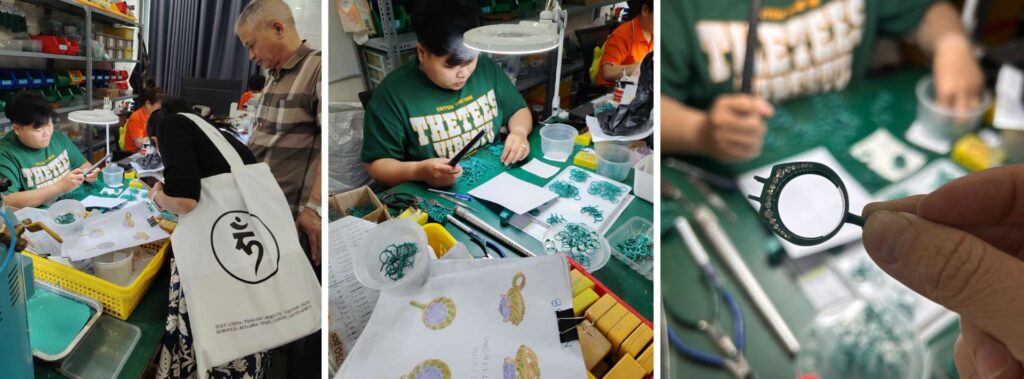
For made-to-order jewelry manufacturing, modular design and computer-aided design (CAD) work best when they are planned together. Modular components define which parts can be shared across products, while CAD helps manufacturers develop, adjust and validate the permitted variations.
A necklace, for example, could use a standardized chain and clasp with interchangeable pendants. A bracelet might offer different charms, while a ring could accommodate approved stone shapes or sizes within a validated setting design. These options expand customer choice without requiring every configuration to be developed from scratch.
At Deepwear, our team considers how these product decisions translate into practical manufacturing requirements, from component sourcing and technical specifications to supplier capabilities and production costs.
A workable system should establish:
- Standardized components: Identify reusable parts, such as chains, clasps, settings and attachment mechanisms, with defined dimensions and tolerances.
- Controlled customization: Specify which features customers can change, including materials, stone sizes, finishes, dimensions and engraving.
- CAD-based validation: Use approved digital models and parametric design where appropriate to assess variations, support technical documentation and reduce repetitive design work.
- Production feasibility: Confirm that proposed configurations can be cast, assembled, set, polished or finished consistently using the manufacturer’s available processes.
- Inventory planning: Evaluate whether common components can be stocked in advance while final assembly or customer-specific modifications take place after an order is received.
Three-dimensional printing can support prototyping and the production of casting patterns, depending on the chosen materials and manufacturing method. However, digital design does not replace physical production requirements. Stone setting, soldering, polishing, plating and assembly may still require substantial manual work and specialist expertise.
The same principle applies to modular components. Interchangeable parts must be tested for fit, material compatibility, durability and finishing consistency. A design that works digitally may still present manufacturing difficulties once produced in metal or assembled with actual stones.
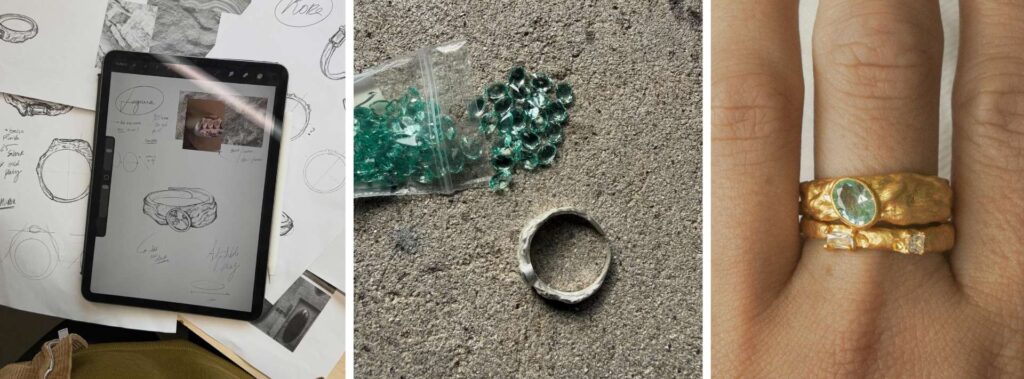
Our team can help brands assess these requirements when evaluating sourcing markets and manufacturing partners. The objective is to establish a customization system that supports meaningful customer choice while keeping specifications, production costs, lead times and quality requirements manageable.
Quality Control Must Cover Every Approved Variation
A customizable product does not have one finished specification. It has a set of permitted configurations, each of which must meet the relevant quality requirements.
Consider a ring offered in different metals and gemstone sizes. The selected stone may legitimately differ between orders, but its security, setting alignment and compatibility with the design must remain within approved limits.
Engraving can change from customer to customer, while its placement and execution should remain consistent with the specification.
Quality planning should distinguish between characteristics that are expected to vary and those that must remain controlled.
For a personalized jewelry collection, this may involve:
- Documenting approved materials, dimensions and finishes.
- Establishing tolerances for each relevant configuration.
- Checking gemstone security and setting quality.
- Verifying engraving content, position and execution.
- Recording the approved design and specification for each order.
- Applying appropriate inspection procedures to finished products.
Inspection requirements should reflect the product’s construction, value and intended use. A complex gemstone setting may require different checks from a simple engraved pendant.
Traceable specifications are particularly useful when multiple variations share the same product family. They help the production team identify what must change between orders and what must remain consistent.
For a broader overview of Deepwear’s quality-control approach, see Quality Assurance in Jewelry Manufacturing: Deepwear Approach.
Selecting a Manufacturing Market
The right sourcing destination depends on the product rather than a country’s reputation alone.
Gemstone requirements, metal type, construction, finishing standards, order quantities, production lead times and supplier experience all influence the decision. Two manufacturers in the same country can also have substantially different capabilities.
The following markets offer potential starting points for supplier research.
| Sourcing market | Capabilities worth investigating | Potential fit |
| Thailand | Gemstone handling, silver jewelry, stone setting, casting and finishing | Collections requiring gemstone expertise, detailed setting or skilled finishing |
| India | Gold jewelry, gemstone work, intricate detailing and hand-finishing | Products with complex stonework or craftsmanship-intensive designs |
| China | Chains, findings, casting, plating, components and varied production capacity | Collections requiring standardized components, multiple configurations or scalable production |
| Vietnam | Jewelry production capabilities, manufacturing labor and production capacity | Brands seeking established manufacturing operations and potential capacity expansion |
| Italy | Fine jewelry, precious metals, specialist techniques and finishing | Premium collections requiring specialized craftsmanship |
| Spain | Jewelry craftsmanship and specialist production | Collections where particular techniques or European manufacturing are priorities |
| Portugal | Jewelry-making expertise and specialist production | Brands exploring European production for distinctive or specialized collections |
| Turkey | Gold jewelry, casting and established jewelry production | Collections requiring gold-working expertise and manufacturing capacity |
These descriptions are intended to guide initial research, not establish that every market or supplier is suitable for a particular collection.
A brand should verify a prospective manufacturer’s experience with the actual product, including its ability to handle small repeat orders, source the required materials, maintain specifications and accommodate customer-specific variations.
The evaluation should also consider total production cost rather than unit price alone. Sampling, tooling, shipping, quality inspections, import duties and the cost of coordinating multiple suppliers can materially affect the final economics.
Deepwear can help brands assess sourcing options against their product requirements and commercial priorities.
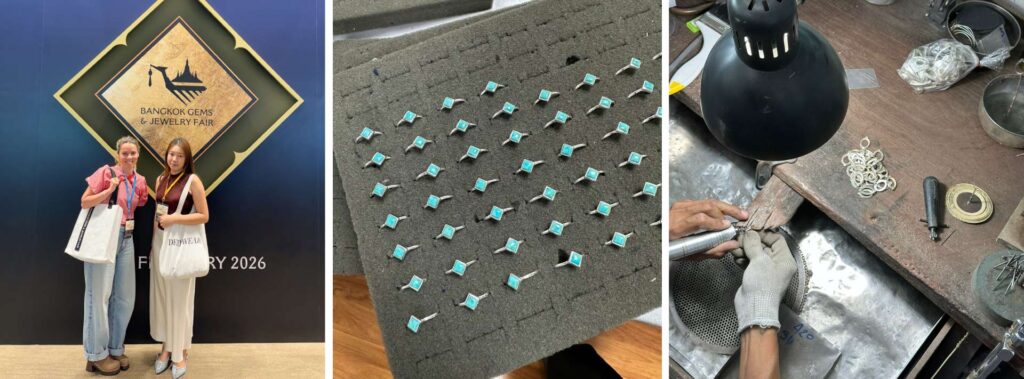
Turning Personalization Into a Repeatable Production Model
Before launching a customizable collection, brands should define the boundaries of the offer.
Which product features can customers change? Which components will remain standardized? Which combinations have been validated for manufacturing? What information must accompany each order? How will costs and delivery estimates change when different options are selected?
These decisions influence the choice of production partners, digital tools and inventory strategy.
A gemstone-focused collection may require different technical expertise from a modular fashion jewelry line. A fine jewelry commission may also need a different development and approval process from a standardized ring with optional engraving.
Supplier selection should reflect these differences rather than rely on a general assumption that one manufacturing arrangement will suit every product.
Brands should also test the model before expanding the number of available options. A limited pilot can reveal whether the customization process creates excessive sampling, purchasing or inspection requirements. It can also help establish realistic production costs and delivery commitments.
The long-term objective is a manufacturing system in which customer choice is supported by clear specifications, suitable production capabilities and reliable quality controls.
Personalization becomes commercially sustainable when the additional options create customer value without making every order unnecessarily expensive or difficult to manufacture.
Developing a made-to-order jewelry collection for 2027? Contact Deepwear to discuss manufacturing capabilities, supplier selection and a sourcing strategy aligned with your product and production requirements.