
Explore technical outerwear manufacturing, from waterproof shells and seam sealing to down insulation, testing, sourcing countries, and MOQs.
In the global apparel industry, technical outerwear manufacturing represents the absolute pinnacle of garment construction, structural complexity, and manufacturing discipline. Parkas, technical rain jackets, insulated puffers, bonded trench coats, and heavy-duty workwear jackets are not simple clothing items; they are engineered environmental shields designed to protect the wearer against extreme weather, wind penetration, sub-zero temperatures, and heavy precipitation.
Outerwear assembly leaves zero room for technical error. While a minor stitching flaw on a standard t-shirt might compromise aesthetics, a flawed seam on a waterproof mountain parka or an incorrect needle selection on a down-filled coat can cause catastrophic functional failure. Water can penetrate the shell, insulation can leak through stitch holes, cold air can enter through poorly constructed pocket seams, and heat-bonded seams can delaminate under physical tension.
When a brand attempts to manufacture technical outerwear using general commercial factories, unverified online directories, or distant sourcing agents who lack heavy-construction expertise, the result can be compromised inventory. Standard commercial factories may lack the specialized machinery, seam-sealing hot air units, down-injection chambers, laser-cutting tables, and hydrostatic pressure testing equipment required for complex technical outerwear.
In this blog we cover:
- Technical outerwear manufacturing and the four pillars of complex garment assembly
- Waterproof shells, seam taping, DWR finishes, and technical insulation
- The strongest outerwear sourcing countries, including Asian production hubs and European nearshoring
- Outerwear MOQs, factory capabilities, and specialized quality-control requirements
- Key rules for testing and managing technical outerwear production
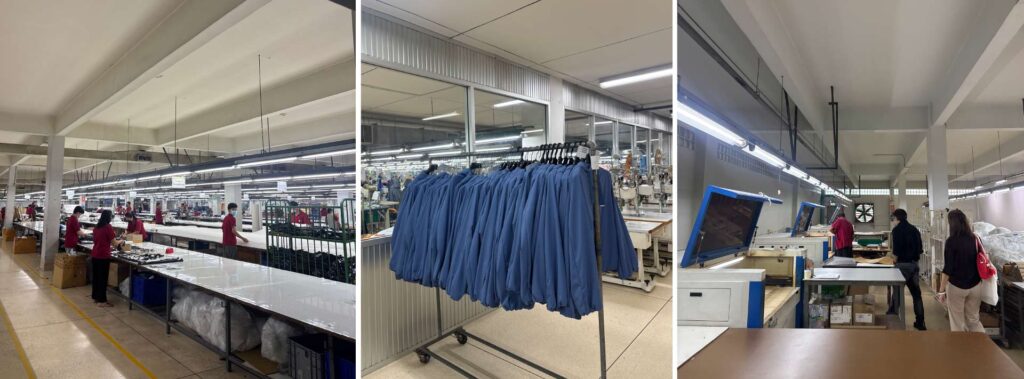
Understanding the Four Technical Pillars of Technical Outerwear Assembly
Engineering high-performance, weather-resistant outerwear requires mastering four core technical and structural parameters that define insulation retention, waterproof integrity, and structural longevity:
1. Advanced Technical Shell Fabrics and Multi-Layer Lamination
Outerwear performance begins at the textile shell. Outerwear fabrics are engineered by laminating or coating high-density woven faces made of high-tenacity Nylon 6,6, recycled polyester, or heavy cotton canvas with functional membranes:
Two-Layer and Three-Layer Lamination: Two-layer fabrics laminate a durable water-repellent face fabric to a waterproof, breathable membrane, generally requiring an interior lining or drop liner for protection. Three-layer fabrics sandwich the waterproof membrane directly between the outer shell face and an ultra-lightweight interior tricot backing, creating a highly durable, lightweight, wind-resistant barrier.
Hydrostatic Head and Breathability Metrics: Waterproof performance is measured in millimeters of water pressure that a fabric can withstand before leaking. Performance technical outerwear can use hydrostatic ratings of 10,000 mm, 20,000 mm, or higher depending on the intended end use and performance specification. Concurrently, breathability, often measured in grams per square meter over twenty-four hours, indicates how effectively internal moisture vapor can escape during active wear.
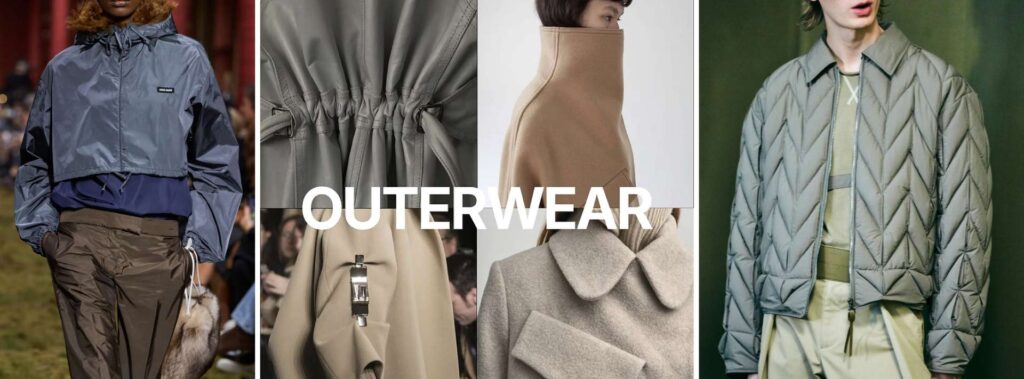
Durable Water Repellent (DWR) Finishes: Eco-friendly C0 or fluorine-free DWR surface treatments cause surface water to bead up and roll off the outer shell face, helping prevent the textile from becoming saturated and supporting membrane breathability.
2. Fully Taped Seams and Heat-Bonded Waterproofing
//Whenever an industrial needle penetrates a waterproof laminated fabric during assembly, it creates a series of needle perforations through the seam line that can become potential pathways for water and air if they are not properly sealed. Waterproof outerwear therefore demands advanced seam-sealing protocols.//
Hot Air Seam Taping: Specialized seam-sealing machinery applies thermoplastic adhesive tape over selected interior seams under precisely controlled heat, speed, and roller-pressure parameters. Correctly applied seam tape can seal needle perforations and reinforce waterproof performance across compatible panel junctions, provided that temperature, pressure, tape compatibility, seam construction, and testing requirements are properly controlled.
Laser Cutting and Ultrasonic Bonding: High-tech technical jackets can utilize CNC laser cutting for precise component edges, paired with ultrasonic welding or thermal bonding tape for selected applications such as pocket components, storm flaps, and interior construction, reducing the dependence on traditional thread stitching in specific areas.
3. Thermal Insulation Engineering: Natural Down versus Advanced Synthetics
Insulated puffers and winter parkas rely on thermal chambers to trap warm air generated by the body. Selecting and managing thermal insulation involves strict technical parameters:
Natural Goose and Duck Down: Natural down offers exceptional warmth-to-weight ratios and compressibility, rated by Fill Power such as 600, 700, or 800+ fill power. Manufacturing down-filled outerwear demands appropriate down-proof lining and chamber construction to minimize feather leakage through the fabric and seams.
Advanced Synthetic Insulation: High-performance recycled synthetic insulations, including products such as PrimaLoft or Thinsulate, can provide thermal insulation while maintaining performance in damp conditions. Synthetic insulation also eliminates feather leakage concerns and can simplify certain industrial baffle quilting and construction processes.
For brands developing ski, winter, and performance-led collections, Deepwear also provides sourcing insight across technical outerwear manufacturing hubs including China, Vietnam, and Türkiye, with country-specific considerations for materials, production capabilities, cost, and lead times. Read our related guide, Rethinking Ski Gear: From Alpine Runs to Urban Rails, for a broader look at technical ski gear and winterwear sourcing.
4. Heavy-Duty Hardware, Storm Closures, and Reinforced Stress Points
Outerwear experiences immense mechanical tension along zippers, cuffs, drawcords, and pocket openings. Outerwear assembly requires heavy-duty specialized trims:
Waterproof Zippers: Specially coated or laminated waterproof zippers, including products from established suppliers such as YKK or Riri, can help repel driving rain along main front closures and chest pockets when correctly specified and constructed.
Double-Flap Storm Plackets: Exterior and interior fabric plackets secured with heavy-gauge snap buttons, zippers, or other appropriate closures can help reduce wind and water penetration through the front closure system.
Reinforced Stress Points: Heavy bartack stitching along pocket corners, shoulder strap attachments, hood drawcord exits, and sleeve cuff adjusters helps prevent fabric tearing under load.
Looking for the right factory for a technically complex outerwear project? Deepwear can help brands assess manufacturing capabilities, compare sourcing markets, negotiate production requirements, and coordinate quality control before bulk production begins.
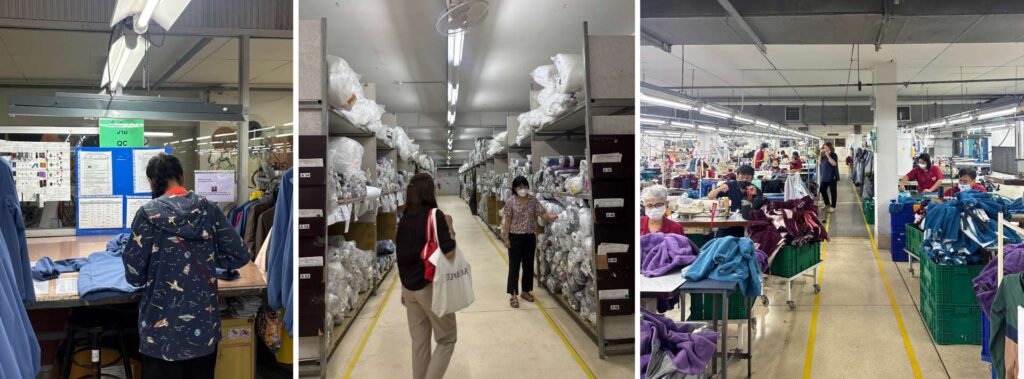
The Deepwear Outerwear Production Protocol: Precision Oversight Across Global Hubs
Deepwear supports brands through a global manufacturing and sourcing network, with teams positioned close to major apparel production markets and factories. Our geographical presence allows production requirements, materials, quality control, timelines, and supplier communication to be coordinated closer to the factory floor.
Asian Technical Outerwear Powerhouses
China, Vietnam, and Thailand represent important manufacturing centers for complex technical outerwear, performance apparel, bonded construction, quilting, and heavy technical jackets. Through our global manufacturing network, Deepwear can help brands evaluate suitable factories and production capabilities according to the technical requirements of each outerwear project.
European Luxury Outerwear and Nearshoring Hubs
Italy, Portugal, Bulgaria, and Türkiye offer established capabilities across luxury outerwear, wool coats, tailored trench coats, specialized leather jackets, and European nearshoring. Deepwear’s European offices and manufacturing network allow brands to explore production options according to product category, quality requirements, target market, and desired production location.
Sourcing Countries for Technical Outerwear Manufacturing
Choosing an outerwear manufacturing country should depend on the garment’s technical requirements, target volume, material availability, delivery strategy, and required level of finishing. The strongest sourcing markets for complex outerwear include China and Vietnam for technical and scalable production, Türkiye for European proximity and flexible fashion outerwear, Portugal and Italy for premium European production, and Morocco for Mediterranean nearshoring and fast-turn programs.
| Sourcing Country | Outerwear Strength | Indicative MOQ | Best Suited For |
| China | Technical outerwear, waterproof jackets, insulated garments, full-package production | 300–500 pcs | Complex technical products, scalable production, integrated materials |
| Vietnam | Performance apparel, insulated and technical outerwear | 300–600 pcs | High-volume technical and performance collections |
| Türkiye | Fashion outerwear, jackets, premium woven construction | 400–1,000 pcs | European nearshoring, premium fashion outerwear, faster replenishment |
| Portugal | Premium European manufacturing and high-quality finishing | 150–300 pcs | Premium outerwear, smaller European collections |
| Italy | Luxury outerwear, tailoring, leather and premium construction | 20–80 pcs* | Luxury, designer, limited-production outerwear |
| Morocco | Nearshore woven apparel and outerwear | 500–1,500 pcs | European nearshoring, commercial and fast-turn programs |
MOQ DISCLAIMER: MOQ figures and sourcing information in this article are indicative estimates based on available Deepwear sourcing data and typical manufacturing conditions. Actual minimum order quantities, pricing, lead times, material availability, technical capabilities, certifications, and production capacity vary by factory, garment construction, fabric, trims, order volume, season, and negotiated terms. Technical performance claims should be validated through appropriate laboratory or factory testing for the specific garment. Brands should request current quotations, samples, technical specifications, and factory verification before committing to bulk production.
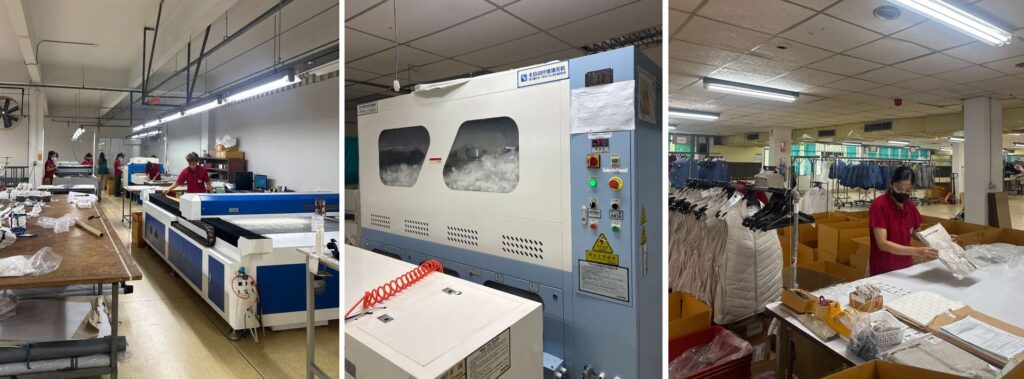
Four Rules for Executing Flawless Technical Outerwear Production
Rule 1: Calibrate Seam-Taping Machinery Temperature for Every Fabric Lot
Different fabric laminates require different hot-air temperatures, speeds, and pressure settings. Applying too much heat can damage the waterproof membrane; applying too little heat can cause seam tape to lose adhesion during wear or laundering.
Rule 2: Conduct Down-Proof Fabric Testing Before Mass Cutting
Before filling chambers with bulk down, conduct physical down-proof testing on sample baffles. High-density down-proof linings must prevent feather quills from poking through the weave during physical compression and movement.
Rule 3: Always Build Ergonomic Movement Allowances into Outerwear Patterns
Outerwear is worn over mid-layers like sweaters or hoodies. Master pattern makers must build explicit ergonomic articulation allowances into elbow curves, armhole depth, and shoulder width to ensure full range of motion without pulling or sleeve riding up.
Rule 4: Verify Water-Repellent DWR Finishes at the Mill Level
Do not rely solely on chemical supplier claims. Conduct physical spray-rating tests on outer fabric batches to verify water-beading performance before authorizing fabric cutting, ensuring the specified DWR treatment meets the garment’s performance requirements.
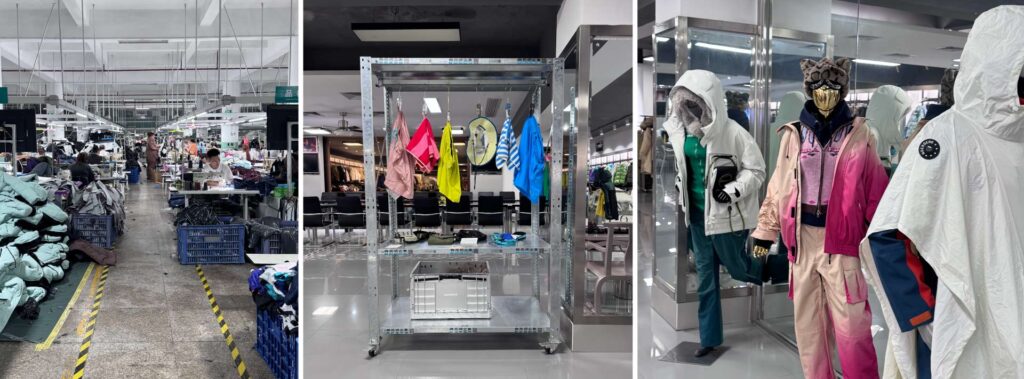
What is the best country for technical outerwear manufacturing?
China and Vietnam are strong options for complex technical outerwear and scalable production, while Türkiye, Portugal, Italy, and Morocco offer attractive options for European nearshoring depending on product requirements, volume, and target market.
Master Technical Outerwear Manufacturing Through Global Infrastructure
Manufacturing heavy-duty, weather-resistant, and commercially successful outerwear requires combining advanced lamination science, specialized seam-sealing machinery, thermal insulation engineering, and physical on-site factory-floor discipline. Partnering with a global manufacturing and sourcing network that can connect brands with technical mills, specialized production facilities, and quality-control support helps ensure that outerwear collections are developed against clearly defined performance, construction, quality, and commercial requirements.
Planning a technical outerwear collection? Deepwear can help you identify suitable sourcing countries, evaluate factory capabilities, navigate MOQs, coordinate production, and manage quality control from sampling to shipment. Contact our team to discuss your outerwear manufacturing requirements.