
Explore how material mapping improves performance apparel through strategic fabric placement, original product development, and smart sourcing and manufacturing decisions.
What makes a performance garment innovative? A new fiber, a more advanced fabric, or a smarter way of combining materials?
In technical sportswear, innovation can come from how different materials work together. A jacket might combine insulation, weather protection and ventilation, while a running shirt could use different fabric structures to balance breathability, stretch and durability.
This approach, known as material mapping, gives designers more control over a garment’s performance by assigning different materials to specific areas according to their intended functions.
In this blog we cover:
- What material mapping is and how it improves performance apparel.
- How to turn existing innovations into original product concepts.
- Key manufacturing considerations, from material compatibility to pattern engineering.
- Leading countries for sourcing technical fabrics and manufacturing performance apparel.
- How material mapping can influence sustainability and product durability.
What Is Material Mapping in Performance Apparel?
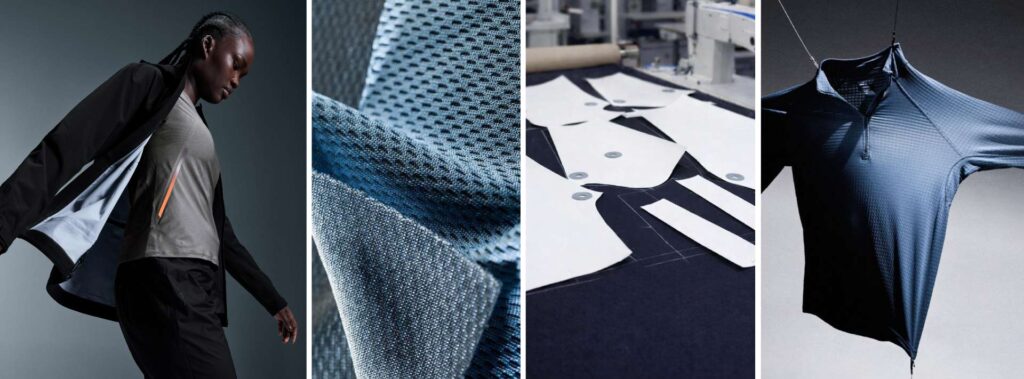
Material mapping is the strategic placement of different fabrics, insulation systems, knit structures or reinforcements across a garment according to their intended functions. The term body mapping is often used when placement specifically relates to the body’s thermal conditions, perspiration and movement.
Different garment areas experience different demands:
- Thermal management: Insulation in areas where warmth is required.
- Ventilation: Breathable structures where airflow and moisture management are priorities.
- Weather protection: Shell fabrics or overlays in areas exposed to wind and rain.
- Mobility: Stretch materials where freedom of movement is essential.
- Durability: Reinforcements where abrasion and friction are concentrated.
The appropriate arrangement depends on the garment, its intended activity and the conditions in which it will be worn.
Rather than expecting one multifunctional fabric to deliver every desirable property, designers can investigate whether combining materials provides a more effective solution.
Three Brands, Three Lessons in Material Innovation
Established performance brands offer valuable examples of how material selection and placement can address different product-development challenges. Their work provides inspiration, not a blueprint for copying their designs.
1. Ciele Athletics: Rethinking Insulation
Ciele Athletics’ VLVInsulator Jacket combines a recycled-polyester shell, specialized insulation and separate fleece panels, alongside ventilation features. Its listed insulation blend includes Merino wool, recycled silk and PLA Ingeo material.
The product illustrates how different materials can serve complementary functions within one garment.
The lesson for product developers: Innovation does not always require inventing a completely new fiber. It can involve exploring alternative material combinations to address a specific performance requirement.
A brand developing lightweight running apparel, for example, might investigate different insulation blends to balance warmth, weight and moisture management. The ideal solution depends on its target conditions, available materials and testing results.
2. Smartwool: Balancing Warmth and Movement
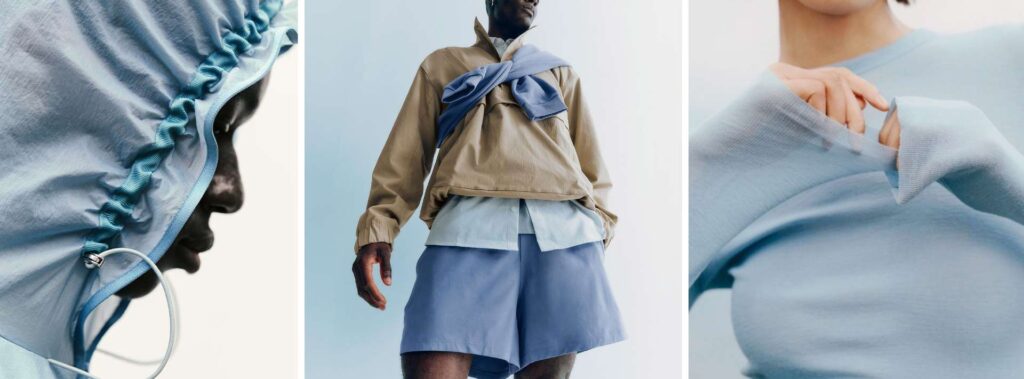
Smartwool’s Smartloft range incorporates insulation made with recycled Merino wool, including material recovered from manufacturing scraps.
Its products highlight a familiar challenge in outdoor apparel: maintaining warmth without introducing unnecessary bulk or restricting movement.
The lesson for product developers: Thermal performance should be considered alongside comfort, fit and the intensity of the intended activity.
A garment designed for low-intensity outdoor use may require a different material configuration from one intended for high-output exercise. The product brief should determine which trade-offs matter most.
3. Salewa: Matching Materials to Different Demands
Salewa’s Ortles Alpine Merino Jacket uses thermal knit material alongside Wool Cordura blend panels in areas requiring additional abrasion resistance. Wind-resistant overlays provide further protection in selected areas.
This is a clear example of assigning different materials to different functional requirements.
The lesson for product developers: Start with the demands of the activity and design around them. A climbing garment may need reinforcement where equipment creates friction, while a trail-running product may prioritize low weight and flexibility.
The opportunity is to develop an original configuration that suits the intended customer, rather than reproduce another brand’s panel arrangement or distinctive design.
How Can Brands Turn Inspiration into an Original Product?
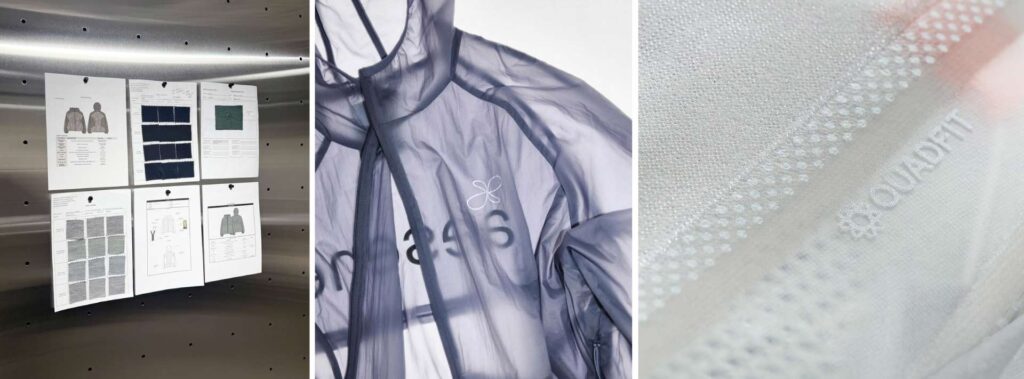
Studying existing products can help identify useful design principles. Developing a successful product, however, requires independent decisions based on customer needs and technical requirements.
A practical starting point involves four steps:
- Define the problem. Identify what the intended customer needs the garment to do. Consider climate, movement, perspiration, weather exposure and common sources of wear.
- Map the functional requirements. Determine which areas need insulation, ventilation, stretch, weather protection or reinforcement. Avoid adding materials without a clear purpose.
- Explore alternative solutions. Investigate different fibers, fabric weights, knit structures, finishes and panel configurations. Existing products can inform the questions, but the answers should emerge from your own design brief.
- Test and refine the prototype. Evaluate fit, comfort, movement, material compatibility and performance. Simplify the construction where possible without compromising the intended function.
For example, a design initially conceived with several ventilation panels might achieve the required airflow through a different fabric construction. Fewer panels could simplify assembly and reduce material waste. Alternatively, prototype testing might reveal that localized reinforcement is necessary to achieve the required durability.
The objective is not to maximize complexity. It is to determine which design delivers the best balance of function, usability and manufacturability for the intended product.
Developing a new sportswear concept? Deepwear helps brands explore material options, identify suitable sourcing partners and assess manufacturing feasibility. Contact our team to discuss your product requirements.
Where Should Brands Source Materials and Manufacture Performance Apparel?
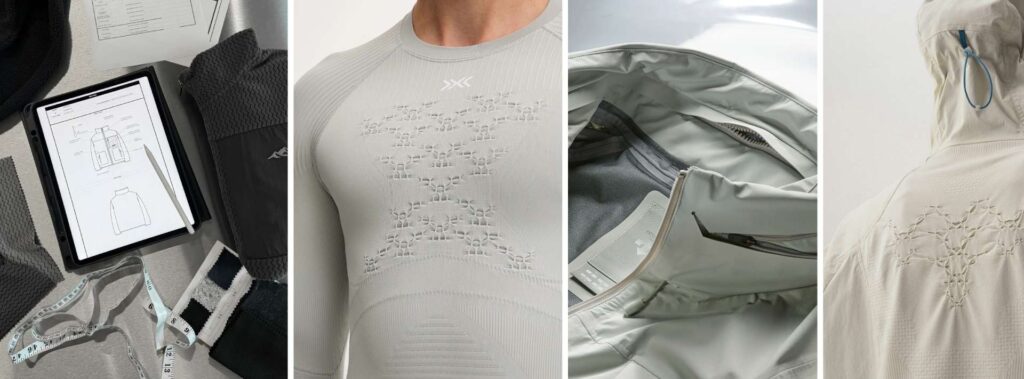
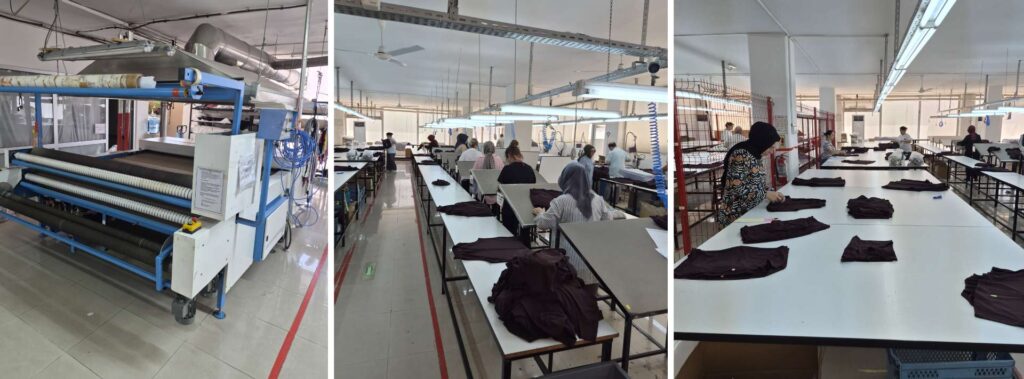
Material sourcing and garment manufacturing do not necessarily need to happen in the same country. A brand may source specialized technical fabrics from one market and work with a factory elsewhere that has the equipment and experience to assemble them.
The following table provides a starting point for evaluating potential sourcing and manufacturing destinations.
| Country or market | Material sourcing strengths | Garment manufacturing strengths | Considerations |
| China | Broad textile base, synthetic fabrics, functional finishes and technical textile options. | Extensive apparel supply chain, including complex sportswear and technical garments. | Evaluate the specific mill and factory capabilities, minimum order quantities and material traceability. |
| Vietnam | Growing textile supply base, alongside access to imported performance fabrics. | Established apparel export industry, including activewear and technical outerwear. | Check whether the factory sources materials locally or imports them, and account for additional lead time. |
| Bangladesh | Strong apparel supply chain, with material availability varying by product category. | Large-scale garment manufacturing, particularly for volume-driven apparel programs. | Confirm experience with technical construction, stretch fabrics, bonding, seam sealing or other specialized processes. |
| Portugal | Textile and knitwear expertise, with options for selected performance materials. | Apparel development and production, including premium and smaller-scale programs. | Assess factory specialization, technical equipment, minimums and overall cost. |
| Türkiye | Textile production, knitted fabrics and synthetic-blend options. | Established apparel manufacturing and comparatively convenient access to European markets. | Confirm technical sportswear experience and whether specialized fabrics or components need to be imported. |
These are general sourcing considerations, not guarantees of capability. Expertise, equipment, quality systems, capacity and commercial terms vary by individual supplier.
When comparing countries, brands should evaluate more than the quoted unit price. Key questions include:
- Can the supplier provide the required fabric construction, composition and finish consistently?
- Does the factory have experience assembling garments with different materials and performance requirements?
- Can fabric sourcing and garment production schedules be coordinated?
- What are the minimum order quantities, sampling costs and expected lead times?
- How will shipping, duties, material origin and quality control affect the final cost?
A two-country supply chain can offer access to specialized materials and suitable assembly expertise, but it also introduces additional coordination, logistics and lead-time considerations.
For further guidance on evaluating fabric options and suppliers, see Deepwear’s Essential Fabric Sourcing Checklist for Emerging Fashion Brands.
Testing also needs to be built into development. Brands should evaluate the assembled garment against requirements appropriate to its intended use, rather than relying only on individual fabric specifications. Deepwear’s existing guidance on textile testing and quality standards can provide further context for establishing those requirements.
Can Material Mapping Make Performance Apparel More Sustainable?
Potentially, but the outcome depends on the design.
Using specialized materials only where they are needed may reduce unnecessary material use, while reinforcement in high-wear areas may support product longevity. However, additional panels can also increase cutting waste, complicate sourcing and make material separation more difficult at the end of a garment’s life.
Brands should assess:
- Material utilization and cutting waste.
- Durability and repairability.
- Fiber composition and manufacturing processes.
- The complexity of separating materials for recycling or disposal.
A more complex garment is not automatically more sustainable. The relevant question is whether its functional benefits justify the additional materials and production requirements.
How Deepwear Helps Brands Develop Original Performance Apparel
Material mapping connects design, sourcing and manufacturing decisions. Each material must serve a clear purpose, work with the surrounding construction and remain commercially viable.
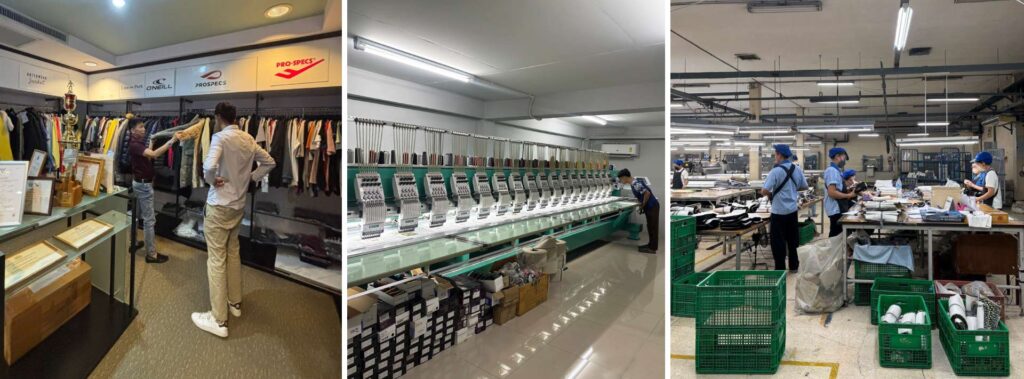
Deepwear helps brands connect their product requirements with suitable material suppliers and manufacturing partners. This includes considering sourcing options, construction requirements and the production capabilities needed to translate a design into a finished garment.
Our focus is on helping clients develop products around their own objectives, rather than reproducing another company’s design.
For brands exploring technical sportswear and performance apparel, that means turning a product brief into a workable development strategy, with material choices aligned to the intended function, target customer and production requirements.
Have a performance apparel concept you want to develop? Contact Deepwear to discuss your material requirements, sourcing options and manufacturing feasibility.
What should brands consider before manufacturing a material-mapped garment?
Brands should assess material compatibility, pattern engineering, supplier availability, factory capabilities, sampling requirements and production costs. Testing the finished garment is also important because individual fabric specifications cannot fully predict how different materials will perform when assembled.
From Inspiration to Original Design
Material mapping demonstrates that performance apparel innovation is about more than finding the right fabric. It also involves understanding where different materials can contribute, how they interact and whether the resulting garment delivers the intended benefits.
The work of Ciele Athletics, Smartwool and Salewa offers useful lessons in approaching these decisions. Their products illustrate different ways of addressing insulation, movement and durability through material selection and construction.
For other brands, the opportunity is to build on those broader principles with original ideas, distinct customer insights and carefully tested solutions.
The goal is not to create another version of an existing product. It is to develop a garment whose materials, construction and performance reflect a clear purpose. Better performance apparel begins with understanding the problem before choosing the materials.
Ready to develop your own performance apparel? Contact Deepwear to explore suitable materials, sourcing opportunities, and manufacturing partners for your product concept.