
Learn how slow product development impacts costs, timelines, and product launches, and discover how Deepwear helps brands streamline sourcing, sampling, and garment manufacturing from concept to production.
Product development is often viewed as the creative stage of fashion. Sketches become prototypes, ideas evolve into garments, and collections gradually take shape. Yet behind every successful launch is a carefully managed development process that determines whether a product reaches the market on schedule, or arrives too late to capitalize on demand.
The most expensive mistake in garment manufacturing is rarely the fabric, the labor, or even the factory.
It’s time.
Every additional week spent revising samples, waiting for approvals, or correcting unclear specifications delays a product launch. For seasonal collections, those delays can mean missing retail windows, tying up working capital, and allowing competitors to reach customers first. These costs rarely appear as a separate line item on an invoice, but they can have a lasting impact on profitability, forecasting, and brand momentum.
The brands that consistently launch on time aren’t simply producing faster. They’re developing smarter.
In this blog we cover:
- The hidden costs of slow product development in garment manufacturing.
- Why unclear Technical Packs and excessive sampling create expensive delays.
- Common bottlenecks that slow product development before manufacturing begins.
- How Deepwear’s localized teams accelerate development through technical support, sourcing, and factory coordination.
- Why efficient product development has become a competitive advantage for modern apparel brands.
Product Development Costs More Than Most Brands Realize
Most brands monitor visible production expenses closely. Material costs, manufacturing rates, freight charges, and customs fees are all easy to measure. The hidden costs of product development, however, often go unnoticed until they begin affecting delivery schedules and sales performance.
Every delay creates a chain reaction throughout the supply chain. A prototype that takes another week to revise pushes back fit approvals. Delayed approvals postpone purchase orders. Production schedules shift, inventory plans become less reliable, and product launches begin drifting away from their intended retail window.
Some of the most common hidden costs include:
- Lost selling time for seasonal collections
- Additional expenses from repeated sampling rounds
- Factory resources spent revising the same garment multiple times
- Delayed purchase orders that affect production planning
- Inventory management challenges caused by shifting timelines
- Missed launch opportunities that competitors may capitalize on first
None of these costs exist in isolation. Each delay compounds throughout the development process, making it progressively more difficult, and more expensive to recover later.
Where Product Development Slows Down
Few development timelines are delayed by a single major issue. More often, they’re affected by several small bottlenecks that accumulate over weeks or months. Identifying these friction points is the first step toward creating a more efficient product development process.
1. Unclear Technical Packs
A Technical Pack serves as the blueprint for manufacturing a garment. When that blueprint lacks clarity, uncertainty spreads across every subsequent stage.
Factories may receive incomplete measurements, conflicting construction instructions, or missing trim specifications. Rather than moving directly into development, production teams must pause to seek clarification or make assumptions that later require correction.
While a detailed Technical Pack provides manufacturers with essential specifications, experienced product development teams know that documentation alone is not always enough. Whenever possible, factories should receive both a Technical Pack and a physical reference sample. The Technical Pack communicates the technical requirements, while the reference sample provides a visual and tactile benchmark for construction, fit, finishing, and overall product expectations. Using both together helps reduce misunderstandings before sampling even begins.
If you’re building your first specification document, be sure to read our guide on Why Tech Packs Are Essential in the Fashion Industry, where we explore the key components that every effective Technical Pack should include.
2. Too Many Sampling Rounds
Sampling is an essential part of product development. From the prototype and fit sample to the sales sample and pre-production (PP) sample, each stage serves a specific purpose in validating design, construction, and quality before bulk manufacturing begins.
The problem isn’t the number of sample stages themselves.
Every sample serves a purpose. Rather than reducing the number of samples, experienced product development teams ensure the right samples are produced from the beginning.
In practice, this often means preparing:
- A factory sample used as the production reference.
- A client sample for review and approval.
- An agent or quality control sample used during production oversight.
Having dedicated reference samples helps everyone evaluate the same product against the same standard, reducing misunderstandings once production begins.
As we discussed in our guide on Garment Sampling: How Deepwear Guides Brands from Concept to Production, every sample should answer a specific question. When new samples are requested simply because previous decisions weren’t finalized, development becomes significantly less efficient.
3. Slow Decision-Making
Factories are often blamed when timelines slip, but delays frequently originate on the brand side.
Internal approval processes can take longer than anticipated. Multiple stakeholders may provide conflicting feedback. Material selections may remain undecided, or design revisions may continue after sampling has already begun.
Each pause forces suppliers to wait before proceeding to the next stage.
Even highly capable manufacturing partners cannot maintain momentum if key decisions are delayed. Efficient product development depends as much on timely communication and clear direction as it does on production expertise.
Product development moves fastest when every stage is coordinated from concept through production. Deepwear helps brands streamline Technical Packs, sampling, sourcing, and manufacturing to reduce unnecessary delays before production even begins. Start a conversation with our team.
How Deepwear Helps Brands Shorten Product Development Timelines
Successful brands rarely shorten development timelines by asking factories to work faster. Instead, they remove the bottlenecks that interrupt the process before production even begins.
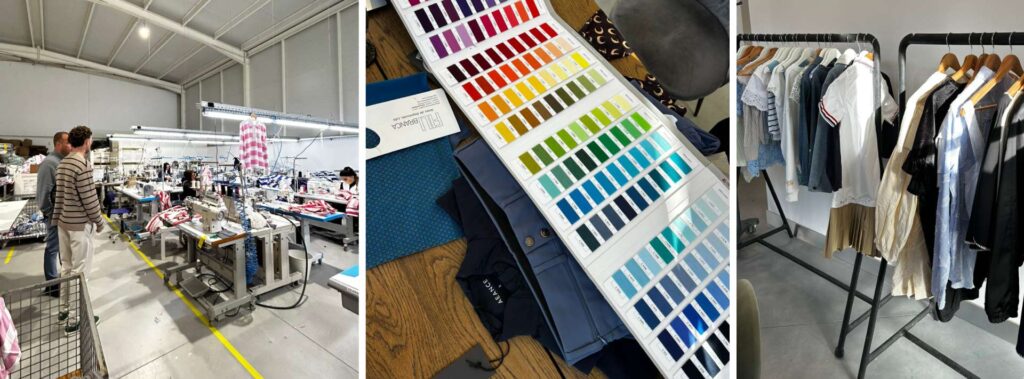
At Deepwear, this is where our localized teams make the greatest impact. Rather than acting as a middleman, our teams work directly with trusted manufacturing partners across our sourcing regions, handling negotiations, verifying technical details, coordinating communication, and identifying potential issues before they become expensive delays.
By staying close to the factory floor while understanding each client’s commercial goals, we help brands move from concept to production with fewer revisions and greater confidence.
1. We Help Finalize Designs Before Sampling Begins
One of the biggest causes of product development delays is changing the design after samples have already been made.
A small adjustment such as changing a pocket construction, switching fabrics, or modifying a neckline can trigger new patterns, revised measurements, and another sampling round.
Before production starts, our teams work with brands to review designs for manufacturing feasibility. We evaluate whether proposed materials are readily available, whether construction methods are practical for production, and whether certain design choices could introduce unnecessary complexity.
For example, if a client requests a specialty trim with an extended lead time, our sourcing specialists can recommend comparable alternatives that maintain the intended aesthetic while keeping development on schedule.
Resolving these questions early allows the sampling process to focus on refinement instead of redesign.
2. We Create and Review Technical Packs for Manufacturing Accuracy
A Technical Pack is one of the most important documents in garment manufacturing. Even experienced brands occasionally provide incomplete or inconsistent specifications, while newer brands may not have one at all.
That’s why Deepwear can both review existing Technical Packs and develop them from the ground up when needed.
Our technical teams understand exactly what manufacturers require because they work alongside factories throughout the production process. Measurements, construction details, stitch specifications, trims, artwork placement, labeling requirements, and finishing instructions are reviewed to ensure they’re complete before sampling begins.
For instance, if sleeve measurements conflict with the grading chart or trim specifications don’t match the design files, these inconsistencies are identified before they result in incorrect samples or repeated factory clarification requests.
A comprehensive Technical Pack cannot eliminate every revision, but it dramatically reduces uncertainty throughout development and gives manufacturers a clear blueprint from the very beginning.
3. Our Local Teams Coordinate Sampling and Factory Communication
Problems arise when factories receive incomplete feedback or conflicting revision requests from multiple stakeholders.
Our local teams coordinate directly with manufacturers throughout each sampling stage, ensuring feedback is consolidated, technical questions are answered quickly, and revisions are communicated clearly. Because our representatives are operating within the same manufacturing regions, discussions that might otherwise take days through international email chains can often be resolved much faster.
This structured communication reduces unnecessary sampling rounds while keeping development moving toward production.
4. We Negotiate and Solve Problems Before They Reach Production
Product development is about more than creating samples. It also involves hundreds of practical decisions that influence cost, lead times, and production efficiency.
Before development begins, our team also negotiates sampling conditions with manufacturing partners. This includes agreeing on the number of required samples, sampling costs, approval timelines, revision procedures, and each party’s responsibilities. By incorporating these conditions into factory agreements from the outset, expectations are clearly defined before production starts, reducing misunderstandings and helping projects stay on schedule.
Our sourcing specialists negotiate directly with manufacturing partners while monitoring factors such as:
- Material availability and procurement timelines
- Factory production capacity
- Alternative construction methods
- Cost engineering opportunities
- Lead-time risks
- Production scheduling
For example, if a chosen fabric suddenly becomes unavailable, our local sourcing team can immediately work with suppliers to identify suitable alternatives instead of allowing the project to stall while brands search remotely for solutions.
5. We Identify Manufacturing Risks Early
Some of the most expensive production problems begin long before garments enter bulk manufacturing.
Our teams conduct feasibility reviews throughout development, identifying technical issues before purchase orders are placed.
This may include:
- Construction methods that are difficult to scale consistently
- Fabric choices that affect fit or durability
- Trim compatibility concerns
- Pattern adjustments needed for mass production
- Cost-saving opportunities without compromising quality
Addressing these issues during development is significantly less expensive than discovering them after production has already started.
Why Faster Development Doesn’t Mean Cutting Corners
Reducing development timelines should never come at the expense of product quality.
Our teams on the ground can help reduce delays through clear communication, detailed Technical Packs, proactive sourcing, coordinated factory management, and continuous oversight throughout development. Quality assurance, fit evaluations, and production approvals remain essential milestones; what changes is the amount of unnecessary rework required to reach them.
The New Competitive Advantage in Garment Manufacturing
Today’s apparel brands compete on far more than product design. They compete on how quickly they can respond to changing markets without sacrificing quality.
Brands that streamline product development are better positioned to:
- Launch collections while demand is strongest.
- Adapt more quickly to changing consumer trends.
- Improve supply chain responsiveness.
- Reduce uncertainty in inventory planning.
- Build more reliable production schedules for future collections.
Behind each of these advantages is a disciplined development process supported by experienced technical and sourcing teams.
By combining localized manufacturing expertise with hands-on project management, Deepwear helps brands transform product development from a potential bottleneck into a strategic advantage through bringing collections to market faster while maintaining the quality and consistency that customers expect.
How can a Technical Pack reduce product development delays?
A detailed Technical Pack provides manufacturers with the information they need from the beginning of the development process. Clear measurements, construction details, material specifications, and trim information reduce clarification requests, minimize unnecessary sampling revisions, and improve communication between brands and factories. While no Technical Pack can eliminate every revision, a well-prepared document creates a stronger foundation for faster, more efficient product development.
From Development Bottleneck to Business Advantage
Slow product development doesn’t just delay production, it delays opportunities. Every unnecessary revision, missed approval, or communication gap makes it harder to launch at the right time and compete in a fast-moving market.
The brands that consistently bring products to market on schedule don’t rely on rushing factories. They build efficient development processes from the beginning, supported by clear documentation, coordinated sourcing, informed decision-making, and strong manufacturing partnerships.
At Deepwear, our localized teams help brands simplify that process by coordinating with trusted factory partners, managing product development, and solving manufacturing challenges before they become costly delays.