
Explore the 2026 jewelry trends reshaping luxury through colored gemstones, transformable design, visible craftsmanship, and global sourcing strategies across Asia and Europe.
What consumers value in luxury jewelry is changing, and the shift is affecting everything from gemstone sourcing to MOQ planning and manufacturing strategy. According to Fortune Business Insights, the global jewelry market was valued at USD 242.79 billion in 2025 and is projected to grow to USD 387.36 billion by 2034, exhibiting a CAGR of 5.41% from 2026–2034. Asia Pacific accounted for roughly 39.23% of the global jewelry market in 2025, reinforcing the region’s dominance across jewelry consumption, gemstone processing, and manufacturing infrastructure.
As the market grows, luxury jewelry is moving beyond the highly polished minimalism and standardized aesthetics that defined much of the previous decade. Consumers are increasingly drawn to pieces that emphasize individuality, craftsmanship, material authenticity, and emotional storytelling. This is reflected in the growing popularity of colored gemstones, transformable designs, sculptural forms, organic asymmetry, mixed materials, and provenance-driven sourcing.
Recent collections from leading luxury houses illustrate this evolution. Tiffany & Co.’s Blue Book 2026: Hidden Garden collection, for example, celebrates nature-inspired design, exceptional gemstones, technical craftsmanship, movement, and the beauty of natural irregularity. While no single collection defines the market, it reflects a broader industry shift toward jewelry that feels more expressive, distinctive, and difficult to replicate.
This movement connects directly to what Deepwear explored in earlier analyses such as Unpolished Gemstones in 2026: The Supply Chain Shift Behind Luxury’s Move to Imperfection and Why Hard Luxury Is Outperforming Fashion And What It Means for Product Strategy in 2026.
In this blog we cover:
- How 2026 jewelry trends are creating new sourcing and manufacturing challenges
- How Deepwear coordinates multi-country jewelry supply chains
- Why supplier relationships remain critical in luxury jewelry manufacturing
- Jewelry MOQ realities across Deepwear’s manufacturing network
- What brands should consider when planning luxury jewelry production
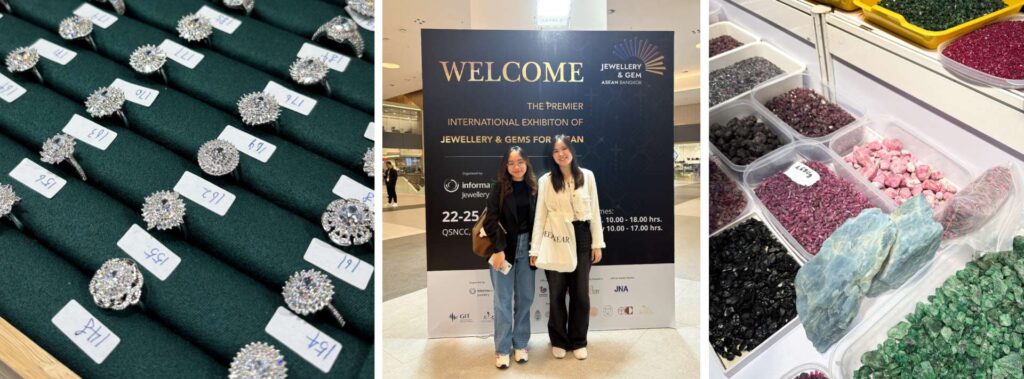
Why 2026 Jewelry Trends Are Creating New Production Challenges
The luxury jewelry trends shaping 2026 are creating new sourcing and manufacturing requirements that many brands underestimate during the design phase.
Collections built around colored gemstones, transformable construction, sculptural forms, and visible craftsmanship require a different production approach from traditional jewelry programs. Unlike standardized designs that rely on uniform materials and repeatable processes, these collections depend on variables that are often difficult to source, match, and manufacture consistently.
Take colored gemstones as an example. Two sapphires of the same size may differ in color saturation, clarity, origin, and cutting characteristics. A design that looks straightforward on paper can become significantly more complicated when a production run requires dozens or hundreds of stones that need to appear visually consistent.
Transformable jewelry introduces another layer of complexity. Components must function smoothly, maintain durability over time, and preserve the aesthetic integrity of the piece across multiple configurations. This requires close collaboration between designers, developers, and manufacturers long before production begins.
As brands move toward more distinctive products, the challenge is no longer simply finding a factory. It is building a production strategy that aligns sourcing, development, manufacturing, and quality control from the start.
From gemstone sourcing in Thailand to premium finishing in Europe, Deepwear helps brands structure connected supply chains that remain flexible, scalable, and commercially viable. Speak with Deepwear’s team to discuss how your jewelry collection can move from concept development to international production without unnecessary operational friction.
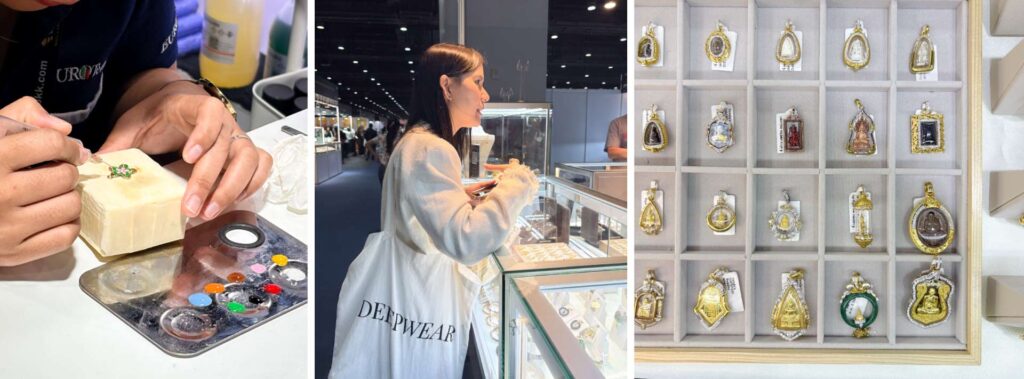
How Deepwear Helps Brands Navigate Complex Jewelry Supply Chains
Many jewelry brands discover that sourcing and production challenges emerge long before manufacturing begins.
Questions such as where gemstones will be sourced, how materials will be matched, whether suppliers can meet target MOQs, and how timelines will be managed across multiple production partners can all affect the viability of a collection.
Deepwear works as an operational partner throughout this process.
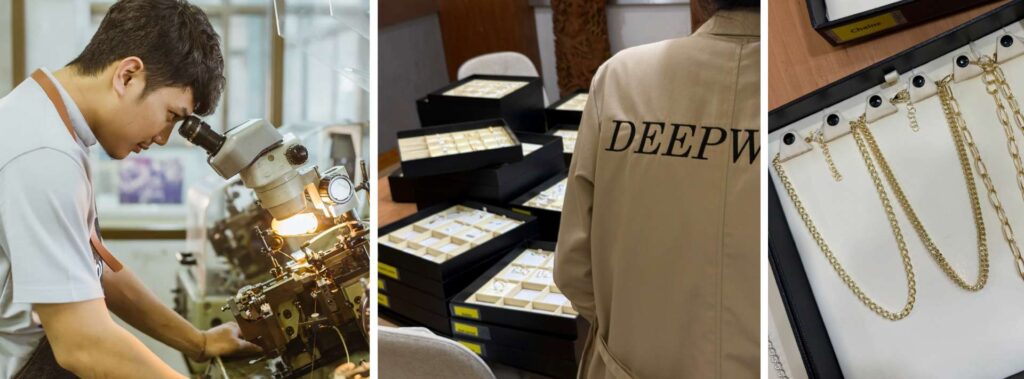
Rather than relying on a single supplier or manufacturing location, we help brands build production strategies around the specific requirements of each collection. This may involve coordinating gemstone suppliers, sample developers, specialist manufacturers, finishing facilities, and logistics partners across multiple regions.
Our support typically includes:
- Gemstone sourcing and supplier coordination
- Factory matching based on product requirements
- Sampling and prototype development
- MOQ planning and production strategy
- Quality control and supplier oversight
- Production scheduling and timeline management
- Multi-country sourcing and manufacturing coordination
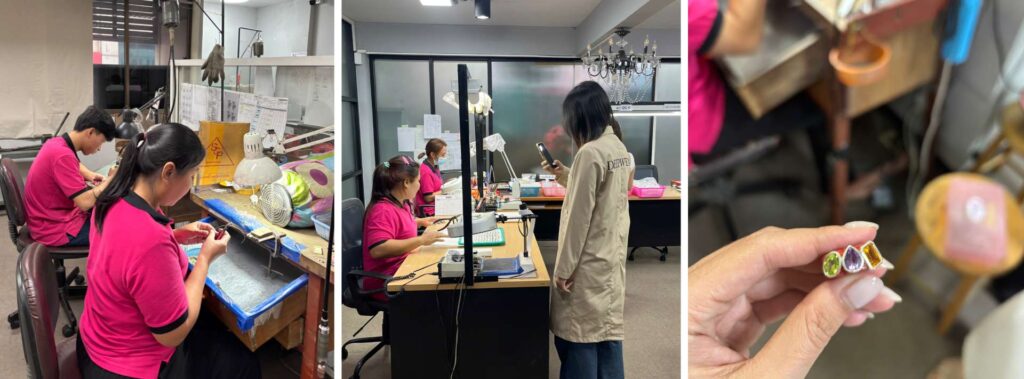
The objective is not simply to manufacture a product. It is to create a production structure that supports quality, scalability, and commercial viability as a collection grows.
Jewelry MOQ Realities Across Deepwear’s Manufacturing Network
At Deepwear, our teams coordinate sourcing and production across multiple manufacturing regions depending on gemstone type, collection complexity, scalability goals, finishing requirements, price positioning, and timeline expectations.
Different regions serve different operational functions within jewelry production.
| Region | Typical Jewelry MOQ | Primary Strength | ||
| Thailand | 30–150 pieces | Colored gemstones, sterling silver, stone setting, low-MOQ OEM production | ||
| Turkey | 20–200 pieces | Boutique manufacturing, artisanal finishing, custom silver jewelry, nearshoring to Europe | ||
| Portugal | 20–120 pieces | Premium finishing, luxury craftsmanship, EU-based production | ||
| Spain | 30–150 pieces | Fashion jewelry, contemporary design, small-batch luxury production | ||
| Italy | 50–500+ pieces | Fine jewelry, luxury craftsmanship, gold jewelry, high-end manufacturing | ||
| India | 50–200 pieces | Gemstone jewelry, gold jewelry, handcrafted production, competitive pricing | ||
| China | 100–500+ pieces | Large-scale production, OEM/ODM manufacturing, speed and cost efficiency
|
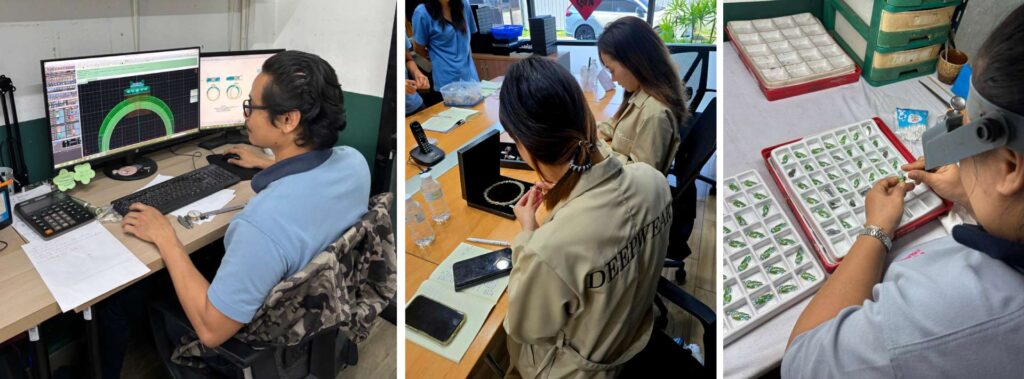
MOQ Disclaimer
MOQ requirements vary significantly depending on material (gold, silver, stainless steel, or fashion jewelry), customization level, stone sourcing, and factory specialization. The ranges above represent common industry benchmarks rather than fixed requirements. Final MOQs are determined case-by-case during sourcing and development planning.
Why Supplier Relationships Still Matter in Luxury Jewelry Manufacturing
In luxury jewelry, access to suppliers is only part of the equation.
Many of the capabilities that define premium products such as gemstone matching, artisanal stone setting, hand-finishing, and complex construction techniques depend on specialist expertise developed over years of experience. These skills cannot always be replaced by larger production capacity or lower pricing.
This is particularly relevant as brands explore trends such as colored gemstones and visible craftsmanship. The success of these collections often depends on the consistency and reliability of the suppliers involved.
Deepwear works with a network of trusted manufacturing and sourcing partners across Asia and Europe, allowing brands to access different capabilities depending on their goals.
For example:
- Thailand remains a key hub for gemstone sourcing, stone setting, and silver jewelry production.
- Portugal supports premium finishing and smaller-batch luxury manufacturing.
- Turkey offers strong capabilities in artisanal production and nearshoring for European markets.
- Bangladesh provides scalable production options for brands preparing to grow.
By maintaining long-term relationships across these supplier networks, Deepwear helps brands connect the right partners to the right projects while reducing unnecessary operational risk.
The result is a more coordinated production process that supports both creative ambitions and long-term scalability.
How do luxury jewelry brands manage colored gemstone sourcing across multiple suppliers?
Luxury jewelry brands typically work with multiple gemstone suppliers, manufacturers, and finishing partners across different regions. Managing these relationships requires coordination of stone availability, quality standards, production timelines, MOQ requirements, and logistics. Many brands work with sourcing and manufacturing partners such as Deepwear to help align these moving parts into a single production workflow.
Why Operational Coordination Is Becoming a Luxury Requirement
As luxury jewelry collections become more dependent on specialized materials, artisanal craftsmanship, and multi-region production, operational coordination plays a larger role in determining whether a collection reaches market successfully.
Brands entering the category will increasingly compete not only on aesthetics, but also on sourcing intelligence, manufacturing flexibility, and supply chain execution.
If your brand is exploring gemstone-led collections, transformable jewelry, or multi-region luxury production in 2026, Deepwear can help structure sourcing and manufacturing systems that support both creative goals and long-term scalability. Contact our team to discuss your next jewelry project.