
Learn about the 8 textile industry trends shaping apparel manufacturing in 2026, including smart textiles, 3D knitting, recycled fabrics, and sustainable sourcing strategies.
The textile industry in 2026 is defined less by breakthrough materials and more by how effectively brands scale production. While smart textiles, nanotechnology coatings, and bio-fabricated fibers continue to generate attention, most remain far from widespread industrial adoption.
Drawing on decades of experience in the fashion industry, our CEO, Thoray D’haese Sacoor, emphasizes that real progress in apparel manufacturing comes from aligning material innovation with sourcing strategies, production systems, and supplier capabilities.
Inside actual apparel manufacturing supply chains, the transformation looks different. Rather than relying on futuristic materials, brands are advancing through incremental improvements in manufacturing technology, material sourcing, and production efficiency.
In this blog we cover:
- Nanotechnology coatings, smart textiles, and bio-fabricated fibers
- 3D knitting and AI-assisted textile manufacturing
- Recycled polyester and circular fabric sourcing
- Regenerated cellulose fibers like lyocell and modal
- Deadstock fabrics and sustainable material sourcing
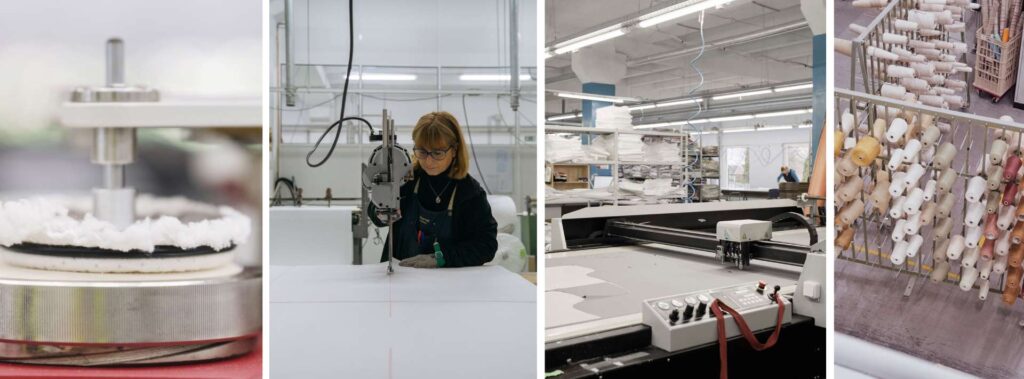
Textile Innovation in the Lab: What Is Still in Development
Many of the most exciting developments in textiles remain at the research and pilot production stage.
1. Nanotechnology textile coatings
Nano-scale surface treatments can create fabrics with advanced properties such as:
- antimicrobial protection
- water repellency
- UV resistance
- stain resistance
These technologies are already used in certain performance textiles, but scaling them for everyday apparel remains challenging due to durability and cost concerns.
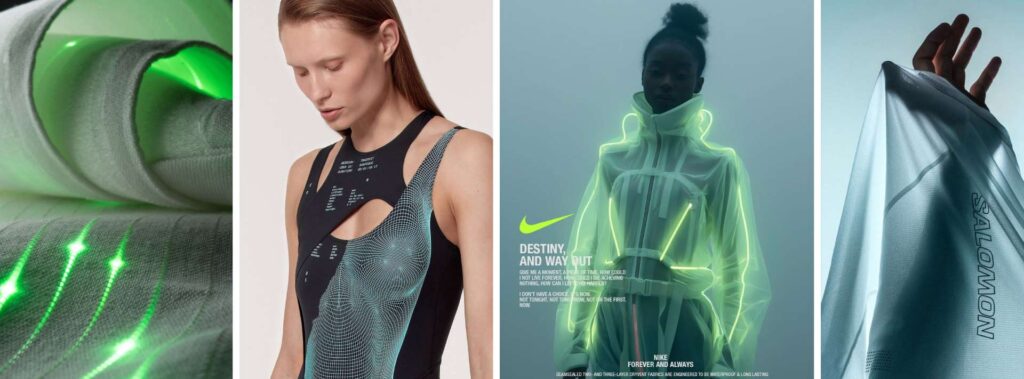
2. Smart textiles and wearable fabrics
Another major research area involves smart textiles that integrate electronic components or conductive fibers.
Potential applications include garments capable of:
- monitoring heart rate
- tracking posture
- measuring body temperature
- collecting health data.
While promising, these wearable textile technologies still face major barriers including wash durability, battery integration, and complex manufacturing processes. However, from a production standpoint, our teams at Deepwear rarely see these materials move beyond controlled environments. Issues such as wash durability, battery integration, and fragmented supplier capabilities make them difficult to align with standardized garment manufacturing processes or scalable factory output.
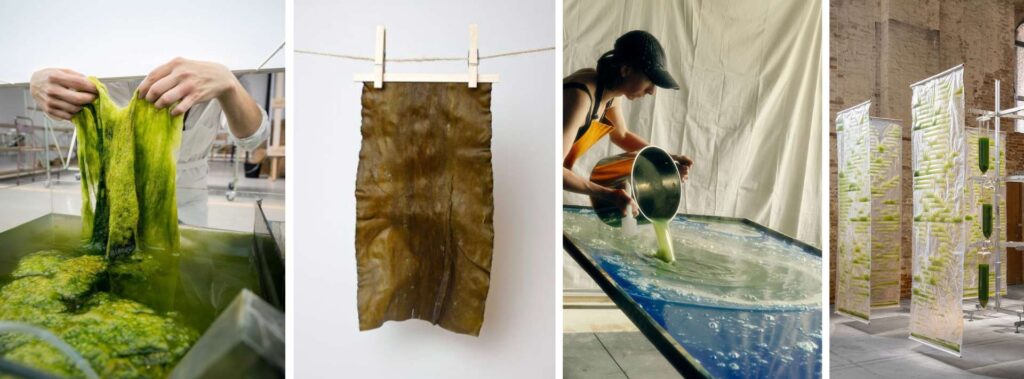
3. Bio-fabricated fibers
Several startups and research labs are developing bio-based textile materials grown through biological processes.
Examples include:
- mycelium-based leather alternatives
- algae-derived fibers
- bacterial cellulose materials
Although these materials offer strong sustainability narratives, Deepwear’s sourcing experience highlights a recurring limitation: inconsistent supply and high minimum costs. Without stable industrial infrastructure, these materials remain difficult to integrate into production pipelines that require reliability, repeatability, and predictable lead times.
What Is Already Changing on the Factory Floor
The biggest changes in garment manufacturing are happening in production systems rather than raw materials.
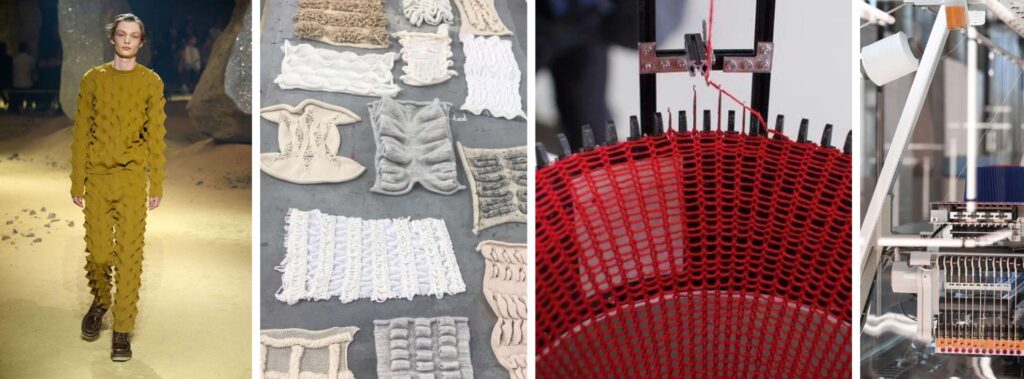
4. 3D knitting and seamless garment manufacturing
3D knitting technology allows garments to be produced directly from digital patterns without traditional cutting and sewing steps.
Benefits include:
- reduced fabric waste
- faster prototyping
- fewer manufacturing stages
- seamless garment construction.
Within Deepwear’s partner network, this technology is already being used to shorten sampling cycles and reduce material loss, particularly in knitwear and performance categories. However, its adoption is still product-specific, as not all garment types can be translated into fully seamless construction without compromising structure or design intent.
5. AI-assisted textile design and production
Artificial intelligence is also becoming a practical tool in textile manufacturing.
Manufacturers are increasingly using AI for:
- automated fabric defect detection
- predictive quality control
- digital textile pattern development
- production efficiency optimization
From Deepwear’s production oversight perspective, these systems are less about innovation and more about risk reduction. By integrating AI into quality control and production monitoring, manufacturers can minimize costly errors, reduce rejection rates, and maintain consistency across high-volume orders; something that becomes critical when scaling across multiple factories.
How Brands Are Actually Sourcing Fabrics Today
While experimental textiles attract attention, most fashion brands are currently focused on practical sourcing strategies that balance sustainability with scalability.
Three material categories dominate modern apparel production sourcing:
6. Recycled polyester fabrics
Recycled polyester has become one of the most widely adopted materials in sustainable fashion.
Compared with virgin polyester, it requires significantly less energy to produce while maintaining durability suitable for activewear, sportswear, and technical garments.
However, our teams’ sourcing experience shows that not all recycled polyester is equal. Most supply still relies on plastic bottle recycling, and variations in fiber quality, traceability, and certification standards can significantly impact final garment performance and brand claims.
7. Regenerated cellulose fibers
Materials such as TENCEL™ Lyocell and modal fabrics are gaining popularity due to their softness, breathability, and lower environmental impact compared with traditional viscose.
These fibers are increasingly used in premium apparel, loungewear, and sustainable fashion collections.
8. Deadstock fabric sourcing
Another growing sourcing strategy is deadstock fabric utilization.
Deadstock refers to unused textiles left over from previous manufacturing runs. By incorporating these materials into new collections, brands can reduce raw material demand while creating limited-edition garments with unique fabric stocks.
Turning Textile Innovation into Scalable Production
At Deepwear, we help brands translate emerging textile trends into commercially viable garment production. Rather than relying on marketing claims alone, our team works closely with verified textile suppliers, responsible material sources, and experienced manufacturing partners to bring new materials into scalable production. Furthermore, with decades of experience in the fashion industry, our CEO Thoray D’haese Sacoor brings a long-term perspective on how sourcing, manufacturing, and material innovation must align for brands to scale effectively.
Deepwear can help brands integrate practical solutions such as:
- recycled polyester fabric sourcing
- deadstock textile utilization
- sustainable fiber alternatives like TENCEL™ Lyocell
- ethical garment manufacturing partnerships
Beyond materials, Deepwear also supports efficient garment development and production planning, helping brands reduce waste during sampling and manufacturing.
By combining global textile sourcing networks with trusted apparel manufacturers across Europe and Asia, Deepwear helps fashion brands turn innovative fabric concepts into scalable finished garments.
Looking for reliable textile sourcing or garment manufacturing partners? Deepwear connects brands with experienced fabric suppliers, garment factories, and sustainable production partners, helping bring collections from concept to market.
What Should Fashion Brands Focus on in Textile Manufacturing in 2026?
The most impactful improvements in apparel manufacturing rarely come from experimental fabrics. Instead, brands should prioritize scalable sustainable fabrics, partner with reliable garment manufacturers, design products with longer lifecycle durability, and optimize production efficiency to reduce waste. While new materials continue to emerge, the short-term reality of the industry remains clear: polyester still dominates global fiber production due to cost and scalability, textile recycling systems are expanding but remain limited, and many next-generation fabrics are still in development. Brands that focus on responsible material sourcing, efficient production planning, and strong manufacturing partnerships are better positioned to adapt as the textile industry continues to evolve.

What Comes Next for Textile Manufacturing
The future of textile manufacturing will not be defined by a single breakthrough fabric. Instead, it will emerge from the interaction between material innovation, manufacturing technology, and global supply chain economics. While laboratories continue to experiment with smart textiles, nanotechnology coatings, and bio-fabricated fibers, the most immediate progress is happening in areas brands can already control: better sourcing strategies, efficient garment development, and stronger manufacturing partnerships.
For fashion companies planning collections in the coming years, the real opportunity lies in building supply chains that balance innovation with scalability. That means selecting reliable textile suppliers, working with experienced garment manufacturers, and integrating materials that are both commercially viable and aligned with evolving sustainability expectations.
Deepwear works with brands at this intersection of innovation and production, helping translate new material ideas into garments that can be manufactured efficiently and responsibly. Through a global network of textile mills, sourcing specialists, and trusted apparel factories, Deepwear supports brands at every stage of development—from fabric sourcing to full-scale manufacturing.
Planning your next collection? Deepwear can help you source innovative fabrics, connect with reliable garment manufacturers, and turn new design concepts into scalable production-ready garments. Schedule a consultation with our teams today!