
Hard luxury is reshaping fashion in 2026. Explore how jewelry demand, gold value, and material sourcing are redefining manufacturing strategy.
For years, the luxury industry operated on a simple formula: brand equity could outweigh material value. A handbag could command a premium far beyond the cost of leather, construction, or durability, as long as demand held.
That equation is now under pressure.
Across global markets, spending is shifting away from soft luxury products defined by seasonal relevance and brand positioning and toward hard luxury, where value is anchored in the material itself. Jewelry sits at the center of this shift, and its performance is not incidental.
Houses such as Cartier, Van Cleef & Arpels, Tiffany & Co., and Bulgari are benefiting from more than brand heritage. They are positioned within a category where material composition itself carries financial weight. Consumers are no longer evaluating products solely on design or branding. They are asking a more direct question: what is this made of, and what is it worth beyond the point of purchase?
In this blog we cover:
- The shift from soft luxury to hard luxury and why value is being redefined
- How the global jewelry market and gold demand reflect material-backed consumption
- Why jewelry functions as liquid value, not just a fashion accessory
- The rise of colored gemstones and material differentiation in luxury
- What this means for product strategy, sourcing, and manufacturing in 2026
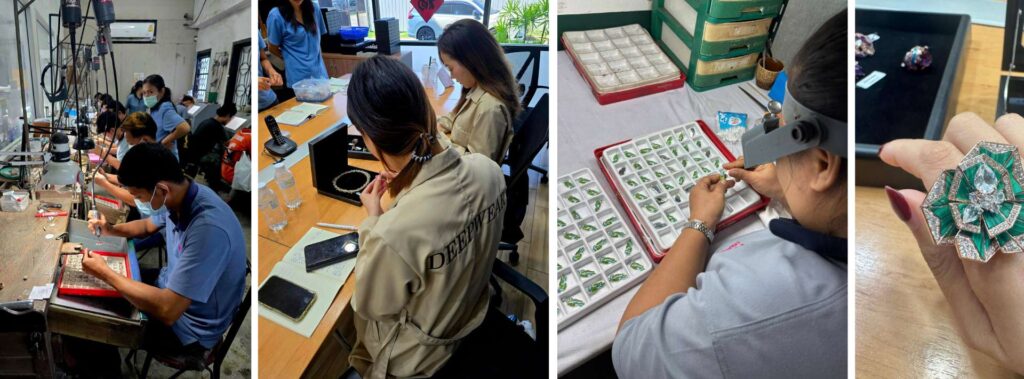
A $300 Billion Market Built on Material Value
The scale of the jewelry market reinforces how deeply embedded this logic already is. According to Fortune Business Insights, the global jewelry market is valued in the hundreds of billions annually, with projections pushing well beyond that in the coming decade. This is not a niche luxury segment; it is a core global industry.
More telling is the role of gold within that system. The World Gold Council consistently reports that roughly half of global gold demand comes from jewelry. That is a striking figure. It means jewelry is not simply decorative; it is one of the primary vehicles through which gold circulates in the global economy.
Demand is also geographically concentrated in ways that clarify its function. Across Asia-Pacific, which accounts for the majority of global gold consumption, jewelry operates as a hybrid product: part adornment, part stored value. In markets like India and China, this dual function is explicit. According to Deloitte reporting cited in the Economic Times, a significant majority of Indian consumers view gold jewelry as a form of wealth rather than discretionary consumption.
This is the critical distinction Western fashion often overlooks. In large parts of the world, jewelry is not purchased despite its cost; it is purchased because of it.
Historical Logic, Modern Relevance
The role of jewelry as a financial instrument is not new. It is deeply embedded in global consumption patterns.
Historically, jewelry functioned as:
- portable wealth
- emergency liquidity
- intergenerational asset transfer
In some contexts, it also provided a form of independent asset holding, particularly in systems where formal ownership structures were limited.
What is happening now is not a reinvention. It is a return to a model where material value and ownership utility matter again.
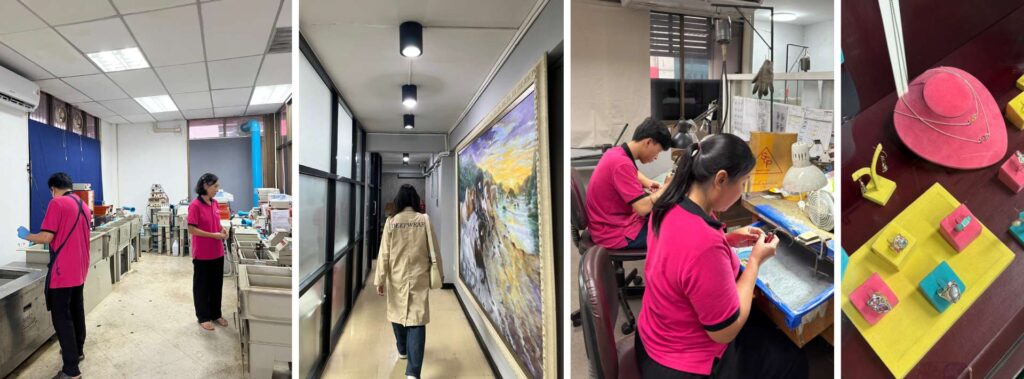
The Shift Toward Material Differentiation
This renewed focus on intrinsic value is also reshaping material preferences.
Colored gemstones are gaining traction as alternatives to standardized diamonds. Stones such as:
- ruby
- sapphire
- emerald
offer characteristics that align with current demand:
- Scarcity — limited high-quality supply
- Uniqueness — no two stones are identical
- Authenticity — less exposure to mass replication
Auction markets have reinforced this, with rare gemstone pieces outperforming expected valuations. The implication is straightforward: non-standardized materials command stronger long-term value perception.
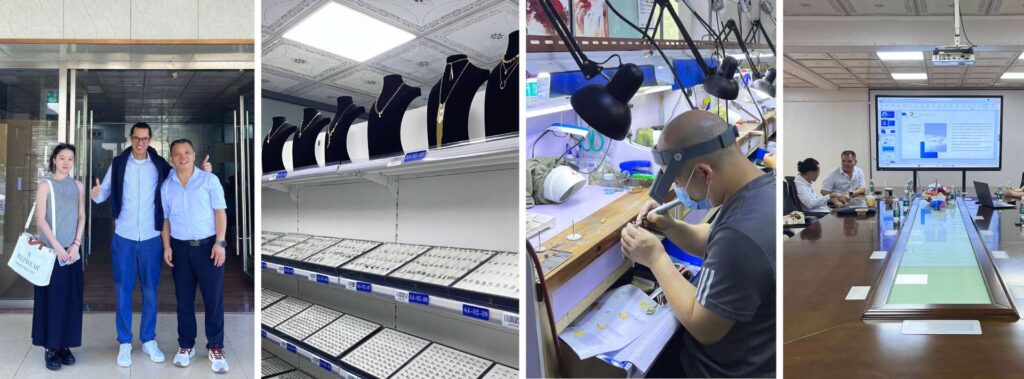
From Thailand to Italy: Where Value Is Built
In Thailand, cities such as Bangkok and Chanthaburi play a central role in gemstone trading and processing. Chanthaburi, in particular, operates as a global hub for colored stones, where sourcing, cutting, and valuation converge.
Thailand also remains a key center for silver and gemstone jewelry production, offering a balance between cost efficiency and technical capability.
In Italy, locations such as Florence and Vicenza represent a different strength: precision manufacturing and heritage craftsmanship. Italian production emphasizes finishing quality, design integrity, and high-value fabrication.
What This Means for Product Strategy
This shift has immediate consequences for how brands approach product development and manufacturing.
- Sourcing becomes strategic
Material quality directly impacts pricing, resale potential, and brand credibility - Product cycles slow down
High-value products are designed for longevity, not rapid turnover - Fewer, higher-value SKUs
Margin shifts from volume to product quality - Supply chains become specialized
Precious materials require tighter control, verification, and expertise
At the same time, this does not eliminate other forms of jewelry production. There remains a strong market for design-led, aesthetic-driven pieces that are not intended for liquidity or resale.
However, the center of gravity is shifting. Products that carry value beyond aesthetics are gaining relevance.
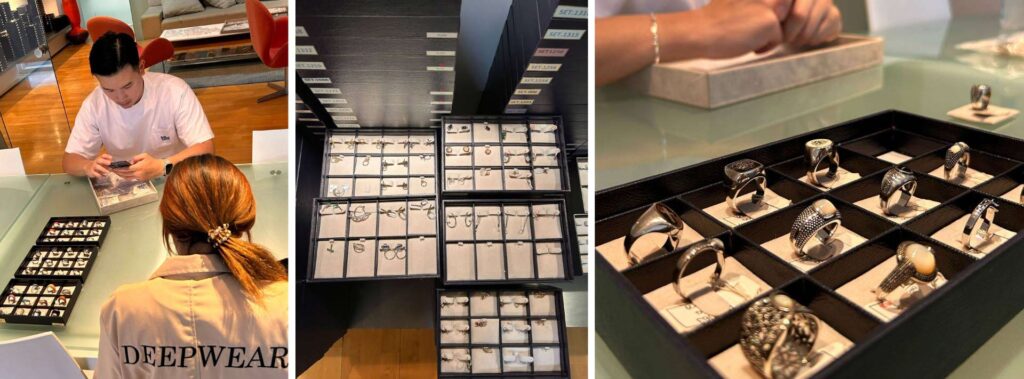
Why Brands Are Turning to Deepwear
Navigating this shift requires more than design direction. It requires execution across multiple regions, materials, and production systems.
This is where most brands face a gap: understanding the shift is one thing, executing it across sourcing and production is another.
With teams and operational networks across key manufacturing regions, Deepwear is positioned to support brands at every stage of development, from sourcing to production to distribution.
What this enables:
- Access to trusted suppliers across Asia and Europe
- Coordination across multiple production hubs
- Quality control aligned with high-value material standards
- The ability to scale from niche collections to mid- and high-end production
Decades of combined experience across these regions allow us to operate beyond a single-market perspective. This is critical in jewelry, where value is tied not just to design, but to where and how materials are sourced and processed.
Why is hard luxury, especially jewelry, outperforming soft luxury in today’s market?
Hard luxury, particularly jewelry, is outperforming soft luxury because it offers intrinsic material value, durability, and liquidity, which are increasingly important in uncertain economic conditions. Unlike fashion items that rely heavily on branding and seasonal demand, jewelry, especially pieces made from gold and high-quality gemstones, retains a baseline value tied to its material composition. According to data from the World Gold Council and global market analyses, jewelry accounts for a significant portion of gold demand, reinforcing its role as both a consumer product and a financial asset. This shift reflects a broader change in consumer behavior, where purchasing decisions are influenced not just by aesthetics, but by long-term value, resale potential, and material integrity.
The Bottom Line
The rise of hard luxury is not a short-term shift; it reflects a broader recalibration in how value is defined and evaluated across the market.
Consumers are moving beyond aesthetics and brand perception. They are placing greater weight on material composition, durability, and the ability of a product to retain value over time. Jewelry sits at the center of this transition because it operates differently from most fashion categories: it is not only worn, but also stored, traded, and, when necessary, converted into liquidity. This changes the expectations placed on brands.
Products are no longer judged solely at the point of purchase. They are assessed over their entire lifecycle, how they age, what they are made of, and whether they hold relevance beyond seasonal trends. In this context, material-backed products outperform perception-driven ones.
For brands, the implication is clear. Competing in this environment requires more than design direction. It demands a shift in sourcing strategy, material selection, and production standards. Those that adapt by building products grounded in intrinsic value and supported by the right manufacturing networks will be better positioned to navigate a market where value is no longer assumed, but measured.
If your brand is exploring high-value materials, global sourcing, or a shift toward longer-lasting, value-driven products, Deepwear offers the infrastructure and expertise to support that transition.