
Explore Thailand’s garment, accessories, and jewelry manufacturing industry in 2026, including strengths, challenges, MOQs, and sourcing insights for global brands.
Thailand has long been recognized as a stable and experienced manufacturing base in Southeast Asia, particularly for mid- to high-quality garments, fashion accessories, and jewelry. As global brands enter 2026, sourcing decisions are increasingly influenced by factors beyond unit cost, including supply-chain resilience, compliance, transparency, speed, craftsmanship, and long-term reliability.
From our CEO, Thoray d’Haese Sacoor’s perspective, Thailand is not positioned as the lowest-cost manufacturing destination in Asia. However, it continues to stand out as one of the most operationally reliable, quality-consistent, and brand-friendly sourcing markets in the region. Thailand’s value lies in its mature manufacturing ecosystem, skilled workforce, established export infrastructure, and strong familiarity with international brand requirements.
In this blog we cover:
- Thailand’s manufacturing landscape in 2026 and key industry shifts
- Core product categories and niche strengths across garments, accessories, and jewelry
- The country’s key strengths, including workforce, infrastructure, and compliance
- Critical challenges and limitations brands must account for
- MOQ benchmarks, sourcing structures, and material lead times in Thailand
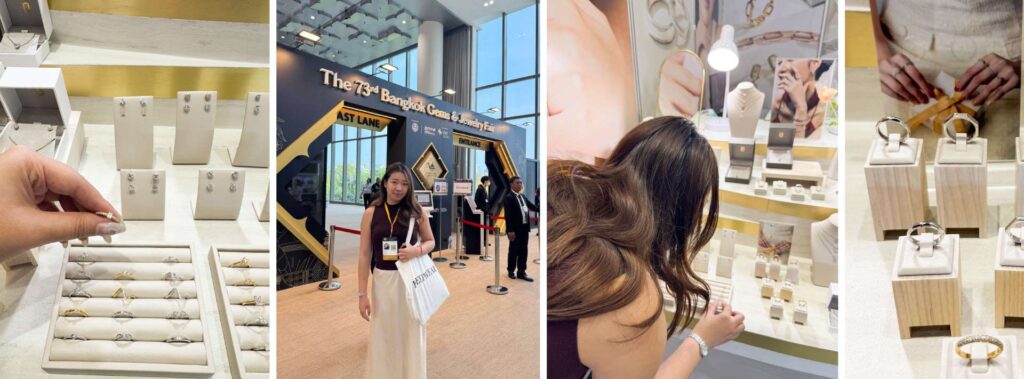
Overview of the Garment, Accessories & Jewelry Manufacturing Industry (2026 Outlook)
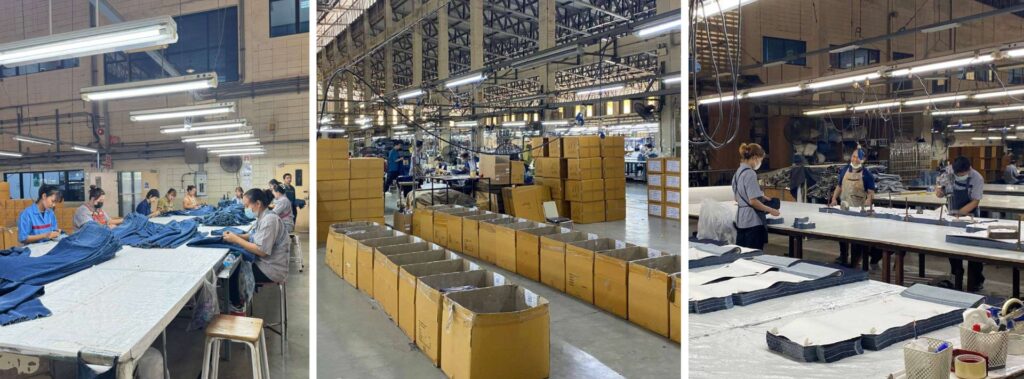
Thailand’s manufacturing industry is mature, export-oriented, and compliance-aware, with decades of experience serving brands across the US, Europe, Australia, Japan, and the Middle East. Unlike emerging low-cost markets, Thailand has gradually shifted away from ultra-high-volume, low-margin production toward value-added manufacturing, where quality, flexibility, and execution reliability are prioritised.
By 2026, the industry is shaped by several consistent trends:
- Reduced emphasis on mass-volume production
- Increased demand for smaller MOQs and faster development cycles
- Greater focus on ethical production, traceability, and sustainability
- Stronger integration with regional supply chains across ASEAN and East Asia
Thailand is often used as part of a China+1 strategy or diversified sourcing model, typically supporting product development, premium production, capsule collections, and technically demanding items, while larger volumes may be placed in lower-cost markets.
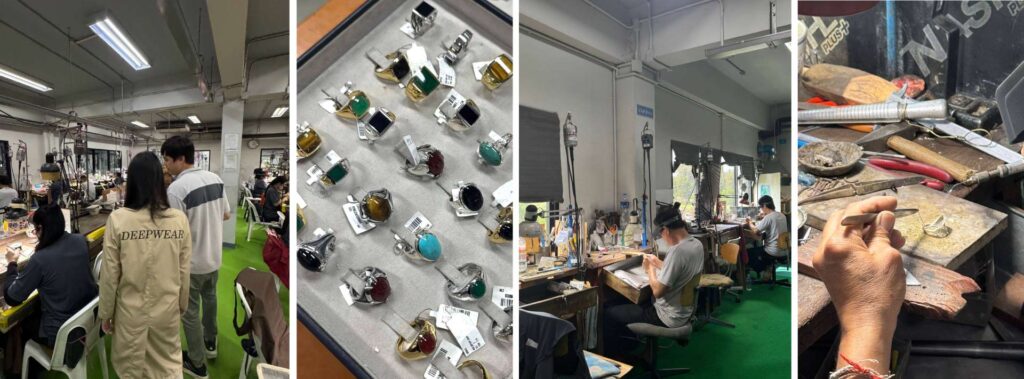
In addition to garments and accessories, Thailand is also a well-established regional hub for jewelry manufacturing, particularly in silver jewelry, fine jewelry, gemstone-based designs, and handcrafted pieces. The country has built a long-standing global reputation for skilled craftsmanship, gemstone handling, and export-ready production, making it a strategic sourcing destination for jewelry brands seeking quality and transparency.
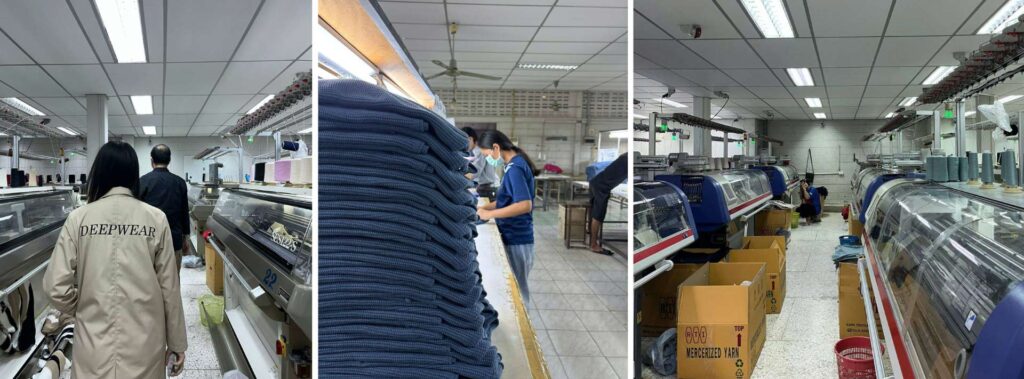
Speciality
Core Product Categories
Thailand’s manufacturing capabilities span garments, accessories, and jewelry, offering brands a diversified sourcing base.
Garments & Accessories
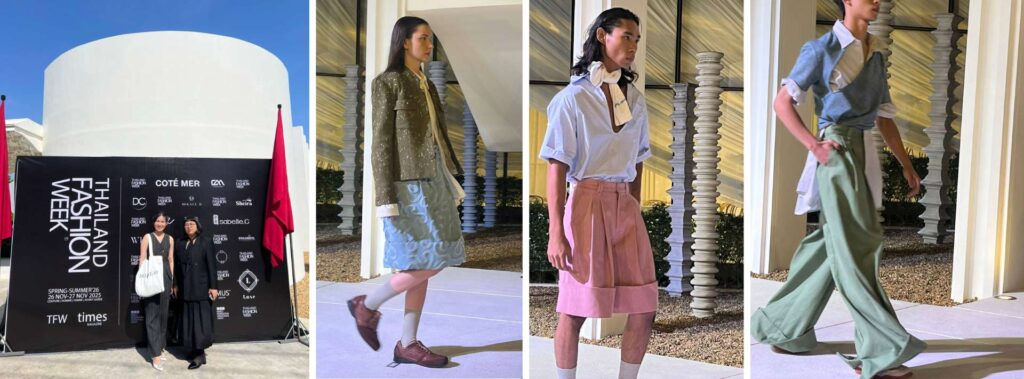
- Women’s and men’s ready-to-wear
- Resortwear and vacation-focused collections
- Swimwear and beachwear
- Activewear and performance garments
- Casual knitwear and woven garments
- Fashion accessories (textile accessories, bags, small leather goods)
Jewelry
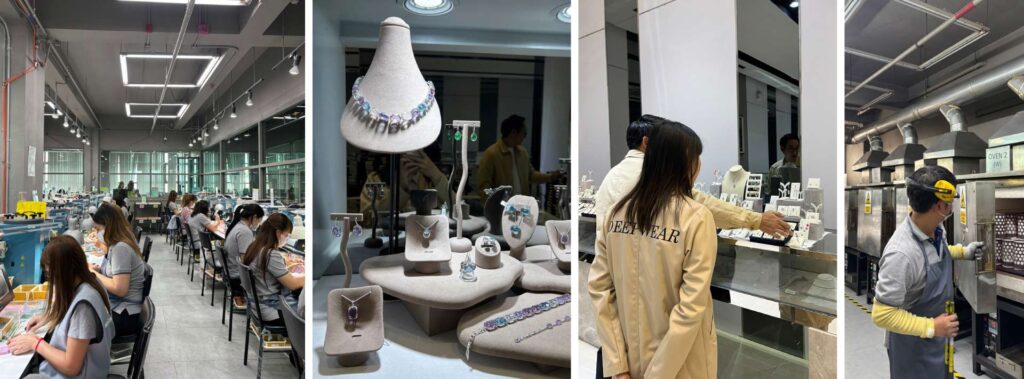
- Fine jewelry (gold, silver, gemstone-based)
- Silver jewelry and handcrafted collections
- Semi-fine and fashion jewelry
- Custom jewelry and small-batch production
- Gemstone-focused and artisanal designs
Niche Strengths
Thailand’s niche strengths include:
- High-quality craftsmanship, particularly in garment finishing and jewelry making
- Strong capabilities in sampling, prototyping, and product development
- Flexibility for small to medium MOQs
- Clear communication and collaborative production processes
- Increasing focus on responsible sourcing and ethical manufacturing
Thailand is particularly suitable for premium, contemporary, and emerging brands that value development support and production precision rather than purely cost-driven sourcing.
Key Strengths
Thailand’s strengths are structural rather than superficial, built over decades of export experience and alignment with international standards. For brands prioritising quality control, predictable timelines, and reduced operational risk, Thailand offers a level of stability that many lower-cost markets struggle to match:
1. Workforce
Thailand benefits from a skilled and experienced workforce, including:
- Pattern makers and garment technicians
- Production supervisors and quality control teams
- Jewelry artisans skilled in stone setting, metalwork, and hand-finishing
While labour costs are higher than in some neighbouring countries, productivity, technical know-how, and quality consistency often offset this difference. Many factories operate with established internal quality systems, reducing the risk of rework, delays, and quality disputes.
2. Infrastructure
Thailand’s industrial and logistics infrastructure is well developed:
- Established industrial zones
- Efficient seaports and international airports
- Reliable transport and logistics networks
- Stable utilities and digital connectivity
This infrastructure supports predictable production planning and export execution, which is critical for international brands.
3. Supply Chain Maturity
Thailand’s supply chain is mature but not fully vertically integrated. It benefits from:
- Strong local networks for trims and components
- Regional sourcing capabilities for fabrics and raw materials
- Long-standing supplier and factory relationships
Factories are experienced in managing imported materials, an essential capability for brands with specific quality, design, or compliance requirements.
4. Compliance & Certifications
Compliance is a recognized strength of Thailand’s manufacturing sector. Many factories work in line with international standards such as:
- BSCI
- WRAP
- Sedex
- ISO certifications
- OEKO-TEX (for selected materials)
This makes Thailand particularly suitable for US and European brands with strict audit, compliance, and transparency expectations.
5. Jewelry Craftsmanship & Expertise
Thailand is widely recognized as one of Asia’s key jewelry manufacturing centers. Strengths include:
- Highly skilled artisans with expertise in stone setting, casting, plating, and hand-finishing
- Experience working with international jewelry quality standards
- Capability to produce custom, small-batch, and high-value pieces
- A well-established gemstone sourcing and processing ecosystem
Thai jewelry manufacturers are especially suited for brands prioritising craftsmanship, consistency, and production transparency.
6. Cost Competitiveness
Thailand is not a low-cost market, but it offers predictable and transparent costing. Brands benefit from:
- Fewer hidden or unexpected costs
- Reduced risk of delays and quality failures
- More stable production outcomes
When assessed on total landed cost, Thailand often remains competitive due to its operational reliability.
Key Challenges
Despite its advantages, Thailand is not a universal solution for all sourcing strategies. Its limitations are clear and largely structural, particularly in relation to cost sensitivity, production scale, and workforce dynamics. Brands that fail to account for these constraints often face misalignment between expectations and execution. Understanding these challenges upfront is essential for building a sourcing strategy that is both realistic and commercially viable.
1. Capacity Limitations
Thailand is not designed for extremely high-volume, low-margin production. Factory capacity can be limited, particularly during peak seasons, requiring advance planning.
2. Cost Sensitivity
Rising labour and operational costs make Thailand less suitable for highly price-driven fast-fashion models.
3. Workforce Constraints
An ageing workforce and reliance on migrant labour in certain regions may create long-term capacity constraints.
4. Operational & Regulatory Factors
Although relatively stable, Thailand experiences:
- Periodic regulatory adjustments
- Wage increases
- Competition for skilled labour
These factors require active local management and realistic planning.
MOQ (Minimum Order Quantities)
Minimum order quantities in Thailand vary depending on factory type, product complexity, materials, and level of craftsmanship. Compared to mass-production markets, Thailand offers greater flexibility for small to medium production runs, particularly for premium and technically demanding products.
Typical MOQ Ranges
| Category | Product Type | Typical MOQ |
| Garments & Accessories | Woven garments | 100 pcs up per style |
| Knitwear | 300 pcs up per style | |
| Swimwear / activewear | 200–500 pcs per style | |
| Accessories | Varies depending on materials and construction | |
| Jewelry | Fine jewelry | 30–150 pcs per design |
| Silver jewelry | 50–300 pcs per design | |
| Fashion jewelry | 100–500 pcs per design | |
| Custom / handcrafted pieces | Often negotiable for trial or pilot orders |
MOQs may be reduced for development programs, repeat styles, or long-term partnerships. However, extremely low-volume and highly price-driven production is generally not aligned with Thailand’s cost structure.
Disclaimer: All MOQ ranges provided are indicative and based on general market observations in Thailand. Actual minimum order quantities may vary significantly depending on supplier capabilities, material availability, design complexity, and market conditions. Deepwear does not guarantee specific MOQ thresholds and advises brands to treat these figures as guidance only. Final MOQs are subject to confirmation during factory engagement and negotiation.
Trims, Materials & Jewelry Sourcing
Thailand operates as a hybrid sourcing market, combining local availability with regional imports to meet varying quality and price requirements.
| Category | Details |
| Basic trims | Widely available locally |
| Specialised / premium trims | Commonly imported from China, Japan, and Europe |
| Fabrics | Primarily sourced from China, Korea, Japan, and Taiwan |
Typical lead times are approximately 3–6 weeks for fabrics and 2–4 weeks for trims, although these timelines may vary depending on order volume, supplier capacity, and material specifications, and should be factored into overall production planning.
Jewelry Materials
Thailand benefits from a relatively integrated jewelry supply chain, which supports both efficiency and quality control.
| Material / Capability | Availability |
| Gold & silver | Strong local and regional supply chains |
| Gemstones | Both locally sourced and imported |
| Casting & plating | Well-established industry capabilities |
| Finishing services | High-quality, export-ready standards |
A well-developed jewelry ecosystem allows for relatively efficient sourcing, particularly for brands requiring precision, customisation, and consistent finishing quality.
Trade Relations with the US & Europe
Thailand maintains long-standing trade relationships with both regions.
While certain preferential trade schemes are no longer available, Thailand remains competitive due to:
- Stable export regulations
- Efficient customs procedures
- Reliable documentation and logistics processes
Although duties may be higher than in least-developed countries, Thailand offers greater predictability and fewer shipment disruptions, which is often critical for mid- to premium brands.
Why Is It Important for Brands to Have Deepwear on Their Side in Thailand?
Thailand’s manufacturing environment is structured but complex, and successful sourcing depends on accurate factory selection, clear communication, and consistent follow-up.
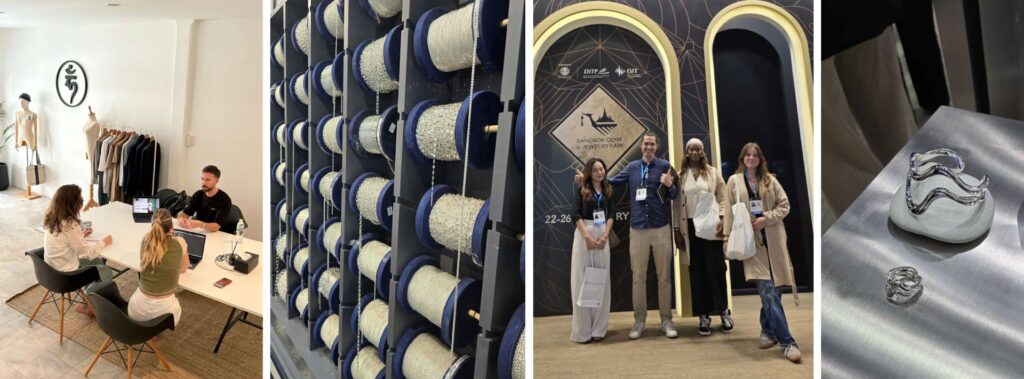
With 18 years of experience operating in Bangkok, Deepwear is positioned at the center of Thailand’s manufacturing ecosystem.
1. Risk Mitigation
Deepwear:
- Pre-vets garment, accessories, and jewelry factories
- Assesses compliance, capacity, and reliability
- Identifies and mitigates operational risks early
2. Value-Added Services
Deepwear provides:
- Factory sourcing and negotiation
- Vendor management and performance tracking
- Transparent costing and margin control
- On-ground quality control and production monitoring
3. Jewelry-Specific Support
For jewelry sourcing, Deepwear supports:
- Vetting jewelry workshops and manufacturers
- Managing material transparency and costing
- Overseeing quality control for fine and semi-fine jewelry
- Coordinating sampling, production, and export compliance
4. Strategic Advantage
Deepwear acts as a bridge between global brand expectations and local manufacturing realities, enabling scalable and responsible sourcing strategies in Thailand.
Sourcing in Thailand in 2026
In 2026, Thailand remains a strategic manufacturing destination for brands seeking quality, craftsmanship, compliance, and long-term sourcing stability across garments, accessories, and jewelry. While not the lowest-cost option, Thailand offers a balanced and reliable sourcing solution aligned with brands prioritising execution quality and risk control.
With Deepwear’s on-ground expertise, brands can confidently navigate Thailand’s manufacturing landscape and unlock its full potential. Schedule a consultation with our teams today!