
A practical guide to producing in Portugal: manufacturing strengths, MOQs, compliance, costs, and who Portuguese production is best suited for—based on real factory conditions and Deepwear’s on-the-ground experience.
Portugal is widely recognized as a premium European manufacturing hub — but that reputation only tells part of the story.
The truth is more nuanced. Portugal is an exceptional production base for the right brands: those with aligned expectations, realistic volumes, and a clear understanding of how local factories operate. When approached strategically, it offers quality, reliability, and technical expertise that few regions can match.
At Deepwear Portugal, we work daily alongside both international brands and Portuguese manufacturers. We support sourcing decisions, oversee product development, and help build long-term production strategies rooted in transparency and performance.
Portugal isn’t simply a “great manufacturing country.”
It’s a highly capable, relationship-driven production environment — and success here depends on understanding how to navigate it properly.
In this blog we cover:
- Why Portugal is gaining relevance as a near-shore manufacturing hub
- How Portugal is positioned in the mid to premium production segment
- What Portugal does best across key product categories
- The commercial reality of costs, MOQs, capacity, and timelines
- Common sourcing challenges—and how local guidance helps avoid them
- How Deepwear Portugal turns Portuguese manufacturing into a long-term strategy
Why Brands Are Looking at Portugal Now
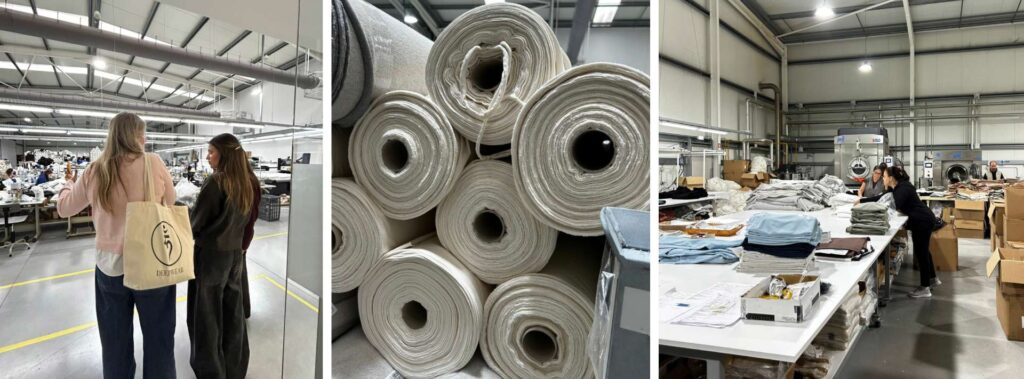
Today’s environment demands speed, transparency, and resilience. In this context, Portugal has become increasingly relevant.
- Shorter collection cycles
Faster trend turnover and the growing expectation of in-season reorders have made long production timelines increasingly risky. Months-long development cycles limit a brand’s ability to react to market feedback and tie up capital in inventory. Near-shore manufacturing in Portugal allows brands to shorten development and delivery timelines, respond more dynamically to demand, and reduce the gap between design, production, and retail. Speed becomes a controlled variable rather than a gamble. - Increased compliance and traceability requirements
Regulatory and commercial pressure around transparency is intensifying. Brands are expected to document labor conditions, environmental impact, and material origins with precision. Producing within the EU simplifies this process. Portuguese manufacturers operate under strict European regulatory frameworks and are accustomed to providing the documentation, certifications, and production transparency required by retailers, investors, and regulators. Compliance is embedded in the system—not added as an afterthought.
- Rising risks in long-distance sourcing
Extended supply chains increase exposure to freight volatility, customs delays, geopolitical instability, and communication gaps. Each intermediary adds complexity—and potential failure points. Manufacturing closer to key European markets reduces logistical risk, improves predictability, and strengthens operational control. Fewer variables mean fewer surprises. - Pressure to balance sustainability, speed, and quality
Sustainability can no longer exist in isolation from commercial performance. It must align with lead times, margin structures, and product standards. Portugal offers a rare balance: access to certified materials, compliant production processes, and skilled craftsmanship—without sacrificing speed or quality. Sustainability becomes operational and measurable, not simply aspirational.
Portugal’s renewed relevance is not based on low cost. It is built on reliability, structure, and proximity to market.
For brands producing for Europe, Portugal represents a strategic midpoint—where craftsmanship, compliance, and operational control intersect.
Portugal as a Manufacturing Destination: The Real Positioning
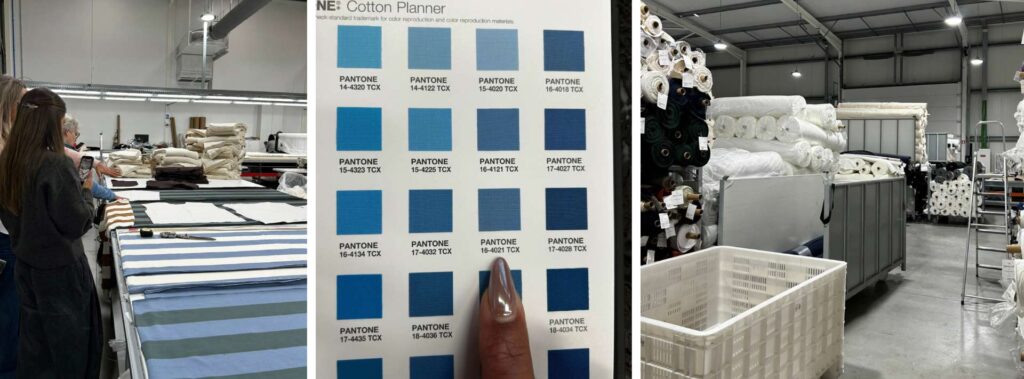
Portugal sits firmly in the mid-to-premium production segment.
It does not compete with low-cost manufacturing countries, nor does it aim to replicate small-scale luxury ateliers. Instead, it offers something distinct: industrialized craftsmanship supported by technical depth, regulatory stability, and operational clarity.
- Strong technical execution
Portuguese factories typically have deep experience in pattern engineering, garment construction, and material handling. This technical competence allows brands to develop more complex products with fewer compromises between design intent and manufacturability.
- Consistent quality
Production is built around repeatability rather than one-off excellence. Quality control processes are embedded into workflows, making Portugal particularly well-suited for brands that rely on consistency across seasons and replenishment programs.
- EU-standard compliance
Manufacturing takes place under European labor, safety, and environmental regulations. For brands, this reduces compliance risk and simplifies audits, reporting, and downstream retail requirements
- Predictable production frameworks
Lead times, MOQs, and costing structures are generally clear and stable. While flexibility exists, it operates within defined parameters—supporting planning accuracy rather than last-minute improvisation.
This makes Portugal particularly attractive for brands that prioritize long-term consistency over short-term price savings.
A Concentrated, Experienced Industrial Ecosystem
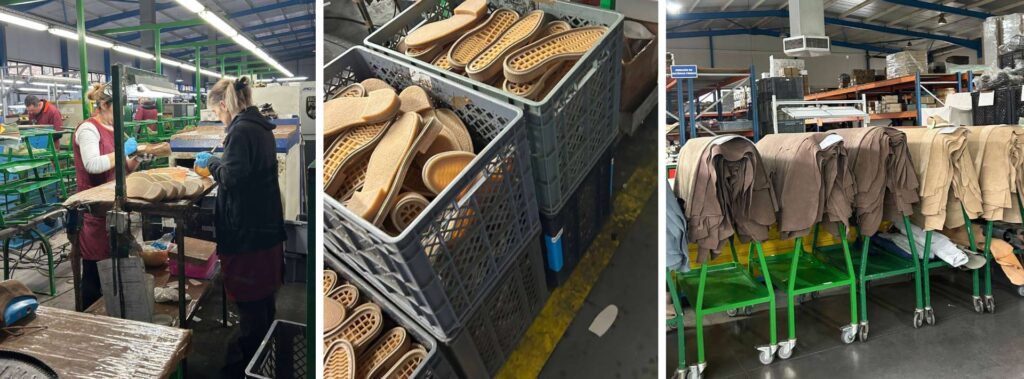
Most garment, footwear, and leather production is concentrated in northern Portugal, around Porto, Braga, Guimarães, Barcelos, and Felgueiras.
This geographic concentration creates a highly interconnected industrial network that allows for:
- Specialized Factories in Close Proximity
Knitwear specialists, woven garment producers, leather workshops, and footwear factories coexist within the same regions, making it easier to source category-specific expertise without fragmenting production across countries.
- Integrated Local Supply Chain
Laundries, dye houses, knitters, embroiderers, and finishing units are embedded within the same regional ecosystem. This proximity enables faster sampling cycles, tighter control over wash and finishing processes, and more efficient adjustments during development. - Faster problem-solving when projects are well prepared
When technical packs, timelines, and expectations are clearly defined, issues can often be resolved through direct coordination between nearby partners. What might take weeks in a geographically fragmented supply chain can often be addressed in days.
At Deepwear, we leverage this ecosystem daily—matching brands to factories based on product category, technical capability, capacity, and long-term fit, not just price.
What Portugal Does Best
Portugal delivers the strongest results when production aligns with its structural advantages. It is not a mass-volume, price-driven system — it is a technically mature, quality-oriented manufacturing environment.
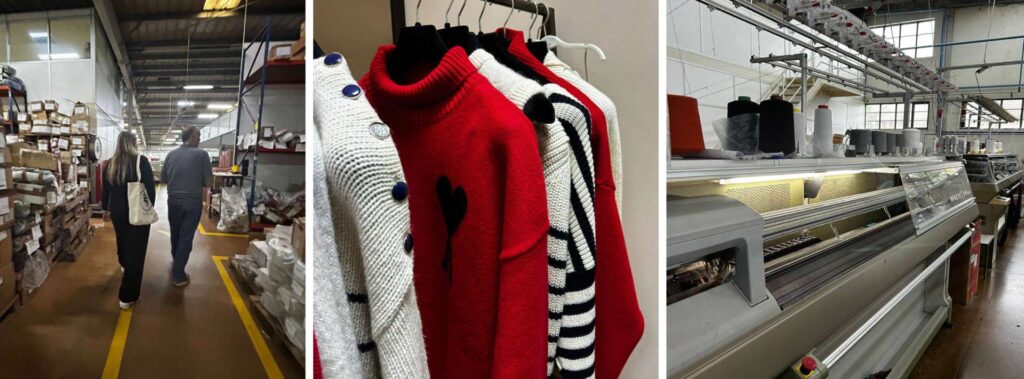
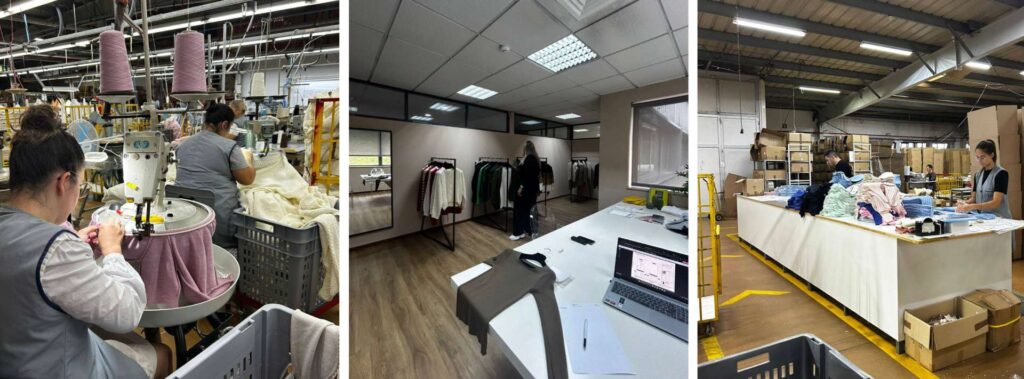
- Knitwear & Jersey: Portugal is internationally recognized for knitwear and jersey production. The country benefits from vertically connected supply chains — from yarn sourcing and knitting to dyeing, finishing, and garment assembly.This integration allows for controlled development, consistent fabric quality, and strong repeatability across seasons. It is particularly well suited for brands building structured collections with continuity, rather than one-off capsule drops
- Woven Apparel: Portugal excels in refined woven garments where finishing, construction, and fit matter. This category suits brands producing elevated shirts, trousers, dresses, and tailored styles rather than high-volume basics.
- Outerwear: Structured and mid-range outerwear performs well, particularly styles requiring technical construction without extreme performance demands..
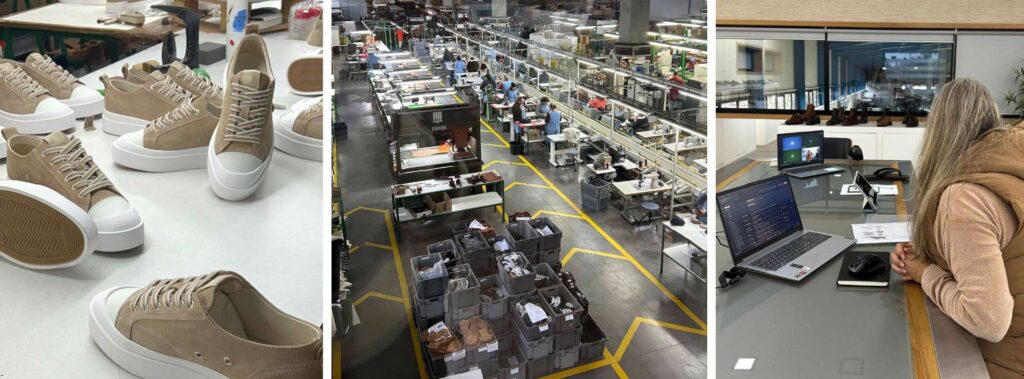
- Leather Goods: Portugal’s leather sector combines craftsmanship with EU compliance. Accessories and small leather goods benefit from access to high-quality European tanneries and experienced workshops.
- Footwear: Footwear is one of Portugal’s strongest global industries. Portuguese factories are ideal for premium and comfort-driven footwear, where material quality and construction define the product’s value.
What Makes Portugal Attractive for Modern Brands
Reliability Over Reactivity: Portugal is not chaotic or experimental—and that is its strength. Processes are structured, timelines are respected, and quality expectations are clear.
Reduced Supply Chain Risk: Producing within the EU minimizes compliance risk, improves traceability, and simplifies logistics. For many brands, this risk reduction offsets higher unit costs when viewed from a total operational perspective.
Sustainability You Can Verify: Portugal operates under strict EU environmental and labor regulations. Sustainable options are widely available, but real sustainability depends on correct factory selection and material choices—an area where local expertise is critical.
Commercial Reality: Costs, MOQs & Capacity
Portugal is not a low-MOQ or ultra-flexible sourcing destination—but it is fair, transparent, and predictable. Brands working with Portuguese manufacturers benefit from stable pricing structures, reliable production planning, and strong technical expertise across categories.
Typical working MOQs vary depending on the product category. For knitwear, factories generally operate around 200–300 pieces per style or color. Woven apparel usually requires 400–800 pieces per style, reflecting the additional complexity in pattern development, cutting, and construction. For leather goods, minimums typically range from 150–300 pieces, depending on the complexity of the product and the materials involved. In footwear production, factories commonly work with 500–800 pairs per style to ensure efficient material usage and production flow.
It is important to note that these MOQ ranges are indicative only. Actual minimums depend on multiple operational factors, including product complexity, material sourcing, factory capacity, seasonality, and existing production commitments. In certain situations, MOQ flexibility may be possible, but it is never guaranteed and must always be evaluated on a project-by-project basis.
Deepwear Portugal does not determine factory MOQs. Instead, our role is to advise brands based on current market conditions, provide realistic production guidance, and negotiate with manufacturers within the practical limits of factory operations.
Factories are capacity-conscious and selective, prioritizing stable, well-planned programs over fragmented orders.
Brands that succeed in Portugal are those that:
- Come prepared with clear tech packs
- Respect development and sampling timelines
- Think in programs, not one-off productions
- Approach manufacturing as a long-term partnership
Where Brands Struggle — and Who Portugal Is Best Suited For
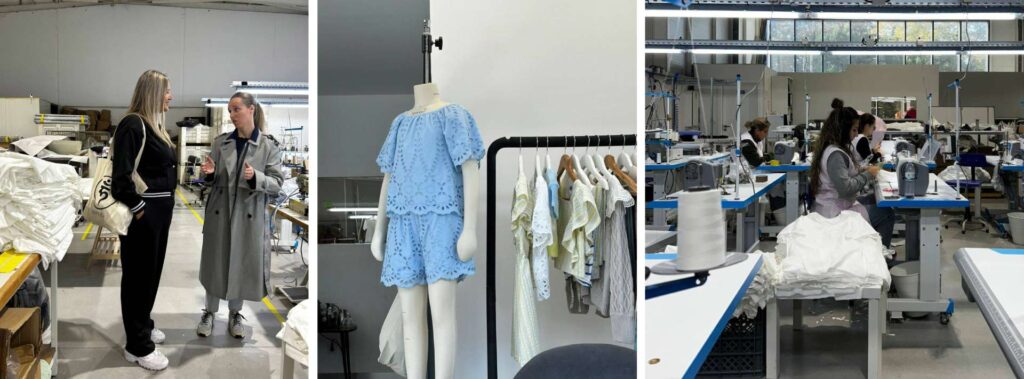
Portugal is a relationship-driven manufacturing market, shaped by long-standing factory partnerships, capacity planning, and mutual trust. Without local presence or guidance, brands often encounter friction that has little to do with unwillingness and much to do with misalignment.
Common challenges include:
- Inappropriate factory matching, where suppliers are selected based on price rather than technical capability, capacity, or product category.
- Overpriced quotations, often the result of unclear project scopes, unrealistic timelines, or misunderstood development requirements.
- Development delays, caused by misaligned expectations around sampling, approvals, and production sequencing.
- Misunderstandings around flexibility and timelines, where structured production systems are mistaken for rigidity
At Deepwear Portugal, we bridge this gap by aligning brand expectations with factory reality—supporting accurate scoping, negotiating fairly, and protecting long-term relationships on both sides of the supply chain.
Understanding who Portugal is best suited for is essential to avoiding these issues in the first place.
Portugal works best for brands that:
- Operate in the mid to premium segment
- Value quality, repeatability, and consistency
- Require EU-compliant production and traceability
- Plan ahead and think in long-term production programs
Conversely, Portugal is less suitable for brands focused primarily on:
- The lowest possible cost
- Very high-volume, price-driven basics
- Last-minute development or compressed timelines
- Constant design changes without development buffers
Recognizing this distinction early saves time, cost, and frustration—not only for brands, but also for the factories that support them.
Deepwear Portugal: Turning Potential into Strategy
Portugal is not a plug-and-play sourcing destination. It requires local knowledge, realistic planning, and the right factory partnerships.
Deepwear Portugal helps brands:
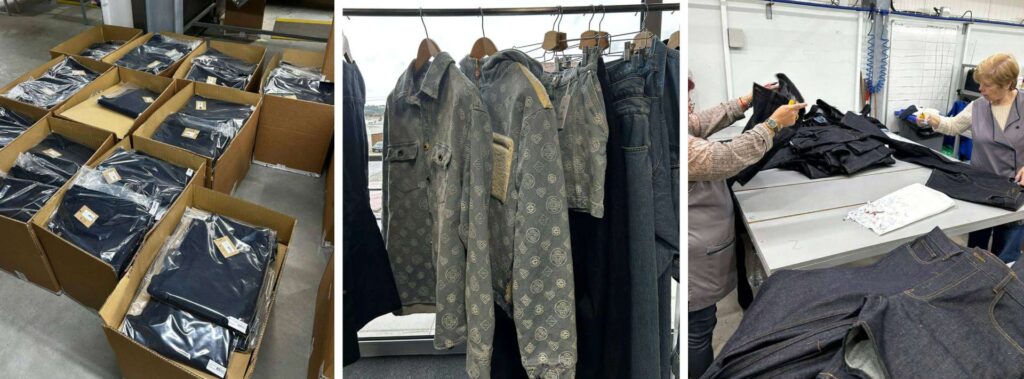
- Select the right manufacturers
Factories are matched based on product category, technical capability, capacity, and development requirements—not simply on price or availability.
- Build scalable production frameworks
Production is planned with growth in mind, allowing brands to expand volumes, refine collections, and stabilize quality over time without disrupting factory operations.
- Navigate MOQs, costing, and timelines
Realistic expectations are set from the outset, helping brands understand commercial constraints while identifying where flexibility is genuinely possible.
- Use Portugal strategically—not emotionally
“Made in Portugal” is treated as a production decision grounded in capability, compliance, and long-term value, rather than as a branding shortcut or trend-driven choice.
Through this approach, Deepwear Portugal helps brands move beyond opportunity toward sustainable, repeatable manufacturing outcomes in Portugal.
Is Portugal the Right Fit for Your Brand?
Portugal is not the right solution for every brand — and it is not meant to be.
But for brands whose positioning aligns with its strengths, Portugal offers one of the most stable, ethical, and technically reliable manufacturing environments in Europe. It rewards preparation, clarity, and long-term thinking.
With the right structure and local guidance, Portugal becomes more than a production base. It becomes a strategic asset — strengthening quality control, reducing operational risk, and reinforcing brand credibility.
That is where Deepwear Portugal operates: not simply as an intermediary, but as a strategic partner aligning brands with the right factories, the right expectations, and the right long-term production framework.
If you are considering Portugal for your next production cycle, speak with our team to evaluate fit, feasibility, and structure before committing. Contact Deepwear Portugal to start the conversation.