
Organic cotton is often seen as the gold standard in sustainable fashion, but does it guarantee durability? Learn how fiber quality, textile processing, and product lifespan define true sustainability in garment production.
Walk into any fashion store or browse online, and one phrase appears repeatedly: organic cotton.
It has become one of the most recognizable signals of sustainable fashion; a shorthand that suggests better environmental practices, higher quality, and more responsible production. In practice, organic cotton does not guarantee durability, performance, or even overall sustainability. A garment can carry the label and still degrade quickly, lose shape, or fail under normal wear.
That is not a minor flaw. It undermines the entire sustainability claim.
At Deepwear, we have observed that this pattern appears consistently across both emerging and established brands. The issue is not the material itself, but how the industry treats it: as a complete solution rather than one variable in a complex production system.
To understand what actually makes a garment sustainable, the focus needs to shift from labels to lifecycle performance.
In this blog we cover:
- Why organic cotton does not guarantee durability or product performance
- How fiber quality and growing conditions impact textile outcomes
- Where durability is lost in textile processing
- Why the industry prioritizes labels over lifecycle performance
- How brands can approach sustainable sourcing through durability and system alignment
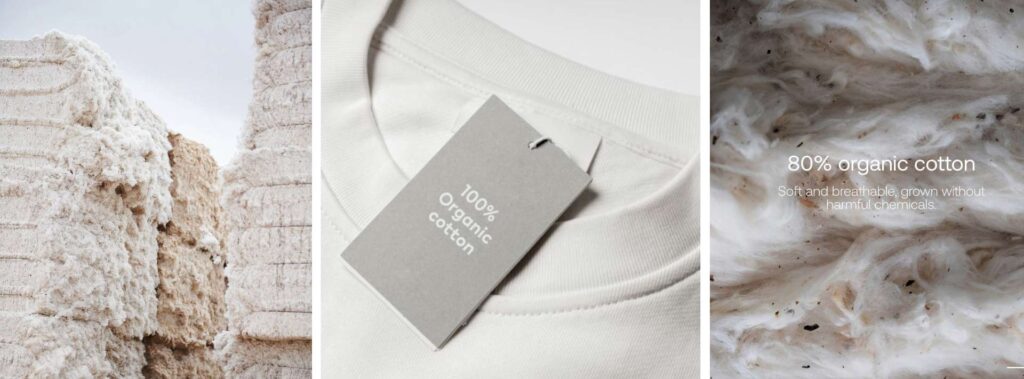
Organic Cotton: What It Solves and What It Doesn’t
At its core, organic cotton addresses how raw material is grown.
Standards such as the Global Organic Textile Standard ensure:
- reduced pesticide and chemical use
- improved environmental practices
- compliance with social and labor standards
These are meaningful improvements at the agricultural level. However, they stop there.
They do not define:
- how strong the fiber is
- how the yarn is spun
- how the fabric performs over time
This distinction is often overlooked in sustainable sourcing strategies.
According to Textile Exchange’s Organic Cotton Fiber Classification Guide, fiber characteristics like staple length, strength, and maturity are independent of whether cotton is certified organic. These characteristics are what ultimately determine how a textile performs. Simply put, a garment can meet sustainability criteria at the farm level and still fail at the product level.
Durability Starts with Fiber, Not Labels
Cotton performance begins with fiber characteristics, particularly staple length and strength. These are not fixed qualities; they are shaped by growing conditions.
Research on cotton cultivation in Turkey shows that fiber strength, length, and maturity vary significantly depending on environmental factors such as temperature fluctuations and humidity during the fiber development stage. Even within a single country, different regions produce measurably different fiber qualities due to these conditions. This reinforces a critical point:
Fiber quality is determined by environmental conditions, genetics, and grading. not whether the cotton is organic or conventional.
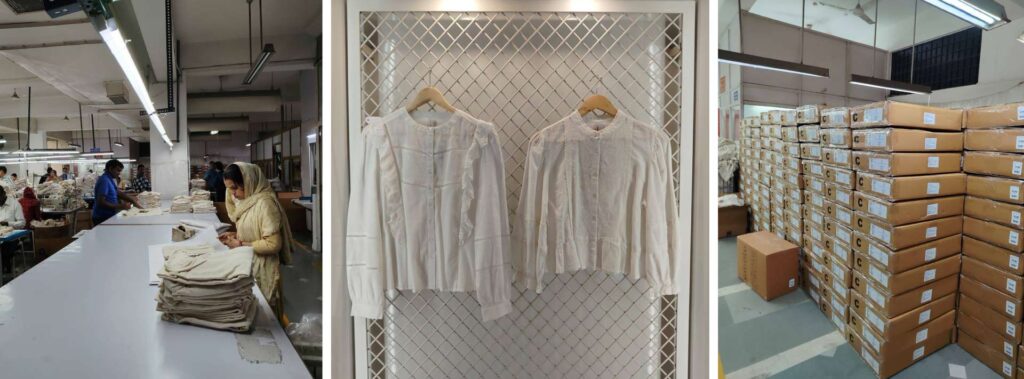
Where Sustainability Breaks Down: Textile Processing
If fiber quality sets the foundation, textile processing determines the outcome.
This is where the majority of durability issues originate.
The journey from fiber to fabric includes several critical stages:
- Spinning: whether yarn is carded, combed, or compact-spun
- Fabric construction: knit or woven structure, density, and tension
- Finishing: treatments that affect pilling, shrinkage, and stability
Each of these decisions directly impacts how a garment performs over time.
For example:
- Combed cotton removes short fibers, improving strength and smoothness
- Compact spinning reduces yarn hairiness, lowering pilling
- Finishing processes like enzyme washing enhance fabric longevity
When these steps are optimized, the result is a durable product. When they are not, even high-quality raw material can fail.
This is where a common contradiction appears in the market:
Brands invest in organic cotton but underinvest in textile engineering
The outcome is predictable: products that carry sustainability claims but behave like disposable garments.
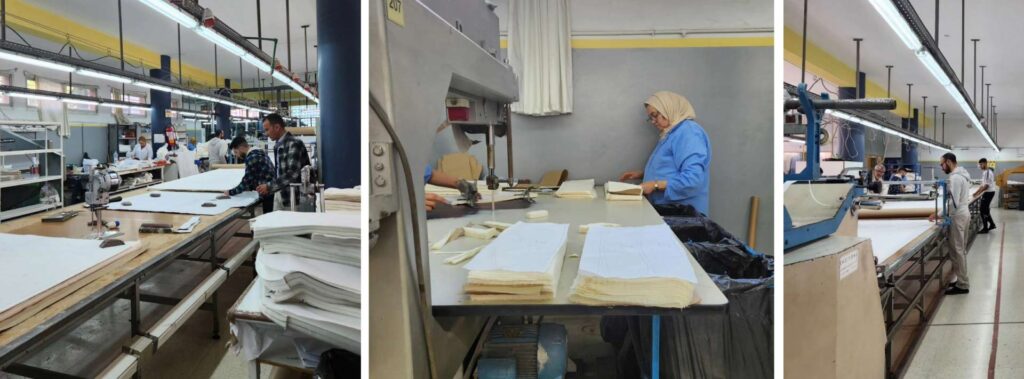
Why the Industry Defaults to Organic Cotton
If durability plays such a critical role in sustainable fashion, why does the industry continue to prioritize labels like organic cotton?
Organic cotton works because it simplifies a complex problem. It gives brands something immediate and recognizable; something that can be communicated at the point of sale without requiring deeper explanation. In a market where attention is limited and decisions are made quickly, that simplicity carries real value. Durability does not offer the same advantage. It cannot be seen, verified, or easily explained in a single label. It depends on a chain of decisions: fiber selection, spinning, fabric construction, and finishing that remain largely invisible to the end consumer.
This creates a predictable imbalance. Material claims are prioritized because they are easy to communicate, while performance is deprioritized because it is harder to prove.
From a commercial standpoint, this is efficient. From a product standpoint, it introduces risk. Because when sustainability is reduced to a label, critical factors such as how a fabric behaves, or how long a garment lasts are no longer central to the decision-making process.
The Lifecycle Perspective
Much of the conversation around sustainable fashion focuses on inputs, but sustainability does not end at production.
Organizations like the Ellen MacArthur Foundation emphasize the importance of lifecycle thinking, which includes:
- how long a product is used
- how often it is worn
- how frequently it is replaced
This shifts the definition of sustainability from: “Was it responsibly produced?” to “Does it last long enough to justify its production?”
A garment that lasts longer reduces:
- resource consumption
- production frequency
- overall environmental impact
By contrast, a product that fails quickly, regardless of material, creates additional waste and demand.
For a deeper breakdown of how these stages connect, read our guide: Textile vs Apparel: A Practical Guide for Emerging Fashion Brands in 2026
Is organic cotton more sustainable than regular cotton?
Organic cotton can be more sustainable at the raw material stage, but it does not determine how a garment performs over time. Sustainability in practice depends on whether the product maintains its structure, shape, and usability after repeated wear. Without durability, the environmental benefits at the material level are offset by shorter product lifecycles and increased replacement.
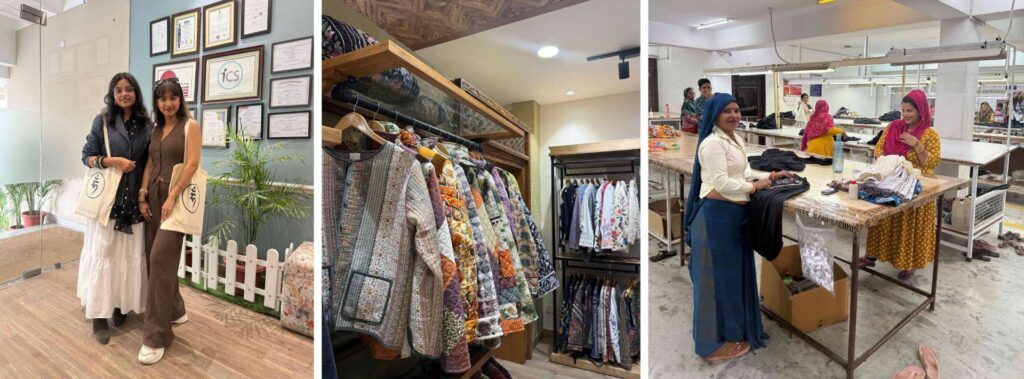
From Labels to Lifecycle Performance
A more complete view of sustainability requires looking beyond individual claims and toward how the entire system is structured.
At Deepwear, our team approaches this from a practical standpoint. Material choice is important, but it is only one part of the equation. Fiber quality sets the foundation, textile processing determines how that foundation performs, and production structure influences whether that performance can be maintained consistently at scale.
Our role is not to treat these as separate decisions, but to ensure they are clearly understood and aligned within the production process. In practice, this means:
- Evaluating materials beyond certification, including fiber characteristics and suitability for the intended product
- Supporting alignment between textile and apparel stages, so fabric decisions are carried through into production correctly
- Identifying risks early through sampling and validation, before issues become costly at scale
- Working within existing production models, whether CMT or FPP, to maintain consistency across suppliers
Organic cotton remains a valuable material within sustainable sourcing. But when treated as a complete solution, it can overlook the complexity of how garments are actually made and used. From our team’s experience, the gap often appears not in the material itself, but in how it is translated into a finished product.
A garment is not sustainable because of the label it carries. It is sustainable because it continues to perform over time.
Build a More Structured Approach to Sourcing
If your current sourcing strategy emphasizes organic cotton but does not fully account for durability and textile performance, it may be worth reassessing how your production system is structured.
Understanding the relationship between textile sourcing and apparel production is essential for building products that are consistent, scalable, and designed to last.