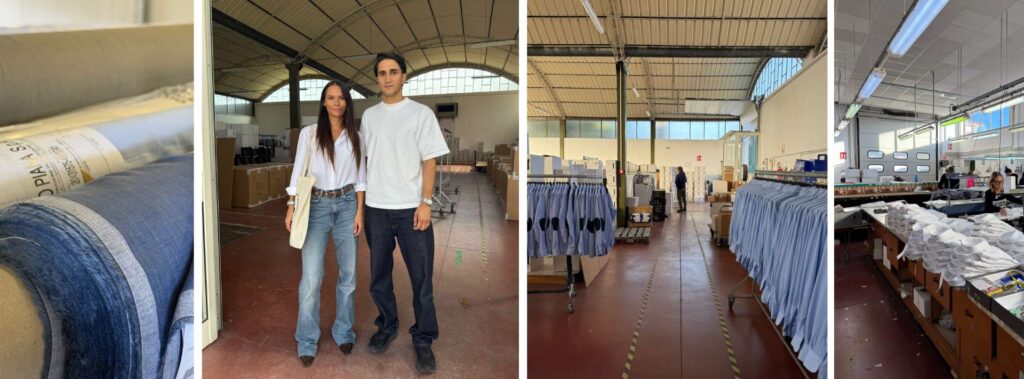
A 2026 overview of Italy’s premium manufacturing ecosystem—covering key districts, core capabilities, MOQs, material access, and why structured local guidance through Deepwear matters for long-term brand value.
In 2026, Italy remains one of the world’s most respected destinations for premium garment and accessories manufacturing. While much of the global fashion industry has shifted toward speed and scale, Italy continues to lead where it matters most for high-end brands: craftsmanship, material excellence, flexibility, and authenticity.
What truly sets Italy apart is its district-based ecosystem: compact networks of family-run workshops, specialised mills, tanneries, and finishers working in close proximity, often within just a few kilometres of one another. This structure enables exceptional quality control, rapid development, and a level of detail that cannot be replicated through fragmented global supply chains.
In this blog we cover:
- Why Italy remains a leading destination for premium fashion manufacturing in 2026
- How Italy’s district-based manufacturing ecosystem supports quality, speed, and flexibility
- Core garment, knitwear, leather, and footwear capabilities—and what sets execution apart
- Typical minimum order quantities (MOQs) and what they mean for emerging and high-end brands
- Access to Italian fabrics, trims, and materials, and the advantage of local sourcing
- Why Deepwear is essential for navigating Italy’s production landscape
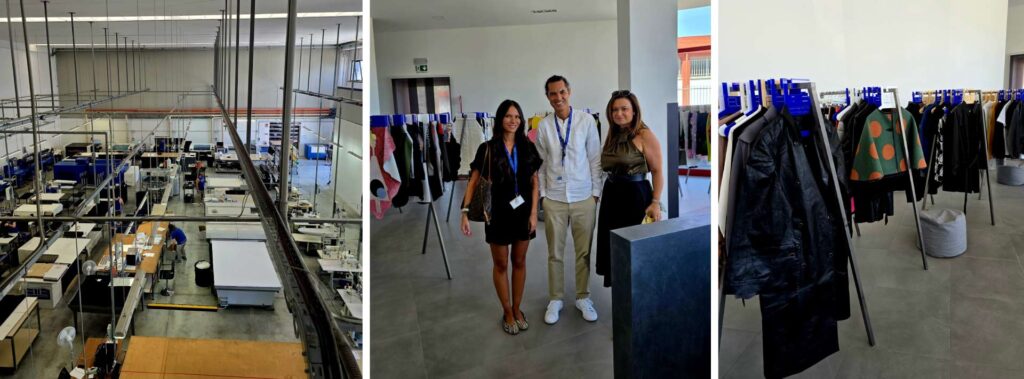
Italy’s Manufacturing Ecosystem & Core Capabilities
Italy excels in high-value, small-to-medium batch production across ready-to-wear, tailored clothing, knitwear, leather goods, footwear, and accessories. Its strength lies not only in what it produces, but in how its districts specialise and collaborate.
Key manufacturing districts include:
- Biella, known for fine wools, worsted yarns, and premium suiting fabrics
- Como, a global reference point for silk, luxury printing, and refined finishes
- Prato, a leader in recycled yarns, circular textiles, and sustainable innovation
- Carpi, specialising in women’s knitwear and fine-gauge production
- Veneto and Tuscany, internationally recognised for leather goods, footwear, and high-quality tanneries
This tightly integrated ecosystem allows brands to move from concept to prototype far faster than in most global hubs—often within days for knitwear and light garments, and weeks rather than months for tailored or leather products.
Across these districts, Italian manufacturers are globally recognised for excellence in:
- Structured tailoring and outerwear
- Luxury knitwear using cashmere, wool, and fine or recycled yarns
- Silk shirts, blouses, and printed textiles
- Handcrafted leather goods and accessories
- High-end footwear and technical components
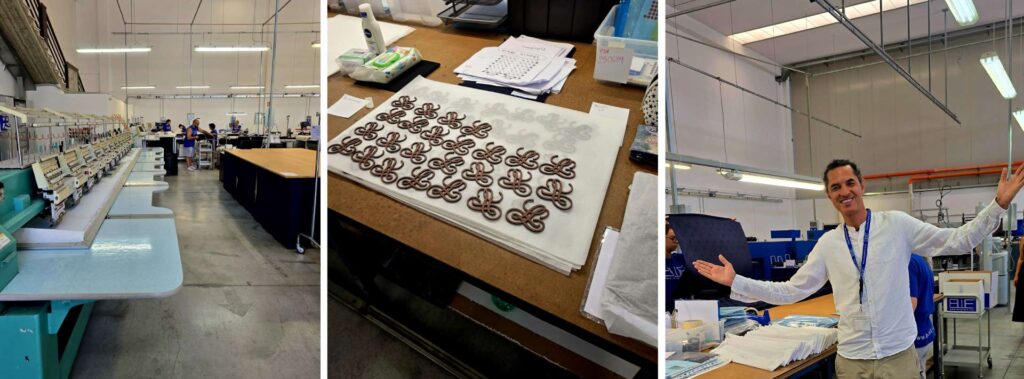
Beyond product categories, Italy’s defining capability lies in execution: precision fit, advanced material handling, hand-finishing, and the ability to elevate even minimal designs into premium products.
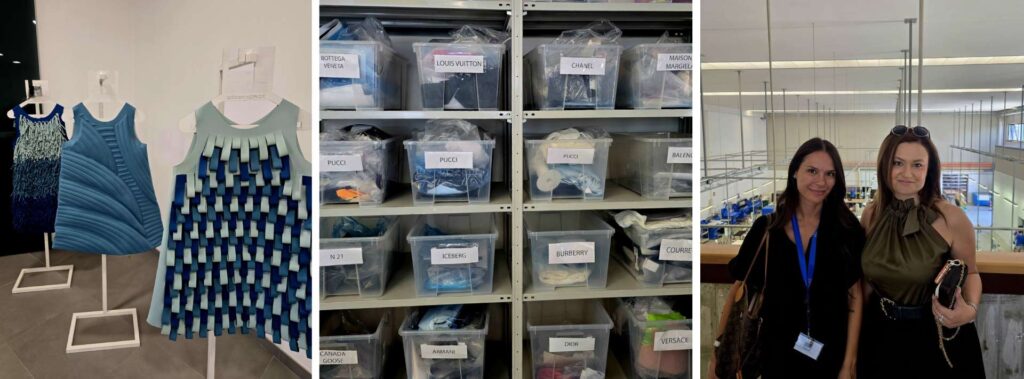
Italy’s Manufacturing Advantage — Capabilities, Value, and Constraints
Italian manufacturing excellence is defined less by individual product categories and more by a system of execution—where craftsmanship, material knowledge, and infrastructure operate as one. This integrated model allows Italy to deliver premium products with consistency, flexibility, and long-term brand value.
Core Capabilities, Executed at a High Level
Italian manufacturers are globally recognised for high-end, small-to-medium batch production across tailored garments, knitwear, silk textiles, leather goods, footwear, and technical accessories. These categories are supported by deeply embedded production practices: precision fit, advanced material handling, and extensive hand-finishing that elevate even minimal designs into premium products.
What differentiates Italy is not variety, but depth of execution. Techniques such as hand-stitching, saddle-stitching, complex knitting, and refined finishing are part of everyday production culture rather than specialist exceptions. This continuity of skill—often passed down through generations—ensures consistency that is difficult to replicate elsewhere.
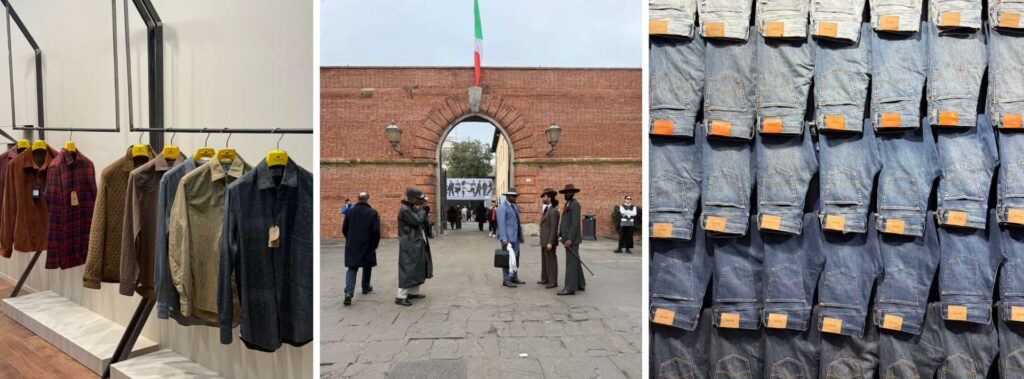
Material Intelligence, Speed, and Sustainability
Italy’s material expertise is inseparable from its manufacturing strength. From regenerated fibres and eco-dye processes to advanced performance treatments and luxury silk printing, innovation evolves alongside tradition. Nowhere is this more evident than in Prato, where circular production systems are embedded structurally rather than applied as a marketing layer.
The same density that supports material innovation also enables speed and flexibility. Close proximity between mills, workshops, tanneries, and finishers allows for rapid prototyping, small production runs, and mid-season adjustments—making Italy particularly well suited to premium brands with refined assortments and shorter decision cycles.
What Brands Actually Gain
These capabilities translate directly into tangible advantages for brands:
- A highly skilled workforce delivering superior fit, durability, and consistency
- Integrated local infrastructure that reduces lead times and production errors
- Mature supply chains with strong quality-control feedback loops
- Alignment with EU labour, environmental, and traceability standards
- A quality-first mindset that prioritises long-term brand equity over short-term cost savings
The intangible value of Made in Italy further reinforces brand perception and resale value, turning manufacturing origin into a strategic asset rather than a simple label.
Constraints That Protect Quality
Italy’s strengths also impose natural constraints. Production capacity at top-tier artisan workshops is limited, skill development cycles are long, and costs are higher than in mass-production hubs. Working with highly specialised suppliers also introduces operational complexity.
However, these constraints are not weaknesses. When managed correctly, they function as protective barriers—preserving craftsmanship, maintaining quality standards, and preventing overextension. Without informed guidance, they can slow development or inflate costs; with the right structure, they become part of a sustainable, high-value production strategy.
Italian manufacturing offers a rare combination of low minimums, premium materials, and speed, making it particularly well suited for emerging brands, capsule collections, and high-end seasonal drops—provided production is structured intelligently.
Typical MOQs & Material Availability
| Product Category | Typical MOQs* | Material & Component Access | Operational Advantage |
| Tailoring & outerwear | ~20–50 units per style | Fine wools from Biella, structured linings, premium buttons | Fast prototyping, precise fit adjustments |
| Leather goods | ~30–100 units (complexity-dependent) | Leather from Veneto & Tuscany tanneries, metal hardware, custom finishes | High material control, small-batch craftsmanship |
| Premium shirts & basics | ~50–150 units | Silk from Como, high-quality cottons, local trims | Short lead times, consistent quality |
| Knitwear & cashmere | ~100–250 units (lower for development) | Cashmere from central Italy, recycled yarns from Prato | Flexibility in sampling and seasonal drops |
*MOQs are indicative and may vary based on design complexity, material selection, and supplier capacity.
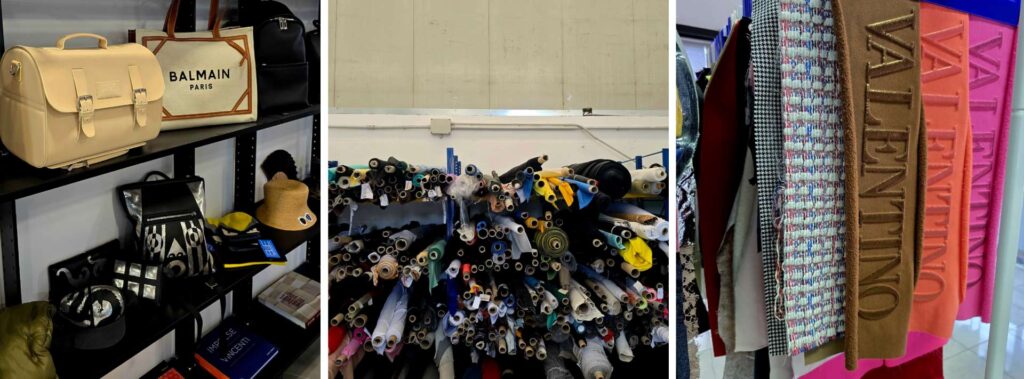
Local sourcing of fabrics, trims, and components—buttons, zippers, linings, hardware, and leather panels—largely within Italy or the EU enables just-in-time production, rapid issue resolution, and reduced dependency on fragmented international supply chains.
Disclaimer: The production ranges and material access outlined above reflect general market conditions in Italy. Actual MOQs, lead times, and sourcing options depend on multiple factors, including product complexity, material availability, seasonal capacity, and supplier specialisation.
Why Deepwear Is Essential in Italy
Italy rewards brands that understand its unwritten rules: relationships over transactions, trust over volume, and craftsmanship over speed at any cost.
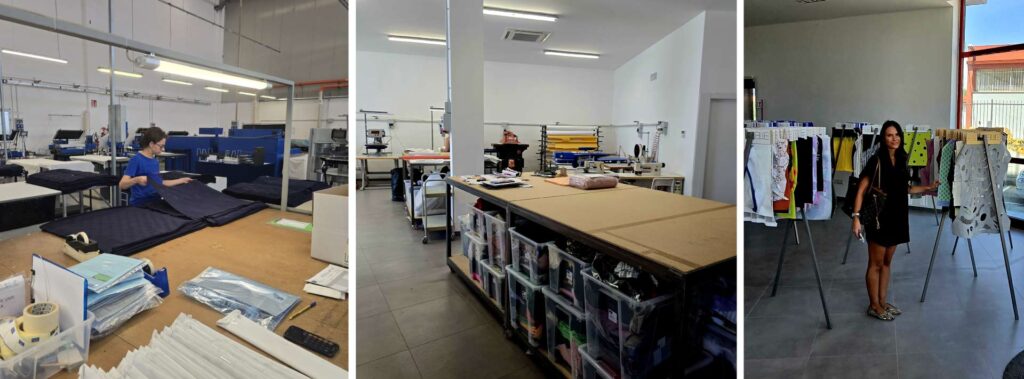
Deepwear gives brands direct access to this ecosystem—without friction.
We work hands-on with Italy’s most reliable workshops and mills, knowing exactly:
- Which Carpi manufacturer excels in fine-gauge knitwear
- Which Biella mill delivers the ideal wool weight and finish
- Which Veneto tannery produces the perfect hand-feel for leather goods
Deepwear manages every layer:
- Strategic sourcing of materials and makers
- Small-batch production with controlled scalability
- Prototyping and development coordination
- Quality control, traceability, and transparent oversight
We bridge the gap between artisan workshops and modern global brands—protecting the authenticity of Made in Italy while making the process efficient, reliable, and commercially viable.
For brands building long-term value rather than short-term volume, Deepwear is not just a production partner in Italy—we are your local advantage.