
Discover the truth behind the “Ibiza Shell” trend. Learn about authentic Capiz shell sourcing in the Philippines, including pricing, MOQs, and supply chain realities for fashion brands.
Shell accessories and interiors labeled as “Ibiza shells” have become shorthand for European summer style, but the material behind the trend is neither European nor from Ibiza. These shells are Capiz, sourced from the Philippines, where they have been used for centuries as a functional material in architecture, craft, and daily life.
As global fashion and interiors rediscover Capiz, renaming it risks flattening its origin into a lifestyle aesthetic disconnected from material reality. At Deepwear, sourcing begins with accuracy. Understanding where materials come from, how they are produced, and what they actually cost at origin is essential to responsible design and long-term sourcing strategy.
In this blog we cover:
- What Capiz shells are and where they come from
- Why “Ibiza shell” is a misnomer in global sourcing
- How Capiz has been used historically in architecture and craft
- Current Capiz pricing, MOQs, and processing costs
- What brands should consider when sourcing Capiz today
What Are Capiz Shells?
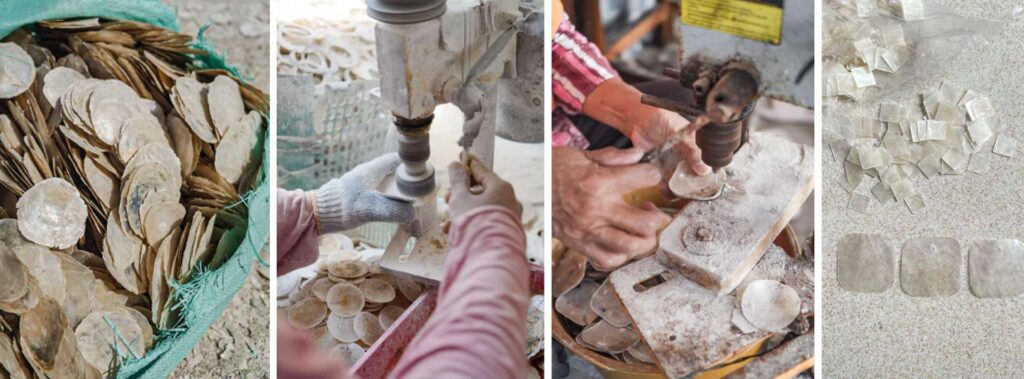
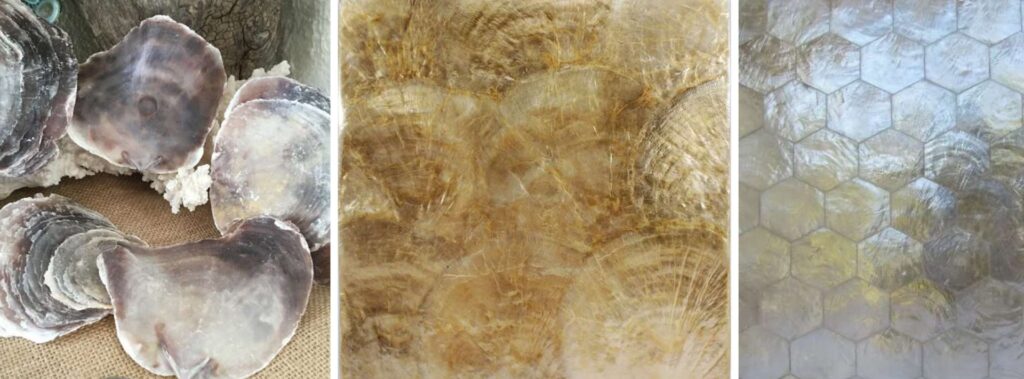
Capiz shells come from the windowpane oyster (Placuna placenta), a bivalve mollusk found in the warm coastal waters of Southeast Asia, particularly the Philippines. Unlike thicker shells, Capiz is naturally thin, flat, and semi-translucent, allowing light to pass through while softening glare.
These physical properties are not incidental. Capiz diffuses light, withstands humidity, and remains lightweight yet durable—qualities that explain why it has historically been used not just decoratively, but structurally and functionally.
Why They’re Called Capiz (and Not Ibiza)
Capiz shells take their name from Capiz Province in the Philippines, historically one of the most prominent centers for harvesting and working windowpane oysters. However, Capiz is not the only source. These shells are also abundant in Samal Island and other Philippine coastal regions, where they have long been used for windows, jewelry, and lighting fixtures.
The term Capiz therefore functions less as a single-point geographic label and more as a material identifier tied to Philippine coastal craft traditions. What matters is not exclusivity to one province, but the fact that the shell’s origin, processing knowledge, and historical use are rooted in the Philippines.
By contrast, there is no indigenous Capiz shell industry in Ibiza or elsewhere in Europe, nor any historical tradition of using these shells in Mediterranean architecture or craft. The label “Ibiza shell” is a recent invention that was applied because the material aligns visually with contemporary European summer aesthetics, not because of provenance.
Aesthetic alignment does not justify renaming. Materials can circulate globally and take on new meanings, but renaming a material based on mood or lifestyle branding obscures its origin. Capiz is Capiz because of where it comes from, not because of where it is marketed.
Capiz as a Functional Material—Before It Was a Trend
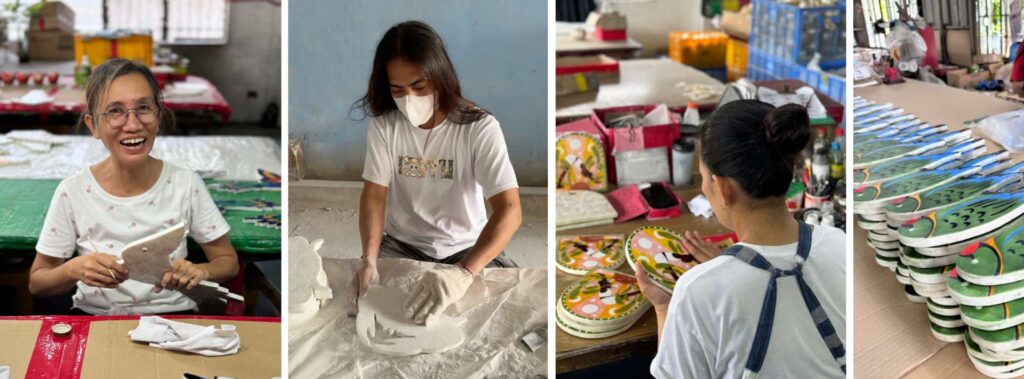
Long before Capiz appeared in fashion accessories or global décor catalogs, it served a practical architectural function in the Philippines.
Capiz shells were traditionally used in place of glass for:
- Window panels and sliding screens
- Lamps and lanterns
- Ventilated partitions
In a tropical climate, this choice was logical. Capiz allows light to enter without trapping heat, performs well in humidity, and predates the widespread availability of glass. Its use shaped vernacular architecture, particularly in bahay na bato (stone house) homes and other climate-responsive structures.
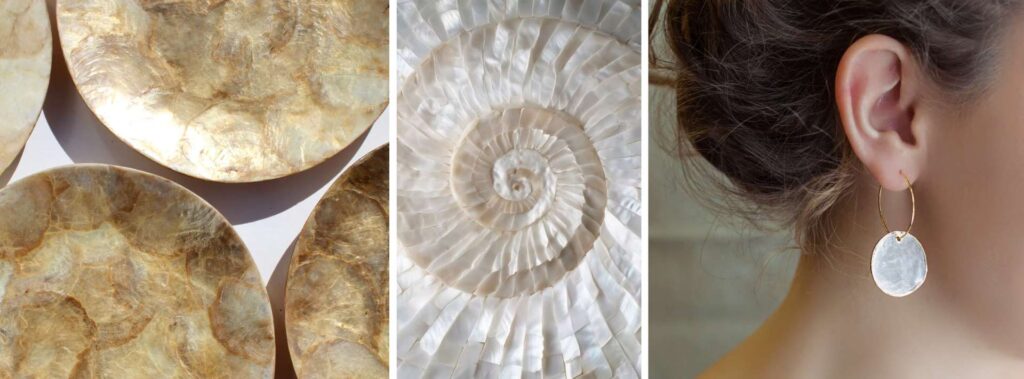
Beyond architecture, Capiz has long been used for household objects such as chandeliers, wall panels, coasters, and decorative furnishings. These applications are not trend inventions; they are extensions of material knowledge built over generations.
How Capiz Became “Ibiza”
As Capiz entered global fashion and interiors markets, it was gradually reframed as part of a European summer aesthetic—light, coastal, and decorative. In this transition, origin gave way to mood.
“Ibiza shell” became shorthand for a look rather than a material. But this rebranding disconnects Capiz from:
- Its tropical, climate-driven origins
- The communities that harvest and work with it
- The supply chains that actually produce it
This is a familiar pattern in global sourcing: materials gain market value as their histories become less visible.
Sourcing Capiz Today: Prices, MOQs, and Reality
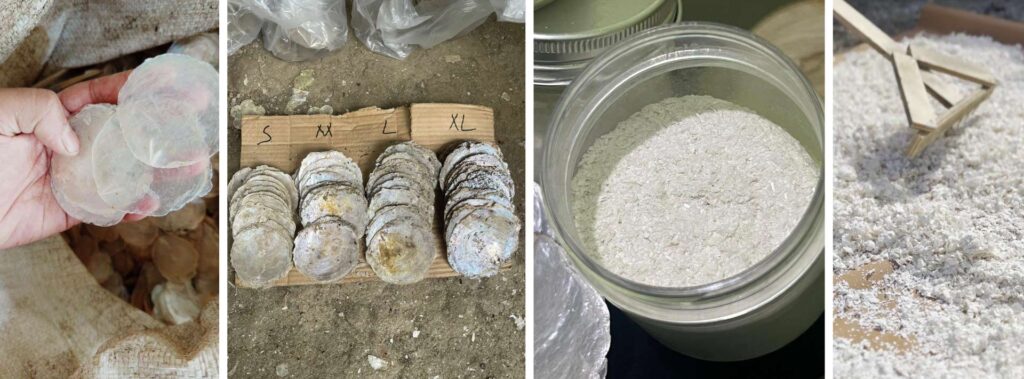
At source, raw Capiz shells in the Philippines are relatively affordable. The material is locally abundant and traditionally harvested, which keeps base costs low. Small suppliers—particularly those close to craft communities—often operate with low minimum order quantities, especially for raw or minimally processed shells.
Costs increase as Capiz moves further from its natural state. Pricing rises once shells are:
- Cut into uniform shapes
- Polished or laminated
- Assembled into panels or finished products
- Exported internationally
For brands, this distinction matters. The “premium” often associated with Capiz products rarely reflects raw material scarcity. Instead, it reflects processing labor, finishing techniques, logistics, and brand positioning.
Indicative Pricing by Processing Level
| Material Type | Price Range | Notes |
| Raw Capiz shells (Philippines) | ~₱30/kg (≈ €0.40–0.50/kg) | Lowest cost at origin |
| Raw shells (international wholesale) | ~$0.20–$0.30 per piece | Basic craft-grade material |
| Bulk raw shells (by weight) | ~$4–$7 per kg | Varies by size and volume |
| Pre-cut / processed Capiz sheets | ~$16–$22 per m² (or higher) | Cutting and sanding add cost |
| Custom-cut or polished Capiz | Variable / higher | Labor-intensive finishing |
Disclaimer: These prices are estimates for reference. Final pricing will depend on processing, volume, and supplier arrangements.
MOQ Considerations
- Artisanal suppliers may accept 100–500 units for finished components
- Industrial suppliers offer better pricing at higher volumes
- Sampling and low-MOQ options exist, but unit costs increase
This structure makes one point clear: Capiz is inexpensive at origin, but expensive to finish and scale.
Considering Capiz for your next project? Deepwear can advise on sourcing options, MOQs, and production trade-offs.
Philippines vs. Global Supply Chains
The Philippines remains central to raw Capiz sourcing and traditional craft, while much of today’s processed Capiz supply is finished elsewhere.
- Philippines: raw shells, artisanal production, small-scale workshops
- China / Vietnam: cutting, finishing, assembly, scalability
This division explains why many Capiz products sold internationally are marketed without reference to Philippine origin—even though the raw material itself comes from Philippine waters.
Are “Ibiza shells” the same as Capiz shells?
Yes. “Ibiza shell” is a marketing misnomer for Capiz shells. These shells originate from the windowpane oyster found in the Philippines, not the Mediterranean. The name “Ibiza” refers to the aesthetic style, not the material’s origin.
Is Capiz shell a sustainable material?
Capiz is a natural, abundant material that has been used for centuries in climate-responsive architecture. However, sustainable sourcing requires verifying ethical harvesting practices and supply chain transparency, rather than just following a trend label.
How Deepwear Approaches Capiz Sourcing
At Deepwear, material intelligence goes beyond trend adoption. We focus on helping brands work with materials accurately and strategically, balancing creative direction with sourcing realities. This includes:
- Using correct and transparent material terminology
- Understanding origin, processing pathways, and supply chains
- Assessing cost, MOQ, and scalability early in the development process
When working with Capiz, this means evaluating whether a project is best suited to artisanal craftsmanship, industrial processing, or a hybrid production model and sourcing in a way that supports both design intent and commercial viability.
Source Authentically, Scale Effectively
Capiz shells are not a recent invention. They are a tropical material shaped by climate, function, and long-standing craft traditions in the Philippines, now finding renewed relevance in global fashion and interiors.
As trends circulate and aesthetics evolve, materials naturally take on new contexts and meanings. Responsible sourcing does not limit creativity; it strengthens it by grounding design choices in material understanding and origin awareness. Capiz’s appeal lies in its versatility and adaptability. Recognizing its roots simply allows brands to engage with it more thoughtfully—wherever in the world it is used.
Whether you are designing a jewelry collection or interior accents, Deepwear manages the entire process—from verifying origin in the Philippines to overseeing industrial finishing. Ensure your “Ibiza” aesthetic is backed by a reliable, transparent supply chain. Start Sourcing Capiz with Deepwear.