
Explore how forgotten textiles can be revived through luxury fashion, smart sourcing, and sustainable production systems in 2026.
There is a reason certain fabrics stay with us, even after they disappear from everyday use. They were never just materials; they were shaped by climate, ritual, and routine. As explored in Deepwear’s work on tradition-inspired design systems, textiles often sit at the intersection of culture, function, and identity, not just aesthetics.
Today, many of these forgotten textiles are remembered more than they are worn. They appear in exhibitions, editorials, or niche collections, but rarely as part of a functioning supply chain.
If revival is the goal, memory alone is not enough. These textiles must be reintroduced as working materials within modern luxury fashion and sustainable sourcing systems.
In this blog we cover:
- What forgotten textiles in fashion are as complete production systems, with examples like Mashru and Patola Silk
- Why traditional textiles are disappearing, driven by industrial manufacturing speed, synthetic fabrics, and broken artisan supply chains
- How luxury fashion supports textile revival through high-value positioning, controlled production, and material storytelling
- A practical strategy for sustainable textile sourcing, including supply chain development, product translation, and traceable production systems
- What the revival of Thai silk reveals about successful textile revival through global branding, structured production, and market alignment
What Are Forgotten Textiles?
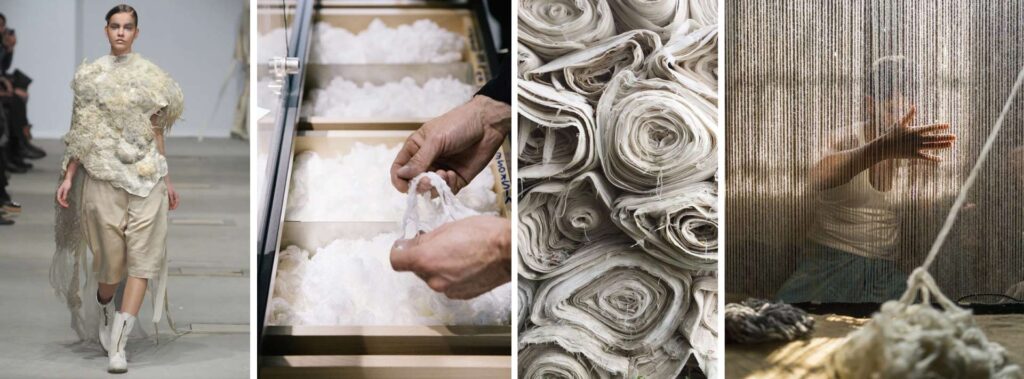
Forgotten textiles are not simply old fabrics that fell out of trend. They are region-specific production systems that once operated as complete ecosystems, linking raw material, technique, and community knowledge into a single workflow. At Deepwear, we approach these textiles not as isolated craft outputs, but as integrated material systems that were historically efficient within their own context.
They declined due to a combination of structural shifts:
- industrial manufacturing speed replacing slower hand processes
- synthetic material substitution reducing reliance on natural fibers and dyes
- breakdown of artisan ecosystems where skills were no longer economically viable to pass on.
Some of the most relevant examples include:
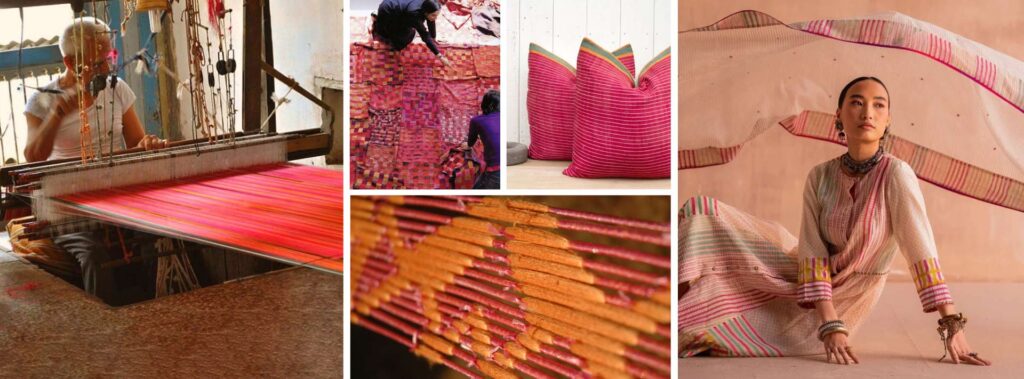
- Mashru
A hybrid textile developed to combine the sheen of silk with the comfort of cotton. Traditionally woven with a silk warp and cotton weft, it reflects early functional innovation shaped by cultural needs. - Dhaka Muslin
Known historically as “woven air,” this ultra-fine cotton depended on specific environmental conditions and rare cotton varieties. Its production required extreme skill in spinning and weaving. - Patola Silk
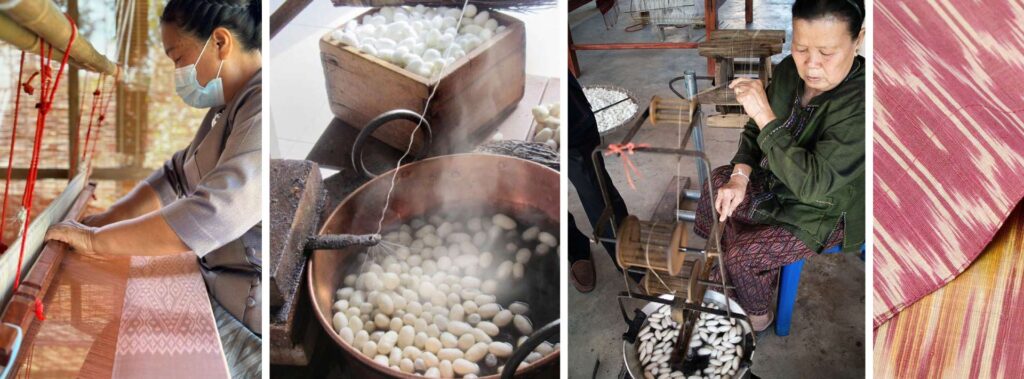
A highly complex double ikat technique where both warp and weft are resist-dyed before weaving. Precision and time investment make it one of the most labor-intensive textiles in the world. - Tangaliya
Recognized for its extra-weft dot technique, traditionally produced by pastoral communities. It carries both functional and cultural significance tied to specific groups. - Indigo dyeing
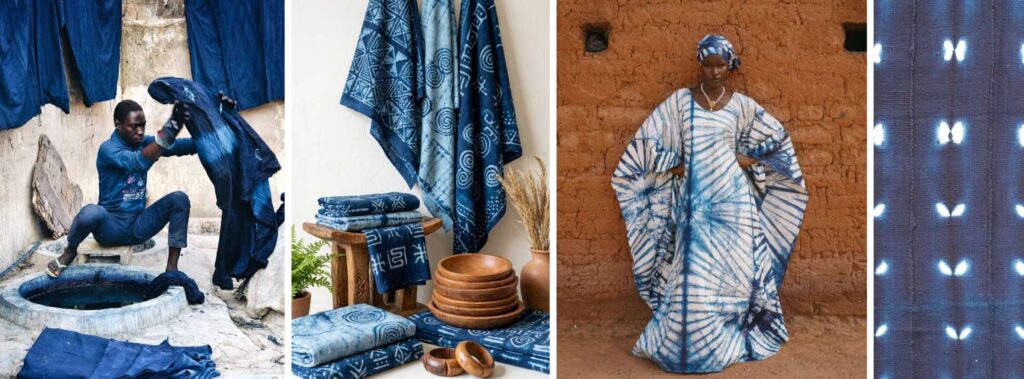
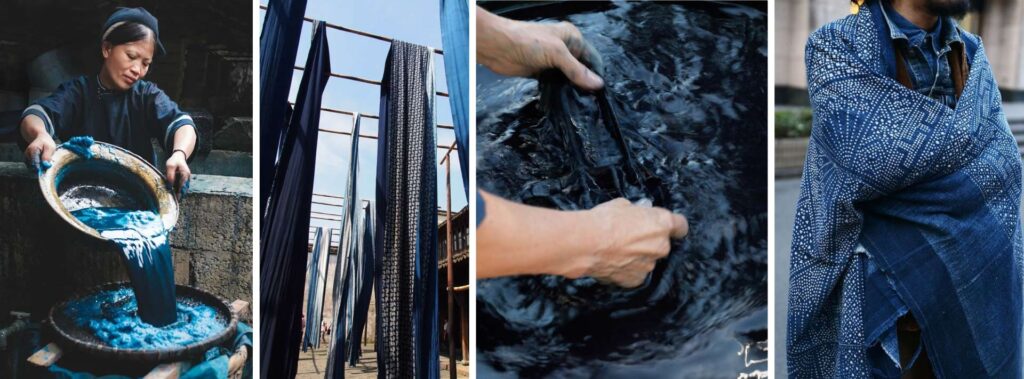
A natural dyeing system based on fermentation, producing deep blue tones with minimal chemical intervention when done traditionally.
These textiles are not standalone materials. They are complete value chains, often refined over centuries, where each stage from fiber to finish carries technical and cultural knowledge.
Why These Traditional Textiles Were Left Behind
The decline of traditional textiles is often framed through nostalgia. In practice, it is driven by market dynamics and production economics.
1. Speed Replaced Craft Time
Hand production operates on human timelines:
- spinning, dyeing, and weaving can take weeks or months
- output is limited by labor capacity
Modern fashion operates on compressed timelines:
- rapid sampling
- bulk production within weeks
At Deepwear, we see this as a fundamental mismatch. Time-intensive craftsmanship cannot compete in systems optimized for speed unless repositioned.
2. Uniformity Replaced Variation
Industrial systems prioritize:
- consistency in color
- uniform sizing
- predictable output
Traditional textiles produce:
- natural variation
- irregular textures
- slight inconsistencies that reflect hand processes
While variation is often reframed as a design feature today, it was historically treated as a production inefficiency.
3. Cost Replaced Process
Labor-intensive methods became economically uncompetitive due to:
- rising labor costs
- cheaper synthetic alternatives
- mechanized production
From a sourcing perspective, this is critical. The issue is not that these textiles lack value. It is that their cost structures were never aligned with modern pricing expectations.
Where Luxury Fashion Changes the Equation
Unlike mass-market production, luxury fashion operates under a different set of priorities. At Deepwear, we see this as the key entry point for heritage textile revival.
Luxury markets value:
- distinction over uniformity
- material story over anonymity
- controlled production over scale
This creates a focused opportunity:
- smaller production volumes become acceptable
- variation becomes a feature rather than a flaw
- craftsmanship can justify higher pricing
However, this opportunity is limited and requires a clear approach. It works only when textiles are positioned as high-value materials within a structured system, rather than treated as standalone craft pieces. As we explored in Tradition-Inspired Streetwear: Merging Culture, Sustainability, and Modern Fashion Trends, the focus should not be on replication, but on thoughtful translation into modern design and production contexts.
Where Forgotten Textiles in Fashion Are Sourced:
In sustainable textile sourcing, origin is not a background detail. It determines whether a material can function inside a modern supply chain or remain limited to symbolic use.
Below is a breakdown of where these textiles are actually sourced and what that means in practice:
- Mashru — Gujarat (India)
Mashru is concentrated in Gujarat, particularly Patan and Kutch. Its silk-cotton construction allows partial standardization, making it one of the few heritage textiles that can integrate into repeatable production with controlled variation. - Dhaka Muslin — Dhaka (Bangladesh)
Historically produced in the Bengal delta, Dhaka Muslin depends on extinct or near-extinct cotton varieties and highly specific environmental conditions. From a sourcing standpoint, this is not a scalable material; it is limited to experimental or symbolic applications. - Patola Silk — Patan (India)
Patola production is geographically and socially concentrated within a small number of weaving families. The double ikat process cannot be industrialized without losing its defining characteristics. This places Patola firmly in high-margin, low-volume luxury. - Tangaliya — Surendranagar district (India)
Tangaliya textiles are produced by the Dangasia community using labor-intensive extra-weft techniques. The supply base is small and skill-specific, making scalability limited but suitable for controlled capsule collections. - Indigo Dyeing — India, Japan, Nigeria
Indigo operates differently from woven textiles. It is a process-based system tied to agriculture and fermentation, not a single location. With the right inputs and process control, indigo can be scaled across regions while maintaining low-impact credentials. - Thai Silk — Northeastern Thailand (Isan region)
Thai silk is sourced from rural weaving clusters in northeastern Thailand. Its transition into a global luxury material was structured through coordinated production, branding, and export strategy. This makes it one of the few proven models of successful textile revival. - Kaudi (Kawandi) Textile — Karnataka (India) Kaudi is a patchwork quilting technique, not a fiber or weaving system. Originating in northern Karnataka, it uses layered, upcycled fabrics (old saris, garments, and textile scraps) stitched together through dense handwork. From a sourcing perspective, Kaudi does not rely on raw material production but on post-consumer textile reuse, making it inherently sustainable but difficult to standardize. It is best positioned for upcycled luxury, limited-edition pieces, or home textiles, rather than scalable garment production.
What This Means for Sustainable Textile Sourcing
For brands operating in luxury fashion supply chains, these origins are not interchangeable. Each textile falls into a different sourcing category:
- Adaptable materials (e.g., Mashru, Indigo) can support repeatable production
- Fixed-location textiles (e.g., Patola, Tangaliya) require controlled, low-volume integration
- Non-scalable heritage materials (e.g., Dhaka Muslin) function as narrative or experimental assets
Without aligning material origin with production systems, timelines, and pricing structures, textile revival remains theoretical. With that alignment, these materials become viable components of modern, traceable, and sustainable fashion production.
A Practical Framework for Revival
To move beyond nostalgia, forgotten textiles must be integrated into modern supply chains and product strategies. At Deepwear, this means building systems that balance craft integrity with production reliability.
1. Select the Right Role for Each Textile
Not every textile should be scaled. Clear categorization is essential.
Scalable Integration
- Mashru
- Indigo-dyed textiles
These textiles can adapt to repeatable production because:
- techniques can be partially standardized
- outputs can be scaled with controlled variation
Limited Luxury (High Margin, Low Volume)
- Patola Silk
- Tangaliya
- Kaudi textile
These textiles rely on:
- craft intensity
- visual identity
- scarcity as value
They are not suitable for scale but are highly effective in limited luxury applications.
Experimental / Symbolic
- Dhaka Muslin
Best used for:
- couture collections
- concept-driven design
Its value lies in rarity and historical significance, not production volume.
2. Rebuild the Supply Chain
If textiles carry memory, supply chains determine whether they survive.
At Deepwear, a viable system includes:
- artisan clusters
Organized groups that allow for coordinated production rather than isolated output - defined quality ranges
Flexible standards that maintain identity while ensuring usability - hybrid production models
Combining hand processes with machine support for consistency and scalability
Without this structure, production remains:
- inconsistent
- difficult to scale
- commercially unreliable
3. Translate Into Modern Products
One of the most common failures in textile revival is product mismatch.
Traditional formats often remain unchanged, while consumer expectations evolve.
At Deepwear, we focus on translation rather than replication:
- structured outerwear
- accessories such as bags and scarves
- interior textiles with higher margins and lower sizing complexity
Examples:
- Mashru adapted into tailored garments
- Indigo used across full capsule collections
- Kaudi reworked into statement outerwear
This step is critical. Without product translation, even the most compelling textile remains commercially limited.
4. Build Real Sustainability
Many forgotten textiles are inherently low-impact, but modern markets require evidence, not assumptions.
A credible sustainability framework includes:
- traceability
Identifying who made the product and where - material transparency
Clear sourcing of fibers and dyes - process documentation
Explaining how the textile is produced
For example, Indigo dyeing offers:
- reduced reliance on synthetic chemicals
- biodegradable dye processes when traditionally executed
At Deepwear, we treat sustainability as a measurable system, not just a narrative layer.
5. Align Pricing With Reality
Handcrafted textiles cannot operate within mid-market pricing structures.
They require:
- higher price points to reflect labor and process
- lower production volumes to maintain quality
If pricing is misaligned:
- artisans exit the system
- quality declines
- supply chains become unstable
Luxury positioning is not optional. It is a structural requirement for survival.
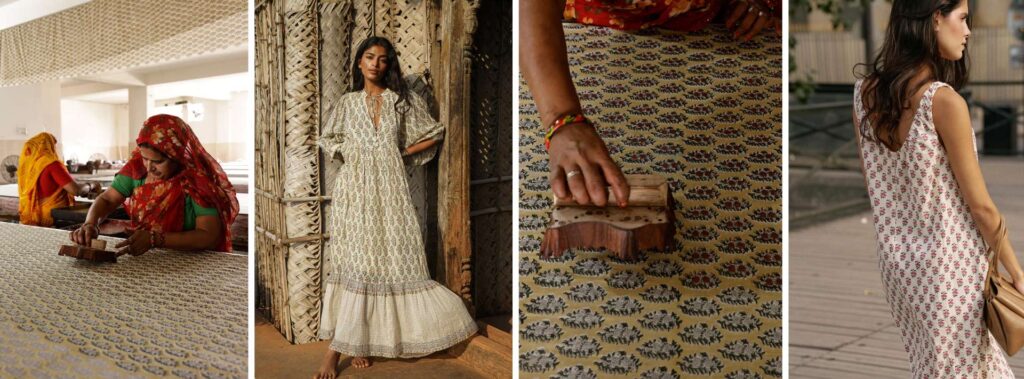
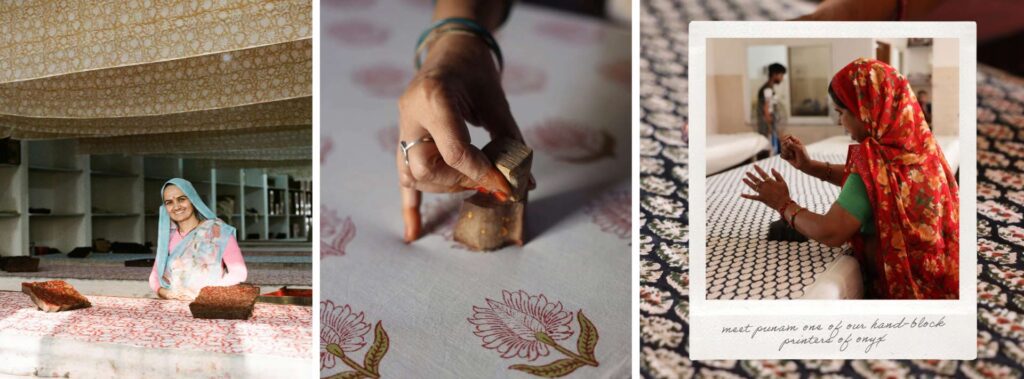
Understanding how these forgotten textiles function as complete systems is essential before integrating them into modern production. For a closer look at how traditional techniques evolve within structured supply chains, explore our insights on Working with Traditional Hand Block Printing.
What This Means for Deepwear
For our team at Deepwear, working with forgotten textiles is not about preservation in isolation.
Our approach is practical and focused:
- we start with 1–2 textiles at a time to ensure depth over spread
- we develop repeatable production frameworks that balance craft and consistency
- we integrate textiles into core product lines, not limited experiments
- we implement traceability systems to support transparency and trust
- we position products within luxury and sustainable markets, where these materials can realistically compete
This reflects how we view fabric sourcing and cultural context. Materials are not passive inputs. They are strategic assets that shape product identity, pricing, and long-term viability.
How does the revival of Thai silk compare to other forgotten textiles?
The revival of Thai silk is often referenced because it followed a structured, top-down model, supported by Queen Sirikit. It combined cultural identity, institutional backing, and global exposure, allowing Thai silk to transition from a declining local craft into a recognized luxury material on the international stage.
In contrast, most forgotten textiles such as Mashru or Tangaliya did not benefit from centralized promotion or coordinated infrastructure. Their decline was tied to fragmented production systems and lack of market integration.
For brands and sourcing partners like Deepwear, this distinction matters. Thai silk demonstrates that revival is possible when production, branding, and market access are aligned. For other textiles, the path forward is different. It relies less on symbolic endorsement and more on building structured supply chains, translating materials into modern products, and positioning them within luxury and sustainable markets.
From Heritage to High-Value Material Systems
Forgotten textiles have never lacked relevance. What they lacked was alignment with how modern fashion operates. Throughout this article, we explored how these materials, from Mashru to Patola Silk, function as complete ecosystems rather than isolated fabrics, and why their decline is rooted in production speed, cost structures, and fragmented supply chains, not a loss of cultural value.
At Deepwear, this is the direction we focus on. We do not approach heritage textiles as one-off projects or symbolic gestures. We treat them as strategic materials that can be integrated into modern supply chains when supported by the right systems.
If you are exploring how forgotten textiles, sustainable sourcing, and luxury production can come together within your brand or supply chain, our team at Deepwear works directly at that intersection. Have a conversation with our teams.