
Master fabric weave selection in product development. Learn to balance aesthetics with durability, define use-cases, and scale production with our expert guide for fashion brands.
For emerging fashion brands, fabric selection is often approached through the lens of aesthetics: how the material looks, how it drapes, how it aligns with a brand’s visual identity. While these considerations matter, they represent only part of the decision.
Fabric weave selection directly affects how a garment performs over time — its durability, comfort, breathability, and response to repeated wear and washing. These qualities are not abstract. They influence customer satisfaction, return rates, and a brand’s ability to scale production consistently.
In this blog, we cover:
- How fabric weave structures influence durability, comfort, and real-world performance
- How to define use-cases before selecting fabrics
- The differences between common apparel and technical weave applications
- A practical, step-by-step framework for choosing the right weave during product development
- How sourcing, scalability, and testing affect weave decisions
- How Deepwear supports brands throughout fabric and weave selection
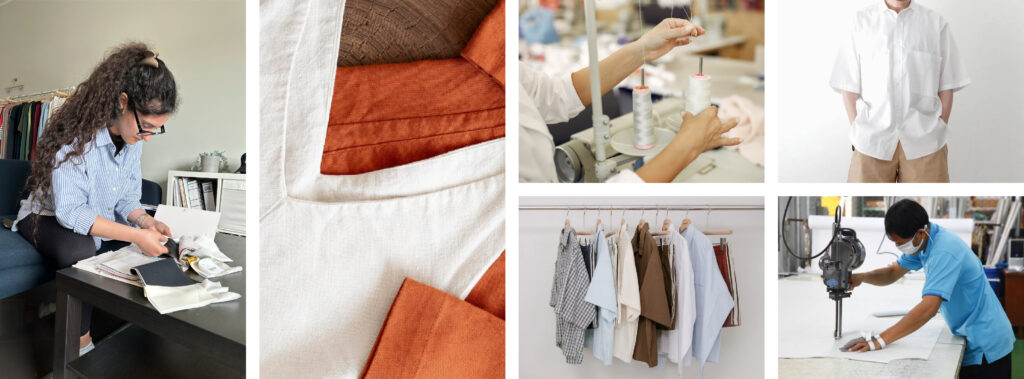
The Structural Role of Fabric Weaves
A fabric weave describes how warp and weft yarns interlace. This structure determines how the textile behaves under tension, movement, friction, and environmental stress.
Two fabrics made from the same fibre — for example, cotton — can perform very differently depending on the weave. One may be breathable and stable but wear down quickly under abrasion; another may be heavier but significantly more durable. These differences are not incidental. They are the result of structural design.
Understanding how to choose the right fabric weave during product development allows brands to design with intention rather than assumption. It reduces avoidable risks, strengthens communication with factories, and creates products that function as well as they look.
A Step-by-Step Approach to Choosing the Right Fabric Weave
Choosing the right fabric weave is more effective when approached as a sequence of decisions rather than a single choice. The steps below reflect how experienced sourcing teams and manufacturers evaluate textiles during product development, balancing creative intent with real-world performance.
Step 1: Define the Garment’s Intended Use
Before reviewing fabric swatches or supplier recommendations, it is essential to define how the garment is actually meant to be used. This step is frequently underestimated, yet it shapes every technical decision that follows.
Key questions include:
- Who is the wearer?
- In what climate or environment will the garment be worn?
- How frequently will it be worn and washed?
- What level of movement, friction, or load will it experience?
A shirt designed for occasional wear in a temperate climate has very different requirements from one worn daily in a humid environment. Without clarity on use-case, even high-quality fabrics can underperform in practice.
Factories routinely ask these questions when assessing feasibility. Brands that engage with them early tend to receive more precise guidance and avoid costly revisions later.
If you’re still developing your product briefs, check out our blog The Essential Fabric Sourcing Checklist for Emerging Fashion Brands, which breaks down the key questions to ask suppliers early, the information factories need to give accurate recommendations, and how to avoid costly revisions later in the development process.
Step 2: Understand What Different Weave Structures Are Designed to Do
Once the use-case is defined, the next step is understanding how common fabric weave types behave. Each weave offers inherent advantages and limitations, regardless of fiber choice.
Plain weaves provide structural stability and even tension but limited flexibility. Twill weaves improve durability and abrasion resistance, often at the cost of added weight. Satin weaves create smooth surfaces and visual refinement but sacrifice strength under friction. More complex structures such as jacquard or pile weaves introduce additional functional and cost considerations. At this stage, the goal is not to select a weave, but to understand what each structure is fundamentally designed to deliver.
Fabric Weave Use-Case Matrix: Apparel vs Technical Applications
At this point in the process, it becomes useful to view weave structures through both an apparel and technical lens. Seeing these applications side by side highlights why certain weaves perform well in specific roles — and where they are likely to fail if misapplied.
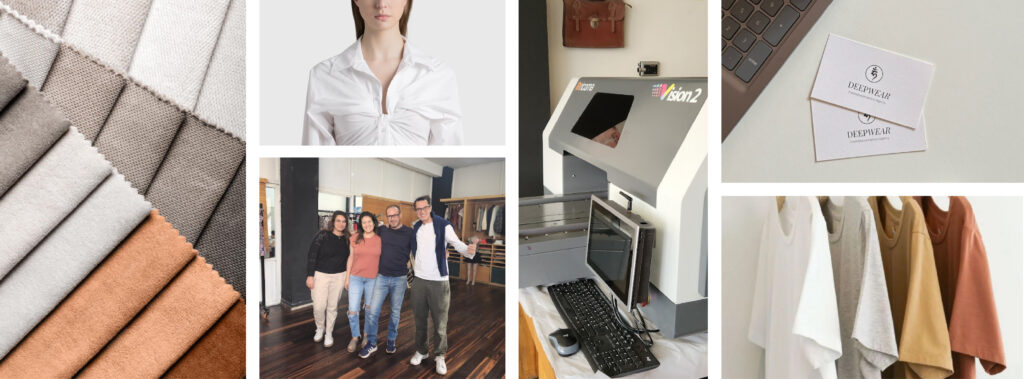
Fabric Weave Use-Case Matrix
Apparel vs Technical Applications
At this stage, it becomes essential to evaluate weave structures through two parallel perspectives: fashion and function. When apparel and technical applications are viewed side by side, it becomes clear why certain weaves excel in specific roles — and where performance begins to fail when they are misapplied.
Plain weave offers structural stability, even tension, and ease of maintenance. In apparel, it works well for shirts, dresses, and lightweight uniforms. Technically, it is used in medical gauze, filtration fabrics, and foundational industrial textiles. However, in fashion it can feel stiff or lifeless if overused, while in heavy-duty environments it may lack sufficient protection.
Twill weave is recognized for abrasion resistance, durability, and strong drape. It defines garments such as denim, chinos, and jackets, while also serving in workwear and protective uniforms. When misused in lightweight garments, it becomes unnecessarily heavy and heat-retentive.
Satin weave provides a smooth surface, low friction, and visual refinement. It is common in eveningwear and lingerie, yet also appears in airbags and conveyor belts where glide performance is critical. Despite its elegance, it snags easily and lacks durability in high-friction or everyday contexts.
Basket weave balances breathability and strength, making it suitable for casual shirts and summer garments, as well as packaging textiles and flexible industrial covers. Under heavy stress, however, it can distort and lose shape.
Herringbone combines durability with visual structure. It is frequently used in tailored coats and suits, and technically in heavy uniforms and upholstery. In casual or lightweight apparel, its added cost and weight may be unnecessary.
Houndstooth offers pattern stability and visual impact with structural integrity. It is primarily used in fashion blazers and statement pieces, while technically appearing in automotive interiors and upholstery. Its advantages are largely aesthetic, offering limited functional gain when misapplied.
Leno weave maximizes airflow while maintaining yarn stability in open constructions. It is ideal for sheer garments and summer layers, as well as mosquito nets and filtration mesh. However, it provides poor insulation and minimal abrasion resistance.
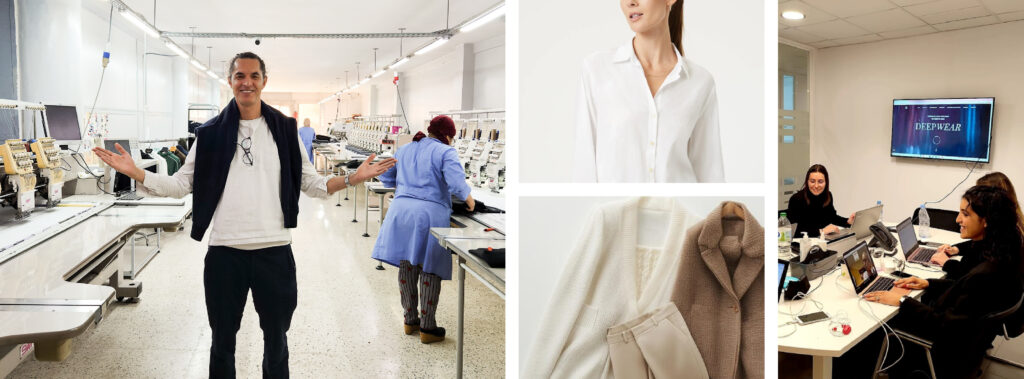
Jacquard enables complex engineered patterns with structural control. In apparel, it defines designer and decorative fabrics; in technical sectors, it appears in automotive and furnishing textiles. Its main drawback is cost and inefficiency for basic, mass-market garments.
Pile weave, including velvet and terry, delivers insulation, softness, and absorption. It is suited to towels and plush garments, as well as carpets and acoustic textiles. Its limitations include weight, slow drying, and surface crushing in active applications.
Corduroy (pile twill) provides ribbed durability and tactile strength. It performs well in jackets and trousers, and in abrasion-resistant workwear. Yet it retains heat and offers limited breathability in warm climates.
Understanding these contrasts clarifies a key principle: weave selection is not only an aesthetic decision but a structural one. The right weave enhances performance and longevity; the wrong weave compromises both.
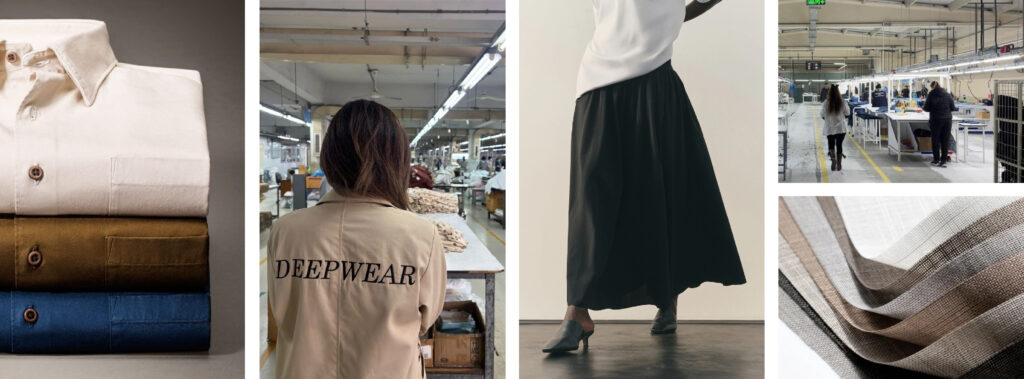
Step 3: Position the Product Along the Fashion–Function Spectrum
Not all garments need to prioritise performance equally. Some products are designed primarily for visual impact or occasional wear; others must withstand frequent use, movement, and washing.
Rather than treating fashion and function as opposing forces, it is more useful to view them as a spectrum. Where a product sits on that spectrum should directly inform weave choice.
A decorative jacquard may be appropriate for a limited-run statement piece but inefficient for everyday basics. Conversely, a durable twill designed for workwear may be excessive for lightweight summer garments. Problems arise when weave choices contradict the product’s actual role.
Clarifying this early helps prevent mismatches between customer expectations and garment performance.
Step 4: Match Weave Structure to Stress and Movement Points
Garments do not experience wear evenly. Certain areas — such as shoulders, elbows, knees, or seams — are exposed to repeated stress, friction, and movement.
When selecting a fabric weave, brands should consider:
- Which areas bend or flex most frequently
- Where abrasion is likely to occur
- Whether the garment needs to retain shape under load
Twill or reinforced weaves may be appropriate for high-stress zones, while lighter structures can be used elsewhere to reduce weight and improve comfort. Ignoring these differences often leads to premature wear or customer dissatisfaction, even when the fabric itself is technically sound.
Step 5: Evaluate When Technical Weaves Genuinely Add Value
Technical or industrial-inspired weaves can enhance performance, but they are not inherently better. In some cases, their benefits are irrelevant to the end user while their drawbacks — cost, weight, reduced breathability — become liabilities.
This step requires discipline. The question is not whether a weave is advanced or innovative, but whether its functional strengths align with the garment’s actual use-case. Brands that make disciplined choices here tend to achieve better balance between durability, comfort, and cost.
Step 6: Consider Sourcing and Scalability Early
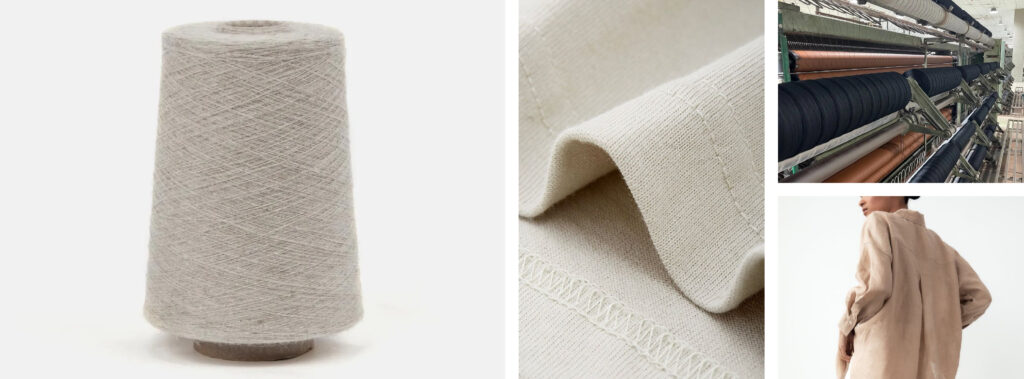
A weave that works conceptually may still present challenges in production. Loom availability, minimum order quantities, lead times, and quality consistency all affect whether a fabric is viable at scale.
Early discussions with factories can clarify:
- Whether the weave is readily producible
- How consistent results are across batches
- What cost implications arise at higher volumes
Addressing these factors early reduces the risk of delays or last-minute substitutions later.
If you’re navigating these decisions in real time, our sourcing services support brands from fabric selection through factory coordination — helping translate design intent into production-ready outcomes without unnecessary delays.
Step 7: Validate Performance Through Testing
Before committing to full production, weave performance should be validated through wear testing, wash testing, and, where relevant, abrasion or stress testing.
This step closes the loop between design intent and real-world behaviour. It also provides objective data that can inform future collections and strengthen communication with manufacturing partners.
Skipping this stage often results in issues being discovered only after products reach customers — when remediation is far more costly.
Why is fabric weave selection important in product development?
Selecting the right weave determines a garment’s durability, comfort, and breathability. It ensures the product performs well in real-world conditions, reducing return rates and manufacturing risks.
What is the difference between apparel and technical weaves?
Apparel weaves prioritize aesthetics and drape (like Satin for eveningwear), while technical weaves focus on function and protection. Using a technical weave for fashion without adjusting for weight or breathability can lead to garment failure.
How Deepwear Adds Value During Fabric and Weave Selection
Understanding fabric weave types in theory is only part of the equation. Applying that knowledge consistently across suppliers, factories, and production cycles requires experience and on-the-ground insight.
Deepwear brings over two decades of combined industry experience to this process. Our teams work directly with factories, discussing weave structures, performance requirements, and production constraints in practical terms. We assess not only whether a fabric looks appropriate, but whether it will perform as intended once worn, washed, and scaled.
In practice, this support includes:
- Direct coordination with factories to evaluate weave suitability and functional performance
- On-site or proxy inspection of fabrics and construction details during sampling
- Validation of weave choices against real-world use cases, stress points, and wear expectations
- Real-time updates and feedback throughout the development process
- Early identification of risks related to durability, comfort, scalability, or misuse
For brands that are able to visit factories, we encourage joint discussions so decisions are made collaboratively and transparently. When travel is not possible, our teams act on behalf of clients — inspecting samples, validating construction choices, and providing real-time updates throughout development. By aligning fabric decisions with production realities early, brands gain tighter control over timelines, outcomes, and material performance.
Choosing the right weave is just the beginning. At Deepwear, we bridge the gap between creative vision and factory floor reality. Whether you need on-site fabric inspection or full-scale sourcing management, our team ensures your products perform as beautifully as they look. Contact Deepwear for a Consultation.