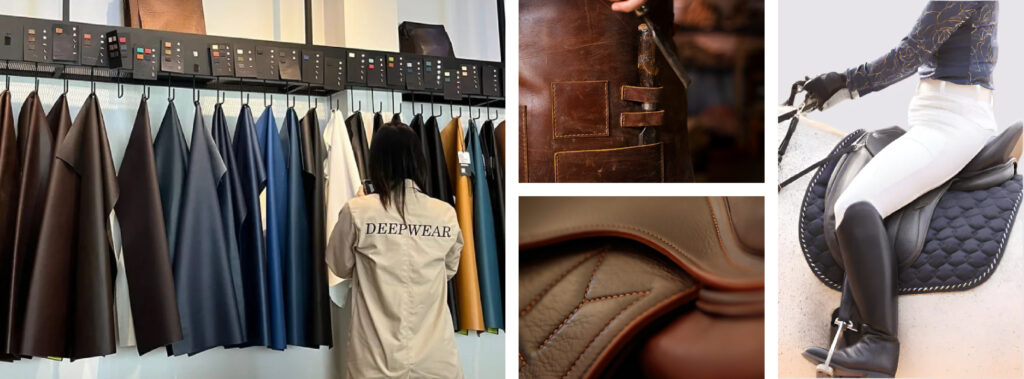
Capitalize on the “Year of the Horse” 2026 trend. Explore global manufacturing hubs for equestrian products, from technical safety gear in China to premium leather tack in India and Europe, with Deepwear’s sourcing guide.
Equestrian design has always been rooted in function rather than fashion. Built to protect riders and horses under physical stress, equestrian products prioritize durability, balance, and material integrity; qualities that translate naturally across safety gear, equipment, and apparel.
In 2026, this category is gaining renewed relevance as brands and consumers shift toward longevity and purpose-led design. The timing is notable: 2026 is the Year of the Horse, traditionally associated with strength, endurance, and disciplined movement—values that closely align with equestrian manufacturing principles.
For brands, this is not a short-term trend. It is an opportunity to understand how equestrian products are made today, where they are manufactured globally, and how sourcing decisions impact performance, compliance, and long-term commercial value.
In this blog we cover:
- How safety, performance, and durability drive equestrian product design.
- The full range of equestrian products manufactured today, from apparel to horse equipment.
- Key global manufacturing regions and their production capabilities.
- Strategic sourcing considerations for brands entering or expanding in this space.
From Safety Equipment to Lifestyle Influence
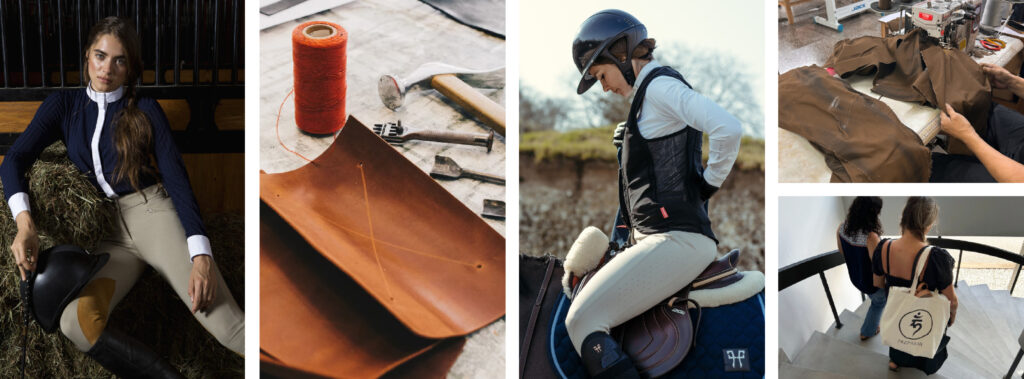
The influence of equestrian design on modern fashion does not come from status symbolism alone. It comes from trust in performance. When products are designed to prevent injury, endure friction, and remain stable under pressure, they naturally communicate quality.
This is why equestrian elements translate so effectively into lifestyle categories:
- Riding boots inform long-lasting footwear construction.
- Saddlery standards influence leather quality benchmarks.
- Protective vests normalize technical textiles and layered construction.
- Helmets contribute to the broader acceptance of engineered headwear.
Modern consumers are increasingly drawn to products that signal durability and purpose rather than novelty. Equestrian design aligns with this shift because it was never intended to be disposable.
Core Equestrian Products Manufactured Today
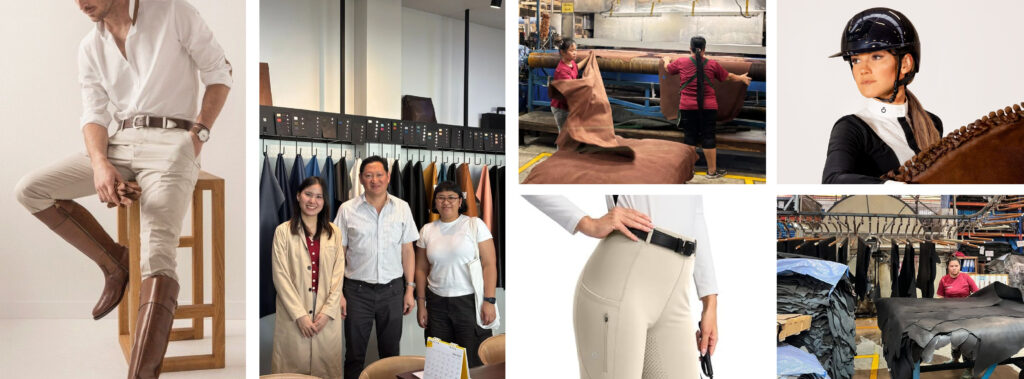
Equestrian manufacturing spans far beyond apparel. It includes a range of safety-critical and performance-driven products, each with distinct material and production requirements.
- Rider Apparel & Footwear: This category includes breeches, jackets, shirts, riding boots, paddock boots, and gloves. These products require stretch, breathability, abrasion resistance, and precise fit. Construction must accommodate movement while maintaining structure over time.
- Rider Safety Equipment: Helmets, airbag vests, and body protectors are among the most technically regulated equestrian products. They rely on impact-resistant materials, layered construction, and compliance with international safety standards. Manufacturing in this category demands experienced factories, certified materials, and strict quality control.
- Horse Equipment: Saddles, saddle pads, bridles, girths, and protective leg boots are engineered to protect both horse and rider. Saddles combine leather craftsmanship with structural components that distribute weight evenly. Pads and boots incorporate shock absorption and breathable linings to prevent injury during extended use.
Across all categories, material choice, construction method, and factory expertise directly affect product performance and longevity.
Where Equestrian Products Are Manufactured
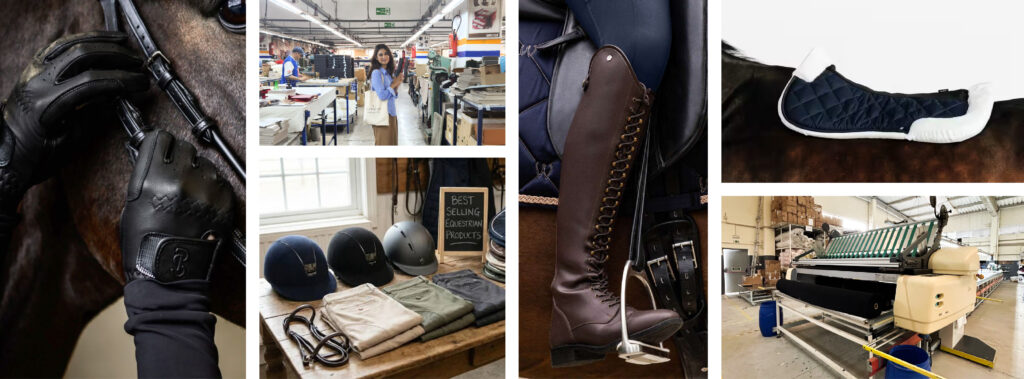
Safety equipment and performance gear require specialized factories, regulated materials, and experienced production teams. As a result, equestrian brands often source across multiple regions to balance craftsmanship, scalability, and compliance.
Disclaimer: Minimum order quantities (MOQs) vary based on factory scale, material selection, construction complexity, and customization requirements. The ranges below reflect common benchmarks among export-oriented manufacturers and should be used as strategic reference points rather than fixed guarantees.
Equestrian product manufacturing is highly regional, with each country offering specific strengths. Successful brands combine regions to balance craftsmanship, performance, and cost.
China is the most versatile hub, producing everything from apparel to helmets, boots, and synthetic tack. With MOQs from 30–1,000+, it offers strong OEM/ODM capabilities, advanced materials, and scalable production—ideal for performance lines and large volumes.
India specializes in leather goods like saddles, bridles, and boots. MOQs of 50–500 support high-quality craftsmanship and hand-finishing, making it perfect for durable, mid-to-premium leather products.
Portugal focuses on premium footwear and leather goods, with MOQs of 200–500. Known for refined finishing and European quality, it suits luxury and heritage brands.
Spain offers a similar premium level with a more fashion-driven approach, ideal for lifestyle equestrian collections blending function and design.
Turkey & Eastern Europe provide flexible, lower MOQ production (50–300) for leather accessories, ideal for smaller runs and complementary products.
Artisan workshops handle bespoke saddles and handcrafted pieces with MOQs as low as 10–50, perfect for limited or made-to-order collections.
Key takeaway: The best results come from combining regions strategically based on product, materials, and scale.
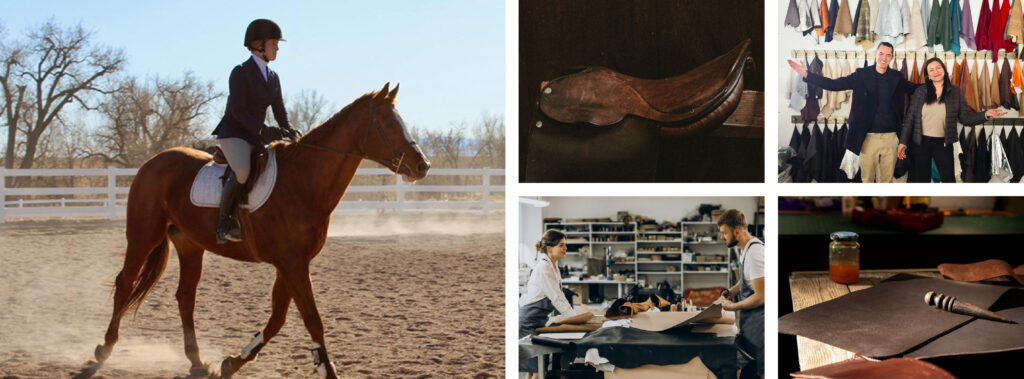
For equestrian and equestrian-inspired accessories—including belts, bags, gloves, small leather goods, and synthetic accessories—China functions as the primary and strongest manufacturing market.
This is due to China’s established OEM/ODM capability across both leather and synthetic accessories, extensive component and hardware sourcing (including buckles, trims, and molded parts), and its ability to support mid to high MOQs with consistent customization and scalable production. Chinese manufacturers also have proven experience supplying global performance, lifestyle, and multi-category brands, making the region particularly well suited for accessory assortments produced at scale.
Other regions—including Turkey, Eastern Europe, India, Portugal, and Spain—play important but more specialized roles. These markets are well suited to specific use cases such as heritage leather craftsmanship, premium positioning, or small-batch production. For accessories requiring scale, material flexibility, and supply chain reliability, however, China remains the most competitive and dependable option.
Choosing between the scalability of China and the heritage craftsmanship of Europe can be difficult. Don’t guess. Contact our sourcing specialists to get a comparative analysis of the best factories for your specific product type.
Why is equestrian fashion trending in 2026?
Beyond the cultural significance of 2026 being the “Year of the Horse”, consumers are shifting toward “quiet luxury” and functional durability. Equestrian design naturally aligns with these values, offering products built for longevity and performance rather than disposable trends.
Where is the best place to manufacture equestrian products?
It depends on the category. China is ideal for technical safety gear (helmets, vests) and scalable accessories. India excels in traditional leather tack and saddlery. Portugal and Spain are the top choices for premium leather riding boots and heritage footwear.
Build Products That Outlast the Trend
Equestrian footwear, apparel, and equipment demand more than standard sourcing. Materials must age well, construction must withstand stress, and factories must understand safety, function, and compliance.
Deepwear supports brands sourcing equestrian and equestrian-inspired products through local teams and trusted manufacturing partners across China, India, Portugal, and Spain. Our on-the-ground presence gives brands direct access to raw materials, vetted factories, and regional expertise without relying on guesswork or transactional intermediaries.
We can help brands:
- Identify factories aligned with MOQ, quality, and positioning
- Source leather, components, and trims suited for long-term wear
- Manage production with clear oversight and compliance standards
- Build assortments that balance heritage design with modern demand
Ultimately, the real measure of quality in equestrian products is not whether it aligns with a single cultural moment, but whether it continues to perform, wear well, and remain relevant over time. The reason equestrian design resurfaces in 2026 and will continue to do so beyond the Year of the Horse is because it is built around endurance, balance, and disciplined construction rather than short-lived trends. For brands, this category rewards long-term thinking: products that age with use, retain their structure, and stay commercially viable across seasons.
Whether you are launching a technical riding line or an equestrian-inspired capsule for the Year of the Horse, execution is everything. Deepwear connects you with vetted factories that understand the balance between safety, durability, and design.
Start sourcing equestrian products today.