
Move beyond fleeting SS26 trends. Explore how street adoption, material intelligence, and strategic sourcing build enduring fashion collections. Learn to design for longevity with Deepwear’s expert guide.
Spring/Summer 2026 is already being decoded through trend reports, runway recaps, and viral micro-aesthetics. Lace, sheerness, and soft one-piece dressing are everywhere, but visibility alone does not guarantee longevity.
What determines whether a trend disappears after one season or evolves into a retail staple is not runway validation, but real-world adoption. The clothes people choose to wear while running errands, traveling, or living their daily lives create the strongest signals for what retailers will stock and what manufacturers must be ready to support.
In this blog we cover:
- How street adoption turns trends into retail staples
- Why materials must function beyond aesthetics
- How adaptable silhouettes support long-term design
- Why sourcing strategy determines product longevity
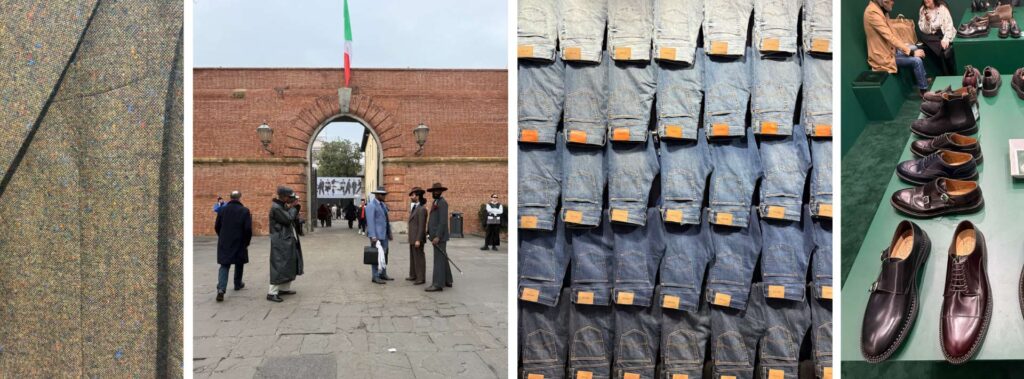
Why Some Trends Endure and Others Don’t
The following five reasons examine how trends move from seasonal visibility to long-term viability, shaped by real-world wear, material intelligence, silhouette design, and sourcing strategy.
1. Trends Endure Only After Real-World Adoption
Today, the most influential moments happen off-duty: airport looks, café sightings, travel photos, and social media posts that show how garments function in everyday life.
Influencers with consistent personal style — rather than trend-chasing creators — play a critical role here. Their value lies not in novelty, but in repeatability. When they wear textured, sheer, or lace-adjacent pieces multiple times, styled differently across contexts, they demonstrate usability. That usability is what retailers respond to.
Off-duty celebrity style reinforces this shift. When public figures adopt materials like lace in casual, unperformed ways — layered with knits, worn flat-shoed, repeated across appearances — the material begins to detach from occasionwear and move toward wardrobe essential.
Trends endure when they stop being performed and start being lived in.
2. Materials Must Function as Systems, Not Statements
A material trending on the runway does not automatically translate into a viable retail product. What matters is whether that material can function across climates, lifestyles, price points, and production scales.
Lace offers a clear example. Historically associated with formality and fragility, it has re-entered contemporary fashion through new applications: open-work jacquards, stretch blends, backed constructions, and panelled usage. These innovations allow lace to behave less like decoration and more like a system component.
To design for endurance, brands must evaluate materials through functional questions:
- Can the fabric be layered or lined in multiple ways?
- Does it allow for movement, breathability, and repeated wear?
- Can it be substituted or reinterpreted without redesigning the entire garment?
- Will the supplier be able to reproduce it consistently across seasons?
When lace is chosen for its properties — airflow, texture, flexibility — rather than its symbolism, it becomes adaptable. The same logic applies to other trending materials such as mesh, lightweight jacquards, and technical sheers.
Design principle: Enduring materials behave like frameworks, not finishing touches.
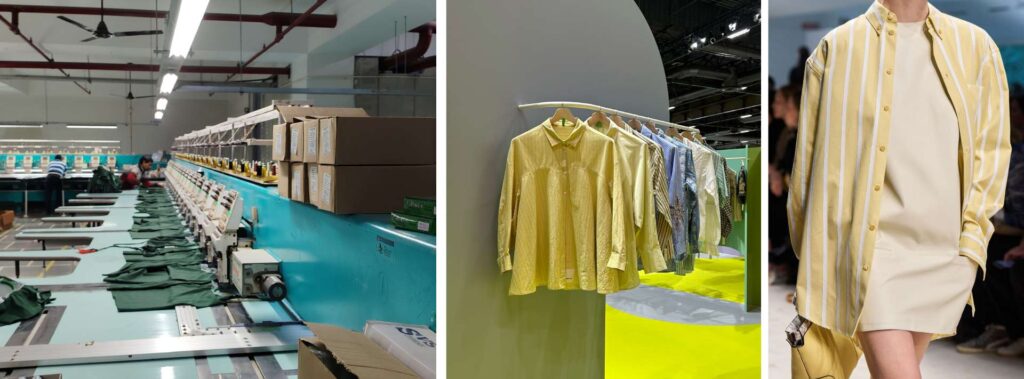
3. Enduring Silhouettes Are Designed for Fabric Evolution
Endurance is rarely achieved through fabric alone. Silhouette plays an equally important role.
One-piece garments such as jumpsuits illustrate this well. Their popularity rises and falls, but the silhouettes that endure are those designed to accommodate material variation. A jumpsuit that only works in one fabric is a trend piece. A jumpsuit designed to function across lace, woven, jersey, or blended textiles becomes a system.
Designing for longevity means:
- Creating blocks that accept multiple fabric weights
- Allowing for adjustable elements (waists, straps, layers)
- Separating visual impact from structural integrity
This approach reduces development costs, simplifies reorders, and enables brands to respond to shifting consumer demand without restarting the design process.
Designing with trending materials? Explore how material intelligence and supplier continuity affect scalability and long-term production.
4. Sourcing Strategy Determines Design Longevity
Material endurance depends on sourcing continuity. Sustainable and ethical claims mean little if a fabric cannot be reordered or replicated.
Strategic sourcing considers:
- Supplier consistency across production runs
- Regional expertise aligned with design intent
- Capacity to scale or adapt without compromising quality
For example:
- European lace suppliers support archival patterns, innovation, and long-term design language
- South Asian suppliers offer embellishment depth and scalability
- East Asian manufacturing supports consistency and volume for commercial collections
Choosing where a fabric is sourced is also choosing how a product will evolve.
Sourcing question to ask: Where does this product belong long-term, and not just this season?
Is your supply chain ready for the next trend? Falling in love with a fabric is easy; ensuring your supplier can produce it consistently for three years is the challenge. Don’t let supply chain breaks kill your best-sellers. Contact our sourcing strategists to vet your suppliers for long-term continuity.
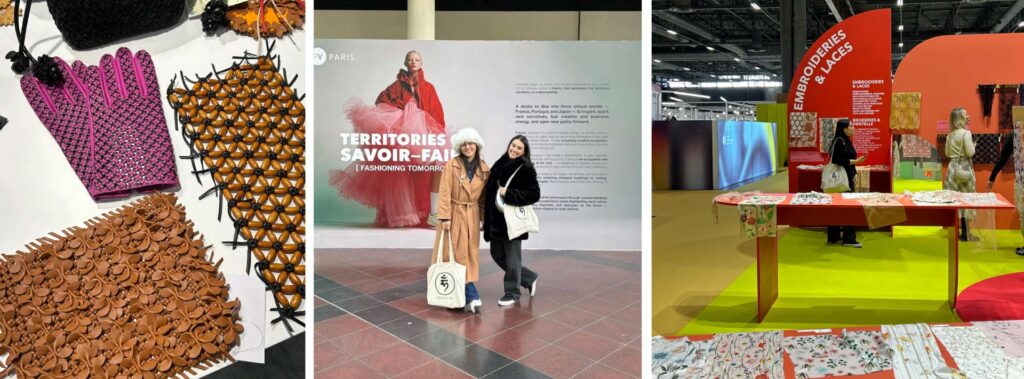
5. Lace Reveals How Heritage Materials Become Enduring Systems
Deepwear’s earlier exploration of lace traced its history, construction methods, and global supply chains. This foundation reveals why lace continues to resurface: it is a material with deep adaptability.
When approached with material intelligence through modern manufacturing, thoughtful application, and strategic sourcing — lace demonstrates how heritage fabrics can remain relevant without relying on nostalgia.
The lesson extends beyond lace. Any material trending today must be evaluated not for its aesthetic moment, but for its ability to integrate into a brand’s long-term system.
How does street style influence SS26 fashion trends?
Street style acts as the “usability test” for runway trends. When influencers and early adopters wear items like sheer lace or one-piece suits in casual, everyday settings (“off-duty”), it signals to retailers that the trend has moved from “performance” to “product,” making it safe to scale.
What is “Material Intelligence” in product development?
Material intelligence is the ability to select fabrics not just for their look, but for their systemic function. It involves asking if a material (like lace or jacquard) can be layered, washed, and sourced consistently across seasons, ensuring the garment remains viable long-term.
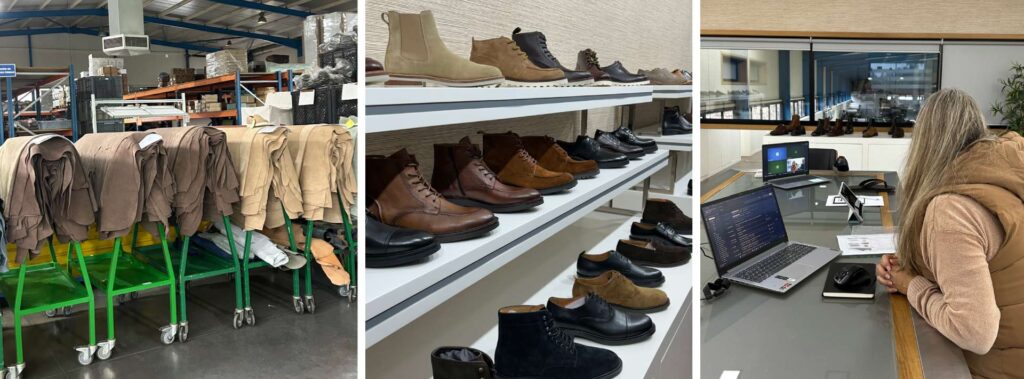
Deepwear’s Role: Turning Reasoning into Reality
Designing beyond SS26 requires more than trend awareness. It demands the ability to translate cultural signals into products that can be produced responsibly, scaled intelligently, and sustained over time. The difference between a seasonal moment and an enduring collection is not aesthetic — it is structural.
This is where strategy meets execution. With teams operating across key global sourcing regions, Deepwear supports brands at the intersection of design intent and manufacturing reality. Rather than chasing trends, we focus on building production systems that allow brands to evolve, adapt, and endure.
Our work centers on aligning creative vision with practical execution through:
- Global manufacturer matchmaking, connecting brands with vetted factories, artisan groups, and production partners suited to their technical needs and price points.
- Strategic sourcing across regions, leveraging Deepwear’s international offices to access diverse materials, craftsmanship, and manufacturing capabilities.
- End-to-end production support, from early-stage design development and sampling to quality control and production oversight.
- Responsible and compliant manufacturing, prioritizing transparency, ethical standards, and long-term supplier relationships.
Market-entry and scaling guidance, helping brands move from small-batch production to scalable, repeatable systems without compromising integrity.
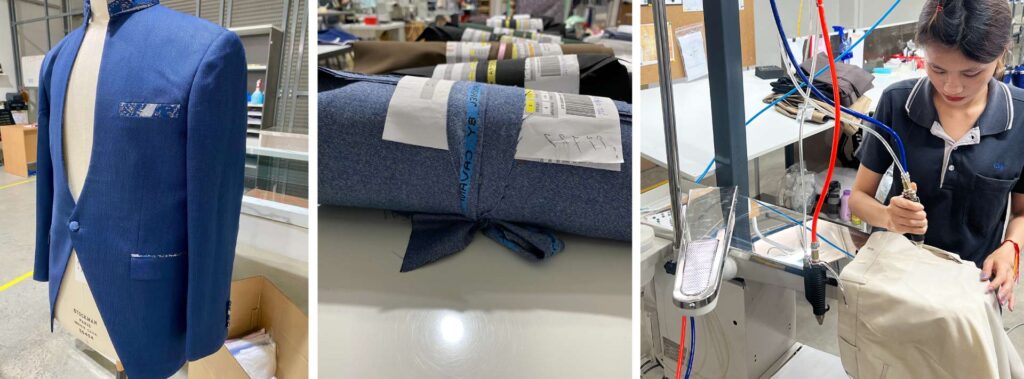
Endurance depends on alignment. Deepwear is selective about the clients we take on because long-term success requires shared values. We work with brands that understand production as a strategic decision — not a last step — and that value clarity, accountability, and intentional growth. This selectivity allows us to build deeper partnerships and deliver more consistent outcomes.
Trends will continue to cycle. Materials will rise, fall, and return in new forms. What lasts are the systems brands build: the sourcing decisions behind the scenes, the partners chosen to execute them, and the discipline to design with longevity in mind. Designing beyond SS26 is not about predicting the future of fashion; it is about creating the infrastructure that allows brands to meet it with purpose.
SS26 is just the starting point. To build a brand that lasts, you need a production infrastructure that values strategy over speed. Deepwear connects creative vision with manufacturing reality. Let’s build your system. Partner with Deepwear.